
If your garden goes from concrete to swamp and back again, hard, cracked plates in a dry August spell, sticky puddling mud by November, you've probably already been told to dig in loads of grit and compost. That's good advice for many gardens, but it's not always practical: raised beds cost money, whole-bed amendment takes years of muscle, and some gardens are on clay so heavy and so extensive that improving it properly is a multi-season project, not a weekend one. This isn't about that project. It's about what you can plant in the clay you've actually got, right now, unimproved, and get a real result from.
What "suits heavy clay" actually means
Heavy, unamended clay creates two separate problems for a plant, and a crop only earns a place here if it copes with both. The first is structural: clay compacts hard, and a lot of root systems simply can't push through it, so anything with a shallow or delicate root network struggles to establish at all. The second is the wet-dry cycle: clay holds water so tightly that it waterlogs roots over winter, then dries out and shrinks into hard, cracked plates by summer, which stresses anything reliant on evenly draining soil.
That second problem is where a lot of popular clay-friendly crop advice quietly falls apart. BrassicasThe cabbage family: cabbage, kale, broccoli, cauliflower, Brussels sprouts, kohlrabi, swede, turnip and more, sharing the same pests, diseases and rotation rules. Full definition →, beans, and potatoes turn up on almost every list of this kind, usually reasoned as firm clay giving strong anchorage, or clay holding nutrients well. But anchorage and fertility aren't the same thing as drainage tolerance, and drainage tolerance is the actual bottleneck on ground that stays wet all winter. Cabbage wants free-drainingSoil that lets water pass through quickly rather than pooling, so roots aren't sitting in wet ground after rain. Full definition → soil and should avoid waterlogged ground; squash and pumpkin want soil that doesn't waterlog; broad beans and most brassicas call for free drainage too, and brassicas carry a real clubroot risk, worse on wet, poorly-drained, acidic ground, exactly what unimproved clay gives you. None of that is a fit for clay that's staying exactly as heavy and slow-draining as it is now. The five below are different: each has a real, sourced tolerance for clay or consistently wet ground, not just a reputation for being unfussy.
Comfrey
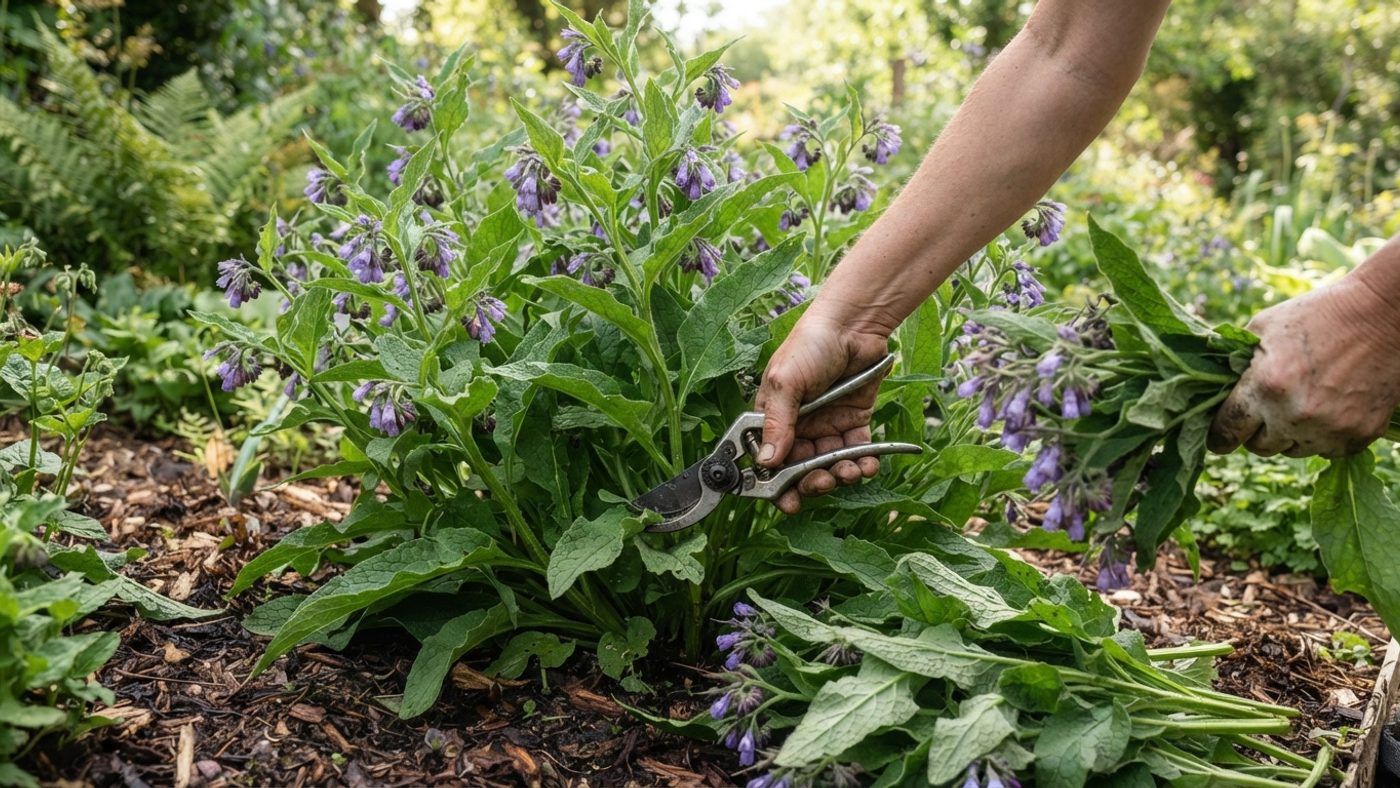
It's worth being upfront about what comfrey is actually for: it isn't a food crop for your plate, it's a cut-and-come-again source of mulchA layer of material spread over the soil around plants to suppress weeds, retain moisture, and improve soil structure as it breaks down. Full definition → and liquid feed. Clay and loam are both listed among comfrey's suitable soil types, with poorly-drained ground named directly as an acceptable moisture condition, the exact opposite of what most vegetables need. It grows in sun or partial shade, and is rated H7, the toughest hardiness ratingThe RHS's H1a–H7 scale for how much cold a plant can survive outdoors, H1a being tender indoor-only and H7 hardy anywhere in the UK. Full definition → there is, hardy through the harshest winters this country has, upland and exposed Scottish gardens included. Once it's in, it's essentially permanent: a well-established clump reaches roughly 1-2m tall and wide, so allow generous space, and goes on producing cut material for compost heaps and diluted liquid feed for years with no real maintenance beyond keeping it contained.
The sterile cultivarA plant variety that arose or was bred under cultivation and is kept true by deliberate propagation, rather than a naturally occurring wild species. Full definition → 'Bocking 14' is the one usually planted in gardens, since it doesn't self-seed everywhere the way common comfrey does, though it still needs the same generous space and is just as hard to remove once established. One genuine caution: comfrey contains compounds called pyrrolizidine alkaloids that can damage the liver if eaten repeatedly, so it isn't a foraged salad leaf, and the same compounds make it worth keeping away from pets, rabbits especially, wear gloves handling it too. Plant it in spring or autumn.
Damsons
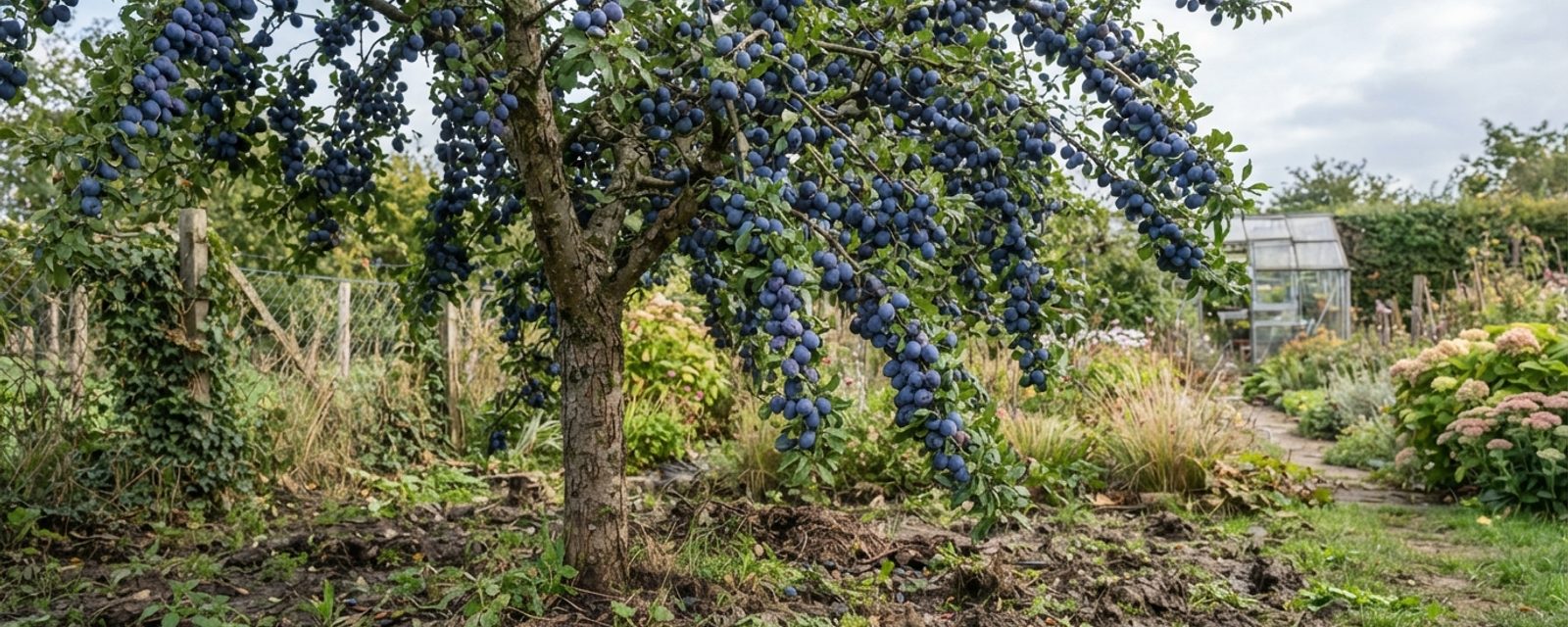
Damsons are one of the few tree fruits named as a good fit for clay soil specifically, because they don't like the ground drying out while the fruit is swelling, clay's moisture retention is a genuine advantage here, not just a tolerance. Clay is listed directly as a suitable soil type, and damsons are rated H6, hardy through most of the UK including a typical Scottish winter, a genuinely reliable tree fruit choice for an exposed or upland Scottish garden as well as a clay one.
The real caveat, and it matters: the site still must not be waterlogged. Clay as a soil texture, yes; clay that sits as standing wet ground all winter, no. In practice that means planting on the highest, best-drained spot your clay plot has, or working the tree into a slightly raised mound within the bed, rather than putting it in the lowest, wettest corner. Blossom is the other real risk: damsons flower early in spring, and a sheltered site away from frost pocketsA low-lying spot where cold air drains and pools on still nights, making it noticeably more frost-prone than the surrounding area. Full definition → matters as much as drainage, since a late frost at blossom time can damage the flowers and put off the pollinating insects the crop depends on. Most widely sold varieties are self-fertileA plant that can set fruit using its own pollen, without needing a second, different variety nearby to cross-pollinate it. Full definition →, meaning one tree fruits on its own with no second variety needed nearby; plant a bare-rootA plant, usually a fruit tree or hedging, sold with its roots exposed rather than in a pot, and only available while dormant. Full definition → tree from November to March, while it's dormant.
Water mint
Ordinary culinary mint only tolerates a range of soil types, true, but not a genuine wet-clay endorsement, and not strong enough to build a claim on. Its wetland relative, water mint, is a different story: clay and loam are both listed as suitable soil types, with poorly-drained moisture conditions named directly, and it's rated H6. It grows in full sun or partial shade, so a damp corner that doesn't get much light through the day still suits it. It's the plant of pond margins and bog gardens, precisely the niche a permanently damp corner of heavy clay creates, a garden with genuinely sodden ground through a wet Scottish winter is closer to that niche than most gardens ever get.
It's used the same way as culinary mint, leaves for tea or in place of mint sauce, though the flavour is stronger and more medicinal, so it suits the wettest, lowest-lying patch of the garden rather than a general herb bed. Like all mints it spreads aggressively by rhizome, so contain it in a bottomless bucket sunk into the ground or a large tub, exactly as you would ordinary mint. Plant in spring, once the ground has warmed and is easy to work, the same timing as most other pot-grown herbaceous plants. See the mint growing guide for the containment method.
Lovage
Lovage is the clearest exception to the usual herbs-need-sharp- drainage rule. Where thyme, sage, and rosemary are all built around protecting drainage above everything else, lovage wants rich, moist soil that doesn't dry out, and its soil-type list includes clay directly, alongside loam, chalk, and sand, a genuinely easier match for damp Scottish ground than the Mediterranean herbs that need a raised bed and grit to cope with the same clay. It's rated H6 and, once established, forms a substantial perennial clump (allow 30-45cm at planting, reckoning on it reaching around a metre wide within a few years), used in the kitchen much like a stronger, more savoury celery.
The caveat is real, though: doesn't dry out is not the same as tolerates waterlogging, lovage wants moisture without being sat in standing wet, so it's a match for clay that stays damp and slow-draining, not for a spot that floods and pools for weeks. Plant young pot-grown lovage in spring, once the soil is workable and frost risk has passed.
Quince
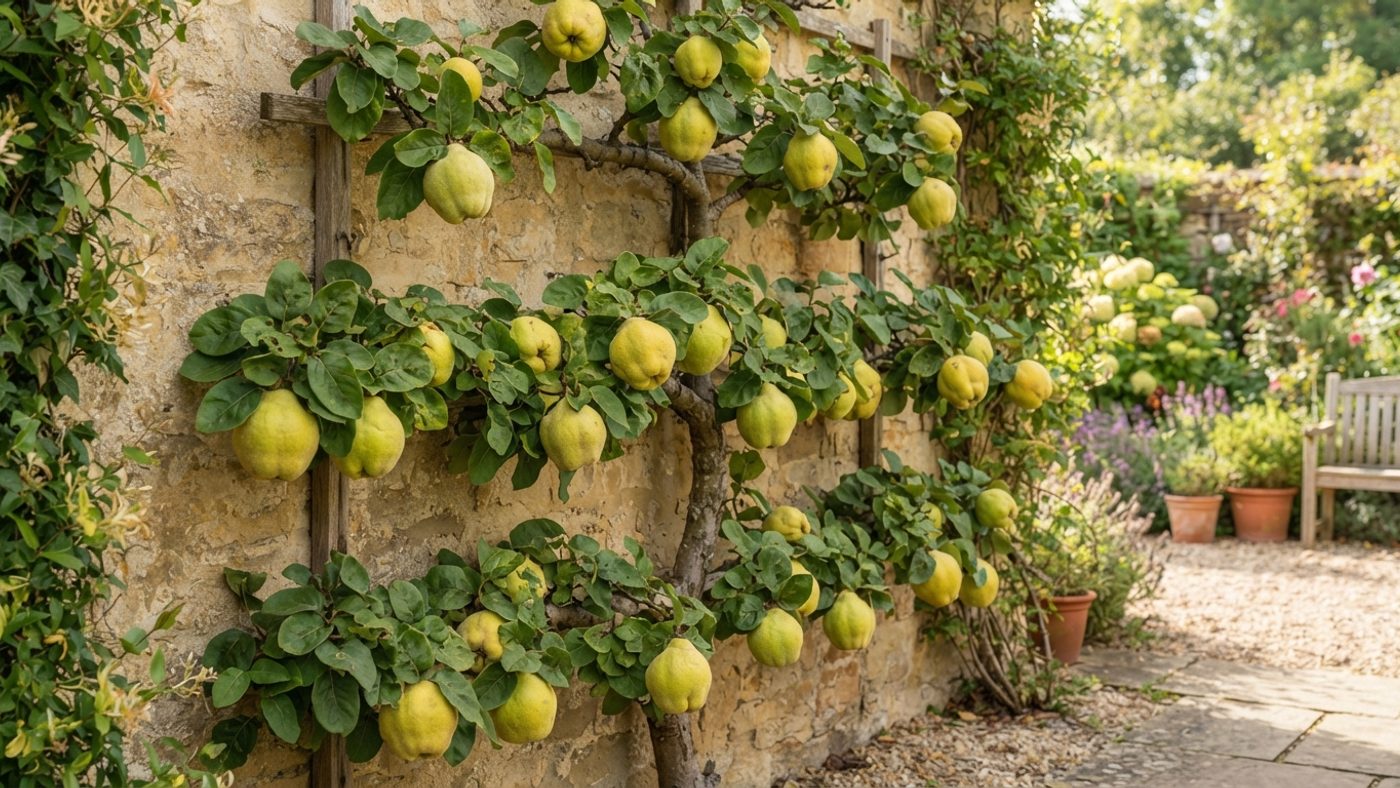
Quince tolerates a range of soils but does best in soil that's deep, fertile, and moisture-retentive, clay is named directly as one of the suitable soil types, alongside loam. Rated H5, hardy through most of the UK but not its most severe winters, which is the one hardiness figure here worth taking seriously in a cold inland or upland Scottish garden rather than a sheltered coastal one. An established tree needs little routine attention and, unlike many tree fruits, doesn't need supplemental watering once settled into moisture-retentive ground, it's more likely to need extra water on free-draining soil than on clay.
The bigger Scottish constraint is timing, not soil: quince fruit needs a long season to ripen, into October or November, and flowers late enough in spring that a cool, short Scottish summer can leave fruit under-ripe on a site without much shelter or sun. A warm, sheltered spot, ideally against a south- or south-west- facing wall in a colder area, matters more here than further south. One tree is enough to fruit. Choose a named rootstockThe root system and lower stem a fruit tree is grafted onto, chosen to control the tree's eventual size rather than for its own fruit. Full definition →: Quince A is semi-dwarfingHow much a fruit tree's rootstock limits or allows its eventual size, from extremely dwarfing (smallest) through to very vigorous (largest). Full definition →, Quince C and Quince Eline are more dwarfing, and all three keep the tree to roughly 3-4.5m in height and spread. Plant a bare-root tree from November to March, while dormant.
Comparison table
| Crop | Clay/wet-soil trait | Real caveat |
|---|---|---|
| Comfrey ('Bocking 14') | Clay, loam, chalk; explicitly tolerates poorly-drained soil; H7 | Not a food crop, cut for mulch/liquid feed only; harmful if eaten repeatedly, keep from pets |
| Damsons | Clay named as suitable; moisture retention helps fruit swell; H6 | Must not be waterlogged, and early blossom needs frost shelter |
| Water mint | Clay, loam; explicitly tolerates poorly-drained soil; H6 | Stronger, more medicinal flavour than culinary mint; spreads aggressively, contain the roots |
| Lovage | Clay, loam, chalk, sand; wants moisture, resists drying out; H6 | Wants moisture, not standing water, not for ground that actually floods |
| Quince | Clay, loam; thrives in moisture-retentive soil; H5 | Needs a warm, sheltered spot and a long season to ripen fully by autumn |
What this doesn't solve
There's an easy way to tell heavy-but-workable clay from genuinely waterlogged ground: dig a hole about 30cm deep, fill it with water, and see what happens. If it drains away within a few hours, you're dealing with slow, heavy clay, what these five crops are chosen for. If water is still sitting in the hole a day later, that's standing waterlogging, and none of these five picks fix it, damsons and lovage in particular are explicit that they want moisture without being sat in standing water. Planting choice alone won't solve ground at that stage; the drainage-improvement approach at Improving Clay Soil is the next step.
Two more honest notes on scope. First, rhubarb is a genuinely good match for heavy, moisture-retentive clay too, but it's covered in depth in the low-maintenance and shaded-garden picks elsewhere on this site, so it isn't repeated here. Second, brassicas weren't excluded absolutely: clubrootA soil-borne fungal disease of the brassica family that swells and distorts roots, and survives in soil for years. Full definition →-resistant varieties do exist and cut the risk considerably, so if cabbage or kale matter enough to you, a resistant variety on the driest bed you have is a reasonable compromise rather than a flat no. Carrots, parsnips, and other crops that need loose, stone-free soil to grow straight and deep, or that rot readily in wet ground like onions and garlic, are left out for the same reason as always: nothing in how they actually grow supports it.
Common questions
Can I actually eat any of these, or is this mostly non-food plants?
Damsons, water mint, lovage, and quince are all genuine food crops, stewed or preserved fruit from damsons and quince, leaves for tea or cooking from water mint and lovage. Comfrey is the exception: it’s grown for mulch and liquid plant feed, not for eating.
Do I need to improve my clay soil at all before planting these?
No, none of these five needs the drainage improvements most vegetables on clay would need, that’s the whole point of the list. Working some organic matter into the planting hole for damsons and quince still helps them establish, and comfrey, water mint, and lovage go straight into the ground with no preparation beyond ordinary weeding.
Do I need to worry about pollination for the damson or the quince?
Not really, and the reason is worth knowing rather than just taking on trust: most widely sold damson varieties are self-fertile, meaning a single tree pollinates its own flowers without needing a second variety nearby, though it’s worth checking the specific variety before buying since not every one is. Quince works the same way, one tree fruits on its own.
My clay soil floods and sits wet for weeks in winter, will these still work?
Not reliably. All five tolerate clay’s moisture retention and slow drainage, but damsons, lovage, and quince specifically want to avoid standing waterlogging. If your ground actually floods rather than just staying heavy and slow-draining, that’s a drainage problem these crops won’t solve on their own.
Should I plant damsons or quince on a mound rather than flat ground?
For damsons, yes it’s worth considering, waterlogged sites should be avoided altogether, so placing the tree on the highest, best-drained spot in the bed reduces that risk. Quince is a little more forgiving since it thrives in moisture-retentive ground, but the same principle helps in a genuinely wet garden.
When’s the best time to plant water mint?
RHS doesn’t give a specific planting window for water mint itself, but it lists propagation by divisionPropagating a clump-forming perennial by digging it up and splitting it into several smaller pieces, each with roots and shoots attached. Full definition → in spring, a reasonable cue that spring, once the ground has warmed and is easy to work, is the sensible default, the same timing as most other pot-grown herbaceous plants going into a bed or a sunken container.
Sources
11 sources, recorded with what each was used for
- RHS: Damsons — grow your own: Soil preference, waterlogging caution, blossom frost-shelter requirement, self-fertility, bare-root planting timing
- RHS: Prunus insititia plant record: Damson's soil type tags (clay, loam, sand), moisture rating, H6 hardiness
- RHS: Mint — grow your own: Culinary mint's general soil tolerance, for contrast with water mint
- RHS: Mentha aquatica plant record: Water mint's soil type (clay, loam), poorly-drained moisture rating, H6 hardiness, habitat
- RHS: Lovage — grow your own: Lovage's moisture requirements, spacing, waterlogging caveat
- RHS: Levisticum officinale plant record: Lovage's soil type list (loam, chalk, clay, sand), moisture rating, H6 hardiness
- RHS: Quinces — grow your own: Quince's soil and moisture guidance, watering needs, ripening window, self-fertility, rootstock names
- RHS: Cydonia oblonga plant record: Quince's soil type tags (clay, loam), moisture rating, H5 hardiness
- RHS: Symphytum × uplandicum 'Bocking 14' plant record: The comfrey cultivar's soil types, moisture rating, H7 hardiness, sterility note
- RHS: Symphytum officinale plant record: Common comfrey's soil type list, explicit poorly-drained moisture tolerance, H7 hardiness, toxicity warning
- RHS: Why comfrey is a superplant for your garden: Comfrey's use as mulch and liquid feed