
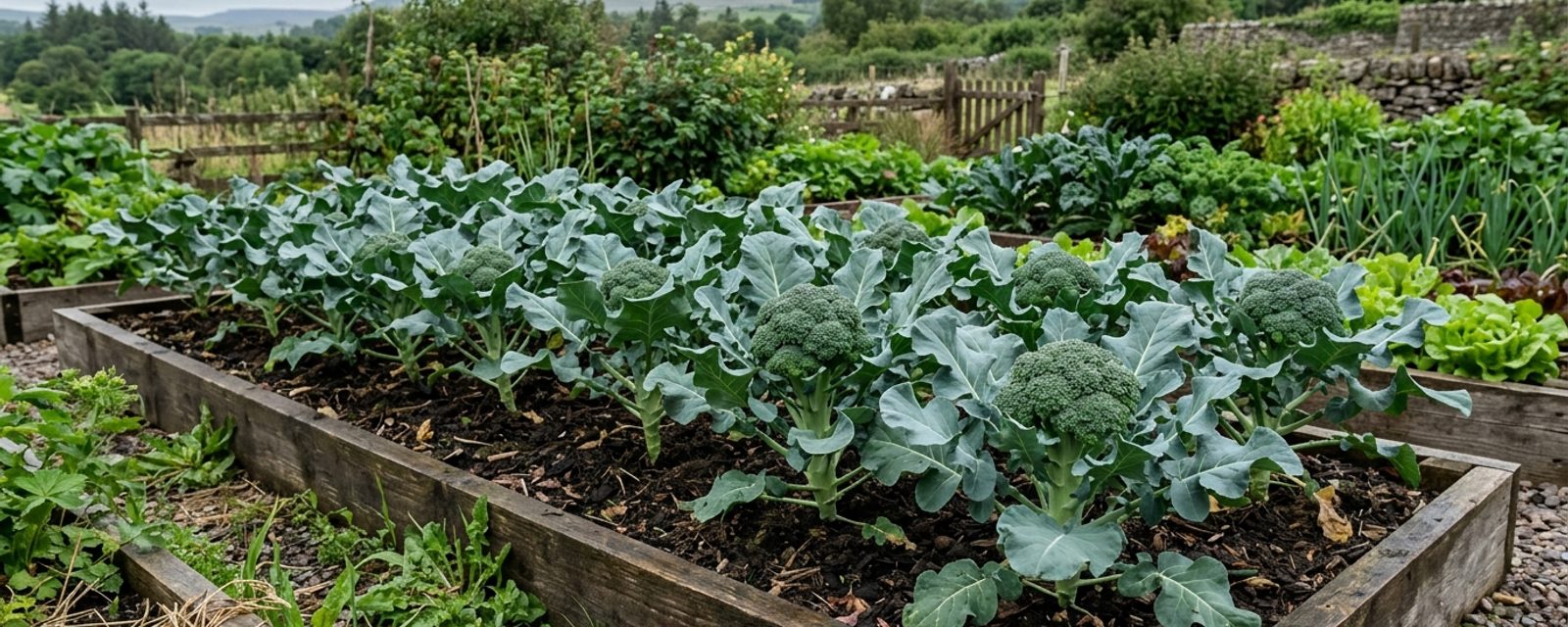
Calabrese is the single large green head sold as "broccoli" in every UK supermarket, not the same crop as purple or white sprouting broccoli, which throws many small spears over several months (covered separately in the broccoli varieties guide). A cool summer works in calabrese's favour: the crop's main failure mode, boltingA plant switching early into flowering and seed production, usually triggered by stress, after which leaves, roots or bulbs turn bitter or unusable. Full page → before the head forms, is heat-triggered, and Scotland's summers rarely deliver the kind of sustained heat that causes it. What that leaves as the real variety decision here is the short growing season itself, picking varieties that between them stretch a single narrow summer window into the longest possible run of harvests.
Quick answer
For most Scottish gardens, Marathon is the strongest all-round choice, its AGMThe RHS's Award of Garden Merit: a UK-wide trials award for reliable performance, not a Scotland-specific recommendation. Full definition → is confirmed directly on its own page, and it's bred for a long, reliable summer harvest. Grow Green Magic alongside it to get an earlier first cut and stagger the season, go with Kabuki instead if space is tight (it's a genuinely compact plant suited to close spacing, cropping later into autumn), or Fiesta if you have a warm, sheltered spot and want the variety with the strongest heat-tolerance claim, for a late-summer cut.
Variety comparison
| Variety | AGM (own page) | Hardiness | Disease/heat traits | Harvest window | Head size |
|---|---|---|---|---|---|
| Marathon | Yes | H2The RHS's H1a–H7 scale for how much cold a plant can survive outdoors, H1a being tender indoor-only and H7 hardy anywhere in the UK. Full definition → | "Some resistance to disease" | Summer, long-cropping | Medium, dense |
| Green Magic | Not shown on own page | H3 | Good resistance to white rust | Early main crop, then side-shoots | Dense, early-maturing |
| Kabuki | Not shown on own page | H3 | None stated | Late summer/autumn | Small, tight, domed |
| Fiesta | Not shown on own page | H3 | Excellent heat tolerance | August-October | Large, domed |
Marathon's H2 rating means it copes with a cool spot but not a proper cold snap; Green Magic, Kabuki and Fiesta are all rated a step hardier at H3, tolerant down to about -5°C. In practice that makes the other three the steadier choice for an exposed or late-season site, with Marathon better suited to a more sheltered spot.
All four are sown March to June and transplanted at 10-15cm tall, the same window and trigger size as any calabrese, see the growing guide for the full sowing calendar. Spacing recommendations range from 30cm up to 45cm for larger varieties, to as wide as 60-75cm elsewhere. Treat 30-45cm as the minimum and give more room than that if you have it, especially for Fiesta and Kabuki's larger, domed heads.
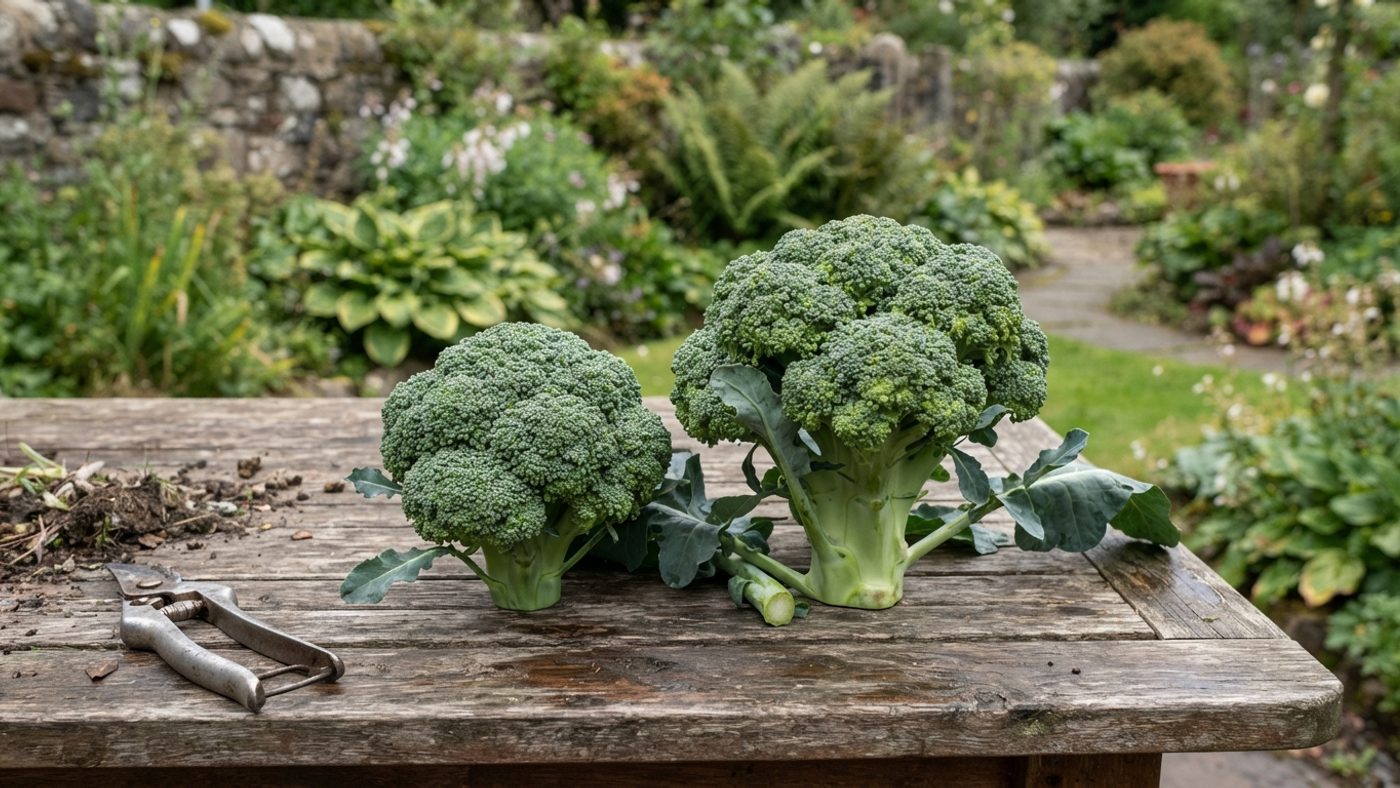
Green Magic and Kabuki's AGM is unconfirmed
The general calabrese growing page names Marathon, Green Magic and Kabuki all as AGM (Award of Garden Merit) varieties, but only Marathon actually carries the AGM badge on its own individual plant page. Green Magic and Kabuki are both genuinely good varieties on the detail their own listings do give, treat their AGM as unconfirmed rather than assume the general page's listing is wrong.
Which variety for your situation
Best overall: Marathon. Described as one of the most reliable summer-cropping varieties, producing firm blue-green heads over a long season, with some disease resistance built in and a confirmed AGM, the safest default if you're only growing one variety and want a long cropping window rather than a single early or late hit.
Smallest plot or most exposed site: Kabuki. Described as compact, good where space is limited and particularly suited to autumn cropping, a reasonable match for a raised bed or a smaller plot where a sprawling variety would struggle, and its H3 hardiness rating gives it more margin than Marathon on a windier or more exposed site. It crops later, into autumn.
Earliest crop / to start a staggered harvest: Green Magic. Described as early maturing, with dense heads followed by side-shoots, and adds a disease-resistance claim (good resistance to white rust) that Marathon's listing doesn't make. Sowing Green Magic alongside Marathon, Green Magic for the first cut, Marathon for the long middle stretch, is the practical way to stretch a short Scottish season, since each plant's side-shoots keep going for weeks after the main head is cut.
Warmest, most sheltered spot, latest cut: Fiesta. It's the only one of the four with an explicit heat-tolerance claim, "excellent heat tolerance, perfect for summer cropping", and an August-October harvest window. It carries no AGM, so it's a specialist pick rather than a default, best reserved for a sheltered bed with good sun.
None of the four is documented as clubrootA soil-borne fungal disease of the brassica family that swells and distorts roots, and survives in soil for years. Full definition →-resistant, all four listings note susceptibility rather than resistance, so on Scotland's more acidic soils, lime and rotationMoving each crop family to different ground each year, on a multi-year cycle, so pests and diseases that build up in soil don't get a repeat host. Full definition → carry that risk regardless of which variety wins on the other traits above.
Soil, pH and pests
All four varieties share the same non-negotiable: calabrese wants a minimum soil pH of 6.8, stricter than most other brassicasThe cabbage family: cabbage, kale, broccoli, cauliflower, Brussels sprouts, kohlrabi, swede, turnip and more, sharing the same pests, diseases and rotation rules. Full definition →, and Scotland's naturally acidic soils are more likely to sit below that threshold than to clear it without help, lime the bed the previous winter if a soil test comes in low. Below that threshold is also where clubroot takes hold, and Marathon's, Green Magic's, Kabuki's and Fiesta's own plant pages all list club root among their disease susceptibilities, so it isn't a risk any of the four is bred to dodge. Green Magic's white-rust resistance is a genuine point of difference, but it doesn't extend to the rest of the standard brassica pest list, flea beetle, cabbage root fly, cabbage white caterpillar, slugs and pigeons, so all four still need the same netting, collars and rotation discipline covered in the growing guide.
A tall, top-heavy calabrese plant is also prone to windrock, the stem loosening and rocking in wind, which damages the roots, on any variety, worth taking seriously on an exposed plot rather than only the two rated for it above; firm the soil well at planting whichever one you grow.
No exact days-to-maturity figure is published for any of the four, so plan a staggered sowing by harvest window rather than a day count: Green Magic's dense heads and side-shoots come first, Marathon holds the long middle stretch, and Kabuki and Fiesta both run into autumn behind it. Marathon is the variety most UK seed retailers stock as standard; check Kabuki and Fiesta's availability before building a sowing plan around them.
Common questions
Is calabrese the same as broccoli?
In UK shops, "broccoli" almost always means calabrese, the single large green head. Purple and white sprouting broccoli is a different crop grown for many small spears over months rather than one head.
What's the best calabrese variety for a small Scottish garden?
Kabuki, described on its own page as compact and good where space is limited, is the best fit for a raised bed or a smaller, more sheltered plot.
Will calabrese bolt in Scotland's cooler summers?
Bolting is triggered by heat stress, so Scotland's cooler summers reduce the risk compared with further south, but transplant timing still matters more than variety choice, plant out at 10-15cm tall before hot weather arrives.
Can I get two harvests from one calabrese plant?
Yes, every variety here produces side-shoots for several weeks after the main head is cut, extending the harvest without a second sowing.
Should I grow more than one calabrese variety?
It's worth it if you have the space: pairing an early variety like Green Magic with a long-cropping one like Marathon extends the usable harvest window further than either grown alone.
Sources
7 sources, recorded with what each was used for
- How to grow Calabrese: General variety recommendations (Marathon, Green Magic, Kabuki, Fiesta), spacing, pH minimum, bolting cause, harvest sizing
- Brassica oleracea (Italica Group) 'Marathon': AGM confirmation, H2 hardiness rating, disease-resistance note, spacing and sowing detail
- Brassica oleracea (Italica Group) 'Green Magic': H3 hardiness rating, white-rust resistance claim, sowing window; confirms no AGM badge on this specific page
- Brassica oleracea (Italica Group) 'Kabuki': H3 hardiness rating, compact/quick-maturing description, harvest timing; confirms no AGM badge on this specific page
- Brassica oleracea (Italica Group) 'Fiesta': Heat-tolerance claim, H3 hardiness rating, August-October harvest window; confirms no AGM
- How to Grow Calabrese: Windrock/firm-planting advice, wider spacing figure (60-75cm), harvest continuing to first frosts
- How to grow Calabrese: Corroborating transplant spacing (45x60cm) and August-November harvest window