
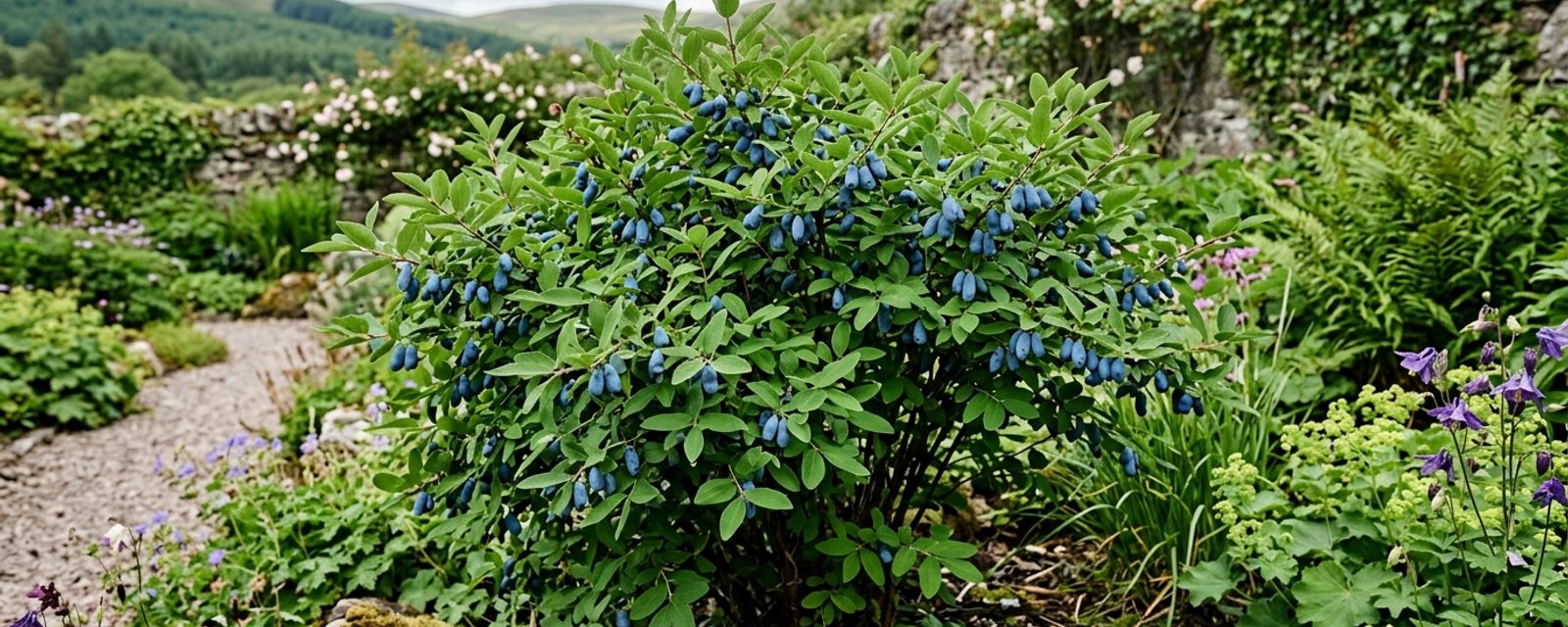
Honeyberry is one of the newest fruits in Scottish gardens, and its variety list is short for the same reason: only three named forms carry real, checkable garden traits, and none of them carries an Award of Garden Merit yet. This article covers which of those three to actually plant and how to pair them for fruit; for planting method, feeding and pruning through the year, see the full growing guide.
Quick answer
Zojka is the best overall pick: the heaviest-cropping of the three, with the largest, sweetest berries. Choose Morena instead if space is tight, it spreads to as little as 0.5m against Zojka's 1–1.5m, at no cost in hardiness or flavour. Plant the two together for reliable cross-pollinationPollen moving from one plant to a different, compatible variety, needed for fruit to set on any variety that isn't self-fertile. Full definition →; honeyberry needs two genetically different plants to fruit at all, and no source publishes a formal pairing chart, so two different named cultivarsA plant variety that arose or was bred under cultivation and is kept true by deliberate propagation, rather than a naturally occurring wild species. Full definition → flowering at the same time is the safest bet. Lonicera caerulea var. edulis is a reasonable third option only where a kamtschatica cultivar isn't in stock.
Why there are only three names to choose between
Honeyberry, also sold as haskap, the same plant, Lonicera caerulea, is new enough to UK gardens that the general grow-your-own page doesn't name individual cultivars at all; it recommends the species by botanical variety instead, pointing to var. edulis and var. kamtschatica as the two forms with the best-tasting fruit. Think of those two as strains bred from slightly different wild populations of the same plant, not different species, both taste and grow similarly, and both are honeyberry in the ordinary sense. Two named var. kamtschatica cultivars, Zojka and Morena, carry real, individual plant pages with checkable garden traits. A handful of other names circulate in nursery catalogues and breeding literature, Kirke, var. altaica, var. longifolia among them, but their RHS entries carry no cultivar-specific hardiness, flowering, or size data, so the comparison below covers Zojka, Morena and var. edulis only.
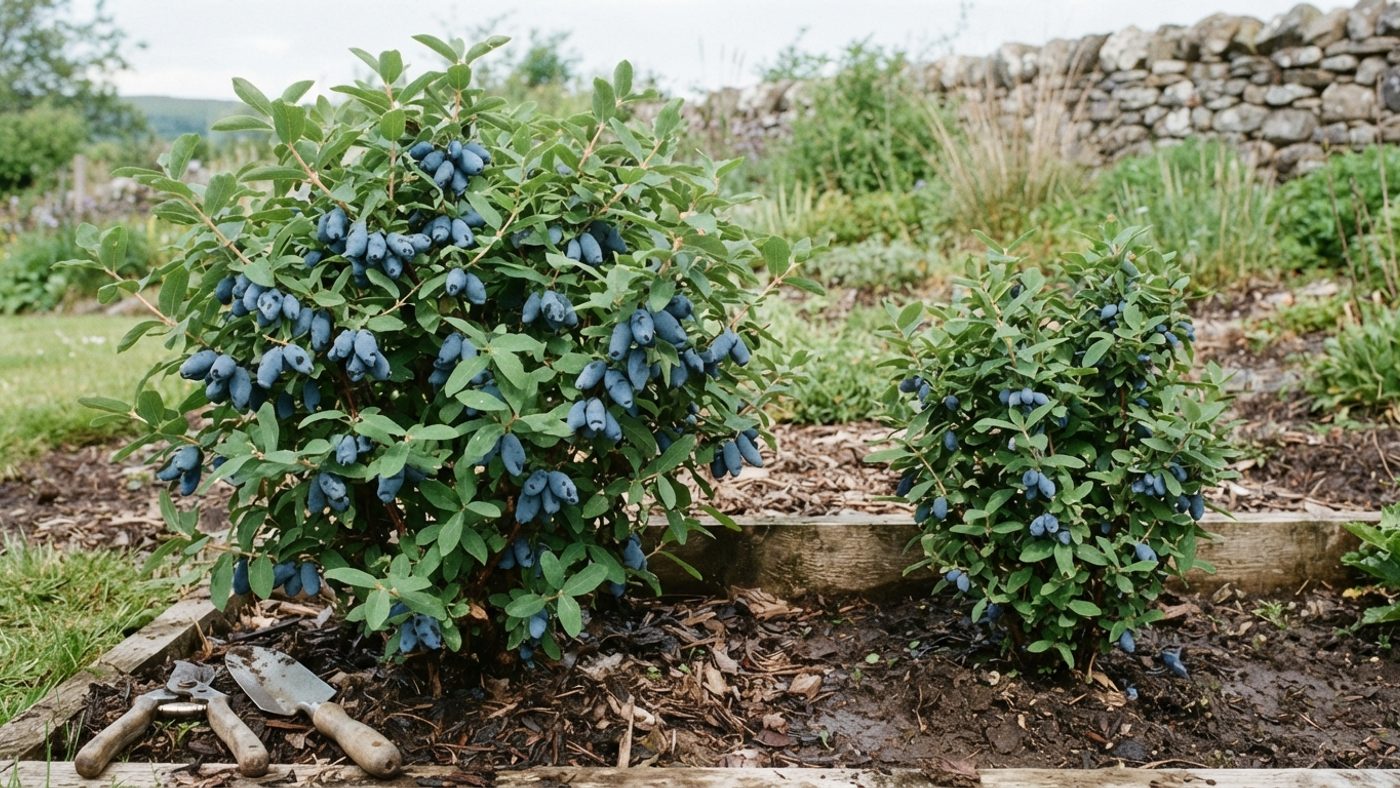
Head-to-head: the three named forms
Hardiness ratings run from H1 (needs heat indoors) to H7The RHS's H1a–H7 scale for how much cold a plant can survive outdoors, H1a being tender indoor-only and H7 hardy anywhere in the UK. Full definition → (survives the severest continental winters, below -20°C), a threshold worth noting, since it lines up almost exactly with the James Hutton Institute's own -20°C stem-hardiness figure for the crop (see The real cold risk, below). The Award of Garden Merit (AGMThe RHS's Award of Garden Merit: a UK-wide trials award for reliable performance, not a Scotland-specific recommendation. Full definition →) is a UK-wide mark, not a Scotland-specific recommendation.
| Zojka | Morena | Var. edulis | |
|---|---|---|---|
| Hardiness | H7 | H7 | H7 |
| Height x spread | 1–1.5m x 1–1.5m | 1–1.5m x 0.5–1m | Not individually stated |
| Fruit | Large (to 3cm), very sweet | Sweet | Sweet, burgundy-red flesh |
| Cropping | Very heavy | Not separately rated | Not separately rated |
| AGM | No | No | No |
Zojka and Morena are both documented on their own individual plant pages, giving real, checkable traits: yield, fruit size, and spread. Var. edulis is named only on the general grow-your-own page as one of the two best-eating botanical varieties, without an individual cultivar attached, a real second option where a named kamtschatica cultivar isn't available from a supplier, but with less to go on for a side-by-side comparison.
Fruit takes genuinely longer to arrive than on most soft fruit: a first small crop after about two years, building to a mature yield of around 6kg as the shrub reaches full size over 5–10 years. That slow build makes yield-per-plant matter more than usual, worth Zojka or Morena over var. edulis wherever a supplier stocks either of them.
Pollination: what's actually published, and what isn't
Honeyberry can't fertilise itself: a single plant, whatever the cultivar, will not set fruit on its own, so at least two genuinely different plants are needed, not just two of the same cultivar. The guidance is to plant two or more shrubs to improve pollination and yield, and to consider hand-pollinating with a soft paintbrush given how few insects are flying this early in the year, a real concern in Scotland specifically, where an early-winter-to-March flowering window falls even colder and quieter for insects than it would further south. What isn't published, on the grow-your-own page or on any individual cultivar page, is a formal chart naming which specific cultivars pollinate which, the kind of paired-variety table that exists for crops like apples or pears. Nurseries selling honeyberry sometimes recommend specific pairings of their own, but none of those claims trace back to RHS or a comparable institutional authority.
The practical answer, from what is confirmed: plant two genuinely different cultivars, Zojka and Morena both flower in the same early-to-late-winter window per their own plant pages, so pairing them is a safe bet on timing even without a named pairing chart. Bumblebees, active at cooler temperatures than most other pollinating insects, do most of the work once flowers open; hand-pollination is worth the five minutes it takes as a hedge against a cold snap keeping bees grounded during the flowering window.
The real cold risk: flowers, not stems
Every honeyberry source agrees the plant itself is exceptionally hardy, H7, the toughest rating, and Zojka and Morena's own individual plant pages both confirm it directly. Sources disagree on the exact figure: the general grow-your-own page states -40°C for the plant, while the James Hutton Institute, Scotland's own crop research institute, which runs an active honeyberry breeding programme, gives -20°C. Neither figure is the one that actually limits this crop in a Scottish garden, though: it's the flowers, which tolerate far less cold than the stems and open early enough in the year to meet a hard frost most winters.
| Figure | Source | |
|---|---|---|
| Stem hardiness | -40°C | RHS |
| Stem hardiness | -20°C | James Hutton Institute |
| Flower hardiness | -7°C | James Hutton Institute |
| Flowering window | Early winter to very early spring (early March) | RHS / Hutton |
March is early enough in the year that many parts of Scotland can still see frost then, how late exactly depends on where you garden, covered in full in the frost dates guide.
That's the same mechanism behind why some fruit crops are more frost-vulnerable in a mild winter than a cold one, the earlier a plant flowers, the more likely an open blossom meets a frost that would have done no damage to a dormant bud. It's a genuine parallel to blackcurrants, where late-flowering cultivars are specifically bred and chosen to dodge this exact risk. No honeyberry cultivar has a documented late-flowering trait, and Hutton's own breeding programme targets sweetness rather than flowering time, so a frost-dodging cultivar isn't on the horizon there either. The real defence available is site choice and short-notice protection rather than variety choice: a sheltered spot out of the first frost pocketA low-lying spot where cold air drains and pools on still nights, making it noticeably more frost-prone than the surrounding area. Full definition → and away from an east-facing aspect (fast morning sun on frosted blossom does more damage than the cold itself, the same reason it's standard advice for early-flowering fruit trees), plus fleece or a temporary cover ready for a forecast cold night while the shrub is in flower.
Scotland's earliest-fruiting outdoor crop
The upside of flowering this early is a genuinely useful one: Hutton describes honeyberry as the earliest-fruiting outdoor soft fruit crop grown in Scotland, ready end of June into early July, weeks ahead of raspberries or blackcurrants. That's real commercial context from an active Scottish breeding programme, the Scottish Honeyberry Growers Cooperative, working with Hutton, grows around 15 different varieties across roughly 72 acres, none named or matched to a domestic garden centre listing. It explains why this crop is getting attention in Scotland specifically, rather than settling the choice between Zojka and Morena.
Which one for your situation
| Your situation | Pick |
|---|---|
| Want the heaviest crop and largest berries, space isn't tight | Zojka |
| Small garden, want the same hardiness and flavour in less space | Morena |
| Pairing two plants for pollination | Zojka and Morena together, same flowering window, genuinely different cultivars |
| Kamtschatica cultivar not in stock locally | Var. edulis |
| Frost-prone site, hollow, or a garden that regularly loses blossom to a late cold snap | No honeyberry cultivar solves this on its own; prioritise a sheltered planting spot and be ready to fleeceA lightweight, breathable fabric laid or draped over plants to trap a little warmth and keep off frost, wind and some flying pests. Full definition → the shrub during its early flowering window |
Soil pH
Honeyberry tolerates acid, alkaline, or neutral soil, without a numeric pH range published for the species or any of its named forms. Aim for a well-drained, reasonably fertile soil rather than a specific target figure; established plants need no routine extra watering beyond a normal dry spell.
Common problems to watch for
Honeyberry's reputation as a low-trouble crop, "very hardy and do not generally suffer from any pest and disease," undersells what Zojka and Morena's own individual plant pages actually list. Honeysuckle aphids distort new growth (light shade can reduce the risk); powdery mildew and glasshouse whitefly can both turn up despite the shrub being grown outdoors; thrips cause fine silvery leaf mottling and fungal leaf spot causes small discoloured leaf patches, neither with a dedicated page on this site yet; and, rarely, silver leaf and honey fungus affect the wood and roots. None of this differs meaningfully between Zojka, Morena, and var. edulis, cultivar choice here is a yield-and-size decision, not a disease-resistance one. Birds don't appear on any of the RHS pages checked for this crop, unlike the standard warning on raspberries or currants, but a ripening crop is still worth keeping netting ready for as general soft-fruit practice.
Morena's compact spread, as little as 0.5m, makes it the obvious candidate for a large container on a patio. No specific pot-growing advice is published for honeyberry the way it is for many other fruit, so treat this as a size-based suggestion rather than a tested one.
Common questions
Where can I actually buy Zojka or Morena in Scotland?
Expect to order from a specialist fruit nursery rather than find either on a general garden centre shelf; as a crop only recently popularised in the UK, stock of named cultivars is thinner than for an established fruit like raspberries. Whichever supplier is used, buy two plants at once rather than one now and one later, since fruiting depends on having a genuinely different cultivar in place from the start.
Is there a recommended pollination pairing chart for honeyberry cultivars, the way there is for apples?
No source publishes one. Plant two genuinely different cultivars that flower in the same window, Zojka and Morena both flower early-to-late winter, rather than relying on a named pairing.
If the plant survives down to -20°C or colder, why does a frost still worry me?
Because the flowers don't share the stem's hardiness. Honeyberry flowers open from early winter into very early spring and tolerate only around -7°C, early enough in the year that a hard frost is still a real possibility in most of Scotland.
How do I know a honeyberry is actually ripe, not just blue?
Check the flesh, not the skin. Berries turn blue with a white bloom before they're properly ripe, and green flesh underneath is still very sour, cut one open and look for purple-red or burgundy-red colour before picking the rest.
Sources
8 sources, recorded with what each was used for
- Honeyberry: Grow Your Own: General cultivation, watering, pollination guidance, flowering time, -40°C plant hardiness figure, the two named "best eating" botanical varieties, general pest/disease framing
- Lonicera caerulea var. kamtschatica 'Zojka': Hardiness, height/spread, flowering time, fruit size and yield, individual pest/disease list
- Lonicera caerulea var. kamtschatica 'Morena': Hardiness, height/spread (compact form), fruit flavour, individual pest/disease list
- Lonicera caerulea var. edulis: Hardiness, flesh colour, named as one of the two best-eating botanical varieties
- Lonicera caerulea (species page): Hardiness, ultimate height/spread, 5-10 year maturity timeline, pollination confirmation
- Lonicera caerulea 'Kirke': Confirms no cultivar-specific hardiness, flowering, or size data is published for this name
- Lonicera caerulea var. altaica: Confirms no cultivar-specific data is published for this variety either
- Scotland's New Superfruit — the Honeyberry: Provenance/commercial context, not home-garden variety advice: -20°C plant hardiness and -7°C flower hardiness, early-March flowering, end-June/early-July fruiting as Scotland's earliest outdoor soft fruit crop