
Glasshouse Whitefly is a common pest that affects tomatoes, basil and cucumbers in Scotland. Here is what it looks like, how to spot the damage, and which controls have been tested.
What does it look like?
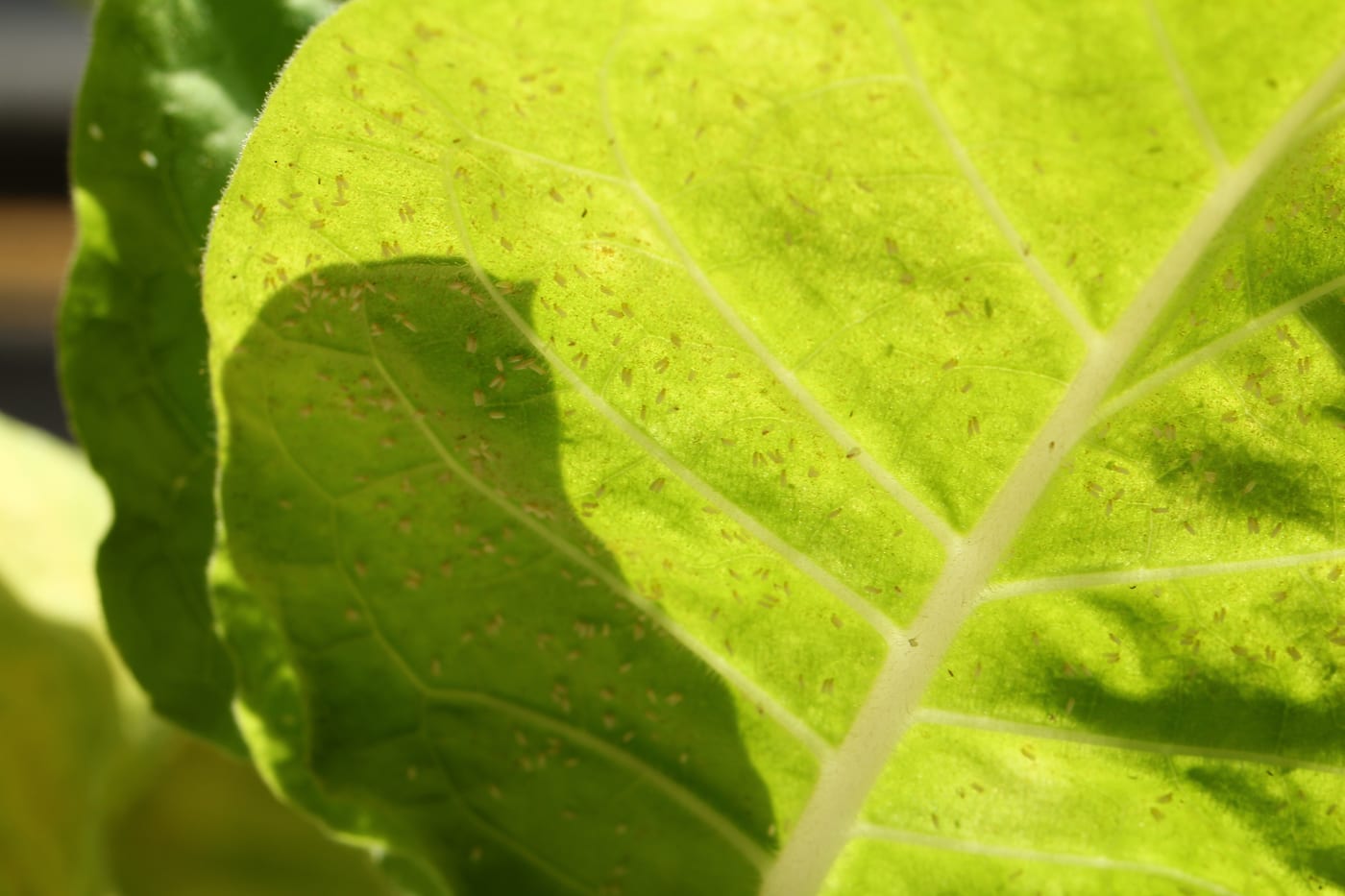
Adults: Tiny white-winged insects about 1.5mm long, which fly up when plants are disturbed.
Nymphs: Flat, oval, creamy white scale-like nymphs on leaf undersides.
The flying-up-when-disturbed behaviour is the practical field test; the nymphs on leaf undersides are what confirm it.
This pest is active year-round under cover: there is no seasonal break.
🌱 Plants at risk
Glasshouse Whitefly also affects these crops:
Symptoms
Weakens plants through sap feeding, and excretes honeydew which 'allows the growth of black sooty moulds', affecting both appearance and health.
Life cycle
Active all year round on houseplants and in greenhouses.
No overwinteringKeeping a plant alive and intact through the cold months, whether left outdoors, moved under cover, or stored dormant. Full definition → break under cover means no natural reset — populations build continuously, which is why RHS treats this differently from an outdoor pest.
Why this matters in Scotland
A pest Scotland gets because of how Scotland has to grow, not despite it.
Glasshouse whitefly 'thrives in warm conditions, which is why it is not usually a problem on outdoor plants'. In most of Britain that makes it a niche greenhouse issue. In Scotland it is not niche: tomatoes are grown under cover almost by necessity here, since outdoor cropping is marginal north of the Central Belt, and basil is a windowsill or polytunnel crop too. The cover that makes these crops possible to grow at all is exactly what makes whitefly a problem for them.
Controls: what actually works
Not every method here works equally well: some are backed by real evidence, others are simply traditional and untested.
Biological control: tiny parasitoid wasps that prey on whitefly nymphs
RHS: 'An established method of control for glasshouse whitefly is to introduce tiny parasitoid wasps, Encarsia formosa, which prey on the whitefly scale nymphs.' Available by mail order. Parasitised nymphs turn black, which gives a built-in way to monitor whether it is working.
The blackened-nymph feedback loop is unusual and worth surfacing: most controls give no way to tell if they worked. This one does.
Yellow sticky traps
RHS: 'Hang sticky yellow sheets above or among the plants to trap adult whitefly.' Colour is specific here: the point is yellow sheets, not plain sticky paper. These mainly help with monitoring and catching adults, not full control on their own.
Quarantine new plants before they go anywhere near existing ones
RHS: 'Watch for signs of whitefly on new purchases as the insect is often first brought into a glasshouse on new plants. If possible quarantine new plants in order to give eggs and nymphs a chance to develop and be recognised.' A new plant showing nothing on arrival can still be carrying eggs that haven't hatched yet.
Companion planting: French marigolds among tomatoes
This is the best-evidenced companion pairing we have found, and the only one backed by two independent authorities. RHS attributes it to limonene emission; Garden Organic attributes it to bright petals distracting whitefly. They agree it works and disagree on why.
Two independent authorities agreeing that it works, even while disagreeing on the mechanism, is a genuinely strong result for a companion-planting claim.
Pesticides
Pesticides are not recommended for glasshouse whitefly. Prevention, biological control and sticky traps come first.
This is an absence of a recommendation, not an explicit warning against pesticides, and the difference matters: prevention, biological control and sticky traps are what's put forward as the answer here, with nothing said against reaching for a spray as well.
Natural predators of glasshouse whitefly
These 2 creatures eat glasshouse whitefly, and each has its own page here on how to get more of them in your garden: what to plant, or what to order and when.
Frequently asked questions
What should I do first if I find glasshouse whitefly in my garden?
Start with biological control. After that, quarantine new plants before they go anywhere near existing ones. Work through the rest in order of how well-evidenced they are if the first two aren’t enough on their own.
Will glasshouse whitefly kill my plants?
They rarely kill established plants. The damage is usually cosmetic on outer leaves, and natural predators often bring numbers under control without you doing anything.
How much of this advice is actually proven?
3 of the 5 controls above are evidence-based, not just repeated folklore. Start with the evidence-based ones and treat anything lower down the list as worth trying, not worth relying on.
Sources
2 sources, recorded with what each was used for
- RHS1: no tolerance advice (unlike slugs/aphids/caterpillars), adult and nymph identification, sap feeding and honeydew/sooty mould, warmth requirement and outdoor rarity, year-round activity under cover, Encarsia formosa as an established control with mail-order availability and blackened-nymph monitoring, yellow sticky traps and their risk of catching beneficial insects too, quarantining new plants, absence of pesticide recommendation
- Garden Organic8: French marigolds among tomatoes deterring whitefly by visual distraction, as a second, independent authority alongside RHS's limonene-mechanism explanation for the same pairing