
Silver Leaf is a common disease that affects cherries, damsons and plums in Scotland. Here is what it looks like, the conditions it needs, and the controls that actually work.
What does it look like?
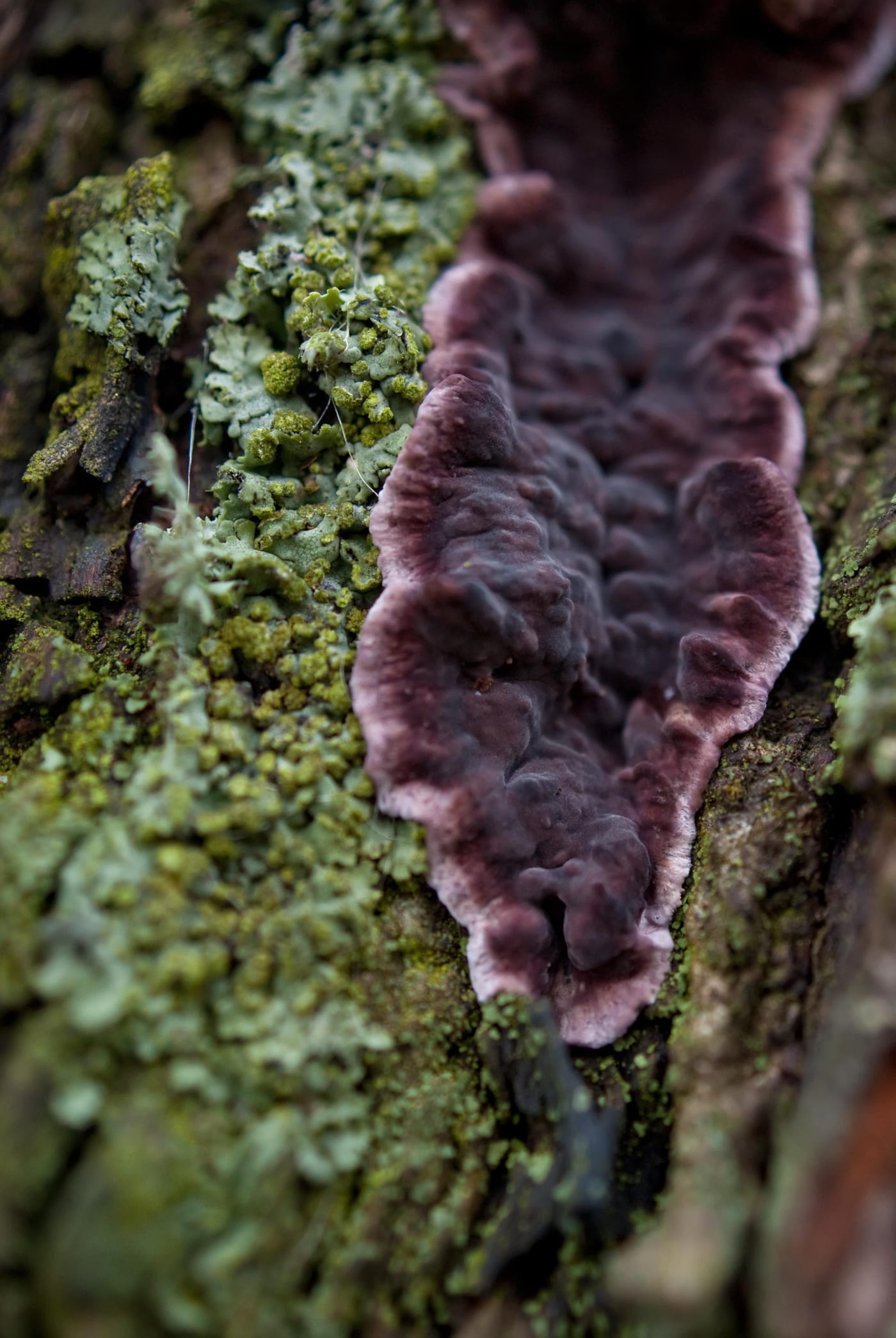
A silvery sheen develops on the leaves, most noticeable in plums, followed by the affected branch dying. Cut across a dying branch and there’s often an irregular dark stain through the centre. Bracket-shaped fungi appear later on dead wood: a whitish, woolly upper surface and a purple-brown lower surface with fine pores.
Cold, drought or other stress can cause near-identical leaf silvering with none of this actually being silver leaf disease, known as 'false silver leaf'. The tell is the wood: cut a branch open, and there’s no staining underneath, unlike the real thing.
What causes it
Damp autumn and winter weather is when the fungus releases most of its spores, and a fresh pruning wound is the main way in. A cut made at the wrong time of year, not the season by itself, is the real risk.
Is this disease active now?
The window to actually act on is September to May, and specifically the reverse of it: prune susceptible trees in summer instead, well outside that window, so cuts heal fast and meet the fewest spores possible.
Symptoms
The sequence is what matters: silvery leaves first, then the branch itself dies. On rhododendrons the disease shows differently, as long strips of dead bark spreading back from where the fungus got in, with no leaf silvering at all.
Life cycle
Airborne spores released from bracket-shaped fruiting bodies on dead wood land on fresh wounds, usually pruning cuts, and infect the healthy branch. The fungus grows down into the wood, killing it and leaving a dark stain. A toxin it produces travels up in the sap to the leaves, separating the leaf tissue and creating the silvery sheen; the fungus itself is never actually present in the leaves. The branch dies shortly after silvering appears, and new fruiting bodies eventually grow from the dead wood to start the cycle again.
Why this matters in Scotland
Scotland runs wetter than the UK average through autumn and winter, exactly the season this fungus favours for spreading. Summer pruning timing carries more weight here than it would in a drier region, not less.
Controls: what actually works
All the methods below are backed by real evidence, not just repeated folklore.
Prune susceptible trees in summer, never in autumn or winter
The single biggest lever here: fewer spores in the air, and a faster-healing wound while the tree is actively growing.
Cut out and remove affected branches as soon as silvering appears
Cut 10 to 15cm beyond the point where the internal staining stops, before the fungal fruiting bodies have a chance to form.
Dispose of the pruned material immediately: fruiting bodies will still form and release spores even on wood that’s already been cut and left lying around.
Disinfect cutting tools regularly
A simple hygiene step that stops one infected cut from becoming the next one, on this tree or the next.
Frequently asked questions
What should I do first if I find silver leaf in my garden?
Start with prune susceptible trees in summer, never in autumn or winter. After that, cut out and remove affected branches as soon as silvering appears. Work through the rest in order of how well-evidenced they are if the first two aren’t enough on their own.
Is there a spray that works?
No. There are no amateur chemical treatments available for silver leaf. The controls that work are cultural: the measures listed above.
When are silver leaf most active in Scotland?
Check the seasonal activity section above. Scottish timings can run a few weeks behind the UK-generic figures.
Sources
1 source, recorded with what each was used for
- RHS1: identification, false-silver-leaf disambiguation, symptoms, biology/mechanism, active timing, pruning-timing and hygiene controls