
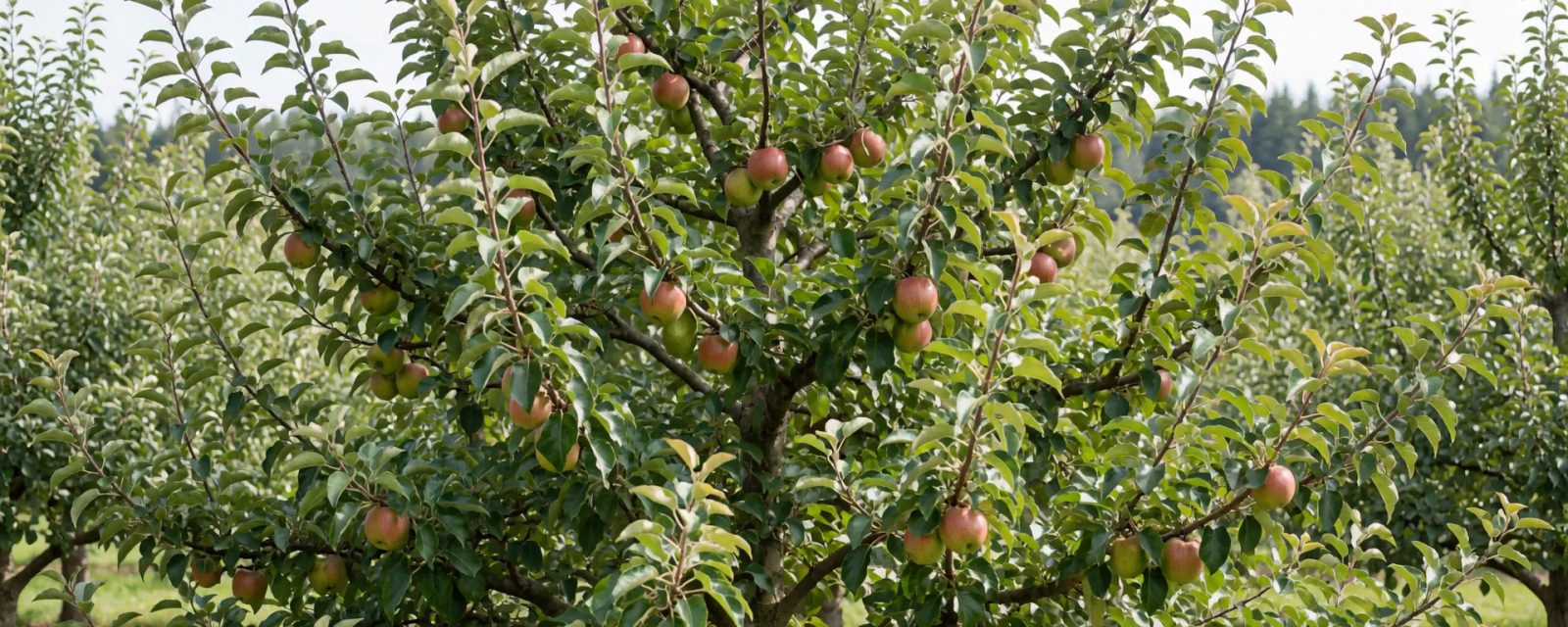
If you've walked out to the fruit trees and found the leaves don't look right, the mark itself usually tells you which of three things is going on, once you know what to look for. Dark scabby blotches, a white powdery film, and curled, twisted new growth are three different problems, they need three different responses, and they're specific to apples and pears, the same three symptoms don't show up the same way on plums or cherries, whose own leaf and disease profile is genuinely different.
Quick diagnosis
| What you see on the leaf | What it is | Apple, pear, or both | What to do first |
|---|---|---|---|
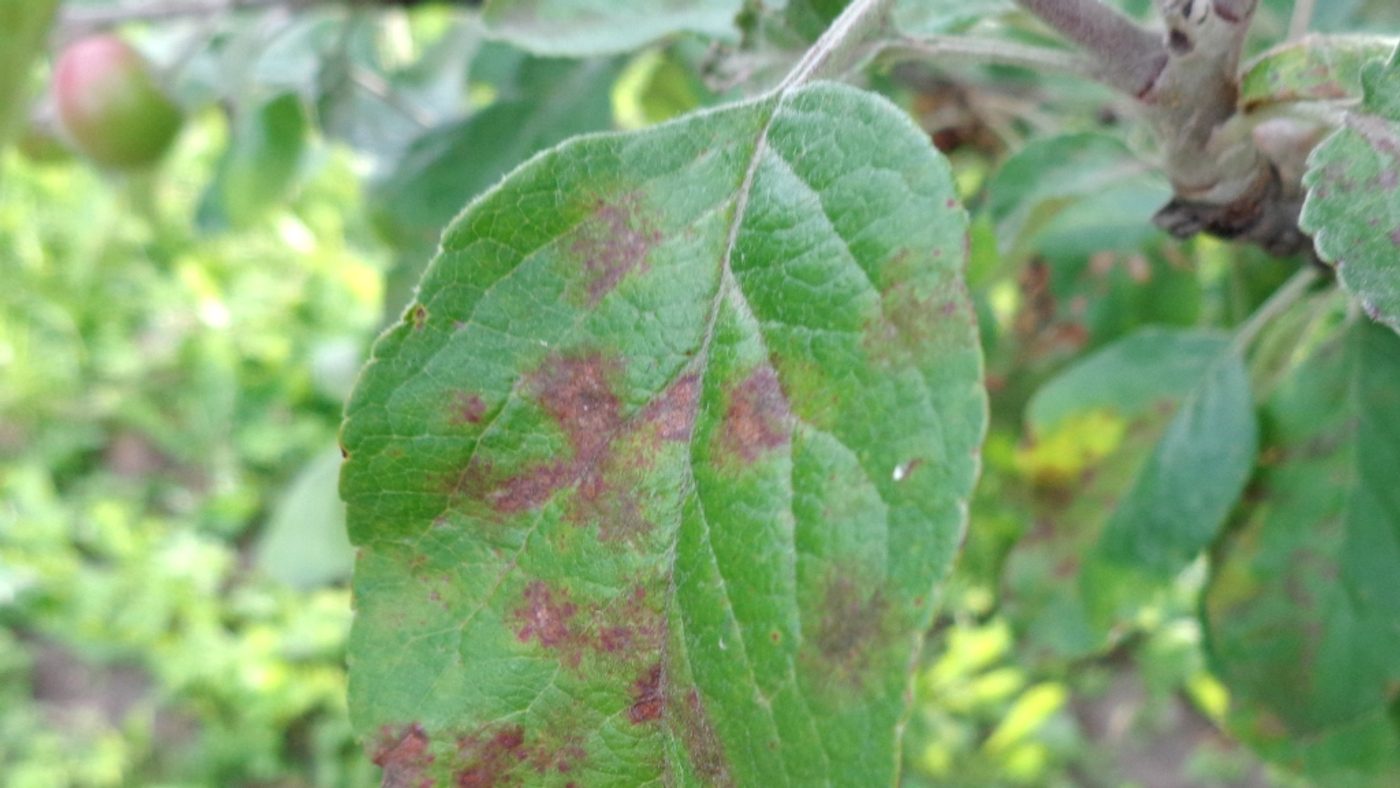
| Dark olive-green or brown scabby blotches, sometimes velvety at first | Apple and pear scab | Both | Rake up and dispose of fallen leaves in autumn |
| White, dusty, powder-like coating on leaves and shoot tips | Powdery mildew | Apple only | Water regularly in dry spells, don't let the tree get drought-stressed |
| Leaves at shoot tips curled, puckered or folded, often yellowish, with a sticky residue | Aphids (different species on each crop) | Both, different species | Check the underside of curled leaves for colonies; squash by hand or tolerate |
Dark, scabby blotches on leaves and fruit: apple and pear scab
Scab starts as olive-green spots on the leaf, velvety at first, that darken to brown or black as they spread. On fruit, the same fungus causes scabby blotches that can crack the skin as the fruit swells beneath them. Affected leaves often drop early. On young twigs it shows as blistering and cracking bark, and that matters beyond the twig itself: a scab wound is one of the ways apple canker gets in.
Apple scab and pear scab are two closely related fungi, not one, but the symptoms and the management are the same on both crops, so they're treated as a single disease here too. A light attack is mostly cosmetic, it blemishes the skin without much affecting eating quality, but cracked fruit is the real problem, since cracked skin lets rot in and the fruit won't keep in storage.
The fungus overwinters on fallen leaves and on infected twigs left on the tree. Airborne spores released from those leaves in spring start the first infections of the year; from there, a second type of spore spreads by wind and rain-splash and keeps reinfecting the tree from mid-spring right through to leaf fall in autumn. Raking up and disposing of fallen leaves each autumn, once they're down rather than while they're still dropping, and pruning out blistered twigs, cuts down how much fungus is left to restart the cycle next year, though it only goes so far on its own, since spores travel on the wind from a neighbouring garden's infected tree too.
A damp Scottish spring and summer is exactly the weather scab spreads by: wind and rain-splash carrying spores off wet leaves. A garden here doesn't get much of a break from this disease the way it might from something that prefers a hot, dry summer, which makes cultivarA plant variety that arose or was bred under cultivation and is kept true by deliberate propagation, rather than a naturally occurring wild species. Full definition → choice worth weighing more heavily on a wet site than a dry one.
Where you're planting new trees, several named varieties carry real scab resistance. Among apples: Discovery, Lord Derby, Winston and Topaz. Among pears: Beurré Hardy, Hessle, Jargonelle and Joséphine de Malines. No fungicide is currently produced for home gardeners to use on apple or pear trees whose fruit will be eaten, so on a wetter site, a resistant cultivar plus pruning and leaf hygiene are the real levers, not a spray.
White powdery film on leaves and shoots: powdery mildew (apples, not pears)
A white, dusty coating over leaves, stems and young shoots is powdery mildew, and between apples and pears it's genuinely an apple problem, not a pear one: apples are named directly among the commonly affected plants, but it isn't named anywhere in the sourced material as a pear problem. Pears belong to the same rose family as apples, but that doesn't automatically mean they share every apple disease, and mildew is a case where they genuinely don't, at least not as a documented risk.
Powdery mildew is unusual among fungal diseases in one respect worth knowing before you reach for the hose: it's a dry-conditions disease, not a wet one. Its spores carry an unusually high water content of their own, which is specifically what lets them infect in drier conditions without needing rain or damp leaves to get started the way most other fungal diseases do. High humidity without actual free water on the leaf still encourages more spores to form, but direct water contact on the leaf inhibits the fungus rather than helping it. That's the opposite of most advice gardeners are used to. Watering the tree regularly through dry spells, so it isn't drought-stressed, and mulchingA layer of material spread over the soil around plants to suppress weeds, retain moisture, and improve soil structure as it breaks down. Full definition → to hold soil moisture, are the real preventative steps; overhead watering at midday in dry weather can even reduce an existing infection rather than make it worse.
That dry-conditions preference is also the one place a Scottish garden gets a genuine break: an open, damp Scottish garden is a fairly hostile place for this fungus outdoors. The catch is anything grown under cover, a polytunnel or greenhouse keeps foliage dry while letting humidity build, which is exactly the combination that favours spore production. Where a polytunnel or greenhouse is being used to stretch a short growing season, that trade runs the other way for mildew: ventilation matters more for a mildew-susceptible plant under cover than it does for an apple tree standing outside in the open.
Fungicides aren't the answer against powdery mildew, they harm biodiversity and soil health, on top of there being no real gain over site conditions and hygiene anyway: full sun and good air circulation, avoiding dense planting against a wall, and removing infected fallen leaves and pruning out infected shoots in autumn.
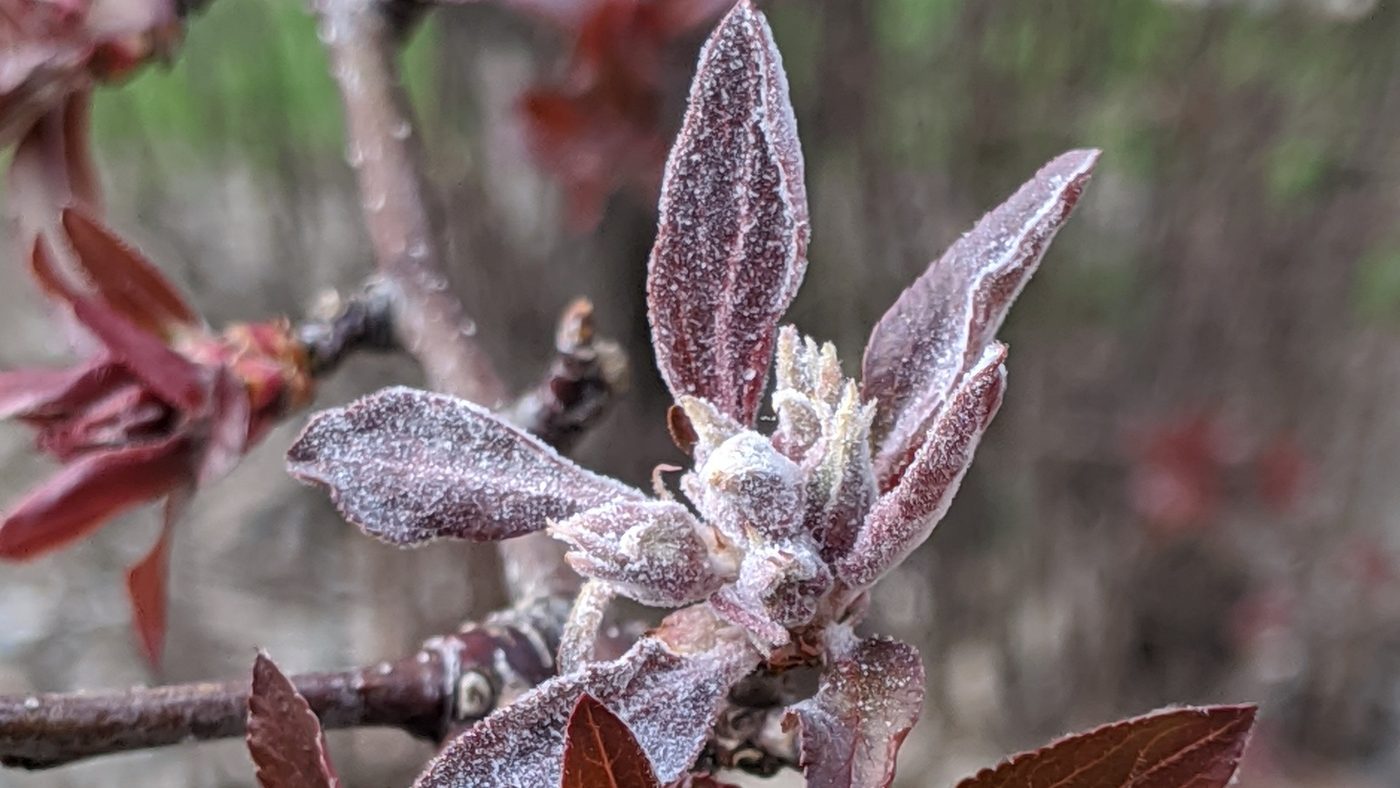
Photo: Adam Kranz, Wikimedia Commons, CC0 1.0
Distorted, curled new growth: aphids
Leaves at the shoot tips that curl, pucker or fold, often turning yellowish, with a sticky coating and sometimes a black sooty mould growing on that stickiness, points to aphids rather than a fungus. Apples and pears don't actually share the same aphid, though, and the mechanism behind the curling is worth knowing rather than lumping both under one "aphids distort new growth" line.
On apples, the main culprit is usually rosy apple aphid. Dense colonies of pinkish-grey aphids build up on the underside of leaves near the shoot tips from spring into early summer; as they feed, they inject a toxin in their saliva that makes the leaf fold and curl, sometimes tightly enough to look like a rolled cigar, while the leaf itself yellows. The same feeding damage reaches the fruit: apples affected earlier in the season come out small, misshapen, and pinched around the eye end (the small crownThe base of a perennial plant where roots and shoots meet, often sold and planted as a ready-made dormant plant rather than grown from seed. Full definition → of dried petals opposite the stalk, on the blossom end of the fruit). Woolly aphid is the other named apple aphid worth knowing on sight, since it looks completely different: white, waxy fluff on the bark and in the crooks of branches, easy to mistake for a fungus, with lumpy swellings underneath where it's been feeding. Those swellings can split in frost, and a split is another entry point for apple canker, just as scab's twig-cracking is.
Pears get a different aphid: pear-bedstraw aphid, the pear-specific equivalent of what rosy apple aphid does on apples. Dense colonies of small, pinkish-grey aphids build up on the underside of pear foliage from April into July; the affected shoot-tip leaves curl and turn yellowish, with honeydew and sooty mould following the same pattern as on apples. The one real difference: the fruit crop and the tree's future health are usually unaffected, so a curled pear leaf with pear-bedstraw aphid on it is more a cosmetic problem than a cropping one, unlike rosy apple aphid's effect on fruit. Fruit aphids more broadly, across apples, pears, plums, cherries, currants and several other fruit crops, cause the same basic pattern: stunted growth, leaf curling, distorted fruit, and honeydew that draws in sooty mould.
| Aphid | Tree | Where it colonises | Effect on fruit |
|---|---|---|---|
| Rosy apple aphid | Apple | Underside of shoot-tip leaves, spring to early summer | Fruit comes out small, misshapen and pinched near the eye end |
| Woolly aphid | Apple | Bark and branch crooks, as white waxy fluff over lumpy swellings | Doesn't feed on fruit directly; frost-split swellings can let apple canker in |
| Pear-bedstraw aphid | Pear | Underside of shoot-tip leaves, April to July | Usually doesn't affect the crop; mainly cosmetic |
Aphids are worth tolerating where possible rather than treating on sight: they're a food source for garden wildlife and part of a garden's biodiversity, they very rarely kill a plant outright, and predator populations, ladybirds, ground beetles, hoverflies, tiny parasitoid wasps (insects that lay their eggs inside aphids rather than sting the way a common wasp does) and earwigs among them, usually bring numbers down through spring and summer without anything else needed. Checking the underside of curled leaves for colonies, and squashing them by hand where a colony is concentrated, is the one direct action worth taking; pesticides aren't recommended, on the same biodiversity and soil-health grounds as the powdery mildew advice above.
What about apple canker?
If you're checking leaves specifically because a branch or the trunk looks wrong too, sunken, cracked patches of dead bark, that's apple canker, and it isn't a leaf disease: it's confined to bark and wood, on smaller branches and spurs as well as the trunk, with no leaf symptom of its own. It's still worth knowing the connection, since both scab's twig-cracking and woolly aphid's bark swellings are named entry wounds for canker to get started, so a tree showing scabby leaves or woolly aphid this year is worth a closer look at the bark next season too.
Bright orange spots on a pear leaf's upper surface, rather than dark blotches, point to a different diagnosis again: pear rust. Its life cycle runs through a nearby juniper as an alternate host, wind-blown spores moving each way between the two, so it's worth ruling out before assuming scab on a pear tree specifically, since scab's blotches are dark rather than orange.
Small raised blisters on a pear leaf, rather than a flat blotch, that change from pale green or pink to brown or black over the season, are pear blister mite instead: mainly cosmetic on an otherwise healthy tree, and a different shape of damage from any of the three main diagnoses above.
For the full growing picture on either crop, see the apple and pear growing guides, and the full aphids and powdery mildew pest pages for broader coverage beyond apples and pears specifically.
Common questions
Do plums and cherries get scab or powdery mildew too?
No: neither disease shows up on plums or cherries. Their leaf and disease profile runs on a different set of problems instead, silver leaf, bacterial canker, brown rot and blossom wilt, none of which look like scab or mildew. A scabby or powdery leaf on a plum or cherry tree is worth checking against that different set of causes rather than assuming it's the same disease apples and pears get.
Does powdery mildew ever affect pears?
Not as far as the sourced material documents it: apples are named directly as commonly affected, pears aren't mentioned anywhere as at risk. Treat a white powdery coating on a pear tree as worth a second look rather than an automatic mildew diagnosis; scab and pear rust are the more likely candidates on that crop.
My apple leaves are curled but I can't see any aphids. What else could it be?
Check the underside of the curl first; rosy apple aphid colonies sit there and can be easy to miss from above, especially once the leaf has folded tightly. If the leaf is genuinely aphid-free, dark scabby patches point to scab instead, and a powdery white coating points to mildew; between the three, curling without any visible colour change or coating is the strongest sign it's still aphids, just from a colony that's already moved on or been eaten by predators.
Is it worth spraying for any of these?
No: none of the three has a fungicide or pesticide worth using in a garden growing fruit to eat. If you only do one thing this autumn, make it the leaf hygiene: raking up and disposing of fallen leaves works against scab directly and is also the standard control for powdery mildew, so one autumn clear-up does double duty against two of the three problems here. Aphids are the exception, since they overwinterKeeping a plant alive and intact through the cold months, whether left outdoors, moved under cover, or stored dormant. Full definition → on the tree itself rather than in leaf litter; tolerating them into next spring, so predator numbers have time to build, is the better response there instead.
Sources
10 sources, recorded with what each was used for
- RHS: Apple and pear scab: Identification (leaf, fruit, twig symptoms), disease mechanism and spread conditions, active season, resistant cultivars, fungicide stance
- RHS: Powdery mildews: Identification, host list (confirms apples named, pears not named), the dry-conditions mechanism, watering/mulching and airflow controls
- RHS: Fruit aphids: Which fruit crops are covered, general symptom pattern, the named apple-species-vs-pear-bedstraw-aphid split
- RHS: Rosy apple aphid: The specific apple leaf-curling mechanism and fruit distortion detail
- RHS: Woolly aphid: Bark-swelling identification, leaf curling, the canker entry-wound link
- RHS: Pear-bedstraw aphid: Pear-specific leaf-curling mechanism, timing, the "fruit and tree health usually unaffected" finding
- RHS: Aphids: General RHS stance (tolerate, encourage predators, no pesticides), named predator species
- RHS: Apple canker: Confirming canker is bark/wood-only with no leaf presentation, and the scab/woolly-aphid entry-wound relationship
- RHS: Pear rust: Orange-spot identification and the juniper alternate-host life cycle
- RHS: Pear blister mite: Blister-shape identification and colour progression, as a look-alike to rule out