
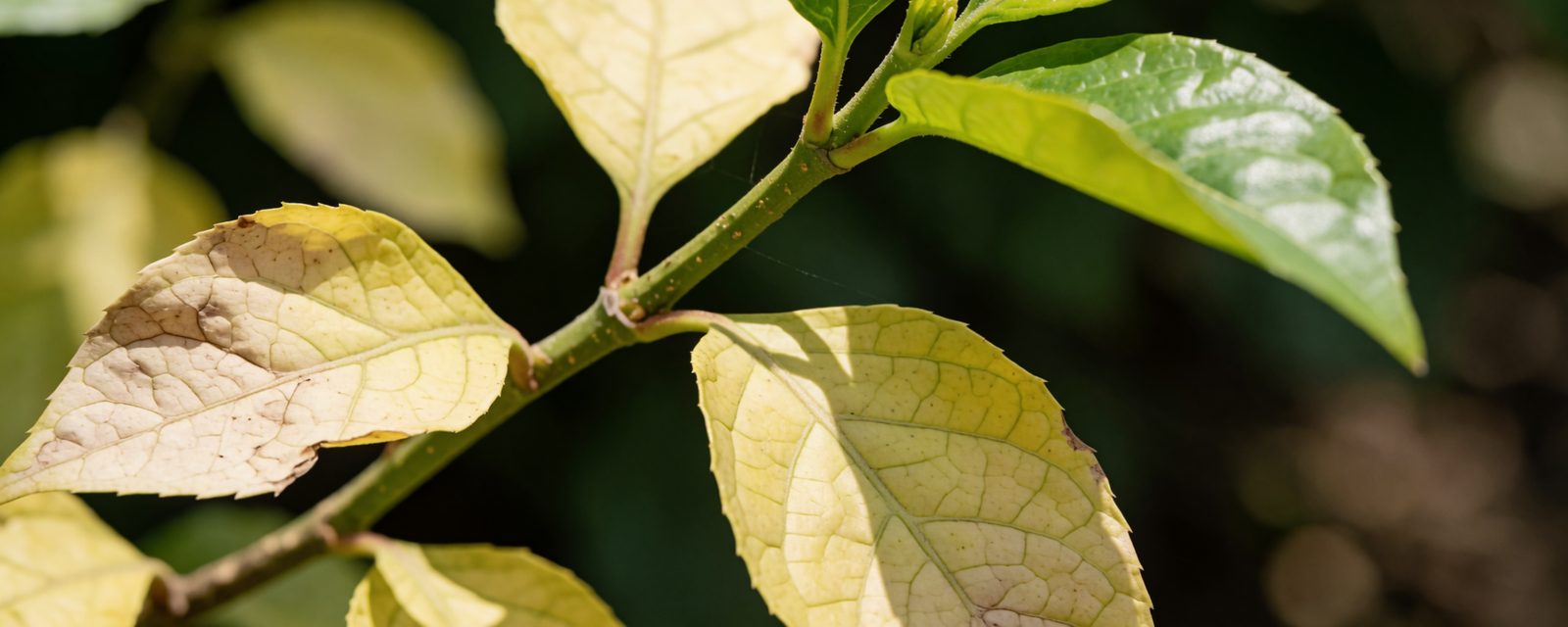
If your plant's older, lower leaves are pale or yellowing while the newest growth at the tip still looks fine, that's already a clue, it points toward a handful of specific causes and rules out several others. If it's the opposite, and the trouble is showing up in the newest leaves while the old ones stay green, that's a different, shorter list of suspects. Before reaching for any fertiliser, the single most useful thing to work out is which leaves are affected first. That one detail does more diagnostic work than the colour, shape, or pattern of the damage itself.
Quick answer
Nutrients that a plant can relocate internally (nitrogen, phosphorus, potassium, magnesium) show a shortage on the older leaves first, since the plant strips them from old growth to protect new growth. Nutrients it can't relocate (iron, boron, calcium) only show up in whatever's growing right now, so the newest leaves are hit first. Match the pattern below, then check old-versus-new before treating anything.
This guide covers the ten nutrient deficiencies that most often show up as leaf symptoms in the garden, plus five non-nutrient stresses that get mistaken for them, with two tables to check against a real plant in front of you, followed by detail on the pairs that are genuinely easy to confuse.
How to use this page
One general caveat is worth applying before diagnosing any deficiency at all: growing conditions including drought, waterlogging, light deprivation or poor establishment can resemble deficiencies, so if a plant fails to thrive despite good soil preparation, watering and mulchingA layer of material spread over the soil around plants to suppress weeds, retain moisture, and improve soil structure as it breaks down. Full definition →, a nutrient deficiency becomes the more likely explanation. A cheap home soil pH test kit is worth using before treating any of the below, since several of these deficiencies (iron and boron especially) are as often a pH lockout as a genuine absence of the nutrient in the soil, worth taking seriously here specifically, since a meaningful share of Scottish garden soil sits on the acidic side of the recommended range (see "The Scotland soil question" below).
One more thing worth knowing before you treat anything: a feed doesn't repair the leaf tissue that's already yellowed, browned or distorted, it only corrects what grows next. Don't judge whether a fix has worked by watching the damaged leaves recover, since they won't; watch the newest growth coming through over the following weeks instead, since that's where the improvement will actually show.
Nutrient deficiency table
| Symptom | Which leaves first | Nutrient | What to do |
|---|---|---|---|
| Pale yellow, spindly, stunted growth, sometimes with pink tints | Older leaves, spreading to younger foliage as it worsens | Nitrogen (N) | General-purpose liquid feed or a nitrogen-rich fertiliser such as poultry manure pellets; mulch with organic matter for the longer term |
| Stunted growth with purple discolouration, eventually turning dull yellow | Older leaves (most visible in seedlings, rarely seen once plants are mature) | Phosphorus (P) | General-purpose liquid fertiliser in containers; improve drainage in open ground and hold off planting tender crops until soil has warmed |
| Yellow or purple-red tints with browning starting at the leaf edges | Mature/older leaves | Potassium (K) | Potassium-rich feed such as comfrey pellets or a seaweed-based fertiliser |
| Yellowing between the leaf veins, sometimes reddish-brown; leaves eventually brown, develop dead patches and drop early | Older leaves | Magnesium (Mg) | Magnesium sulphate (Epsom salts or Kieserite) worked into soil at ~30g/m², or a foliar spray at 20g Epsom salts per litre |
| Rarely a distinct leaf symptom; shows far more reliably as a fruit or root-vegetable quality problem | New growth, since calcium can't be relocated from older tissue | Calcium (Ca) | Keep soil evenly moist, avoid overfeeding potassium, improve ventilation under glass |
| Thinly documented as a garden symptom; where described, general pale yellowing similar to nitrogen deficiency | Not well established | Sulfur (S) | Improve soil organic matter and overall fertility rather than chasing a specific sulfur product |
| Yellowing between leaf veins, sometimes with dead spots between veins or at leaf tips | Newest/youngest leaves | Iron (Fe) | Ericaceous compost and rainwater (not tap) for lime-hating plants in containers; chelated iron feed |
| Stunted growth with browning; tip dieback on lettuce, brown cracks in celery stalks | Newer growth | Boron (B) | Test soil pH; if very acidic, liming can help, otherwise treat with fritted trace elements before sowing |
| Yellow or purplish leaves; new growth stunted, delayed, small or narrow | New growth | Zinc (Zn) | A chelated micronutrient feed formulated for zinc |
| Yellowing between leaf veins, sometimes with leaf edge browning | Older/more mature leaves | Manganese (Mn) | Chelated manganese feed; ericaceous compost for lime-hating plants in containers |
One nutrient outside this guide's ten is worth knowing by name if you grow brassicasThe cabbage family: cabbage, kale, broccoli, cauliflower, Brussels sprouts, kohlrabi, swede, turnip and more, sharing the same pests, diseases and rotation rules. Full definition →: molybdenum. Like boron, it locks out in acid soil, and the result has its own name, "whiptail", narrow, whip-like, distorted young leaves. The fix is the same as for boron: raise soil pH rather than search for a molybdenum-specific product.
The magnesium/iron mechanism, and why it matters more than the colour
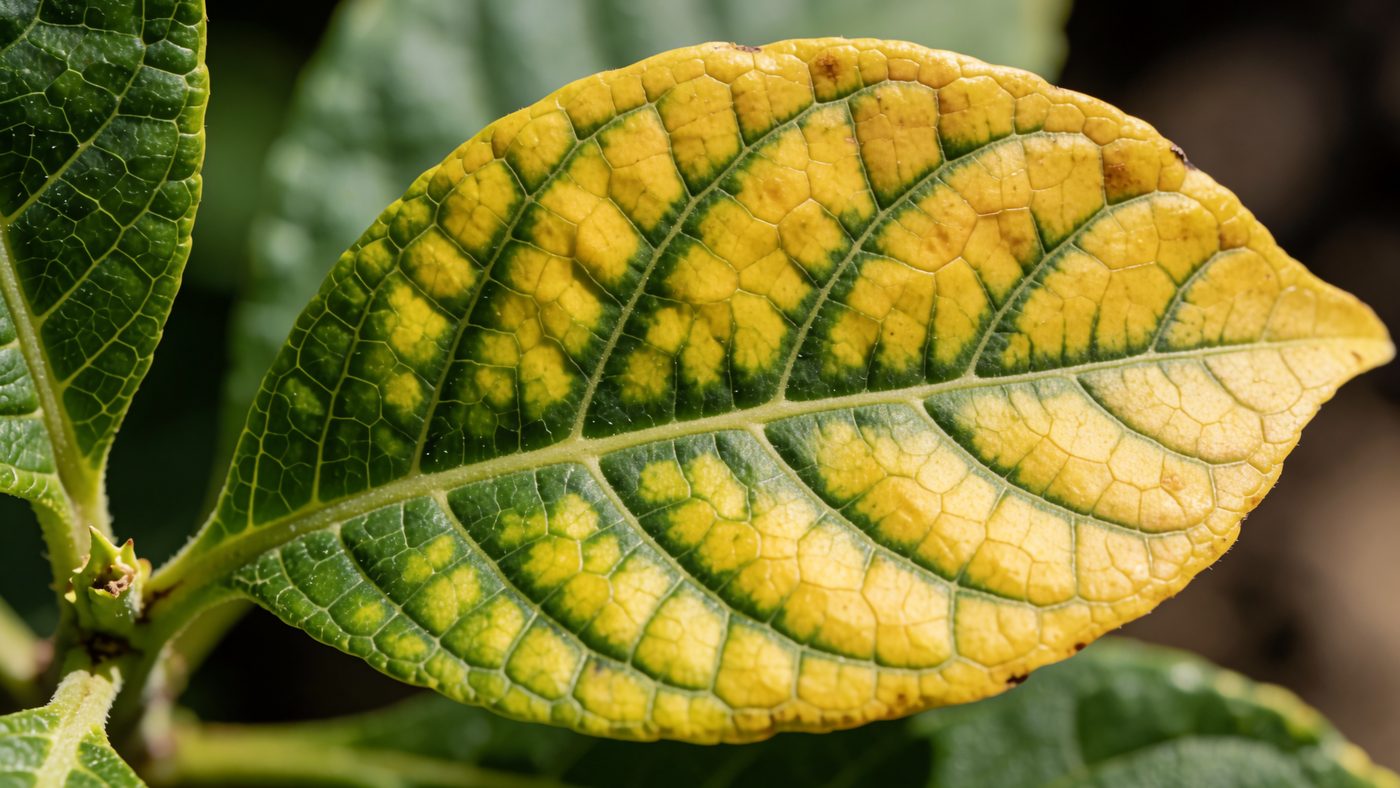
Magnesium can be relocated inside the plant, so when it's short, the plant pulls it from older leaves to protect new growth; the damage shows up as older leaves turning brown with dead patches and dropping early. Iron can't be relocated once it's built into leaf tissue, so a shortage only shows up in whatever's growing now, the youngest leaves come in yellow while the oldest leaves stay green. Both deficiencies produce the same headline symptom, interveinal yellowing with the veins themselves staying green, which is exactly why they get confused, and feeding Epsom salts to a plant with an iron problem (or vice versa) won't help, because the two are opposite failures of a similar-looking symptom.
Iron shortage is also frequently a lime-induced lockout rather than a true absence of iron in the soil, it shows up on lime-hating (ericaceous) plants such as rhododendrons and camellias grown in alkaline soil or tap-watered containers, where the iron is present but chemically unavailable to the plant. That's worth knowing anywhere rhododendrons and camellias are grown on naturally acidic ground, since it's the acid soil that suits them in the first place; the same plants struggle the moment they're limed, potted in ordinary compost, or watered from a hard-water tap. Manganese deficiency looks almost identical to iron in colour and pattern but is described as showing on more mature leaves rather than the newest ones, so the two micronutrients sit on opposite sides of the old/new divide despite looking alike.
Other pairs worth flagging
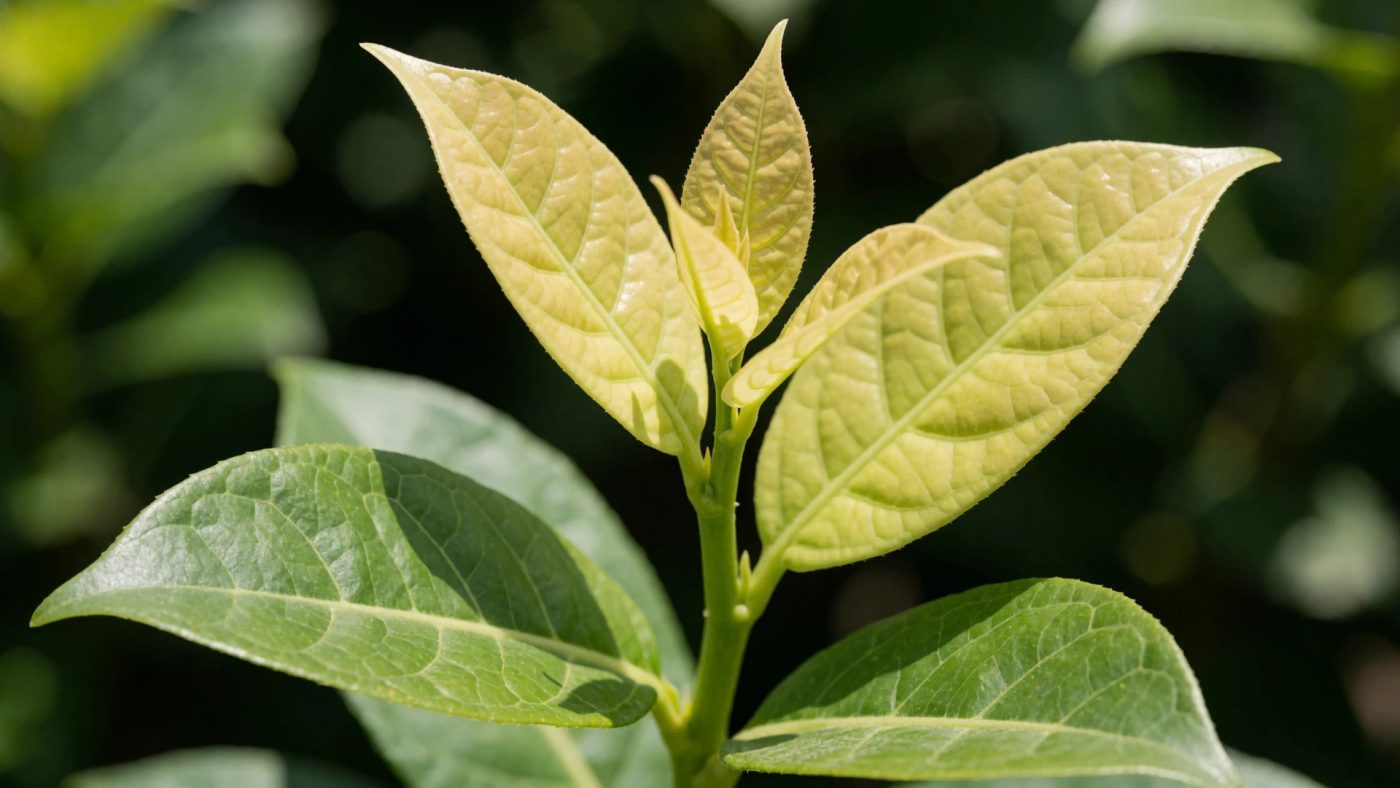
Nitrogen and potassium deficiency both start on older leaves and both cause yellowing, but potassium adds browning that starts specifically at the leaf margins, while nitrogen's yellowing is more general across the whole leaf and comes with distinctly spindly, stunted growth. Phosphorus deficiency's purple discolouration is the most distinctive symptom in the group, but it's mostly seen in young seedlings rather than mature plants, so a purple-tinged adult plant is more likely something else. Sulfur deficiency's resemblance to nitrogen deficiency is not well established; treat a plant that looks nitrogen-deficient as a nitrogen problem first, and sulfur as the less likely explanation.
Calcium deserves a specific note, since its most familiar name to most gardeners is a fruit problem, not a leaf one. The table above covers distorted new growth and tip dieback, the general leaf/growth-stage symptom, a different mechanism from blossom end rot specifically, where calcium usually is present in the soil but fails to reach the fruit because of an inconsistent water supply, not a shortage in the ground.
The Scotland soil question
Scotland's soils are, on the whole, more acidic and more leached than most of the rest of the UK. A large share of the country's land sits on podzols, a soil type that forms specifically where a cool, wet climate washes minerals and nutrients down out of the topsoil and over acid rock, leaving the surface layer naturally acidic and nutrient-poor, the Scottish Soil Framework describes podzols this way, and they cover close to a quarter of Scotland's land area. Acidic, leached, free-drainingSoil that lets water pass through quickly rather than pooling, so roots aren't sitting in wet ground after rain. Full definition → soil is exactly the profile associated with magnesium and boron leaching risk in general soil-science terms, which is a reasonable starting expectation for parts of Scotland.
| Finding | Figure | What it means |
|---|---|---|
| Soil acidity on Scottish farmland | Nearly half of samples tested below the pH 5.8–6.2 range recommended for most crops | The acidity itself is real and widespread, not a one-off |
| Magnesium status on the same soil | 99% of samples still "Moderate Status or greater" | Acidity isn't translating into widespread magnesium shortage on Scottish farmland |
| Boron status on Scottish soil | No comparable Scottish survey data found | A real reason to keep an eye on boron on light, acidic ground, but not a confirmed Scottish finding either way |
The acidity and magnesium figures come from SRUC's farm soil survey; podzol coverage from the Scottish Soil Framework.
Containers and raised beds change this picture regardless of native soil type. Compost in a pot drains and gets watered far more often than open ground, so nutrients leach out the bottom faster than the same nutrients would in a border, the reason a liquid feed suits containers better than a granular one, covered in the fertiliser types guide. A gardener on a naturally rich Lothian soil growing everything in raised beds or pots faces more of the leaching risk described above than the soil type alone would suggest.
Environmental leaf stress table
These five aren't nutrient problems at all, but they produce leaf damage that gets mistaken for one, especially yellowing, browning and stunted growth. All five below are about established, outdoor garden plants, a seedling or young transplant showing similar symptoms shortly after planting out is more likely dealing with transplant shock, which is covered separately in the hardening off seedlings guide.
| Symptom | Cause | Fix |
|---|---|---|
| Yellowing/decay between veins, soft brown patches, dark areas along the midrib; roots blue-black, may smell sour; wilting despite wet soil | Overwatering / waterlogging | Improve drainage, let soil dry between waterings, remove badly damaged growth, foliar feedA liquid fertiliser applied directly onto a plant's leaves rather than the soil, absorbed faster than a root feed. Full definition → to help recovery |
| Scorched or crisp brown patches, worst after foliar feeding in strong sun | Nutrient burn (over-fertilising, or feeding in bright sun) | Apply fertiliser at the labelled rate, water it in, avoid foliar feeding in direct sun |
| Brown, desiccated leaf edges, worst on the windward or most exposed side | Wind scorch | Temporary windbreak, mulch to reduce moisture loss, fleeceA lightweight, breathable fabric laid or draped over plants to trap a little warmth and keep off frost, wind and some flying pests. Full definition → small or tender plants |
| Leaves losing water faster than it's replaced; brown patches after a hot spell | Light/sun scorch | Choose plants suited to the site's light levels; keep up watering, feeding and mulching |
| Pale brown scorched patches between veins on tender young growth; blackened, water-soaked leaves on tender perennials | Frost damage | Wait until frost risk has passed before pruning out damaged growth |
Wind scorch is worth taking more seriously on an exposed coastal or upland Scottish plot than the table above might suggest, coastal gales carry salt as well as speed, which adds its own drying and leaf-damaging effect on top of the wind itself, and a windbreak or fleece earns its keep faster on ground like that than in a sheltered urban garden.
A note on telling these apart from deficiencies
Wind scorch and light scorch both produce brown, crisped leaf margins that can look like potassium deficiency's edge-browning, the giveaway is pattern rather than colour: scorch is worst on the exposed or sun-facing side of the plant and appears suddenly after a spell of specific weather, while a nutrient deficiency develops more gradually and evenly across the plant regardless of which way it faces. Overwatering's interveinal yellowing can resemble magnesium or iron deficiency at a glance, but waterlogging comes with wet, smelly, discoloured roots and soil that's visibly saturated, check the roots and the soil before reaching for Epsom salts. Once a genuine nutrient shortage has been identified rather than an environmental stress, the fertiliser types guide covers what the different feed types actually contain and which one addresses which shortage.
Common questions
My tomato's older leaves are yellowing between the veins with a slightly reddish tint, is that magnesium?
That pattern (interveinal yellowing with reddish-brown tints, on older leaves) matches magnesium deficiency. Epsom salts, either watered in or used as a foliar spray, is the standard fix.
Why are my newest leaves the yellow ones, while the old leaves look fine?
That points away from magnesium and toward iron, boron or zinc, all of which show up in new growth because the plant can't relocate them from older tissue once they're already in place. Iron deficiency in particular is common on lime-hating plants like rhododendrons growing in soil or being watered with water that's too alkaline for them.
Is blossom end rot on my tomatoes the same as calcium deficiency in the soil?
Not usually. It's typically caused by an inconsistent water supply interrupting how calcium reaches the fruit specifically, rather than a genuine shortage of calcium in the soil.
Could Scotland's soil be why my plants seem short of magnesium or boron?
Scotland's soils genuinely are more acidic and more leached than much of the rest of the UK, and that's the right general direction to suspect. A Scottish farm soil survey found magnesium levels generally adequate despite the acidity, and no Scotland-specific data on boron leaching was found, so treat it as a plausible risk on light, free-draining acidic ground, or in a pot or raised bed, rather than a confirmed local problem.
My plant's leaves are yellow and the soil is constantly wet, is that a nitrogen deficiency?
Check the roots first. Waterlogged roots turning blue-black or smelling sour points to overwatering rather than a nutrient shortage, and feeding a waterlogged plant more won't fix it, improving drainage will.
Sources
9 sources, recorded with what each was used for
- RHS: Nutrient deficiencies: Nitrogen, phosphorus, potassium, magnesium, calcium, iron, manganese and boron symptoms and remedies, molybdenum/whiptail, and the general deficiency-vs-growing-conditions caveat. No dedicated sulfur section; doesn't cover zinc
- RHS: Wind scorch: Cause, symptoms and remedy for wind scorch
- RHS: Weather damage: Sun/light scorch and general wind-damage symptoms
- RHS: Frost damage: Frost symptom descriptions and recovery advice
- RHS: Waterlogging and flooding: Overwatering/waterlogging leaf and root symptoms and remedy
- RHS: Fertilisers (garden jobs): General caution on overuse causing plant damage
- UC IPM: Nutrient Deficiencies (Vegetables): Nitrogen, phosphorus, potassium and iron leaf-onset patterns, and zinc symptoms — used for plant-physiology facts only, not UK- or Scotland-specific claims
- SRUC: Acidic soils could be affecting production on many Scottish farms: Scottish farm soil pH survey data and magnesium status findings
- gov.scot: The Scottish Soil Framework, Chapter 3: Podzol coverage, leaching, and acidity across Scottish soils generally