
Pear Blister Mite is a minor pest that affects pears in Scotland. Here is what it looks like, how to spot the damage, and which controls have been tested.
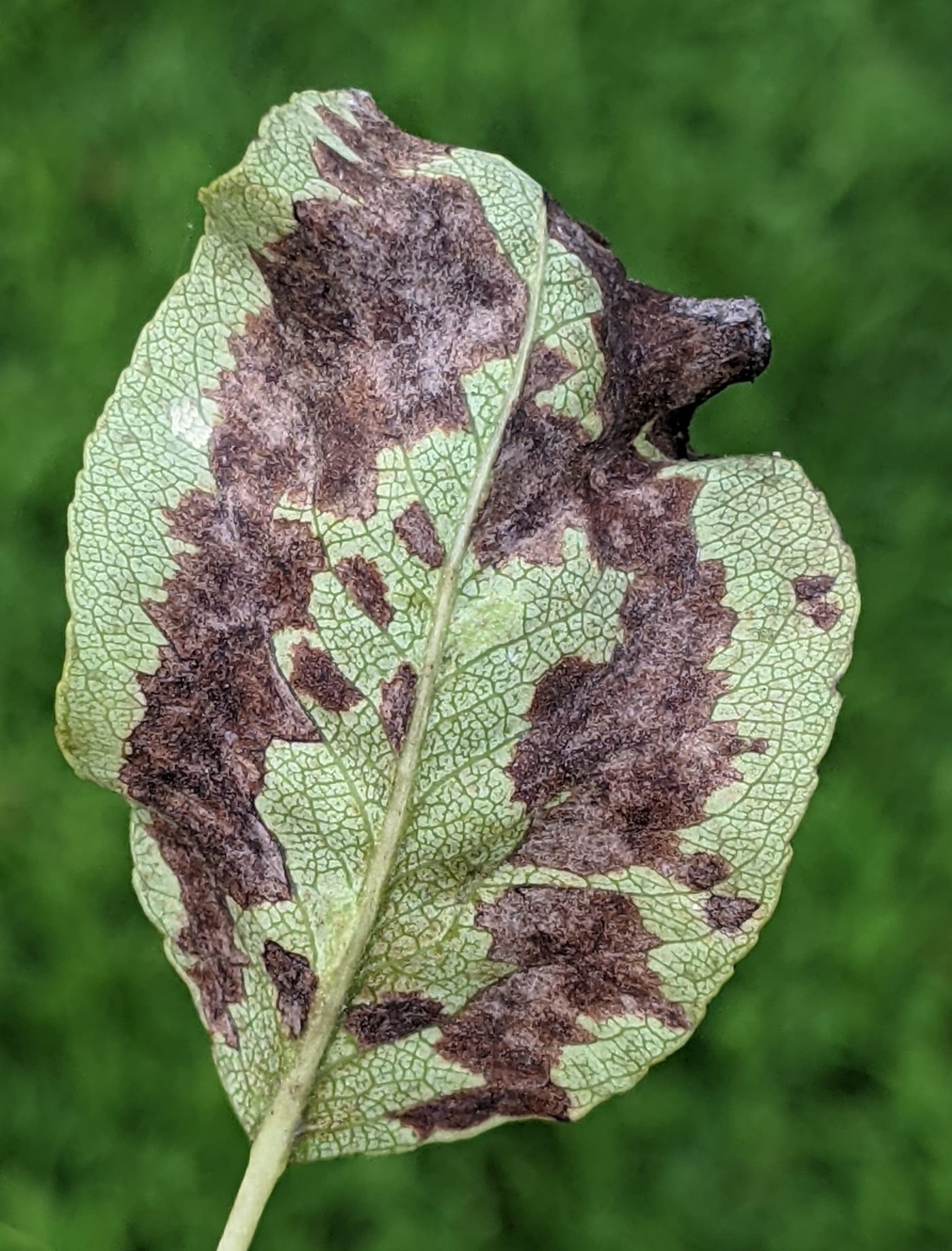
What does it look like?
In spring, many slightly raised pink or yellowish-green blotches, up to 4mm across, appear on developing leaves. These blisters darken to blackish-brown over summer, and a heavily affected leaf can be covered edge to edge. Occasionally fruit develops irregular russeted patches where mites fed on the bud before the blossom opened. A separate species, pear rust mite (Epitrimerus pyri), causes a different symptom on pear, bronzed foliage and russeted fruit, rather than these leaf blisters; the two are easy to conflate by name but look distinct once you know what to check.
Is this pest active now?
Mites emerge and begin feeding as buds swell in early spring, with blisters visible on new foliage from spring onward and darkening through summer.
Symptoms
Fruit is not usually affected: the mites feed and breed inside the leaf blisters rather than on the fruit itself, and any russeting comes only from earlier bud-stage feeding before blossom opens. A tree can carry a heavy blister infestation for years without any measurable drop in fruit yield.
Life cycle
The mites overwinter as mature females underneath the outer bud scales. As buds swell in spring, they emerge and move into the developing foliage, where they feed and breed inside the leaf tissue through summer, secreting chemicals that convert normal leaf cells into the nutrient-rich gall tissue that forms the blister. Before leaf fall, they leave the blisters to find fresh overwinteringKeeping a plant alive and intact through the cold months, whether left outdoors, moved under cover, or stored dormant. Full definition → sites under bud scales for the following year. Several generations can develop in a single season, and mites can spread between trees on the wind or carried by birds and insects.
Controls: what actually works
All the methods below are backed by real evidence, not just repeated folklore.
Leave the tree alone; no control is needed
RHS's direct position for a typical garden tree: this doesn't need treating at all.
Avoid stripping off heavily affected leaves
Removing a lot of foliage to deal with the blisters can cost the tree more in lost photosynthesis than the mite itself ever would. On a light infestation, picking off the odd affected leaf or shoot is fine.
Frequently asked questions
What should I do first if I find pear blister mite in my garden?
Start with leave the tree alone; no control is needed. After that, avoid stripping off heavily affected leaves.
Will pear blister mite kill my plants?
They rarely kill established plants. The damage is usually cosmetic on outer leaves, and natural predators often bring numbers under control without you doing anything.
When are pear blister mite most active in Scotland?
Check the seasonal activity section above. Scottish timings can run a few weeks behind the UK-generic figures.
Should I just leave pear blister mite alone?
In most gardens, yes. pear blister mite are food for birds, wasps and predatory insects, and a healthy garden carries some without trouble. Tolerance is also RHS's official position now, for that same reason.
Sources
2 sources, recorded with what each was used for
- RHS1: causal organism, affected crop, identification, symptoms, life cycle, and the leave-alone/avoid-stripping-leaves stance
- Pacific Northwest Extension18: independent corroboration of the causal species, distinguishing it from the separate pear rust mite (Epitrimerus pyri), additional life-cycle and dispersal detail, and confirmation that fruit damage comes from bud-stage feeding rather than the leaf blisters themselves