
Green Shieldbugs is a minor pest that affects runner beans in Scotland. Here is what it looks like, how to spot the damage, and which controls have been tested.
What does it look like?
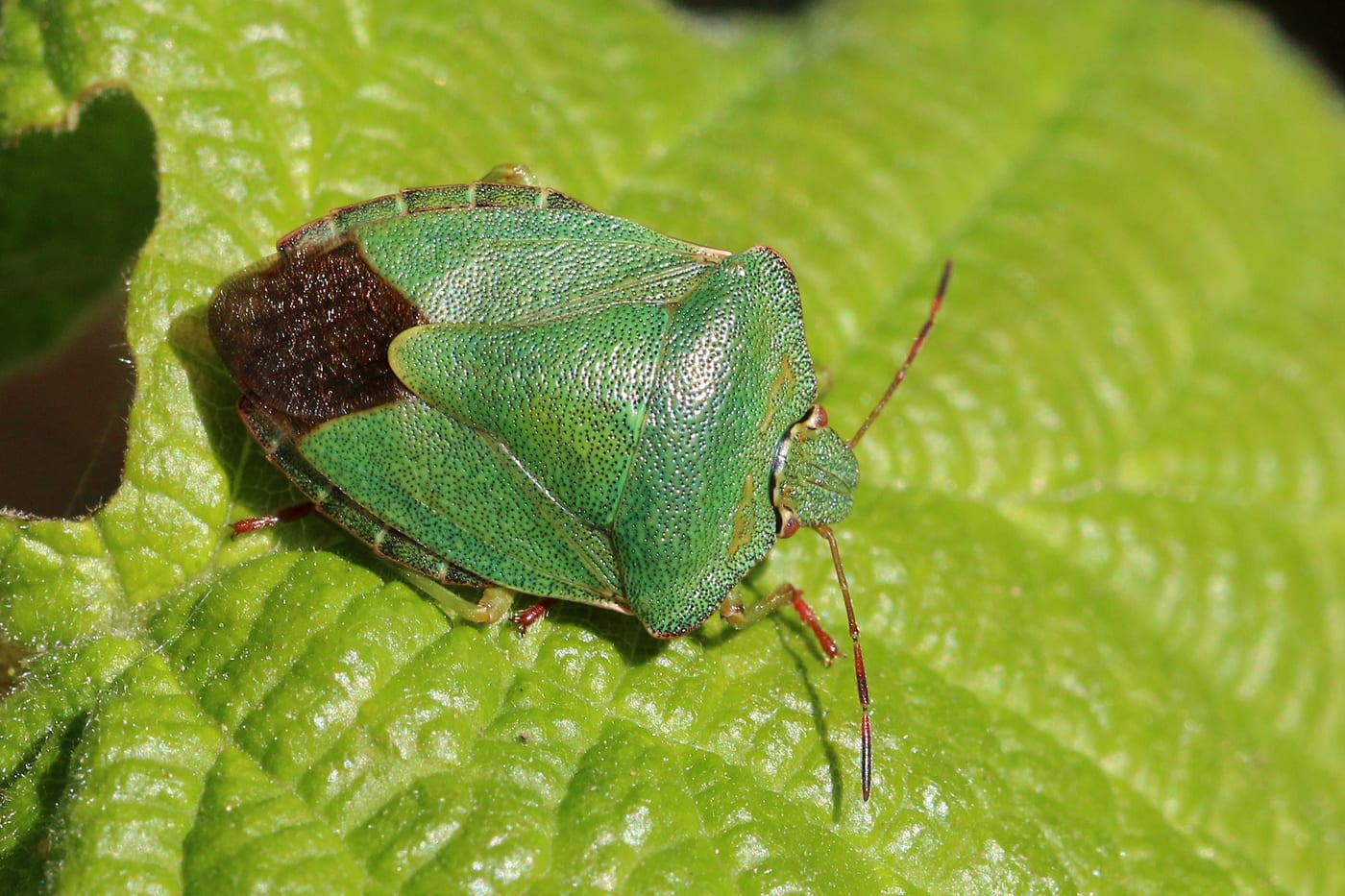
The native green shieldbug is around 10mm long, green with a contrasting dark brown patch at the rear and tiny brown puncture marks across the body. The introduced southern green shieldbug is slightly larger at up to 12mm, uniformly green with no dark rear patch. Both turn a brown-bronze colour before overwinteringKeeping a plant alive and intact through the cold months, whether left outdoors, moved under cover, or stored dormant. Full definition →.
What causes it
Southern green shieldbug numbers don't reach any meaningful level until late summer or autumn, well after most vegetable crops have already finished cropping for the year. That timing gap, not any control measure, is the real reason it rarely causes damage here.
Is this pest active now?
Watch from May, when overwintered adults emerge, through autumn, though southern green shieldbug numbers only become notable late in that window.
Symptoms
The native species causes no noticeable damage to garden plants. The southern species can occasionally distort bean pods and damage fruit, but this stays rare and minor in Britain given how late in the season its numbers actually build up.
Life cycle
Both species overwinter as adults sheltering in grass and leaf litter, emerging around May. Eggs are laid in hexagonal clusters on the underside of leaves in early summer, hatching into wingless nymphs around June. Nymphs pass through five growth stages before reaching adult form by autumn.
Why this matters in Scotland
The southern green shieldbug, the one species with any capacity to damage a crop, has only been established in the UK since 2003 and remains concentrated around London.
A pest that's still working its way north from London two decades on hasn't necessarily reached a Scottish garden at all yet.
Controls: what actually works
All the methods below are backed by real evidence, not just repeated folklore.
Identify which species it actually is before doing anything
The native green shieldbug carries a dark patch at the rear and tiny brown puncture marks; the southern green shieldbug is uniformly green with neither. Telling them apart stops a harmless, beneficial native from being mistaken for a problem and removed unnecessarily.
Leave it alone: no active control is needed for either species
The native species does no damage worth acting on, and the southern species' UK impact stays minor given its late-season timing, so intervening would be solving a problem that isn't really there.
Frequently asked questions
What should I do first if I find green shieldbugs in my garden?
Start with identify which species it actually is before doing anything. After that, leave it alone.
Will green shieldbugs kill my plants?
They rarely kill established plants. The damage is usually cosmetic on outer leaves, and natural predators often bring numbers under control without you doing anything.
When are green shieldbugs most active in Scotland?
Check the seasonal activity section above. Scottish timings can run a few weeks behind the UK-generic figures.
Should I just leave green shieldbugs alone?
In most gardens, yes. green shieldbugs are food for birds, wasps and predatory insects, and a healthy garden carries some without trouble. Tolerance is also RHS's official position now, for that same reason.
Sources
3 sources, recorded with what each was used for
- RHS1: identification of both species, symptoms, the late-season population timing, life cycle, host plants, tolerance framing, absence of a need for control
- Gardener's World12: corroborating identification, life cycle detail (hexagonal egg clusters, five nymph instars), and the tolerance position independently
- RHS1: confirming green shieldbugs directly on runner beans' own growing page