
Runner and French Bean Rust is a common disease that affects runner beans and french beans in Scotland. Here is what it looks like, the conditions it needs, and the controls that actually work.
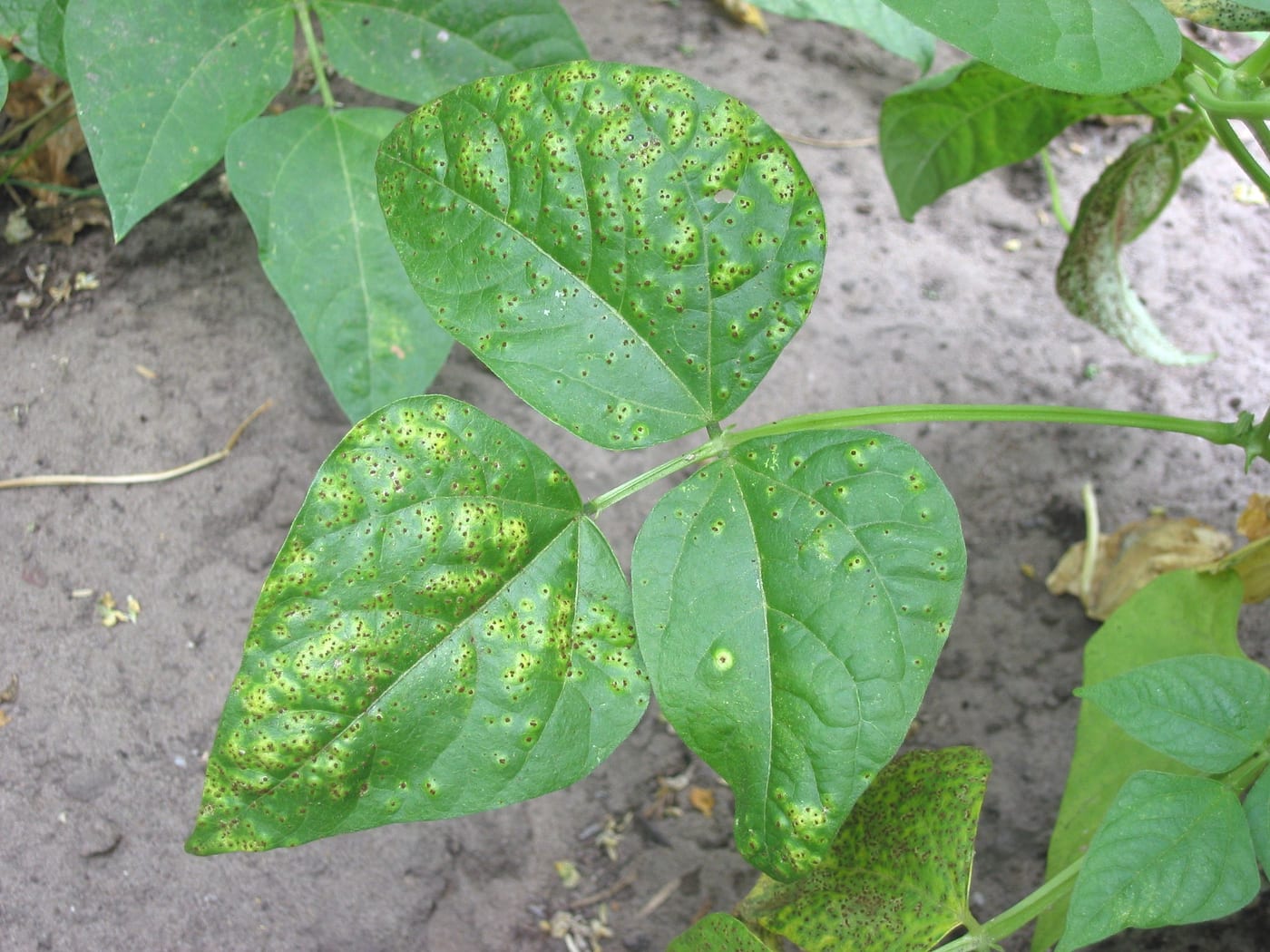
What does it look like?
Pale, raised spots appear on the upper leaf surface first, matched by small white pustules on the underside. As the season goes on these develop into small brown, rust-coloured pustules, and later black pustules form on the lower leaf surface. Severe infection turns leaves brown, and they can shrivel and shed.
What causes it
Wet or humid, warm weather through the summer favours it, and prolonged spells of that weather increase the risk. Infection specifically needs free water sitting on the leaf surface for more than 10 hours, at cool to moderate temperatures around 18-29C (65-85F); repeating infection cycles can then follow every 10-14 days while conditions stay favourable, with late-July and August often the worst stretch because of cooler nights.
Is this disease active now?
Active through the growing season once conditions turn warm and humid, typically worst in late summer.
Symptoms
Spores rub off the pustules onto anything that touches them, giving affected leaves a literal rusty look. Pods and stems can become infected too in bad cases, and a heavily affected planting can look scorched from a distance.
Life cycle
The fungus overwinters as black spores (teliospores) on old leaf debris. These germinateA seed sprouting: breaking dormancy and putting out its first root and shoot, given the right warmth and moisture. Full definition → the following spring, and through summer the fungus produces rapidly-spreading brown summer spores from pustule to pustule, before switching back to the overwinteringKeeping a plant alive and intact through the cold months, whether left outdoors, moved under cover, or stored dormant. Full definition → black spore stage as the season ends, ready to survive on debris through to next year.
Why this matters in Scotland
The specific trigger, over 10 hours of continuous leaf wetness at cool-to-moderate temperatures, describes a damp Scottish summer night and morning about as precisely as any disease mechanism on this site does.
Controls: what actually works
All the methods below are backed by real evidence, not just repeated folklore.
Thin out dense growth to improve airflow and reduce humidity around the plants
Less humidity around the foliage means less time spent with free water sitting on the leaf surface, directly working against the specific wetness window the fungus needs.
Remove affected leaves promptly, and dispose of severely affected plants
Cuts down the amount of actively spreading brown-spore infection on the plant before it multiplies further.
Clear all plant debris after cropping, and rotate where beans are grown for two to three years
The overwintering black spores survive on old leaf debris, so removing it, and not growing beans on the same ground again straight away, breaks the link between one season's infection and the next.
Water at the base of the plant rather than overhead, and if using sprinklers, time them so foliage dries before nightfall
Since infection needs over 10 hours of continuous leaf wetness, avoiding overhead watering that wets the foliage right before a long dry-free night directly removes the conditions the fungus needs. This helps most with how you water; ordinary rain will still wet the foliage overnight regardless, which is exactly why the airflow and spacing above matter just as much in a wet Scottish summer.
Avoid saving seed from an infected crop
Keeps a season's infection from being carried straight into next year's planting.
Avoid handling healthy plants straight after touching affected leaves
Spores rub off the pustules onto anything that touches them, so hands and tools moving from an infected plant to a healthy one can carry the fungus along with them.
Frequently asked questions
What should I do first if I find runner and french bean rust in my garden?
Start with thin out dense growth to improve airflow and reduce humidity around the plants. After that, remove affected leaves promptly, and dispose of severely affected plants. Work through the rest in order of how well-evidenced they are if the first two aren’t enough on their own.
Is there a spray that works?
No. There are no amateur chemical treatments available for runner and french bean rust. The controls that work are cultural: the measures listed above.
When are runner and french bean rust most active in Scotland?
Check the seasonal activity section above. Scottish timings can run a few weeks behind the UK-generic figures.
Sources
2 sources, recorded with what each was used for
- RHS1: causal organism, affected crops, identification, life cycle, conditions, and the thinning/removal/debris-clearing/no-seed-saving controls
- Colorado State University Extension23: independent corroboration of the mechanism and life cycle, the specific leaf-wetness-duration and temperature trigger RHS's own page doesn't give, crop rotationMoving each crop family to different ground each year, on a multi-year cycle, so pests and diseases that build up in soil don't get a repeat host. Full definition → length, and the overhead-watering-timing control