
Bean Seed Fly is a common pest that affects french beans and runner beans in Scotland. Here is what it looks like, how to spot the damage, and which controls have been tested.
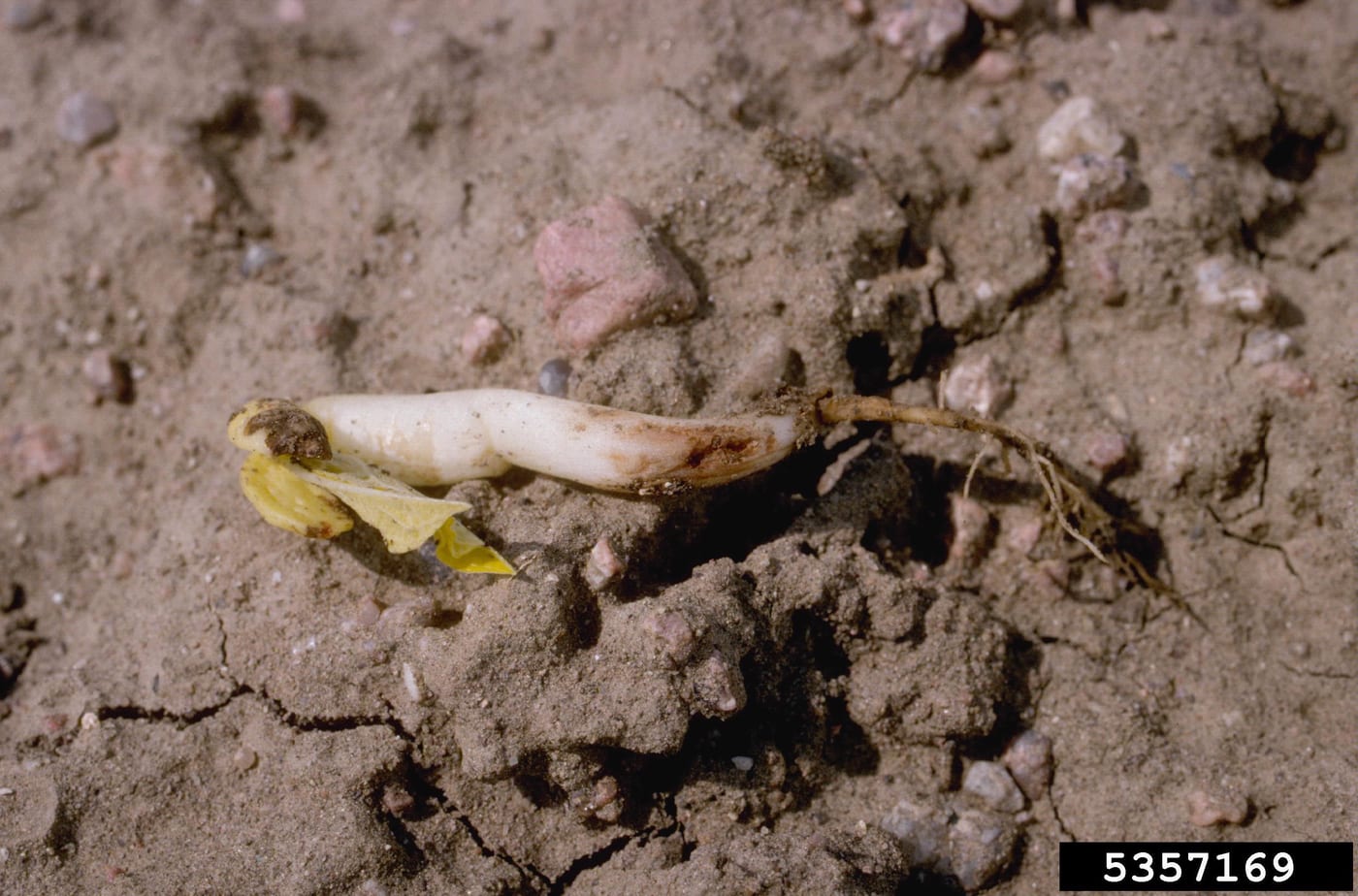
What does it look like?
The adult is a small, dark fly about 6mm long. It's the larva that actually does the damage: a white, legless, headless maggot that grows up to 8mm long as it feeds in the soil.
What causes it
Cold, wet soil is what turns this from a minor nuisance into real losses, because it slows germinationA seed sprouting: breaking dormancy and putting out its first root and shoot, given the right warmth and moisture. Full definition → and leaves seed sitting exposed to maggots for longer. Adult flies are also drawn in to lay eggs by fresh organic matter freshly worked into the soil, so a bed dug over and sown straight away carries more risk than one left to settle first.
Is this pest active now?
Watch from May through the summer, with the first generation in May typically the most damaging one for spring-sown beans.
Symptoms
Maggots tunnel into germinating seed and the base of emerging shoots. Seedlings that survive come up distorted and 'blind', with no growing point, while more heavily fed-on seed is killed outright before it ever breaks the surface.
Life cycle
Pupae overwinterKeeping a plant alive and intact through the cold months, whether left outdoors, moved under cover, or stored dormant. Full definition → in the soil, with adults emerging in early spring to start three to five overlapping generations through the growing season. Each generation runs its own cycle from there: one to three weeks as a feeding larva, then pupation, then around three more weeks before the next adult emerges.
Why this matters in Scotland
The exact condition that makes this pest worse, cold and wet soil slowing germination, is closer to the Scottish spring norm than the exception.
That's not a one-off risk tied to a single bad spring, it's a recurring feature of gardening this far north, so it's worth building into a normal sowing routine rather than treating as an occasional problem.
Controls: what actually works
All the methods below are backed by real evidence, not just repeated folklore.
Raise seedlings indoors before transplanting rather than sowing direct
Seed germinates in warm, controlled conditions rather than sitting exposed in cold outdoor soil, cutting out the extended vulnerability window that cold, wet ground creates.
Insect barrier netting or horticultural fleece over direct-sown seed
A physical barrier over the sown row stops adult flies reaching the soil to lay eggs in the first place, useful where seed is sown direct rather than raised indoors.
Avoid working fresh organic matter into the seed bed right before sowing
Freshly dug-in green matter or manure is what draws egg-laying adults to a bed in the first place, so digging it in well ahead of sowing, or leaving at least a week between cultivation and drilling, removes the attractant before seed goes in.
Biological control: pathogenic nematodes watered into the soil
Sold as Fruit and Vegetable Protection, this drench targets the maggots directly in the soil rather than trying to keep adult flies away.
Frequently asked questions
What should I do first if I find bean seed fly in my garden?
Start with raise seedlings indoors before transplanting rather than sowing direct. After that, insect barrier netting or horticultural fleece over direct-sown seed. Work through the rest in order of how well-evidenced they are if the first two aren’t enough on their own.
Will bean seed fly kill my plants?
Yes, at the seed and seedling stage — this isn't a foliage pest that an established plant can simply outgrow. A germinating seed or fresh seedling can be killed outright or left with no growing point at all. Once a plant is through that early establishment stage and growing away, it's no longer at meaningful risk from this pest.
When are bean seed fly most active in Scotland?
Check the seasonal activity section above. Scottish timings can run a few weeks behind the UK-generic figures.
Sources
4 sources, recorded with what each was used for
- RHS1: identification, symptoms, the cold-wet-soil trigger, life cycle and generations, raising seedlings indoors, barrier netting, nematode drench, absence of a chemical control
- RHS1: confirming bean seed fly directly on French beans' own growing page
- RHS1: confirming bean seed fly directly on runner beans' own growing page
- pgro.org: the fresh-organic-matter attractant mechanism, UK-specific confirmation of no licensed insecticidal seed treatment, and the wider host-range context used to test (and exclude) peas and broad beans