
Halo Blight is a common disease that affects french beans and runner beans in Scotland. Here is what it looks like, the conditions it needs, and the controls that actually work.
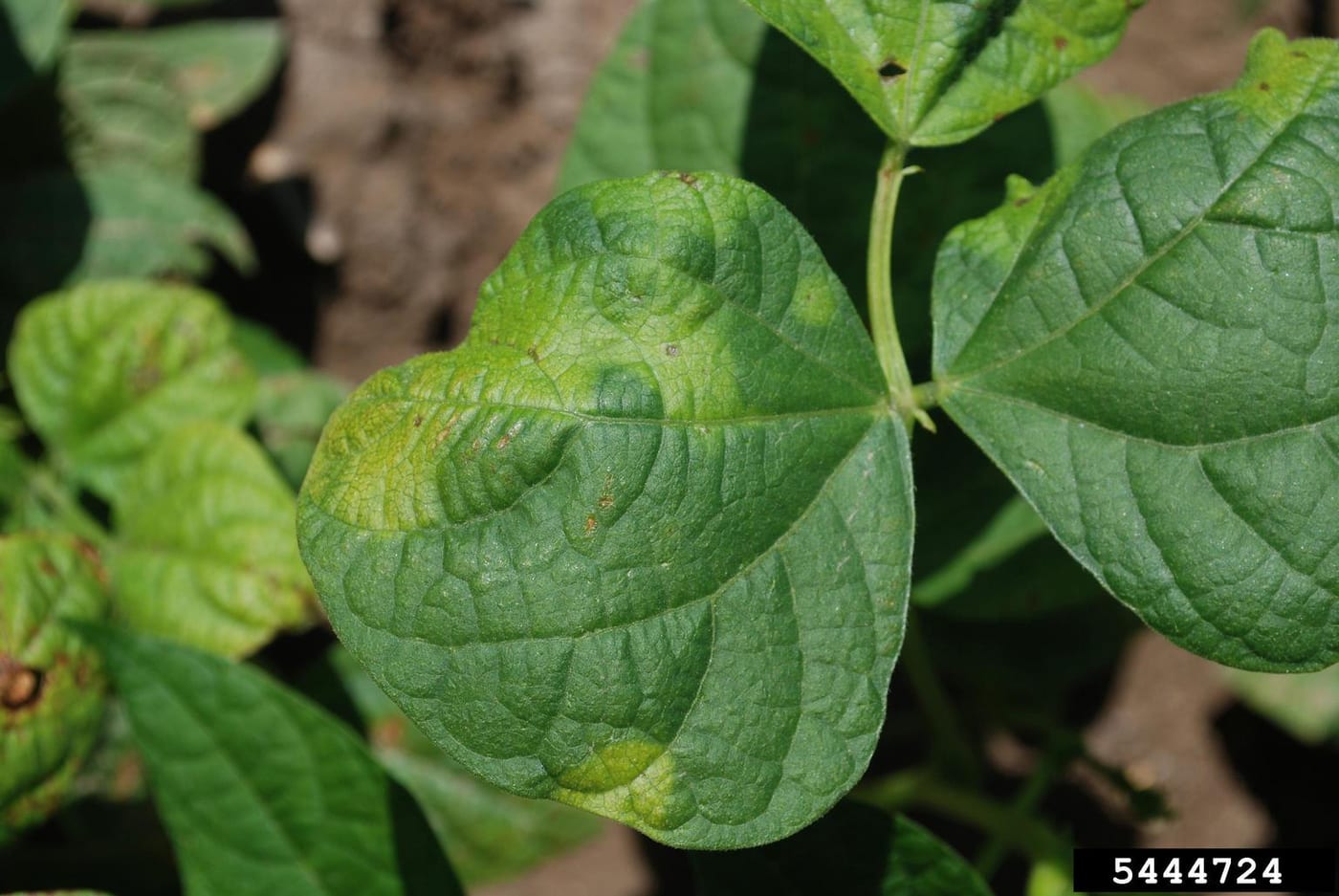
What does it look like?
Small, water-soaked spots appear on the underside of leaves and quickly turn necrotic, often ringed by the pale 'halo' that gives the disease its name. There's no distinct insect or visible organism to look for here, since the cause is a bacterium too small to see with the naked eye.
What causes it
The bacterium starts inside the seed itself, so an infected seed produces an infected plant from the outset. From there, water droplets, particularly from overhead watering, are what actually carry it from leaf to leaf and plant to plant, with losses running worst in humid conditions and a moderate 16-23°C, cooler than many bacterial diseases actually need to thrive.
Is this disease active now?
Watch through the May-to-September stretch beans are normally growing, since that's the same window the bacterium's favoured 16-23°C and humid conditions actually cover.
Symptoms
Affected foliage develops the spotted, haloed lesions, and a badly infected plant is a genuine loss, not a cosmetic blemish; a plant that far gone is usually removed and destroyed rather than nursed through.
Life cycle
Bacteria carried inside an infected seed establish themselves as the seedling grows, then spread to neighbouring foliage and plants via splashed water. The bacterium also persists in the soil and on plant debris afterwards, which is why a genuine multi-year gap before growing beans on the same ground again actually matters.
Why this matters in Scotland
This disease's two favoured conditions, wet and a moderate 16-23°C, both describe an ordinary Scottish summer more closely than a hot, dry one further south.
Most bacterial plant diseases need real warmth to get going, so a bean crop grown in a cool Scottish summer doesn't get the usual break that heat-loving pathogens would deny it here.
Controls: what actually works
All the methods below are backed by real evidence, not just repeated folklore.
Buy certified, disease-free seed and never save seed from an affected plant
Since the bacterium starts inside the seed itself, this is the single step that stops the problem before it can begin, rather than managing it once it's already present.
Water at the base of the plant rather than over the foliage
Since water droplets are what actually carry the bacteria between leaves and plants, keeping water off the foliage removes the main way it spreads once it's present.
Remove and destroy badly infected plants; pick off individual affected leaves on a lightly infected one
A plant too far gone is a source of further spread if left in place, while a plant with only a few affected leaves can sometimes be salvaged by removing just those.
Use a 3-year minimum rotation before growing beans in the same ground again
The bacterium persists in the soil after an infected crop, so a genuine gap before beans return to that ground is what actually breaks the cycle, not just a single season off.
Clean tools and boots between plants or beds
A bacterial disease can travel on wet tools or footwear just as easily as on water splash, so basic hygiene closes off a route that's otherwise easy to overlook.
Frequently asked questions
What should I do first if I find halo blight in my garden?
Start with buy certified, disease-free seed and never save seed from an affected plant. After that, water at the base of the plant rather than over the foliage. Work through the rest in order of how well-evidenced they are if the first two aren’t enough on their own.
Is there a spray that works?
No. There are no amateur chemical treatments available for halo blight. The controls that work are cultural: the measures listed above.
When are halo blight most active in Scotland?
Check the seasonal activity section above. Scottish timings can run a few weeks behind the UK-generic figures.
Sources
4 sources, recorded with what each was used for
- Garden Organic8: identification, symptoms, the seed-borne origin, the water-splash spread mechanism, life cycle and soil persistence, clean seed, watering practice, removing infected plants, crop rotation, tool hygiene, absence of a chemical control
- RHS1: confirming halo blight directly on runner beans' own growing page
- RHS1: confirming broad beans' own growing page does not name this disease, supporting its exclusion from affected_crops
- UC IPM: the 16-23°C, humid-conditions figure for disease development, used to derive the Scottish-relevant temperature overlap and the honest calendar estimate