
Black Bean Aphid is a common pest that affects broad beans, french beans and runner beans in Scotland. Here is what it looks like, how to spot the damage, and which controls have been tested.
What does it look like?
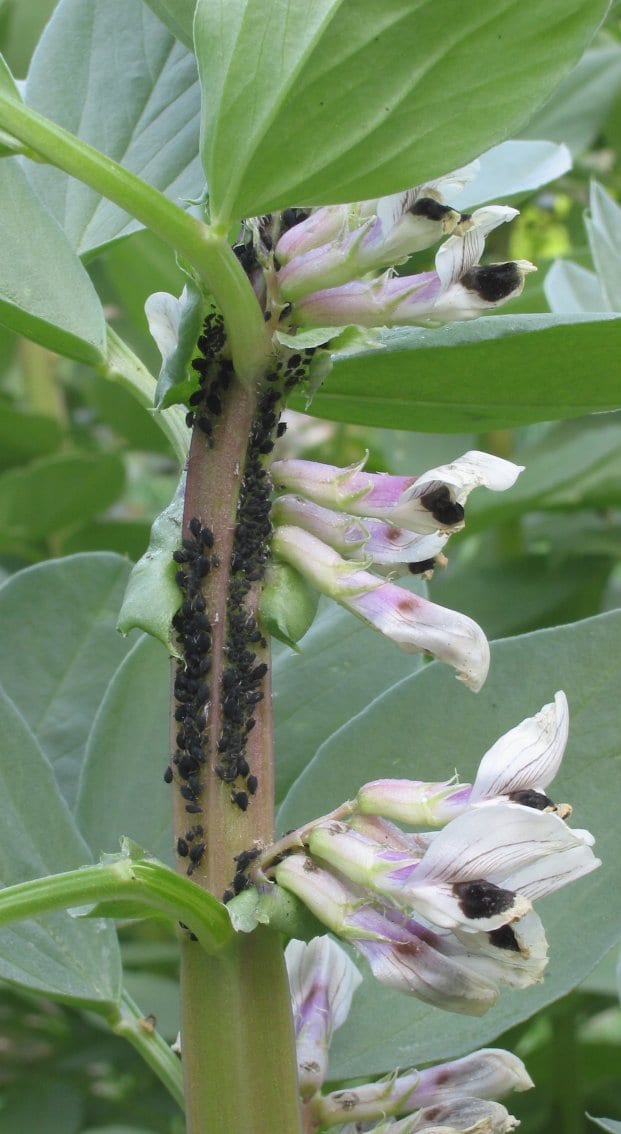
Adults are up to 2mm long, mainly black with occasional white flecks on their backs. Colonies build up fast on soft shoot tips, flower stems and the undersides of young leaves, with pale, empty skins shed by growing aphids left scattered among them.
What causes it
Soft, actively growing shoot tips are what this aphid targets, which is why colonies build up fastest on vigorous spring growth rather than tougher, older stems. Warmth speeds that up further, since aphids reproduce faster the warmer it gets, which is why a warm spring specifically turns an ordinary population into a real problem.
Is this pest active now?
Watch from around April through August, as populations build on beans and other summer hosts after migrating from their shrub winter hosts.
Symptoms
Heavily colonised plants weaken and their growth stalls, and on beans specifically that shows up as poorer pod formation, not just curled or cosmetic leaf damage. Honeydew from feeding coats nearby leaves and draws in ants, which drive off ladybird larvae and other predators that would otherwise be keeping the colony down.
Life cycle
Eggs overwinterKeeping a plant alive and intact through the cold months, whether left outdoors, moved under cover, or stored dormant. Full definition → on shrubs like spindle, viburnum and philadelphus, hatching as those plants come into new leaf in spring. Several generations of wingless females build up there first, all producing live young rather than eggs, before a winged generation flies off in search of beans and other summer hosts by around May. A reverse migration back to the winter shrub hosts happens later in the year.
Why this matters in Scotland
A warm spring is a threshold Scotland reaches less often than further south, which works in a grower's favour here.
The same pinching-out routine broad bean growers already do to boost pod production doubles as the single most effective step against this aphid, timed to catch the colony before a warm spell lets it take off.
Controls: what actually works
All the methods below are backed by real evidence, not just repeated folklore.
Pinching out: remove growing tips once first flowers set pods
Shoot tips are exactly where colonies concentrate, so removing them once pods have started setting takes out most of an existing colony in one go, not just tidies the plant.
Hand control: squash colonies by finger and thumb, or wipe with a damp cloth
Direct, mechanical removal doesn't rely on any product and works immediately on a colony you can see, useful for a smaller infestation before it's worth pinching out the whole tip.
Natural predators: encourage ladybirds, hoverflies, parasitoid wasps and earwigs
Ladybirds, hoverflies, parasitoid wasps (small wasps that lay their eggs inside aphids) and earwigs all feed on this aphid directly. Avoiding pesticides entirely is what lets this work, since spraying removes the same predators alongside the aphid.
Frequently asked questions
What should I do first if I find black bean aphid in my garden?
Start with pinching out. After that, hand control. Work through the rest in order of how well-evidenced they are if the first two aren’t enough on their own.
Will black bean aphid kill my plants?
They rarely kill established plants. The damage is usually cosmetic on outer leaves, and natural predators often bring numbers under control without you doing anything.
When are black bean aphid most active in Scotland?
Check the seasonal activity section above. Scottish timings can run a few weeks behind the UK-generic figures.
Should I just leave black bean aphid alone?
In most gardens, yes. black bean aphid are food for birds, wasps and predatory insects, and a healthy garden carries some without trouble. Tolerance is also RHS's official position now, for that same reason.
Sources
2 sources, recorded with what each was used for
- RHS1: identification, symptoms, the shoot-tip feeding mechanism, life cycle and host migration, pinching out, hand control, encouraging predators, absence of a recommended pesticide
- Garden Organic8: corroborating pinching out and hand removal; the warm-spring trigger RHS doesn't state explicitly