
Plum Moth is a minor pest that affects plums and damsons in Scotland. Here is what it looks like, how to spot the damage, and which controls have been tested.
What does it look like?
The caterpillar inside the fruit is the identifying sign, not the adult moth: pale pink with a brown head, up to 12mm long, found feeding around the stone with light brown excrement pellets nearby.
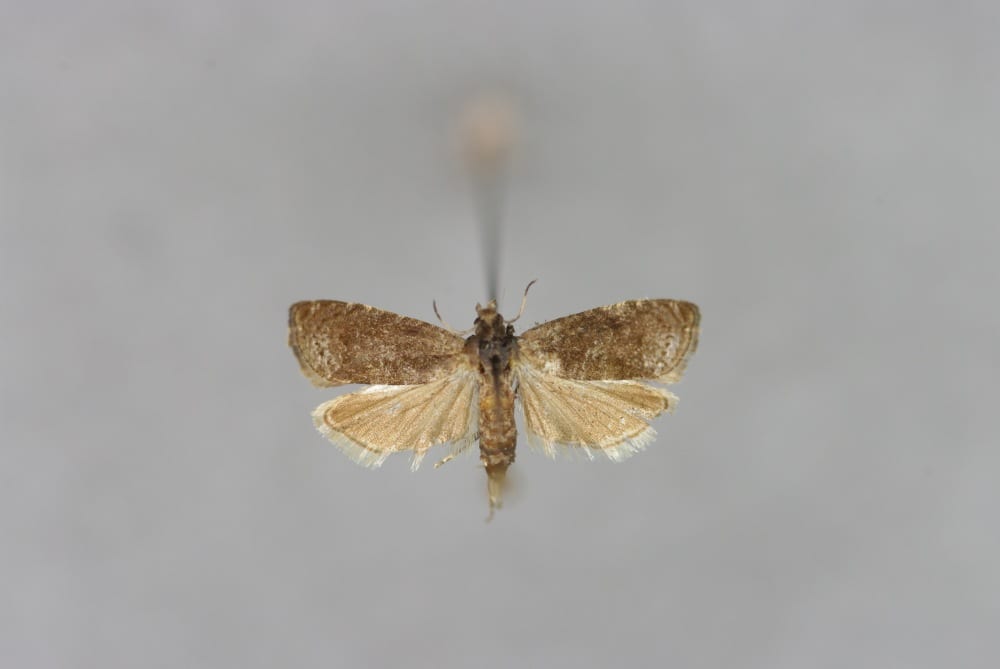
Adults: Rarely what a gardener actually spots first; the caterpillar-in-fruit damage is what gives this pest away. Adults are small, mottled grey-brown moths (see photo).
Larvae: Pale pink caterpillar, up to 12mm long, with a brown head. Feeds inside the ripening fruit, around the stone, leaving light brown excrement pellets close by.
What causes it
A warm summer is the one real trigger worth knowing: it can push some caterpillars to pupate early and produce a second generation late in the season, on top of the usual single generation.
Is this pest active now?
Adults: late May to July, mostly mid-June to mid-July
Larvae (the damaging stage): inside fruit from early summer until late summer, then overwinteringKeeping a plant alive and intact through the cold months, whether left outdoors, moved under cover, or stored dormant. Full definition → as cocoons under bark
Symptoms
Affected fruit ripens early and is often slightly misshapen, with light brown excrement pellets near the stone; fruit that ripens first usually has the highest proportion of caterpillars, while later-ripening fruit is much less affected. Two look-alikes are easy to confuse this with: pocket plum, a separate fungal disease, and gumming, a physiological response to changing water availability, neither of which is plum moth. Plum sawfly causes different damage again: its larvae tunnel into young fruitlets in June, which then fall from the tree early, unlike plum moth’s caterpillars, which develop inside fruit that stays on the tree until ripe. The cultivarsA plant variety that arose or was bred under cultivation and is kept true by deliberate propagation, rather than a naturally occurring wild species. Full definition → Czar and Victoria are more susceptible to plum sawfly specifically. A resinous gum around the stone is a physiological disorder, not moth damage.
Life cycle
Usually one generation a year. Adults emerge from late May, mostly mid-June to mid-July. Newly hatched caterpillars tunnel into fruit and feed around the stone until late summer, then emerge to overwinter in silk cocoons spun under loose bark or other concealed places. A warm summer can trigger a second generation late in the season.
Why this matters in Scotland
A second generation follows specifically from a warm summer, so Scotland’s cooler, shorter summers likely make that additional generation on Scottish plums and damsons less common than further south — though no source states a second-generation frequency for Scotland specifically, so treat this as reasoning from the stated trigger rather than a separate finding.
Controls: what actually works
All the methods below are backed by real evidence, not just repeated folklore.
Tolerate the loss of some fruit
Often only a small proportion of fruits are affected, even though the earliest-ripening, most visibly-damaged fruit can make it look worse than it is at first.
Encourage natural predators
Birds, hedgehogs and ground beetles are predators that help keep plum moth numbers down.
Pheromone traps for monitoring, hung from early May
Traps alone rarely control plum moth; their main value is monitoring activity, though on an isolated tree they may catch enough males to reduce the females’ mating success and cut the number of fertile eggs laid.
Hang in the tree in early May. Adding bird netting around the trap reduces the risk of birds getting caught on the sticky sheet.
Biological control: pathogenic nematodes watered onto trunk, branches and soil
A mixed-species nematode product sold as "Fruit and Vegetable Protection" may provide some control. Applied to the trunk, branches and soil under the tree in September and October, once caterpillars have left the fruit; not while they’re still feeding inside it.
There are real limits: this treatment gives no protection the following year against female moths flying in from nearby gardens, so it may not be worthwhile where plums are widely grown locally. Nematodes can affect non-target animals and should be used with care, only where there’s a specific problem to treat.
This is the same "Fruit and Vegetable Protection" product used against cabbage caterpillars, covered on this site’s Caterpillar Nematodes page.
Natural predators of plum moth
These 3 creatures eat plum moth, and each has its own page here on how to get more of them in your garden: what to plant, or what to order and when.
Frequently asked questions
What should I do first if I find plum moth in my garden?
Start with tolerate the loss of some fruit. After that, encourage natural predators. Work through the rest in order of how well-evidenced they are if the first two aren’t enough on their own.
Will plum moth kill my plants?
They rarely kill established plants. The damage is usually cosmetic on outer leaves, and natural predators often bring numbers under control without you doing anything.
When are plum moth most active in Scotland?
Adults are active late May to July, mostly mid-June to mid-July; larvae do the main damage inside fruit from early summer until late summer, then overwintering as cocoons under bark. Scottish timings may lag behind UK-generic advice, so use the Frost Date Calculator to adjust for your region.
Should I just leave plum moth alone?
In most gardens, yes. plum moth are food for birds, wasps and predatory insects, and a healthy garden carries some without trouble. Tolerance is also RHS's official position now, for that same reason.
Sources
2 sources, recorded with what each was used for
- RHS1: identification, symptoms, look-alikes (pocket plum, gumming, plum sawfly), life cycle, active-by-month timing, tolerance guidance, pheromone traps, biological control, natural predators
- RHS1: corroborating the "Fruit and Vegetable Protection" nematode product and its Steinernema species, cross-referenced against the existing Caterpillar Nematodes wildlife entry