
Blossom Wilt is a common disease that affects cherries, damsons and plums in Scotland. Here is what it looks like, the conditions it needs, and the controls that actually work.
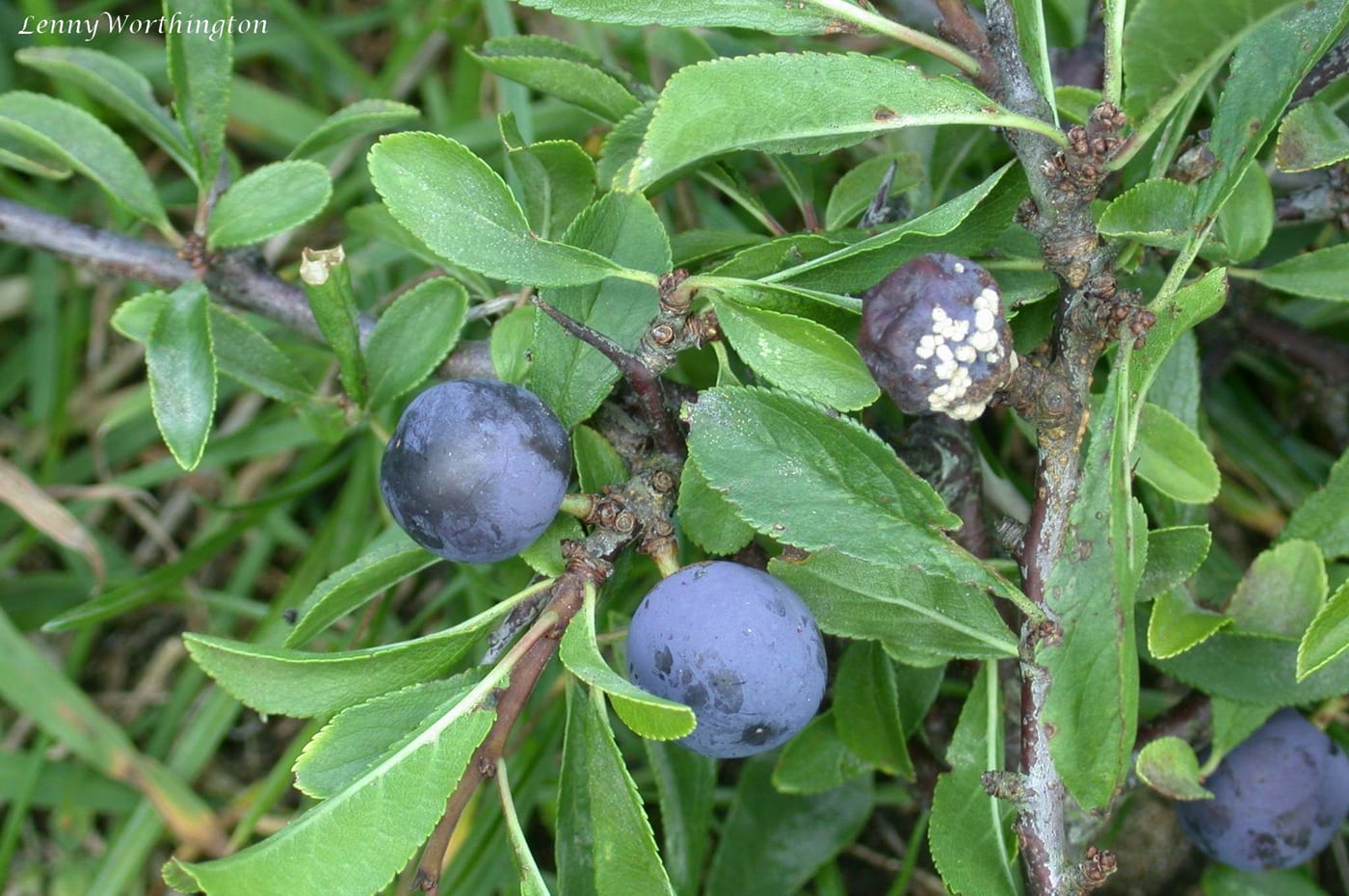
What does it look like?
Brown, shrivelled blossoms and nearby leaves on the fruiting spursWhether a fruit tree carries its fruit mainly on short side-shoots along older wood (spur-bearing) or at the tips of the previous year's growth (tip-bearing). Full definition →, showing up right at flowering time. Look closely in wet weather and you may see small, buff-coloured pustules of the fungus on the dead tissue.
What causes it
Wet weather right at flowering time is what turns a mild year into a bad one; that’s also when the fungal pustules on dead tissue become visible enough to actually spot.
Is this disease active now?
Flowering time in mid-spring is when the damage starts, though it becomes more obvious as shoots die back into late spring and early summer.
Blossom wilt and Brown Rot are caused by the same two fungi, just at different points of their cycle: infected fruit that mummifies and stays on the tree over winter is what releases the spores that cause blossom wilt the following spring. See Brown Rot →
Symptoms
Dieback along an affected shoot rarely spreads more than 20 to 30cm, so this doesn’t tend to take out a whole branch on its own. How bad a year is varies a lot: it comes down to the weather at exactly the point the blossom is out, not a fixed severity from year to year.
Life cycle
Fruit gets infected through wounds, bird damage especially, and develops brown rot; the mummified fruit stays hanging on the tree over winter, and where it touches bark it can start a small canker too. Both the dead fruit and any cankers release spores the following spring, and that’s what causes the blossom wilt phase of the disease at flowering time. Those fresh infections then go on to infect more wounded fruit, and the cycle repeats.
Why this matters in Scotland
A damp cold snap right at blossom time is a genuinely common pattern in a Scottish spring, and that timing is exactly what decides a mild year from a costly one. Scotland doesn’t need unusual weather for this disease to bite; an ordinary wet spring will do it.
Controls: what actually works
All the methods below are backed by real evidence, not just repeated folklore.
Remove and dispose of rotted fruit promptly
Bury it at least 30cm below the soil surface, or put it in council green waste where accepted. Don’t let rotted fruit stay on the tree: mummified fruit is exactly what carries the fungus through winter to reinfect next year’s blossom.
Net fruit to reduce bird damage
The fungus infects through wounds, and bird pecks are one of the main ways fruit gets wounded in the first place.
Prune out and burn infected spurs and blossom where practical
Reduces how much fungus is left on the tree to infect fruit later in the season.
Choose a resistant cultivarA plant variety that arose or was bred under cultivation and is kept true by deliberate propagation, rather than a naturally occurring wild species. Full definition → where you’re planting new
Real resistant plum options exist: ‘Jefferson’, ‘Marjorie’s Seedling’, ‘President’ and ‘Reine Claude Violette’ among them.
Frequently asked questions
What should I do first if I find blossom wilt in my garden?
Start with remove and dispose of rotted fruit promptly. After that, net fruit to reduce bird damage. Work through the rest in order of how well-evidenced they are if the first two aren’t enough on their own.
Is there a spray that works?
No. There are no amateur chemical treatments available for blossom wilt. The controls that work are cultural: the measures listed above.
When are blossom wilt most active in Scotland?
Check the seasonal activity section above. Scottish timings can run a few weeks behind the UK-generic figures.
Sources
1 source, recorded with what each was used for
- RHS1: identification, symptoms, biology/mechanism shared with brown rot, active timing, all non-chemical controls, resistant cultivars, fungicide stance