
A tree bent under fruit one autumn, then carrying almost nothing the next, looks like bad luck. It's usually the opposite: a self-reinforcing cycle where last year's heavy crop is the reason this year's is bare, and this year's bare crop is what sets up next year's heavy one. Apples and pears are the classic cases, but plums and damsons fall into it too.
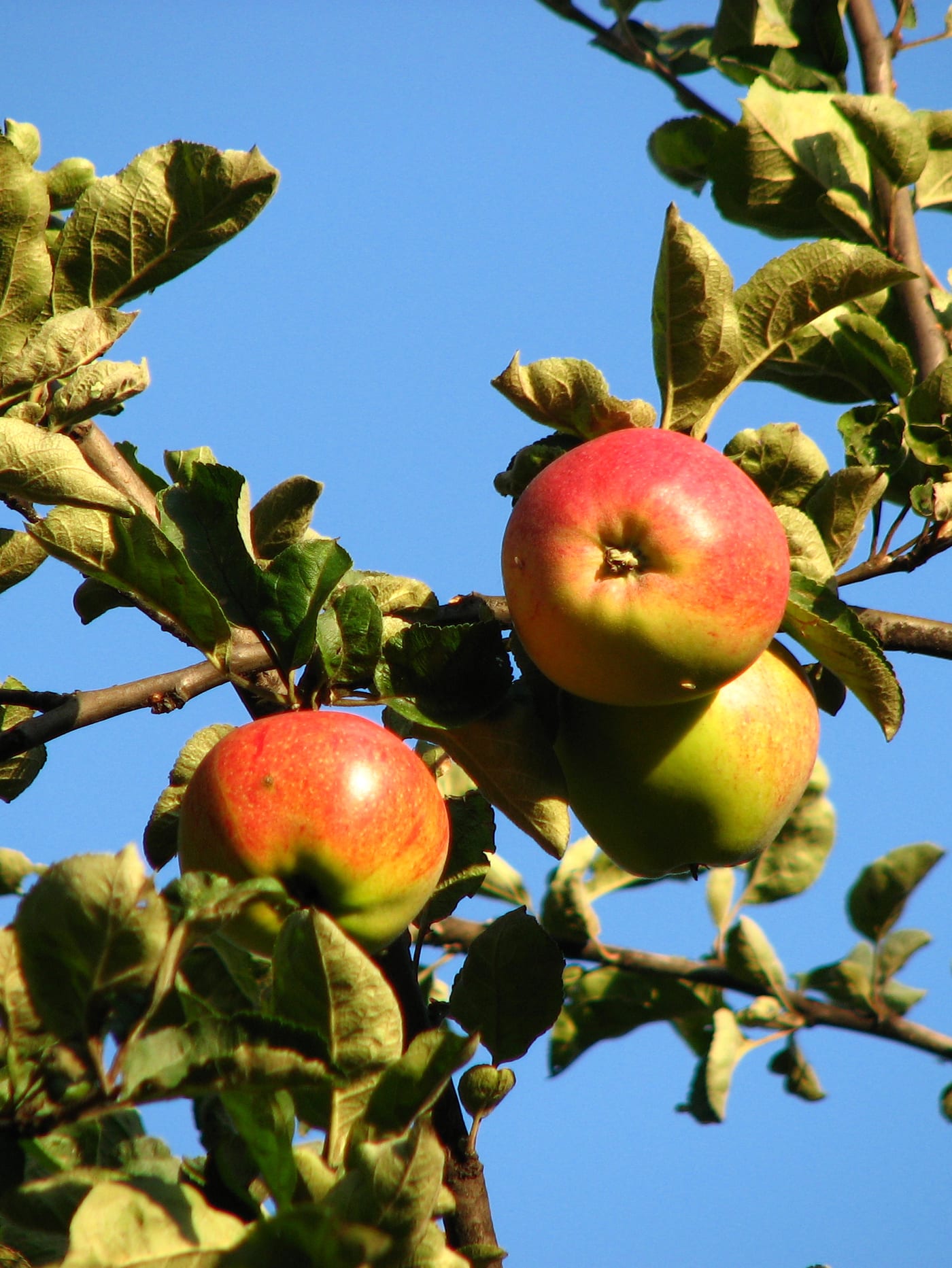
What it looks like
A heavy "on" year, often with fruit smaller than usual simply because there's so much of it, followed by a light or empty "off" year, on a tree that otherwise looks perfectly healthy. The pattern then repeats: another heavy year, another light one. It usually affects a whole tree, but occasionally shows up on just some branches while others crop normally.
🌱 Plants at risk
Biennial BearingA fruit tree's tendency to crop heavily one year and barely at all the next, then repeat that cycle rather than cropping evenly every year. Full definition → also affects these crops:
The cause: a cycle the tree sets up for itself
Without a crop to support in a given year, a tree puts its spare resources into producing flower buds instead, building towards heavy blossom, and a heavy crop, the following year. Heavy fruiting then consumes the energy that would otherwise go into next year's flower-bud initiation, leaving fewer flowers and less fruit the year after, and the cycle repeats on its own. Apples and pears are the classic cases; plums, alongside apricots, need the same hand-thinning management for the same reason.
Some cultivarsA plant variety that arose or was bred under cultivation and is kept true by deliberate propagation, rather than a naturally occurring wild species. Full definition → are naturally prone to this. Beyond genetics, incorrect pruning, weather and soil fertility all play a part, and two specific triggers can start the pattern in a tree that wasn't previously biennialA plant that completes its life cycle over two years: growth in year one, then flowering, seeding and dying in year two. Full definition →: a tree that's starved or short of water and can't carry a heavy crop, so it diverts into excess flower-bud production instead, or frost destroying the blossom in a single spring, wiping out that year's crop and pushing the tree's resources into next year's buds.
Why this matters in Scotland
A late spring frost hitting open blossom is a real, recurring risk across much of Scotland, and that specific event can start the biennial cycle in a tree that wasn't previously affected. LayeredPropagating a new plant by pinning a low, flexible stem into the soil while still attached to the parent, so it roots before being cut free. Full definition → on top of it, 'Bramley's Seedling' is both a naturally-biennial cultivar and a common, deliberate choice in Scottish gardens for its hardiness and reliable cropping in cooler summers, so plenty of Scottish gardens are already growing exactly the variety most likely to need thinning. On apples specifically, evening out the crop load this way has a second benefit beyond breaking the biennial cycle: a heavy "on" year's fruit tends to grow larger, and larger apples are more prone to Bitter Pit.
What actually works
The methods below run in order of effectiveness: bud thinning first, flower thinning as a fallback, fruit thinning only as a last resort.
In early spring before an expected heavy 'on' year, thin the flower buds themselves
The most effective single method. Rub off half to three-quarters of the fruit buds, leaving just one or two per spur, before the heavy year's crop sets. An alternative version of the same idea is to remove all fruit buds from half the tree's branches, alternating which half each year, so the whole tree never carries a full 'on' year crop at once. Iowa State University Extension gives a concrete window and spacing for the related hand-thinning-of-fruit step: within six weeks of full bloom, leaving the largest fruit in each cluster unless damaged, spaced 8-10in (20-25cm) apart on apples and 6-8in (15-20cm) apart on pears, plums and apricots. Extension does not name damsons specifically, but as a close relative of plums they follow the same spacing.
If bud thinning was missed, thin the open flowers instead, a week or ten days after they open
Use scissors or pinch outRemoving the soft growing tip of a stem to stop upward growth and make the plant branch out sideways instead. Full definition → each blossom at the stem. A later, less effective fallback than bud thinning, but still reduces how much of the tree's resources go into that year's fruit.
Thin the young fruit itself once it has set, as a last resort
Much less effective than thinning the buds or flowers for correcting biennial bearing, since most of the resource cost to the tree has already been spent by this stage. It does still increase the size of the fruit that remains.
Keep the tree fed and watered, especially through a heavy 'on' year
A starved or water-short tree is one of the two triggers that can start biennial bearing in the first place. Clear grass and weeds within a 1m radius of the trunk, mulchA layer of material spread over the soil around plants to suppress weeds, retain moisture, and improve soil structure as it breaks down. Full definition → small trees with compost or well-rotted manure 5-8cm deep, water at 20 litres per square metre every 10 days during dry spells, and apply a general-purpose fertiliser at 100g per square metre in early spring.
Where possible, favour cultivars that aren't naturally prone to biennial bearing
'Blenheim Orange', 'Bramley's Seedling' and 'Laxton's Superb' are naturally biennial apple cultivars. For a new planting, this is worth weighing alongside the usual cropping and flavour considerations, though 'Bramley's Seedling' in particular remains a common and deliberate choice in Scottish gardens for its hardiness.
Frequently asked questions
Is my tree dying if it has no fruit this year?
Almost certainly not, if it fruited heavily last year and otherwise looks healthy. That pattern, a heavy crop followed by a bare year, is the signature of biennial bearing, not a sign of decline. The tree spent last year's resources on fruit instead of next year's flower buds, so this year's blossom, and crop, is thin.
Will it fix itself over time?
Left alone, no, because each heavy year sets up the next light one and each light year sets up the next heavy one. It's self-reinforcing rather than self-correcting. Thinning breaks the cycle by stopping any one year from being heavy enough to trigger a bare year after it.
What actually starts it in a tree that was cropping normally?
Two things specifically: a tree that's starved or short of water and can't carry a heavy crop, so it diverts into producing excess flower buds instead, or frost destroying the blossom in a single spring, wiping out that year's crop and leaving the tree to put its resources into next year's buds instead. A late spring frost after blossom has opened is a real, recurring risk across much of Scotland.
Are some varieties just prone to this regardless?
Yes. 'Blenheim Orange', 'Bramley's Seedling' and 'Laxton's Superb' are naturally biennial apple varieties. 'Bramley's Seedling' in particular remains a common, deliberate choice in Scottish gardens for its hardiness and reliable cropping in cooler summers, so plenty of Scottish gardens are growing exactly the variety most likely to need thinning.
Sources
2 sources, recorded with what each was used for
- RHS: definition, the resource-cycle mechanism, contributing factors (pruning, weather, soil fertility), the two named starting triggers (starvation/water shortage and frost destroying blossom), susceptible apple cultivars, and all thinning/feeding/watering controls
- Iowa State University Extension: independent corroboration of the resource-diversion mechanism, confirmation that apples and pears are the classic cases with plums and apricots also affected, and specific hand-thinning timing/spacing detail RHS does not give