
Brown Rot is a common disease that affects apples, pears and plums in Scotland. Here is what it looks like, the conditions it needs, and the controls that actually work.
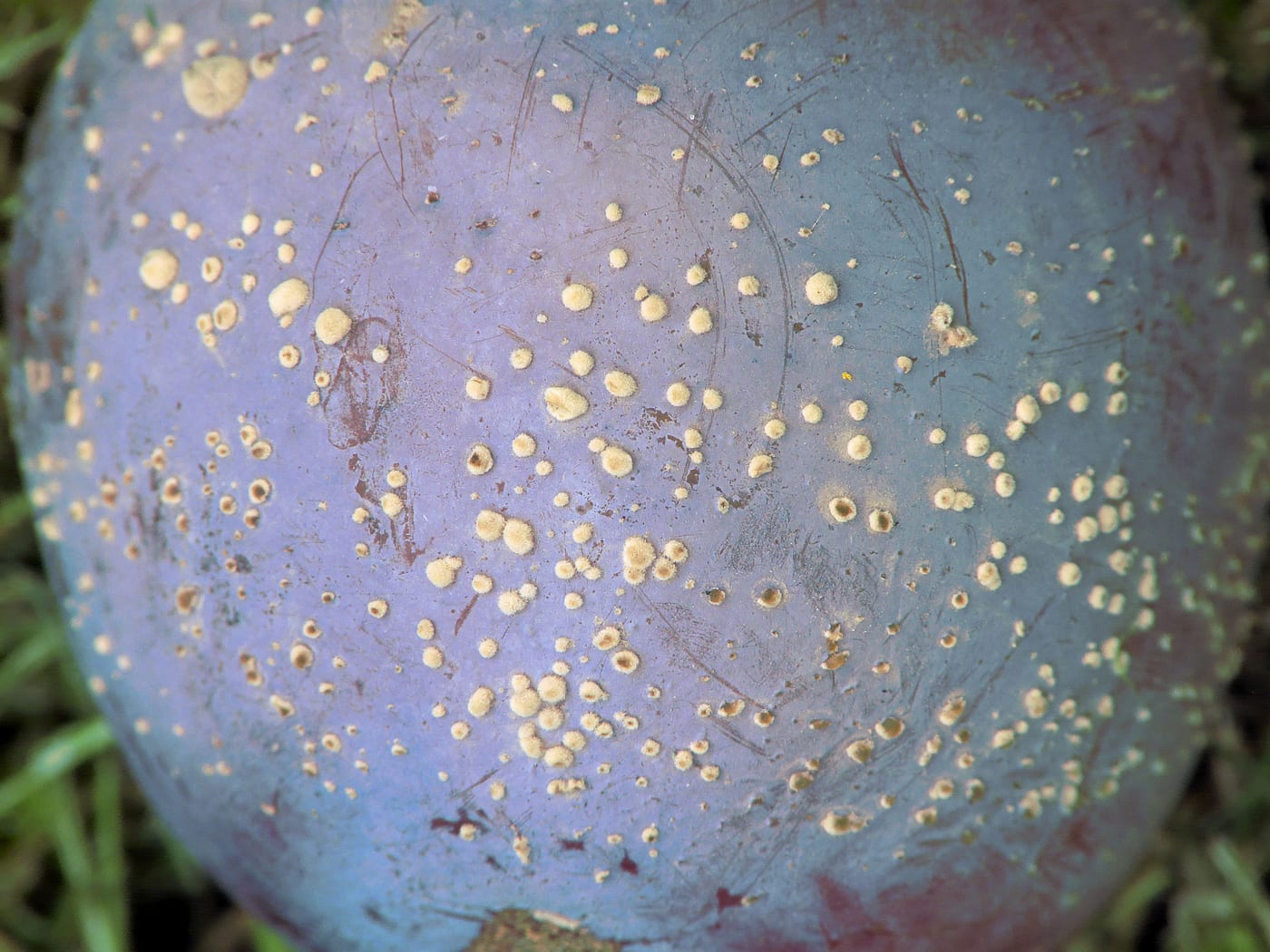
What does it look like?
Infected fruit develops a brown, spreading rot, often with buff-coloured fungal pustules growing in concentric rings across the surface, most visible in wet weather. A related phase, blossom wilt, turns blossom and leaves on fruiting spursWhether a fruit tree carries its fruit mainly on short side-shoots along older wood (spur-bearing) or at the tips of the previous year's growth (tip-bearing). Full definition → brown and shrivelled in spring.
What causes it
Infection needs a wound to get started, commonly from bird pecking, codling moth damage or apple scab, rather than healthy, unbroken fruit skin. How severe the blossom wilt phase turns out also depends heavily on the weather during flowering.
Is this disease active now?
Watch for blossom wilt in spring, then fruit rot from mid-summer onwards through to harvest.
The same two fungi cause both diseases at different points in their cycle: mummified fruit left over winter is what releases the spores that cause blossom wilt the following spring. See Blossom Wilt →
Symptoms
Rot spreads outward from the original wound and can pass between fruits that are touching, whether still in a cluster on the tree or stacked together afterwards in storage. Affected fruit either drops from the tree or dries out and stays attached as a mummified husk, both a genuine loss of that fruit rather than a cosmetic mark.
Life cycle
The fungus overwinters in mummified fruit left on the tree and in cankers on the bark. Spores released in spring cause the blossom wilt phase, and the spores that produces go on to infect wounded fruit from mid-summer onwards.
Why this matters in Scotland
This cuts both ways here. Codling moth, one of the wounds this disease relies on, is already less of a problem in a Scottish summer, but a wetter climate also gives the fungus itself more of the damp conditions it needs to spread once a wound, from a bird peck or scab, exists.
Bird damage and apple scab aren't affected by that same codling-moth advantage, so the wound side of the equation only partly improves here, while the spread side may if anything get a little easier in a wet year.
Controls: what actually works
All the methods below are backed by real evidence, not just repeated folklore.
Remove and dispose of rotted or mummified fruit promptly, buried at least 30cm deep or via green waste collection, and check stored fruit regularly for the same reason
Fruit left on the tree or ground over winter is exactly where the fungus survives to produce next spring's infectious spores, so removing it breaks that cycle before it starts again. The same spread-by-touching risk applies to fruit stacked together in storage, so a single rotting piece left in a box can spread to the rest.
Net trees to reduce bird damage
Bird pecking is one of the ways this fungus gets its start, so a net that keeps birds off the fruit closes off that entry point directly.
Prune out infected spurs and blossom where practical
Removing the blossom wilt phase where it's found stops it producing the spores that would otherwise go on to infect wounded fruit later in the summer.
Choose a resistant plum variety: 'Czar', 'Jefferson', 'Ontario' or 'President'
A resistant variety avoids the problem at the planting stage, useful given how many of this disease's other hosts on this list have no resistant option named at all.
Frequently asked questions
What should I do first if I find brown rot in my garden?
Start with remove and dispose of rotted or mummified fruit promptly, buried at least 30cm deep or via green waste collection, and check stored fruit regularly for the same reason. After that, net trees to reduce bird damage. Work through the rest in order of how well-evidenced they are if the first two aren’t enough on their own.
Is there a spray that works?
No. There are no amateur chemical treatments available for brown rot. The controls that work are cultural: the measures listed above.
When are brown rot most active in Scotland?
Check the seasonal activity section above. Scottish timings can run a few weeks behind the UK-generic figures.
Sources
7 sources, recorded with what each was used for
- RHS1: identification, symptoms, the wound-based infection trigger and named wound sources, flowering-weather severity link, life cycle and overwinteringKeeping a plant alive and intact through the cold months, whether left outdoors, moved under cover, or stored dormant. Full definition →, removing rotted fruit, netting against birds, pruning infected spurs, resistant plum varieties, absence of a fungicide
- RHS1: confirming brown rot directly on apples' own growing page
- RHS1: confirming brown rot directly on pears' own growing page
- RHS1: confirming brown rot directly on plums' own growing page
- RHS1: confirming brown rot directly on damsons' own growing page
- RHS1: confirming brown rot directly on cherries' own growing page
- RHS1: confirming brown rot directly on quince's own growing page