
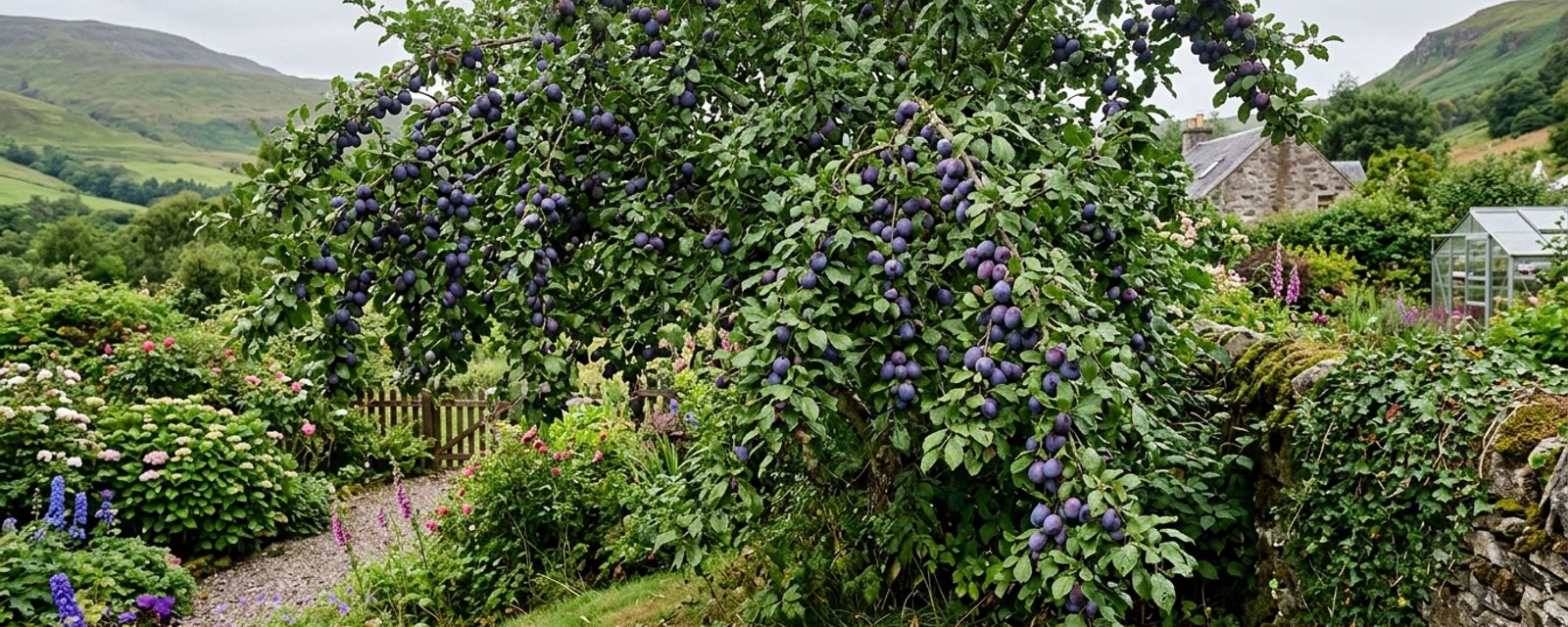
Six plum varieties hold the RHS Award of Garden Merit (AGMThe RHS's Award of Garden Merit: a UK-wide trials award for reliable performance, not a Scotland-specific recommendation. Full definition →), and Czar is the best overall pick for an early crop: rated H6The RHS's H1a–H7 scale for how much cold a plant can survive outdoors, H1a being tender indoor-only and H7 hardy anywhere in the UK. Full definition → for cold hardiness and named as less susceptible to frost damage than most other cultivarsA plant variety that arose or was bred under cultivation and is kept true by deliberate propagation, rather than a naturally occurring wild species. Full definition →, which matters because plums blossom early enough to be a genuine frost gamble most years. The full field turns up two more genuinely different frost-avoidance options worth knowing about, not just runnersLong, trailing stems a plant sends out that root where they touch soil, producing a genetically identical new plant for free. Full definition →-up: Marjorie's Seedling, on the same cold-hardiness footing as Czar but ripening a month later, and Blue Tit, which avoids frost an entirely different way, by flowering late enough to miss it. The plums growing guide checked frost data for only Czar and Victoria; this covers all six.
Quick answer
Czar is the safest default for an early crop. Marjorie's Seedling matches its cold-hardiness for a later harvest. Blue Tit dodges frost a different way, by flowering late enough to miss it rather than tolerating it outright. Victoria suits a small garden thanks to its usually compact, semi-dwarfingHow much a fruit tree's rootstock limits or allows its eventual size, from extremely dwarfing (smallest) through to very vigorous (largest). Full definition → rootstockThe root system and lower stem a fruit tree is grafted onto, chosen to control the tree's eventual size rather than for its own fruit. Full definition →.
All six, side by side
| Variety | Use | Ripens | Hardiness | Frost note |
|---|---|---|---|---|
| Czar | Culinary | Early (Aug) | H6 (-20 to -15°C) | Less susceptible to frost damage than many other cultivars |
| Marjorie's Seedling | Dessert/culinary | Late (Sept) | H5 (-15 to -10°C) | Less susceptible to frost damage; should escape spring frosts |
| Victoria | Dessert/culinary | Mid-season (Aug–Sept) | H5 (-15 to -10°C) | Flowers early, so at risk from spring frosts |
| Opal | Dessert | Early-mid (Aug) | H6 (-20 to -15°C) | Flowers early, so at risk from spring frosts |
| Warwickshire Drooper | Culinary/dessert | Mid-late | H5 (-15 to -10°C) | Flowers may be susceptible to spring frost damage |
| Blue Tit | Dual-purpose | Mid-season | H5 (-15 to -10°C) | Self-fertileA plant that can set fruit using its own pollen, without needing a second, different variety nearby to cross-pollinate it. Full definition →; flowers late, avoiding frost by timing rather than cold-hardiness |
One figure worth flagging on its own: Opal carries the same H6 rating as Czar, but the opposite frost note, so the hardiness number alone doesn't predict blossom risk, it's the named frost statement that matters, not the H-number by itself.
Two more per-variety notes beyond frost: Victoria is usually graftedJoining a chosen fruiting variety onto a separate rootstock, so the tree grows the fruit of one plant on the roots of another. Full definition → onto a semi-dwarfing rootstock, keeping the tree compact and a genuinely good fit for a small or medium garden, not just the default everyone reaches for. Marjorie's Seedling carries general disease resistance alongside its frost-resistant blossom, a second reason it's worth considering beyond its later season. A warm, sheltered wall and fan training suit any of the six on a marginal site, the same technique used for other borderline fruit trees, capturing reflected warmth an open bed doesn't get.
What this doesn't change
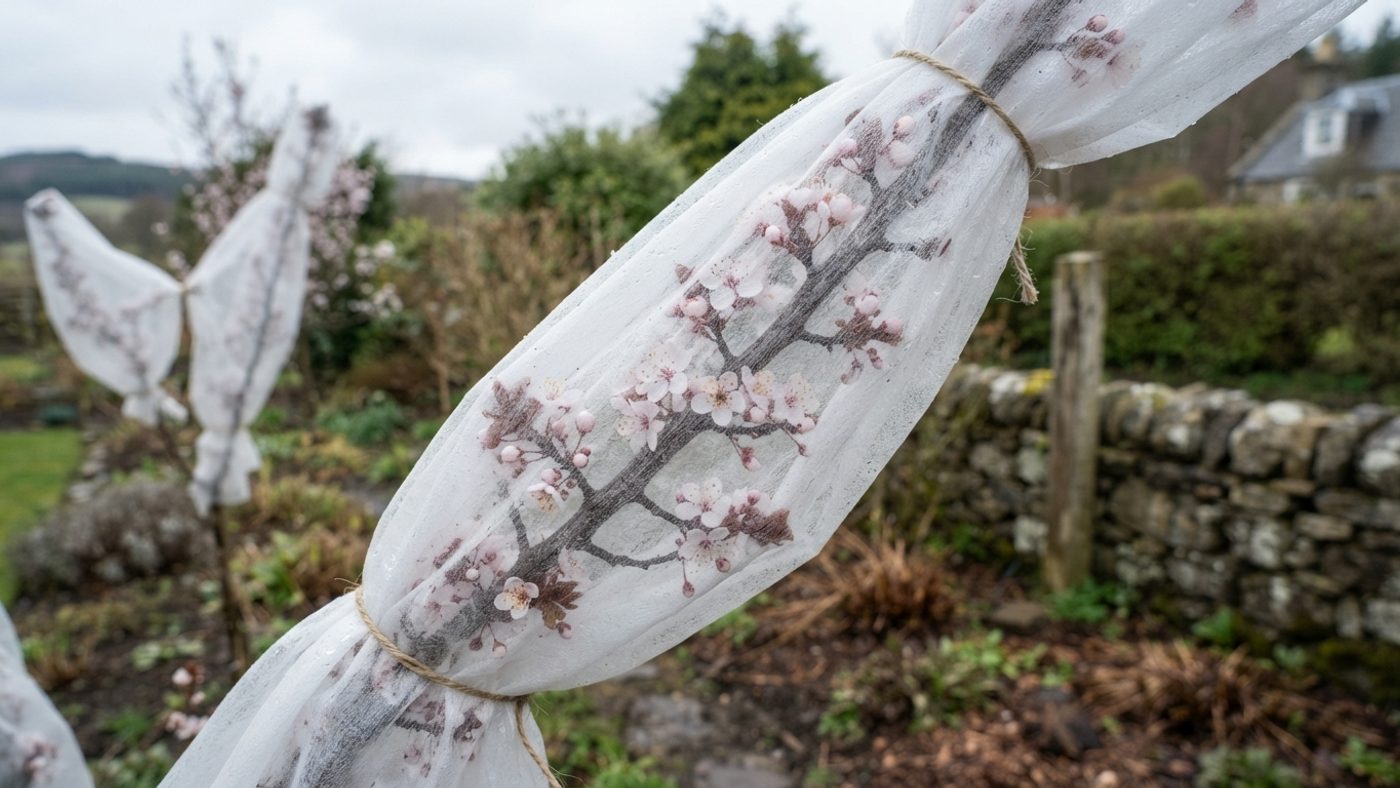
All six remain self-fertile, but cross-pollinationPollen moving from one plant to a different, compatible variety, needed for fruit to set on any variety that isn't self-fertile. Full definition → still improves the crop even on a self-fertile variety, worth knowing if there's room for a second tree even where one isn't strictly required. Poor pollinating weather, cold, wet, still conditions that keep insects grounded during blossom, is a separate risk from frost damage itself, worth planning for regardless of which variety is planted. Site selection matters at least as much as variety: cold air pools in low ground, so a sheltered hollow that feels warmer to stand in is often the worse spot for frost than an open slope that drains cold air away, and a plum still wants a properly sunny spot in well-drained, fertile soil underneath all of that, the same basic siting rule as most fruit trees. Check the frost dates page for typical last-frost timing in your area, since it varies more within Scotland than a single figure suggests. Throwing fleece over the canopy on a night frost is forecast during blossom is a real, low-effort way to protect any variety's crop. For rootstock, spacing, planting, and pruning, the plums growing guide covers all of it.
Pests worth knowing per variety
Heavy-cropping varieties like Warwickshire Drooper can fall into biennial bearing, a heavy crop one year followed by a poor one the next as the tree recovers; thinning fruit properly is one of the better ways to avoid it regardless of variety. Silver leaf and bacterial canker enter through fresh pruning wounds on any variety, the reason plums are never pruned while dormant. The growing guide's Common problems section covers the full list.
Common questions
The growing guide says only Czar and Victoria have a confirmed frost rating. Is that still true?
Not quite, that reflects an earlier, narrower check. Marjorie's Seedling, Opal, and Warwickshire Drooper each have a stated hardiness rating and frost note of their own, and Blue Tit does too: H5, self-fertile, flowering late enough to escape spring frosts rather than tolerate them.
Is Marjorie's Seedling a good frost-resistant alternative to Czar?
Yes: it carries almost the same frost-resistance wording as Czar's. The difference is season, Czar ripens in August, Marjorie's Seedling in September, so picking between them can come down to when you want the crop rather than frost risk alone.
Is Blue Tit's frost protection as good as Czar's?
It's different rather than better or worse. A site prone to late, hard frosts favours Blue Tit's flowering-timing approach; a site with an early frost snap favours Czar's or Marjorie's Seedling's cold-hardiness instead.
Should I avoid Victoria, Opal, and Warwickshire Drooper because of the frost risk?
Not necessarily. All three are named at risk from spring frosts because they flower early, the same trait that makes most plums a frost gamble in the first place. Site selection and fleece on a forecast frost night matter more than swapping variety for variety here; see the growing guide for both.
Sources
7 sources, recorded with what each was used for
- Prunus domestica 'Czar': Hardiness rating and frost-resistance statement for Czar
- Prunus domestica 'Victoria': Hardiness rating and frost-risk statement for Victoria
- Prunus domestica 'Marjorie's Seedling': Hardiness rating and frost-resistance statement for Marjorie's Seedling
- Prunus domestica 'Warwickshire Drooper': Hardiness rating and frost-risk statement for Warwickshire Drooper
- Prunus domestica 'Opal': Hardiness rating and frost-risk statement for Opal
- Prunus domestica 'Blue Tit': Hardiness rating, self-fertility, and frost-avoidance note for Blue Tit
- Gardener's World: How to grow plums: Victoria's semi-dwarfing rootstock/compact habit, Marjorie's Seedling's disease resistance, sun/soil siting factors, and cross-pollination improving yield on self-fertile varieties