
You spot it before you've even set the trowel down, a rosette of jagged leaves pushing up between the sprouts, or a nettle colonising the gap behind the shed. The hand reaches for it almost before the brain catches up. Pulling "weeds" on sight is such an automatic reflex in gardening that most of us never stop to ask whether the plant in question is actually a problem, or just unplanted.
A few of the most commonly yanked plants in Scottish gardens are doing real work the moment they're allowed to stay: feeding early bumblebee queens when nothing else is flowering, hosting the caterpillars that become garden butterflies, feeding the aphid predators that keep other pests in check, building soil fertility for free. None of this is a case for letting any of them run entirely unchecked, they can still swamp seedlings, dominate a border, or annoy someone who wants a tidy lawn. It's a case for pausing before the reflex pull and deciding, plant by plant, whether this particular patch is actually a problem or just a habitat you hadn't planned for.
Here are four to reconsider, trade-offs included.
Stinging nettle (Urtica dioica)
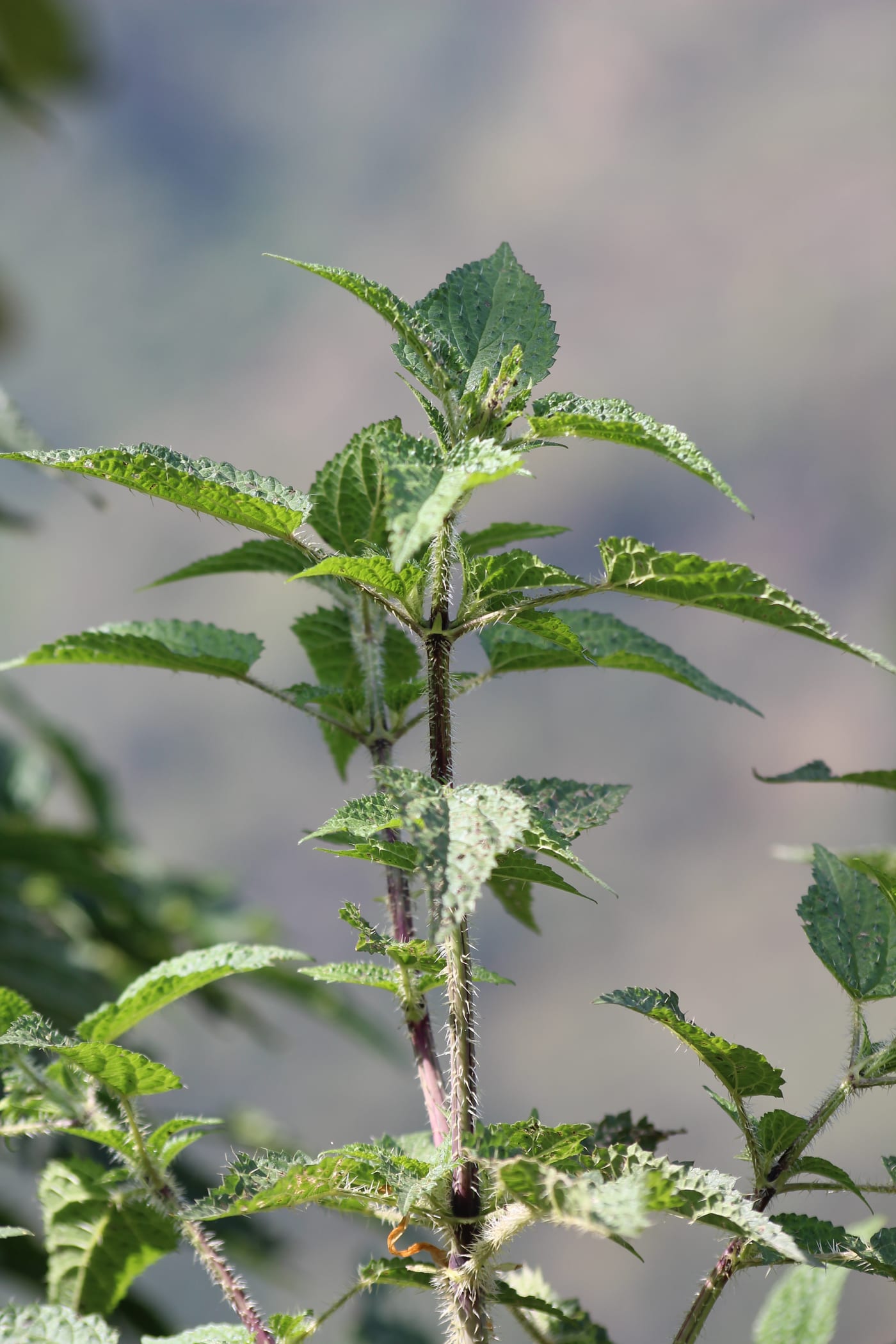
Photo: GB Ryan771, CC BY-SA 4.0
Nettle is probably the hardest of the four to defend on first impression, it stings, it spreads by both seed and creeping roots, and it can engulf a border in a season if left unchecked. Nettles compete with garden plants for water and nutrients and can give a patch an uncared-for look. But where there's space to leave some, nettles are "an excellent source of food and habitat for butterflies such as the red admiral, peacock and small tortoiseshell."
Common nettle is the main larval foodplant for small tortoiseshell, red admiral, peacock, and comma caterpillars, all four lay eggs on nettle leaves, either singly (red admiral, comma) or in batches (small tortoiseshell, peacock), and the caterpillars feed there until they're ready to pupate. Several moth species depend on it too: the mother-of-pearl moth feeds almost exclusively on common nettle, alongside micro-moths like the small magpie and nettle-tap. If you're curious which of these butterflies actually turn up in a Scottish garden, the rare Scottish butterflies piece covers that ground.
Nettle patches also draw aphid colonies, and those aphids in turn feed ladybirds and hoverflies, a nettle bed left standing near a vegetable patch can act as a nursery for the predators that will later help keep aphids off your beans and roses, rather than a source of them.
There's a genuine soil-building use too. Nettle leaves are high in nitrogen, and soaking them makes a nitrogen-rich liquid feed, a trial comparing nettle and comfrey feeds found nettle liquid ran roughly 50% higher in available nitrogen than comfrey, though the two were similar in potash. It's one solid high-nitrogen compost input among several, not a uniquely magic one.
This matters more in Scotland than the general "good for butterflies" framing suggests. NatureScot's own 40-year monitoring data (1979–2023) shows these three nettle-feeders moving in very different directions here:
| Species | 40-year trend in Scotland |
|---|---|
| Red admiral | Almost tenfold increase |
| Peacock | Markedly more common (traditionally a species found south of the border) |
| Small tortoiseshell | Down more than 60% |
NatureScot attributes the small tortoiseshell decline to a mix of climate change, habitat loss and parasites, one more reason a nettle patch is worth keeping rather than assuming the species is doing fine everywhere else.
The honest caveat: some spots are genuinely wrong for it. Path edges, anywhere bare legs brush past, and play areas are all reasonable places to keep nettle out entirely rather than tolerate. A patch tucked behind a shed or at the back of a wildlife corner does the same ecological job without catching anyone off guard.
One mix-up worth clearing up before you reach for gloves: white dead-nettle has similar heart-shaped, toothed leaves and is often mistaken for stinging nettle, but it doesn't sting at all, the giveaway is its whorls of white, hooded flowers arranged up the stem, which true stinging nettle doesn't produce.
Dandelion (Taraxacum officinale agg.)
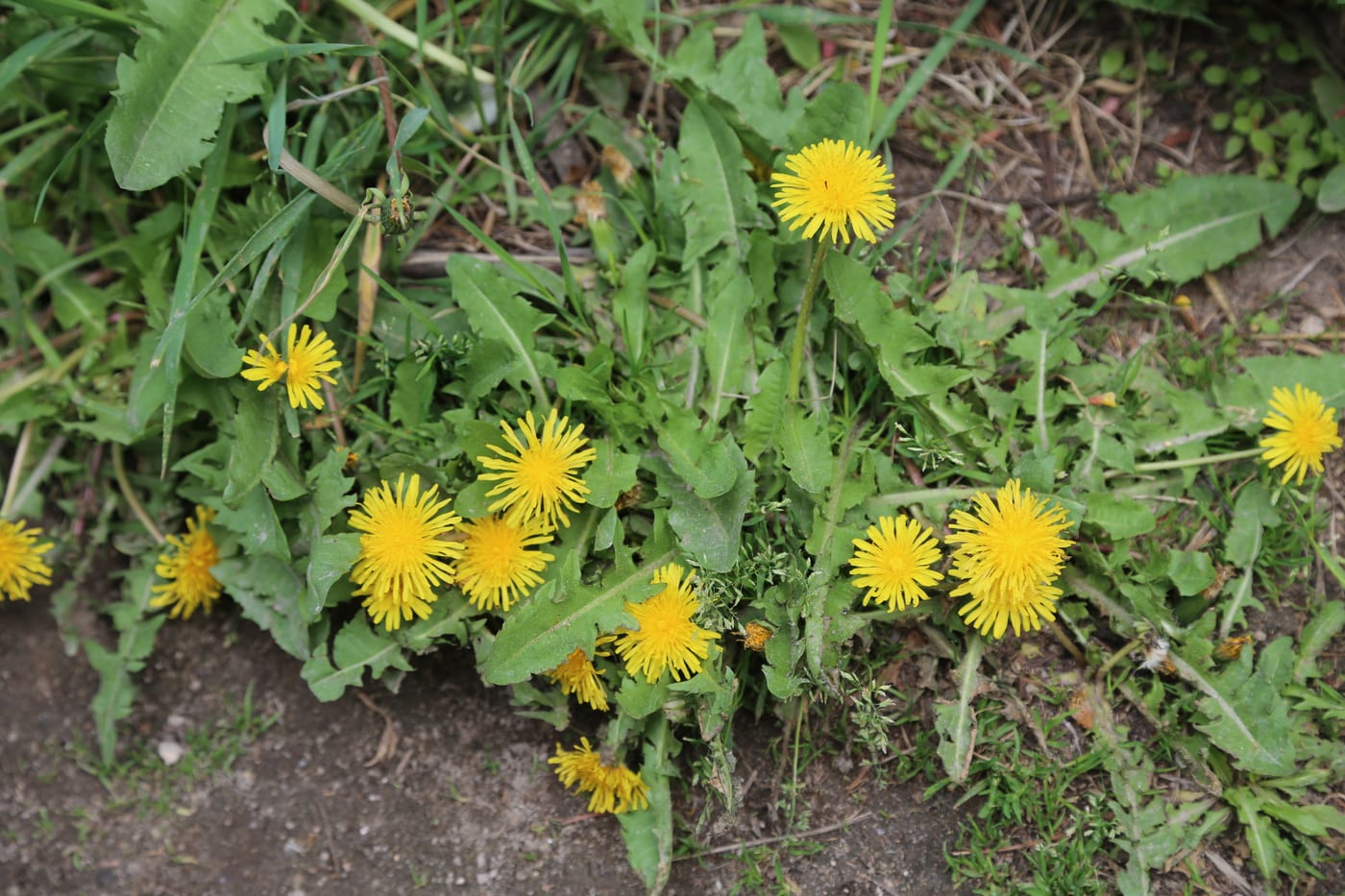
Dandelion is probably the single most reflexively pulled plant on this list, and also the one with the clearest case for restraint, at least in patches. ("Agg." after the Latin name is short for aggregate: dandelion isn't one single species but a large group of near-identical microspecies, all treated the same way in a garden.) Dandelion is one of the most valuable early sources of nectar for bees, and the timing is the whole point: dandelions flower from very early spring, often before most border plants have even broken dormancy, at exactly the moment queen bumblebees are emerging from hibernation and need to refuel fast to found a new colony. A queen with nowhere to feed in March and April doesn't get a second chance that season. The bumblebees page and solitary bees page both name dandelion as lawn forage for exactly this reason.
Below ground, dandelion does something borders quietly benefit from too: its taprootA single, thick, dominant root growing straight down from a plant, storing energy and anchoring it, as opposed to a spreading mass of fine roots. Full definition → drives deep into compacted soil and draws up nutrients from layers most border plants can't reach, which is part of why dandelion foliage that's left to break down (or added to compost) is relatively nutrient-rich. The leaves and flowers are also edible, young leaves in a salad, flowers in fritters or wine, though that's a minor bonus rather than the main case for leaving them.
The trade-off is real: a dandelion clock disperses seed on the wind, widely and efficiently, and an uncontrolled patch will seed itself into lawn, borders, and neighbouring gardens within a season. If you want fine, formal turf, dandelions there are a legitimate nuisance, and lifting the taproot with a dedicated weeder rather than just topping the flower still holds as the practical fix. The middle ground most gardeners land on: let dandelion flower in the rougher patches, along a lawn edge, or in a wildlife corner, and remove flowerheads before they clock over in the areas where you don't want the seed spreading.
Clover — white clover (Trifolium repens) and red clover (Trifolium pratense)
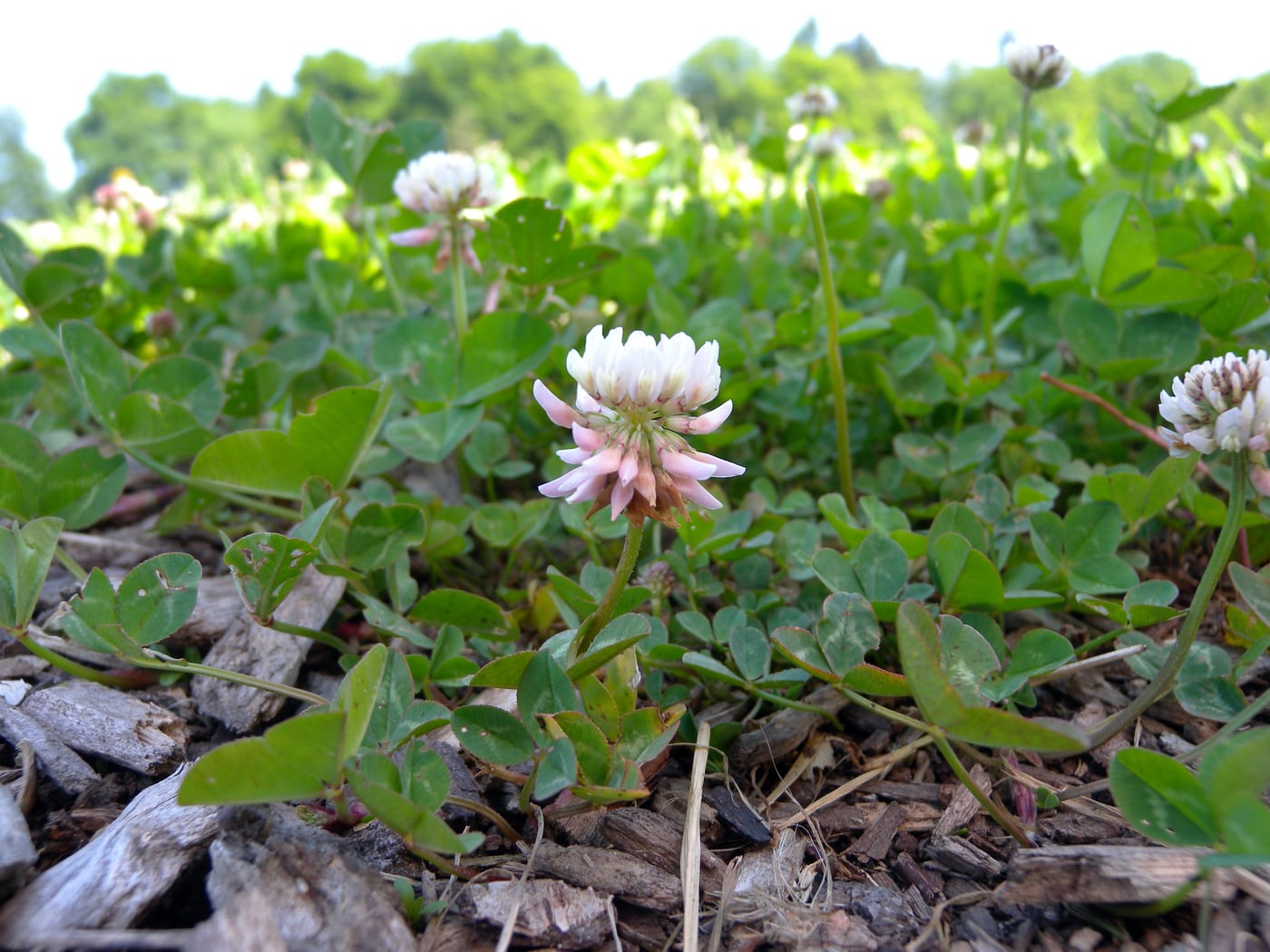
Photo: MurielBendel, CC BY-SA 4.0
Clover's reputation as a "nitrogen fixer" is real, but it's worth being precise about the mechanism, because the common shorthand, that clover growing next to your other plants is actively feeding them nitrogen while it's alive, overstates it. What actually happens is that clover roots host rhizobia bacteria in nodules on the roots, and those bacteria convert atmospheric nitrogen into a form the plant can use, in exchange for sugars from the plant. That nitrogen is mostly retained in the clover's own tissue while it's growing. The transfer to neighbouring plants happens later, when clover material dies back or is cut and left to decompose, releasing nitrogen into the soil for other roots to take up, a soil-building, rotationMoving each crop family to different ground each year, on a multi-year cycle, so pests and diseases that build up in soil don't get a repeat host. Full definition →-style benefit rather than a live feeding effect. It's the same reason green manuresA fast-growing crop sown specifically to be dug back into the soil, adding organic matter and, with legumes, fixing nitrogen. Full definition → work: not because they hand nutrients to their neighbours in real time, but because what they've fixed becomes available once they break down.
As bee forage, clover earns its keep on its own terms regardless of the nitrogen question. Both white and red clover flowers are heavily worked by bumblebees and honeybees, and clover is drought-tolerant and needs no irrigation or fertiliser to stay green, unlike turf grass, most useful on a lawn that does dry out and brown off each summer. Some gardeners now re-seed lawns with dwarf white clover cultivarsA plant variety that arose or was bred under cultivation and is kept true by deliberate propagation, rather than a naturally occurring wild species. Full definition → deliberately, or simply stop weeding it out, since a lawn kept low and regularly cut still holds its clover without it ever getting the chance to flower, one route to keeping a tidy lawn and a pollinator-friendly one from the same patch of grass, rather than choosing between them.
The honest caveat, and it's a fair one: a lawn thick with flowering clover is a lawn bees are actively visiting, and anyone walking barefoot, children especially, can get stung underfoot. Mowing before clover flowers, or keeping a clover-heavy patch away from the area used for barefoot play, resolves this without giving up the plant altogether.
Chickweed (Stellaria media)
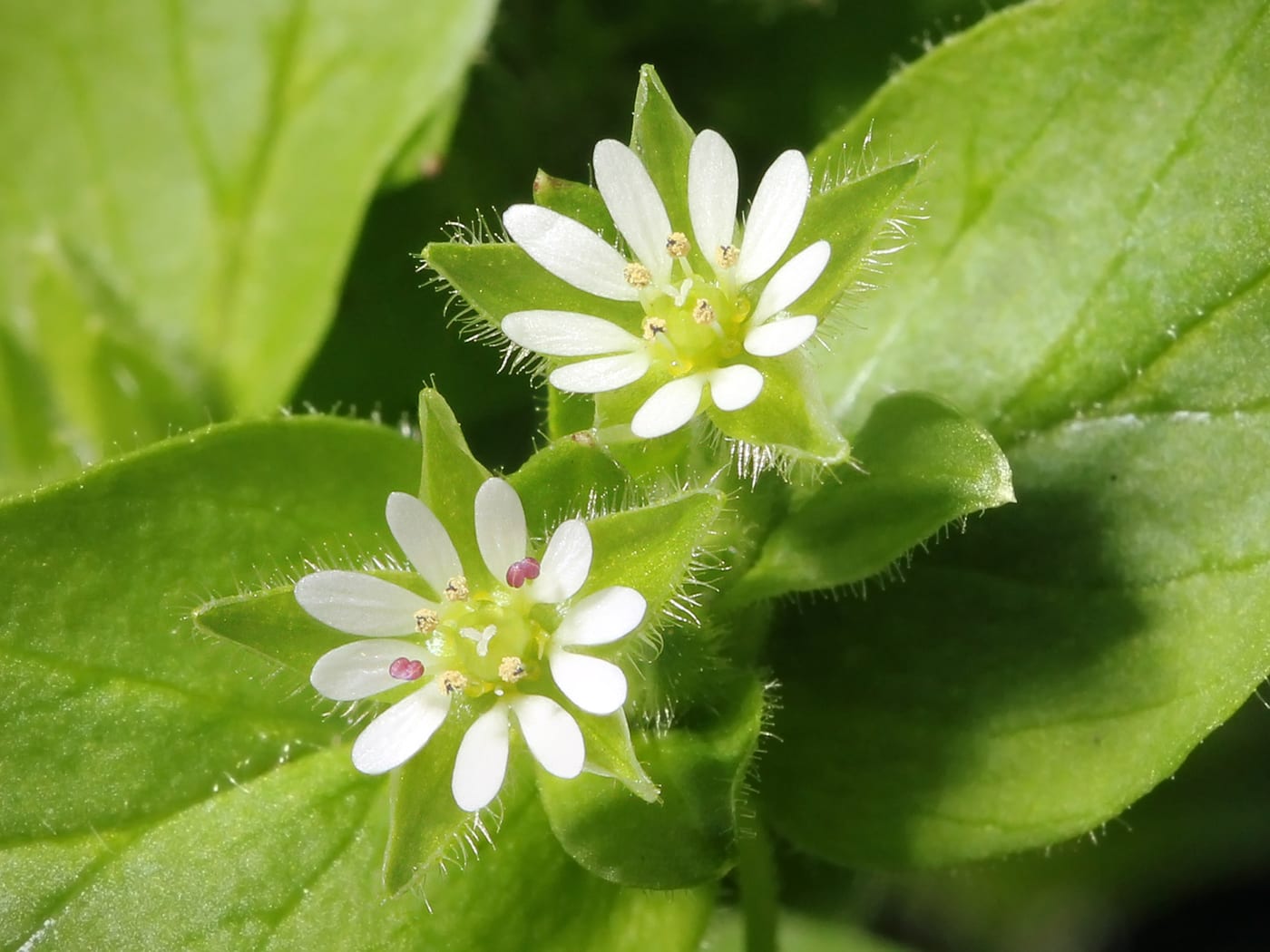
Chickweed gets pulled without a second thought because it's prolific, low, and everywhere, but it's also one of the most underrated forage plants in a Scottish garden, largely because nobody expects much from something this small. Its small white star-shaped flowers appear throughout the year, including through mild spells in what would otherwise be a dead patch of the calendar for flowering plants. That long season matters ecologically: chickweed is often flowering, and setting seed, when very little else in the garden is.
Its flowers provide nectar for bees, but the bigger draw is the seed: chickweed sets seed prolifically and the seed is a genuine favourite of small seed-eating birds, chaffinches named specifically as beneficiaries. In a garden managed with birds in mind, a chickweed patch left to seed through fine weather is doing quiet, unglamorous work feeding them at times of year when natural seed sources are thin.
It's also edible, young leafy growth has a mild, slightly grassy taste and turns up in salads and sandwiches, historically was fed to chickens (hence the name), though that's a footnote rather than the reason to leave it.
The genuinely useful thing about chickweed, though, is how easy it is to walk back if it oversteps: it's shallow-rooted, individual plants are small, shallow-rooted and easily removed, by hand or with a hoe on a dry day. Left entirely unchecked, chickweed will smother small seedlings and carpet bare soil fast, so the case here isn't unconditional tolerance, it's a plant you can let run in moderation and pull back in five minutes the day it starts crowding something you actually planted.
The pattern across all four
Move any of these four a metre or two, into a corner, a border edge, a rougher patch of grass, and most of the problem disappears while the wildlife value stays. Same logic behind tolerating bramble for its wildlife value while controlling where it spreads: the plant isn't the issue, its location is. A garden with a nettle corner, an unmown lawn edge, a patch of clover, and a chickweed margin left to seed isn't an untended garden. It's one with slightly more food in it, for slightly longer in the year, for the insects and birds doing useful work in the rest of it, lacewings included, and anything overwinteringKeeping a plant alive and intact through the cold months, whether left outdoors, moved under cover, or stored dormant. Full definition → in a hibernaculum nearby.
Common questions
Will leaving nettles or dandelions make my garden look neglected?
Only if they're left completely unmanaged everywhere. Confining them to a corner, a border edge, or a designated wildlife patch, rather than letting them spread through beds and lawn, gets the ecological benefit without the whole garden reading as abandoned.
Do I need a big patch of nettles for butterflies to use them?
No single minimum size is required, but a slightly larger, sunny patch tends to get used more than a token clump, since small tortoiseshell and peacock caterpillars feed in dense clusters and need enough foliage to support a whole batch through several weeks of growth.
Is clover actually good for my lawn, or does it compete with the grass?
Both, depending on what you want. Clover competes with turf grass for space, which is why it's traditionally treated as a lawn weed, but it also stays green through dry spells when grass browns off and needs no added nitrogen fertiliser to thrive, exactly why some gardeners now oversow it deliberately instead of fighting it.
Can I still get rid of dandelions in my flower beds while leaving them in the lawn?
Yes, this is a completely reasonable middle ground. Lift the taproot with a dedicated dandelion weeder in borders where you don't want self-seeding, and simply let flowering dandelions stand in a lawn edge or rougher patch of grass.
Is chickweed harmful to other plants if I leave it?
It isn't toxic or invasive in the aggressive sense, but a dense mat of it can smother small seedlings and low-growing plants by competing for light and space. It's shallow-rooted, so it's easy to thin out by hand or hoe wherever it's crowding something you want to keep.
Are nettle stings dangerous, or just uncomfortable?
For most people, a nettle sting is a temporary skin irritation, a stinging or burning sensation with a raised rash that settles within an hour or so. It isn't medically dangerous for the great majority of people, but it's still a good reason to keep nettle patches away from paths, play areas, and anywhere bare skin brushes past regularly.
Sources
14 sources, recorded with what each was used for
- RHS: Stinging Nettles: Nettle spread/competition behaviour, wildlife value for red admiral/peacock/small tortoiseshell
- Butterfly Conservation: Small Tortoiseshell: Confirming nettle as larval foodplant, gregarious caterpillar feeding behaviour
- Butterfly Conservation: Red Admiral: Confirming common nettle as the primary larval foodplant in Britain and Ireland
- Butterfly Conservation: Peacock: Confirming nettle as larval foodplant
- Butterfly Conservation: Comma: Confirming nettle as the most widely used larval foodplant, egg-laying pattern
- Butterfly Conservation: Mother of Pearl: Nettle-feeding moth caterpillars beyond butterflies
- Garden Organic: Comfrey versus nettle, which makes the best plant feed: Nettle liquid feed nitrogen content compared to comfrey
- RHS: Hoverflies: Hoverfly larvae as major aphid predators
- NatureScot: Climate change drives butterflies north: Scotland-specific 40-year population trends for red admiral, peacock and small tortoiseshell
- RHS: Dandelion: Dandelion as early bee nectar source, taproot removal advice, seed dispersal caveat
- RHS: Clover in Lawns: Clover drought tolerance, oversowing practice, control methods
- RHS: Chickweed: Flowering season, bird seed value (chaffinches), shallow roots/ease of control, edibility
- The Wildlife Trusts: Common chickweed: Year-round flowering confirmation, general wildlife/insect value
- The Wildlife Trusts: White dead-nettle: Distinguishing white dead-nettle (no sting) from stinging nettle