
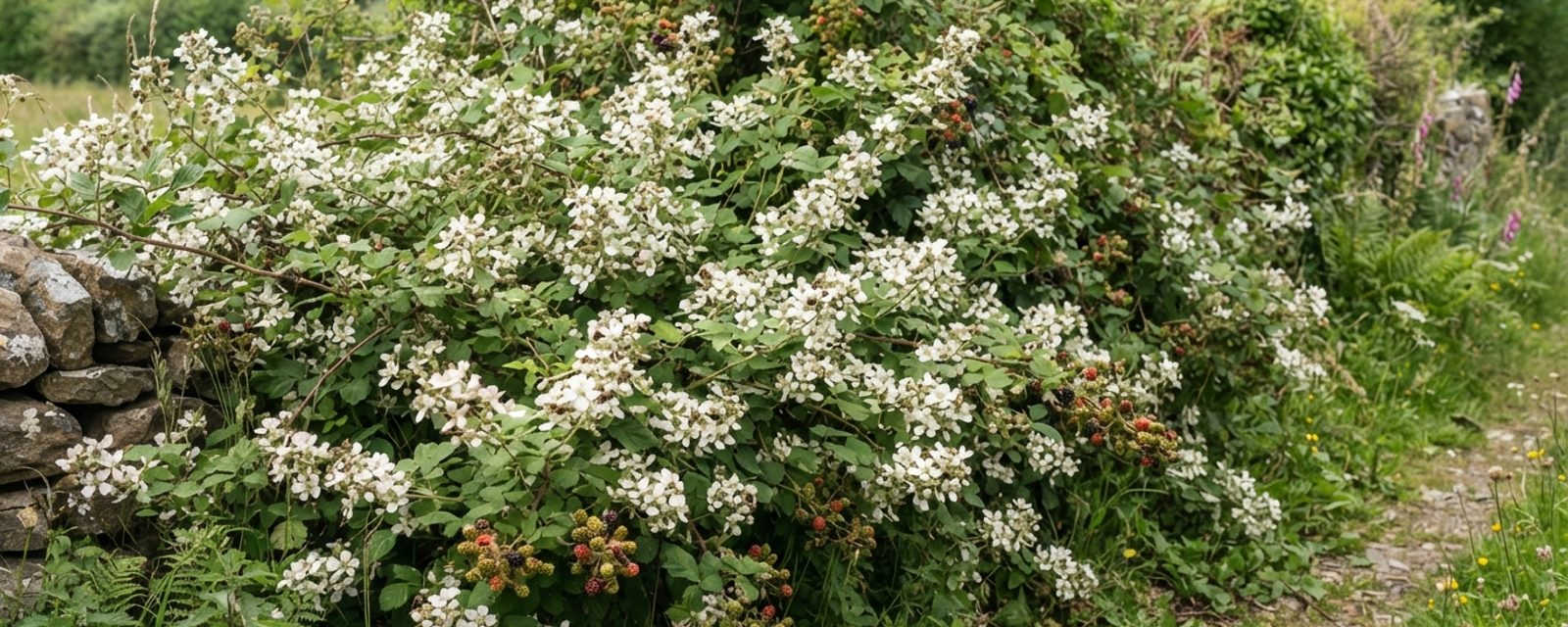
Bramble spreads two ways at once, and only one of them needs a gardener's help to notice. The first is seed: birds eat the berries and pass the seed on wherever they land next, which is usually how a bed that's never had bramble in it before ends up with a seedling from nowhere. The second is the more aggressive one, and the reason an established patch is so hard to argue with: an arching cane that touches the ground roots wherever its tip makes contact with soil, producing a new, independent plant exactly where it lands, without needing a bird or the wind at all. A single season's canes can reach several metres, so a patch left unchecked doesn't just get denser, it advances. Pulling the visible cane does nothing about a root system that may already be rooted in two or three places along its length.
The same structure that makes bramble a nuisance in a border is what makes it valuable everywhere else. A stand of canes builds into a dense, thorny tangle that is genuinely hard for a person to get into and genuinely good cover for a bird, and it flowers for months rather than weeks. Bramble flowers from May to September, an unusually long season that keeps it producing nectar well after most spring-flowering plants have finished, worth more in a Scottish garden than the same fact would be further south, given how much shorter the rest of the growing season already is. It supports around 100 species of moth as a foodplant, alongside bees and butterflies drawn to the flowers, and its berries and thorny cover feed and shelter garden birds and small mammals. The practical question isn't whether to keep bramble, but where.
What the wildlife actually gets from it
A dense bramble patch does several distinct jobs at once, and each one changes how much space is actually worth giving it.
Flowers first: bramble's long flowering window means it's providing nectar and pollen through a stretch of summer when many other plants have already set seed. Fruit second: the berries feed birds and mammals directly, and thorny growth around them means the fruit isn't cleared as fast as it would be in the open, worth noting a boundary patch is edible for people too, not just wildlife, if you get to the berries first. And structure third, this is the one gardeners underrate. A mature bramble thicket is close to impenetrable to anything without a reason to be in there, which is exactly the quality that makes it good nesting cover for garden birds, and shelter for small mammals such as hedgehogs, in a Scottish garden the same as anywhere else in the UK.
Why the same plant is a real problem in beds
Bramble roots compete hard for water and nutrients, canes throw thorny growth across paths and over smaller plants within a season, and because it roots at the cane tip rather than staying put, an unmanaged patch doesn't creep, it colonises new ground actively, on its own schedule, not yours. Left long enough, a border can end up shaded and physically inaccessible before you've registered how much ground it's taken.
Digging is genuinely easier straight after rain: the soil around a root crownThe base of a perennial plant where roots and shoots meet, often sold and planted as a ready-made dormant plant rather than grown from seed. Full definition → lifts more cleanly when it's damp rather than dry and compacted. Roots also pull with the least resistance while the plant is dormant over autumn and winter, before spring growth puts its energy back into the canes.
The boundary strip: how much to leave, and where
Decide, deliberately, which zones of the garden bramble is allowed in, rather than leaving it to spread wherever it happens to reach.
| Zone | What to do | Why |
|---|---|---|
| Boundary or hedge base, away from beds | Leave a controlled patch or strip, cut back rather than dug out | Keeps flowering, fruiting and nesting cover without competing with cultivated plants |
| Margin between the boundary strip and beds | Cut back hard, remove any rooted cane tips | Stops the patch expanding into cultivated ground season on season |
| Inside beds and borders | Remove fully, including roots | Root competition and thorny growth aren’t compatible with plants you’re actively growing |
A strip along a fence line, a hedge base, or an awkward corner that isn't being cultivated anyway is a natural place to let bramble stand: it gets the flowering, fruiting and cover value without threatening anything you're trying to grow. The work that actually matters here isn't removing the patch, it's controlling its edge. Because bramble spreads by rooting cane tips rather than staying in a tidy clump, a boundary patch left completely unmanaged will still send canes forward into the border over a season or two. Checking that margin periodically and cutting back or lifting any cane that's rooted past the line you've set keeps the arrangement stable, rather than turning into encroachment by default.
If thorns near a path or seating area are the real objection rather than bramble itself, a thornless cultivated variety is worth considering for the boundary strip instead of the wild plant, see the best blackberry varieties for Scotland guide for options bred that way, though bear in mind a cultivated variety is a deliberate planting decision with its own management needs, not a direct swap for whatever's already established.
Clearing what you don't want
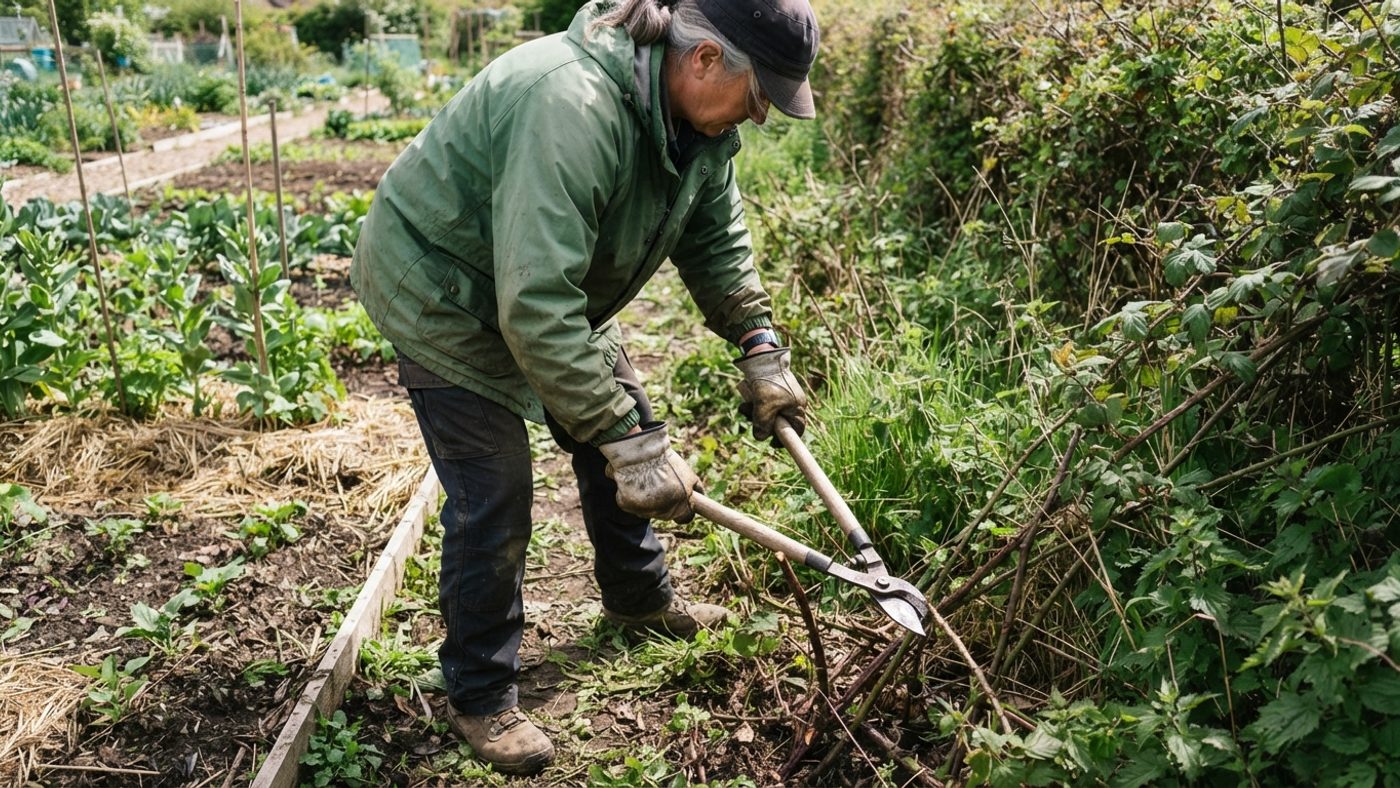
For bramble that has to come out of a bed entirely, rather than being pushed back at a margin, the technique doesn't change from what works anywhere else on the plot: cut the canes back hard, dig out the stump and root system, and stay on top of regrowth from any fragments left behind, since bramble roots and stump pieces will resprout if missed. Wear thick gloves throughout, thorns are the most common injury on this job, and eye protection is worth adding too, an arching cane can whip back at face height as you cut or pull, and a thicket dense enough to work into puts thorns at eye level as often as at hand level. The clearing an overgrown allotment plot guide covers the full removal technique, tool choice and root-fragment troubleshooting in more depth.
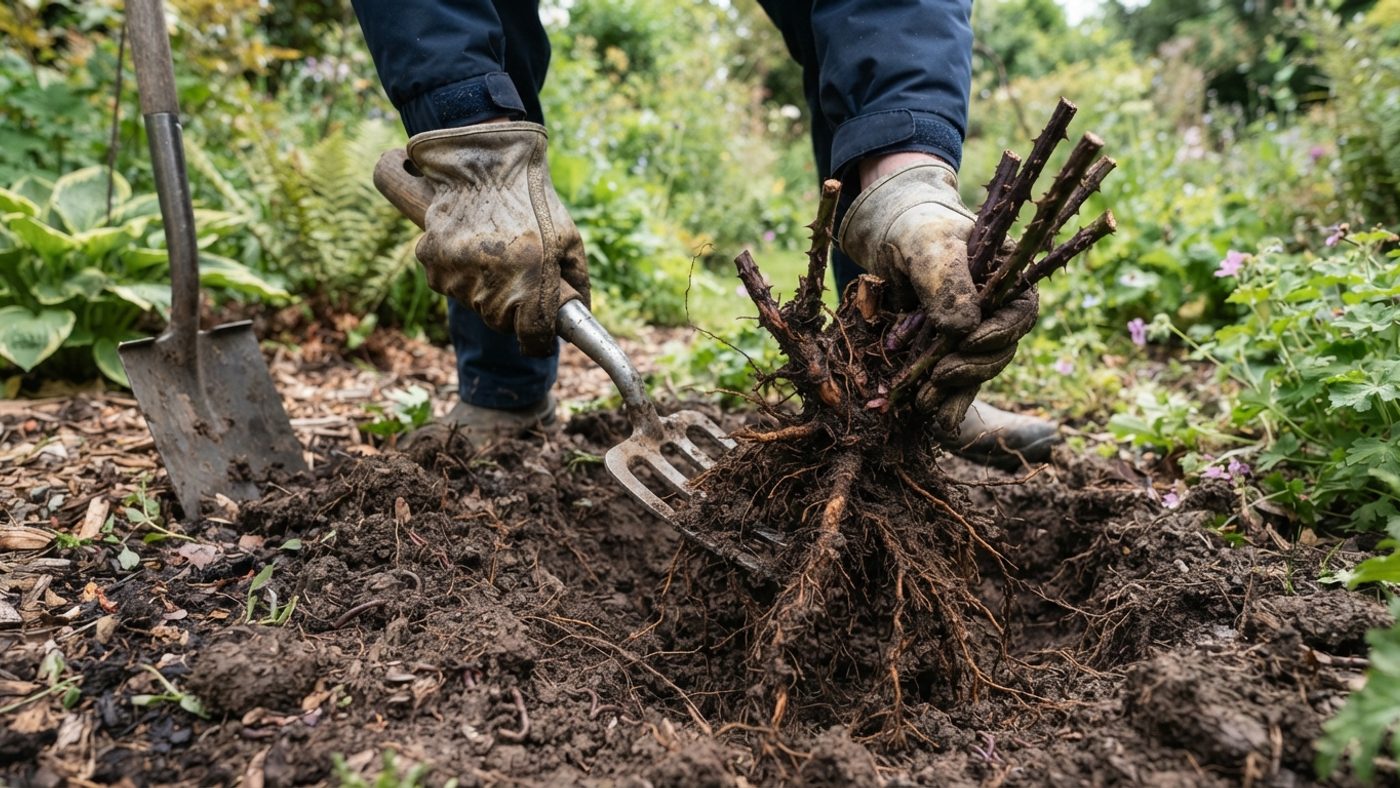
Bramble is a native plant, not a controlled or notifiable species like Japanese knotweed or giant hogweed, so there's no legal disposal requirement beyond ordinary good practice: don't put dug-out roots on a home compost heap, since fragments can survive and regrow in the heap itself, but cut top growth can go in a council green bin or garden-waste collection, or be composted once it's dried out and shredded. On weedkiller: digging and smothering are generally favoured over chemical control for garden brambles. Smothering means covering cut-back ground with cardboard or a heavy-grade membrane to block light to any regrowth, left in place for a full growing season or more where roots weren't fully removed underneath. Spray is also genuinely awkward to keep off canes you're deliberately preserving nearby at the boundary, so digging, cutting or smothering is the more practical choice close to a strip you want to keep.
The timing rule that applies to all of this
Whichever zone you're working in, cutting back a boundary strip, tidying a margin, or clearing a bed, the same legal constraint applies. Under the Wildlife and Countryside Act 1981, it's an offence to intentionally take, damage or destroy the nest of any wild bird while it's in use or being built, and the Act's Scotland-specific provisions extend that to interfering with an active nest more broadly. Hedge and shrub work is best avoided between March and August, when nesting is underway, and October to February is the recommended window for hedge cutting for the same reason. A dense bramble patch is exactly the kind of cover a bird will nest in, so this isn't a formality here, check a patch for an active nest before cutting into it, and if you're clearing a substantial stand, plan the work for autumn or winter rather than mid-summer.
Not the same plant as your blackberry bed
Wild bramble encroaching from a boundary or hedge base is a different situation from a cultivated blackberry variety planted and trained deliberately in a fruit bed, different vigour, different management, and a different reason for being there. Anyone planting blackberries on purpose rather than managing an existing wild patch is better served by the best blackberry varieties for Scotland guide, which covers cultivated options bred for flavour and manageable growth.
Common questions
Should I remove all the bramble in my garden?
Not necessarily. Bramble growing where it isn’t competing with cultivated plants, a boundary, a hedge base, an uncultivated corner, provides genuine flowering, fruiting and nesting value across the summer. The plant only needs to come out fully where it’s competing directly with beds or borders; elsewhere, controlling its edge is usually enough.
How do I tell if a bird’s nest in a bramble patch is actually active?
Look and listen before cutting rather than assuming an old nest is empty: a nest with fresh droppings underneath, visible eggs, or adult birds flying to and from the same spot repeatedly is active. An empty, weathered nest with no recent activity around it isn’t protected in the same way, but if you’re not confident either way, treat the patch as occupied and wait rather than risk disturbing one that is.
Will bramble regrow if I don’t dig out the roots?
Yes. Cutting canes back to ground level without removing the root system doesn’t stop the plant, bramble regrows readily from roots and stump fragments left in the ground, so any piece missed during digging will resprout, sometimes over more than one growing season.
Is wild bramble the same plant as garden blackberries?
They’re closely related, but a cultivated blackberry variety bred for garden growing is a deliberate planting choice with different vigour and management needs from a wild bramble patch that has spread in on its own.
Do I need permission from a neighbour or my allotment site to remove bramble growing along a shared boundary?
There’s no legal requirement to ask, since bramble isn’t a protected or notifiable species, but a shared boundary is worth a conversation regardless: cutting back your side of a hedge line can expose or thin out growth your neighbour was relying on, and an allotment site may have its own rules about what can be cut at a shared edge. Confirming who’s responsible for which side avoids doing the work twice, or undoing someone else’s deliberate boundary planting.
Sources
5 sources, recorded with what each was used for
- legislation.gov.uk: Wildlife and Countryside Act 1981, Section 1: The offence of intentionally taking, damaging or destroying an active wild bird’s nest, including the Scotland-specific provisions
- RHS: Brambles: Wildlife value (pollinators, around 100 moth species, birds and mammals), and removal technique (cutting back, digging out stump and roots, regrowth from fragments)
- RHS: Hedges — Nuisance and Overgrown: Wildlife and Countryside Act 1981 protection for active nests, and the March-to-August cutting caution
- The Wildlife Trusts: Bramble: Flowering period (May-September), fruit and nectar value for birds and butterflies, shelter for small mammals
- Woodland Trust: How to Plant and Maintain Hedges: Recommended October-to-February cutting season and the nesting-bird reasoning behind it