
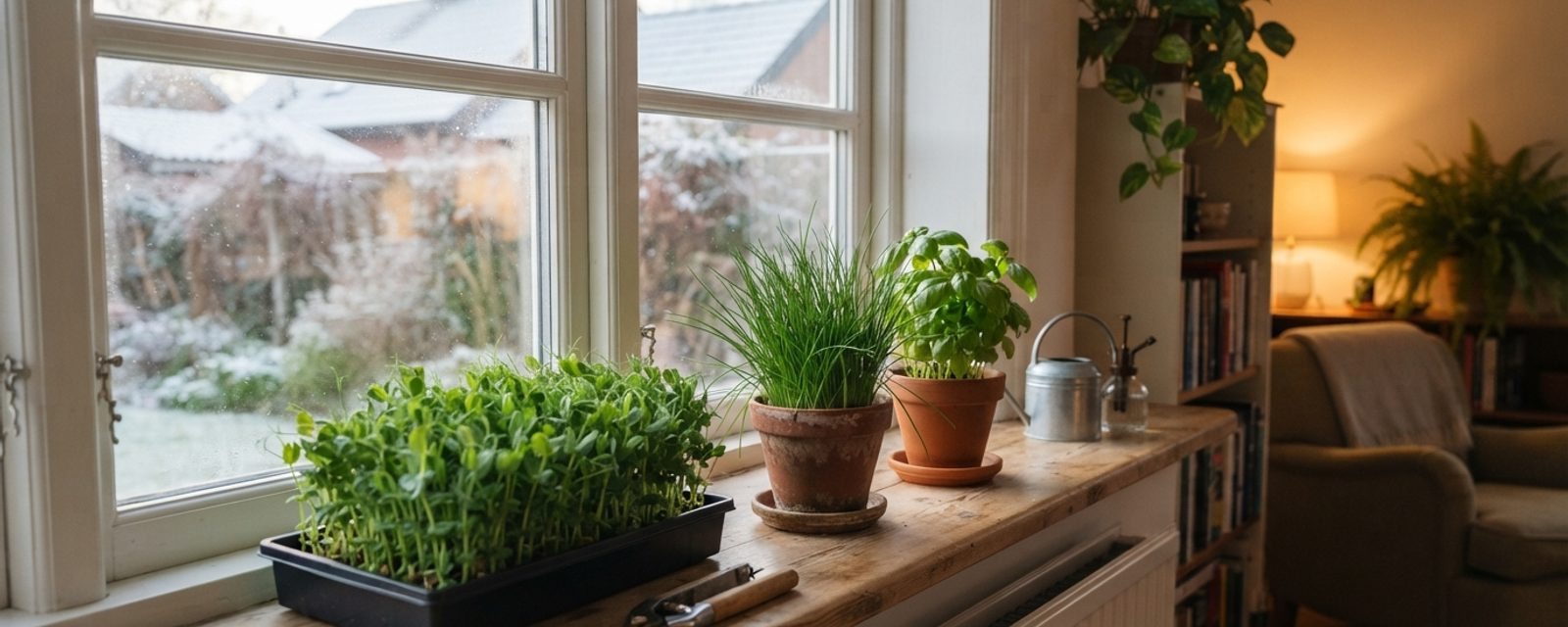
On the December solstice, Edinburgh gets around 6 hours and 58 minutes of daylight, against roughly double that in June. A windowsill you're sowing onto in January is working with a fundamentally different light budget than the one you'll use in summer, and that gap doesn't rule windowsill growing out for winter, it just means the right crop, the right timing, and realistic expectations matter more here than they do further south. A fast, forgiving crop sown in low light will still crop reasonably well; a slow, sun-hungry one sown at the same time may simply sulk until the days lengthen. For the full month-by-month picture and the case for supplementing that light with a grow lamp, see our LED grow lights guide.
Five plants suit a windowsill, in Scotland, on their own terms: what each one needs, and what to actually expect from it. There's a quick side-by-side comparison table further down if you want to jump straight to it.
Why a windowsill, specifically
A windowsill isn't a scaled-down greenhouse or polytunnel. It's warmer and more stable than either, because it sits inside a heated room, but it also gets far less total light, no matter how sunny the aspect, and that light comes from one direction rather than all around. That combination rules out anything that wants full sun from a wide arc of sky or a long, slow growing season, which is the filter behind the five picks below.
Microgreens
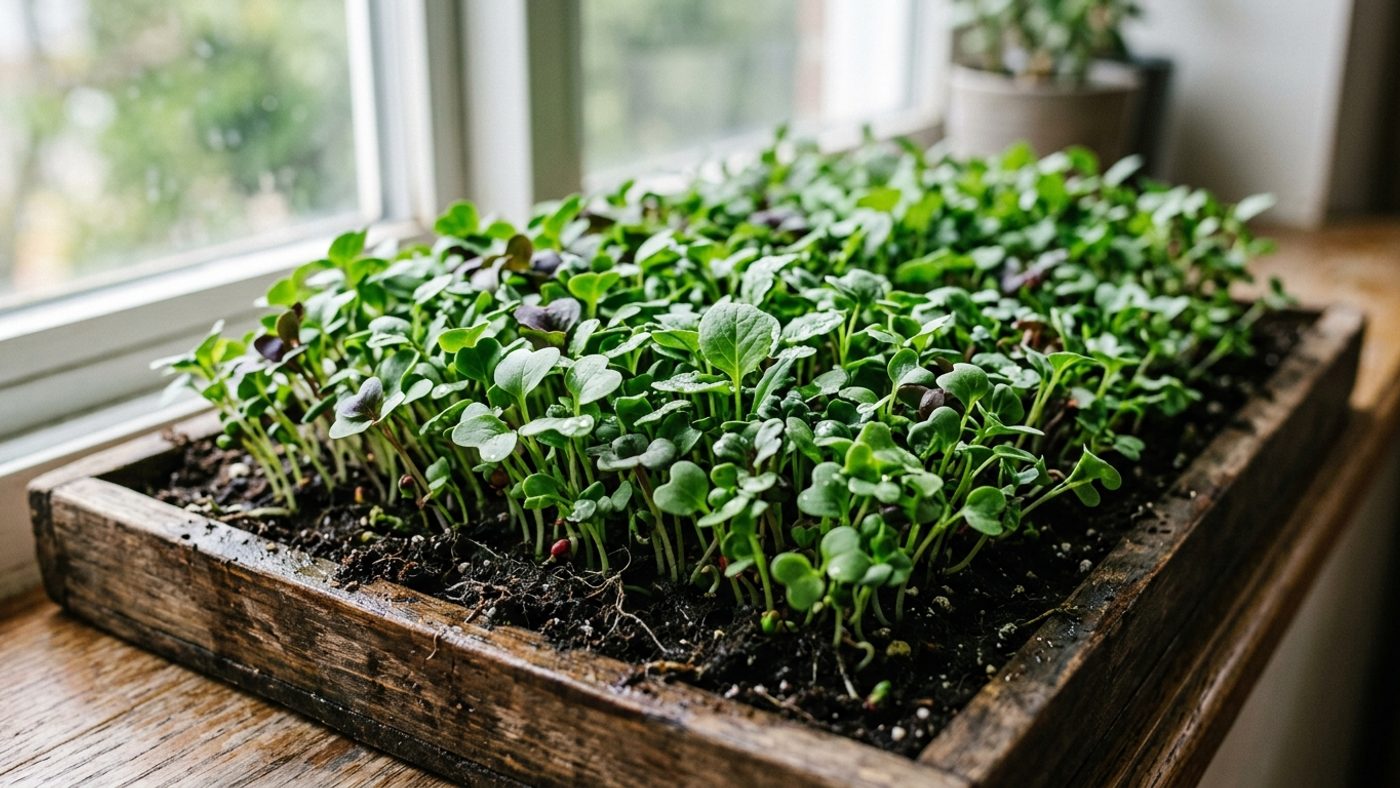
Microgreens are cut vegetable and herb seedlings, harvested days after their first true leaves appear rather than grown to maturity, and they're arguably the single best match for a Scottish windowsill in winter. RHS growing advice puts them on "a warm, sunny windowsill or in a bright indoor space," sown thickly on the surface of moist compost and ready to cut in as little as one to three weeks. Suitable seed includes cress, radish, chard, turnip, mustard, beetroot, and herbs such as basil and coriander.
Because the whole cycle is over before low light becomes a real constraint, microgreens are one of the few crops you can sow through a Scottish December or January and still expect a decent result. Sow a small tray every week or two and you get a rolling harvest rather than a single glut, which also hedges against any one sowing struggling in a particularly dull spell.
Chives
Chives are a hardy perennial herb, and the RHS advice for extending their season is explicit: pot up a clump from the garden and bring it indoors over winter, keeping it on a sunny windowsill. That's a genuinely different use case from sowing seed indoors from scratch. You're not asking a seedling to establish in low light, you're giving an already-mature plant a warmer spot to keep ticking over and stay pickable through the months when the outdoor plant would be dormant.
Growth will be slower and thinner than a summer clump on the same windowsill, since even a south-facing pane in Edinburgh is working with well under half the daylight hours it gets in June, but a potted-up clump will typically keep producing enough for regular snipping rather than a full stop. Treat it as maintaining a supply, not growing a crop from nothing. See our chives growing guide for the rest.
Cut-and-come-again salad leaves
RHS advice on cut-and-come-again leaves notes that autumn-sown salads can be kept in a greenhouse or on a sunny windowsill over winter, with leaves ready in around eight weeks in cooler conditions, compared with about four weeks in summer. The technique itself, snipping a few outer leaves per plant and leaving the centre to keep growing, suits a windowsill well because it spreads the harvest over many small pickings rather than needing one big cut.
For winter windowsill sowing, lean toward the more shade-tolerant leaves such as mizuna, mibuna and rocket rather than leaves that want to bulk up into a full lettuce head. Earlier sowings of oriental leaves tend to bolt, running up to flower and turning bitter before the leaves are worth eating, but as an indoor winter crop grown for leaf rather than a full head, the same shade-tolerant varieties are the sensible choice, and the doubled time-to-harvest compared with summer is the direct, practical version of the daylight gap described above: same technique, roughly twice as long.
Basil
Basil is the classic windowsill herb: it wants a sunny windowsill or a warm greenhouse, full sun for at least part of the day, and consistent warmth, since it dislikes cold, damp conditions and germinatesA seed sprouting: breaking dormancy and putting out its first root and shoot, given the right warmth and moisture. Full definition → best around 20°C (68°F). RHS sowing guidance runs from March through July, which is a deliberate seasonal window, not an oversight.
This is the pick where the Scottish daylight gap most directly changes the calendar rather than just the yield. Sowing basil on a windowsill in a dark Scottish January against RHS's own recommended window is fighting the plant on two fronts at once: low light, and a windowsill that in an unheated room, or right against cold glass, can sit well short of the 20°C basil wants to germinate well. Waiting until the RHS window opens in spring, when the days have lengthened well beyond the December low and rooms need less help staying warm, gives it a genuinely fair chance rather than a seedling stalled at the two-leaf stage for weeks. See our basil growing guide for the rest.
Chilli peppers
Compact chilli varieties are, per RHS growing advice, well suited to a sunny windowsill indoors, with seed sown from late winter to mid-spring, seedlings needing 16 to 18°C (60 to 64°F) once up, and mature plants doing best kept above 15°C (59°F). Fruit typically comes from midsummer into autumn, several months after sowing, which makes this the slowest of the five picks by a clear margin. This is also the pick where a windowsill's main advantage over an unheated greenhouse or polytunnel matters most: a heated room can hold those temperatures through a Scottish winter and spring in a way an outbuilding usually can't.
That long lead time is exactly why the RHS sowing window starts in late winter rather than earlier: sowing in December to catch the shortest days would mean weeks of weak, leggyDescribes a plant that's grown tall, thin and sparse rather than bushy, usually from too little light or not being pinched out. Full definition → growth before the plant has a chance to make real progress, whereas a late-winter sowing has the days lengthening in its favour almost from the start. A windowsill chilli plant grown in Scotland on the RHS timetable is a slower, smaller-scale crop than the same plant would be further south or under grow lights, but it's a realistic one, not a race against the darkest weeks of the year. See our chilli growing guide for the rest.
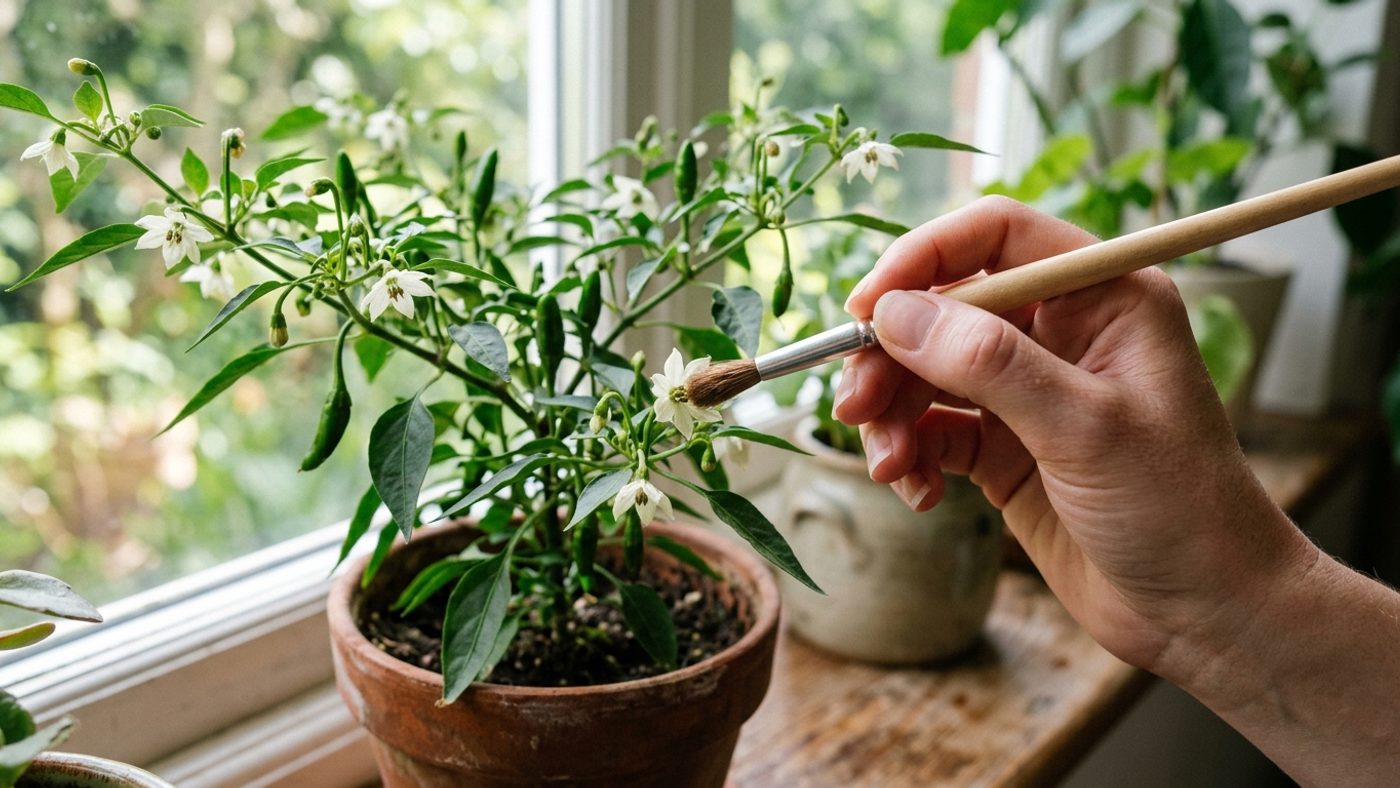
Indoors there are no insects to move pollen between flowers, so a windowsill chilli plant usually needs help to set fruit at all: once flowers open, a gentle daily shake or a light brush inside each one is normally enough. Feed both basil and chillies with a dilute general liquid feed every couple of weeks once they've outgrown their first small pot, and pot onMoving a plant into a larger pot as its roots fill the current one, giving it more room and fresh compost before it becomes pot-bound. Full definition → into the next size up as roots fill the current one rather than waiting for the plant to visibly struggle.
Windowsill risks worth knowing about
A few problems come up often enough on a Scottish windowsill that they're worth flagging before you start, rather than after.
Glass gets colder than the room around it overnight, particularly in older single-glazed windows, and a pot pushed right up against the pane can chill enough to check growth or damage tender crops such as basil and chillies. Pull pots back an inch or two from the glass on frosty nights.
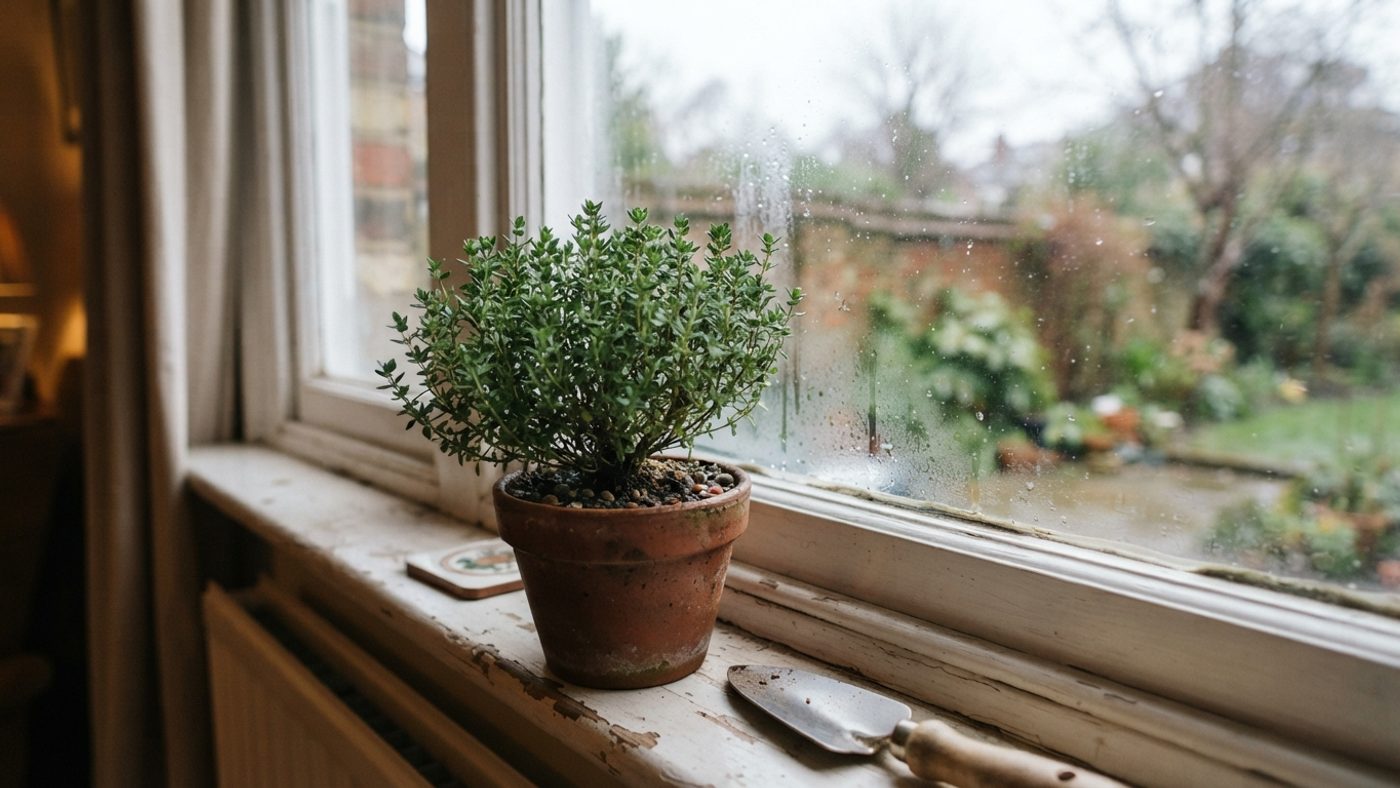
Because light only arrives from one side, give any pot a quarter-turn every few days, or growth will lean and stretch toward the window rather than growing upright. Central heating dries the air fast, which basil in particular dislikes, so keep pots away from direct radiator heat and mist occasionally if leaves start to look papery.
Low light and still air, exactly the conditions of a dim winter windowsill, are also when damping offA fungal disease that kills seedlings at soil level, usually caused by overwatering, poor airflow, or reused unsterilised compost or trays. Full definition → (seedlings collapsing at the base almost overnight) is most likely, and it's the main risk for microgreens and salad leaves specifically: sow thinly enough that air can move between seedlings, don't let compost sit waterlogged, and use clean trays. Sciarid gnats, the small black flies that swarm up from wet compost, can build up in microgreens and salad trays; letting the surface dry out slightly between waterings usually breaks their cycle. Aphids can find their way onto an indoor basil or chive plant even without a garden nearby; check the undersides of leaves occasionally, and a strong jet of water in the sink or a wipe with a damp cloth is usually enough to knock a small early infestation back before it spreads.
Feeding and watering matter too. A tray of microgreens or a small pot of salad leaves cut repeatedly over several weeks will use up the nutrients in a small volume of compost faster than a single-harvest crop, so a dilute general liquid feed every couple of weeks once past the seedling stage keeps growth going. Water when the compost surface starts to dry rather than on a fixed schedule, and water at the base where possible rather than over the top of small seedlings, which helps avoid the damp conditions damping off needs.
The five at a glance
| Pick | Light need | Typical sow-to-harvest | Container | Best suited to |
|---|---|---|---|---|
| Microgreens | Bright windowsill, tolerates lower light | 1 to 3 weeks | Shallow tray or punnet | Sowing right through winter |
| Chives (potted clump) | Sunny windowsill | Ongoing, from an established plant | 20cm (8in) wide and deep, or existing pot | Keeping a herb supply alive over winter |
| Cut-and-come-again salad leaves | Sunny windowsill, shade-tolerant varieties cope better in winter | About 8 weeks in cooler conditions (vs 4 in summer) | Shallow, wide tray or trough | Repeated small harvests through the darker months |
| Basil | Full sun for part of the day, warmth essential | Several weeks from a spring sowing | 7.5cm (3in) pots, moving up to 20cm (8in) | Sowing March to July, not midwinter |
| Chilli peppers | Sunny windowsill, warmth essential | Months: sown late winter to mid-spring, fruiting midsummer to autumn | 13cm (5in) pots, moving up to 22cm (9in) | A slow-season crop started as days lengthen |
Common questions
Can I grow any of these on a north-facing windowsill in Scotland?
Microgreens are the most forgiving of the five and will still grow on a north-facing sill, though more slowly than on a bright one. Chives and cut-and-come-again leaves tolerate some shade too. Basil and chillies both want direct sun for part of the day, and a north-facing sill in a Scottish winter is unlikely to give either enough light to do well without extra help.
Why do salad leaves take twice as long to reach harvest in winter?
RHS guidance gives roughly 4 weeks to harvest for cut-and-come-again leaves sown in summer, against around 8 weeks for the same technique in cooler, darker conditions. The plants aren't struggling, they're simply growing at the pace the available light allows.
What should I do if seedlings suddenly collapse at the base?
That's almost always damping off, a fungal problem that thrives in the still air and low light of a dim winter windowsill, and it's the biggest risk to microgreens and salad leaf trays specifically. Sow thinly so air can move between seedlings, avoid waterlogged compost, and use clean trays each time; there's no rescuing an affected seedling once it's gone, so prevention is the only real fix.
Should I bother sowing basil or chillies in a Scottish January?
RHS sowing windows for both start later, basil from March and chillies from late winter into mid-spring, and those windows aren't arbitrary. Sowing either in the depths of a Scottish winter usually means weeks of weak growth for little gain. Waiting for the recommended window, or supplementing light if you want to start earlier, tends to give a stronger plant.
Do I need to pollinate a windowsill chilli plant myself?
Yes, generally. Outdoors or in a greenhouse, insects do the work; on an indoor windowsill there usually aren't any, so flowers can open and drop without setting fruit unless you help. Once flowers are open, gently shake the plant or brush inside each flower with a soft brush every day or two to move pollen around.
Sources
6 sources, recorded with what each was used for
- RHS: Growing microgreens: Microgreens light, sowing method, and 1-3 week harvest timeline
- RHS: How to grow chives: OverwinteringKeeping a plant alive and intact through the cold months, whether left outdoors, moved under cover, or stored dormant. Full definition → a potted chive clump indoors on a sunny windowsill
- RHS: Cut and come again leaves: Autumn sowing kept on a windowsill over winter, the 4-week vs 8-week harvest comparison, shade-tolerant variety notes
- RHS: How to grow basil: Basil's light, warmth and March-to-July sowing window
- RHS: How to grow chilli peppers: Windowsill suitability of compact varieties, sowing window, temperatures, pot sizes
- timeanddate.com: Sunrise and sunset times in Edinburgh, December: Edinburgh's winter solstice day length, the same figure and source used in our LED grow lights guide