
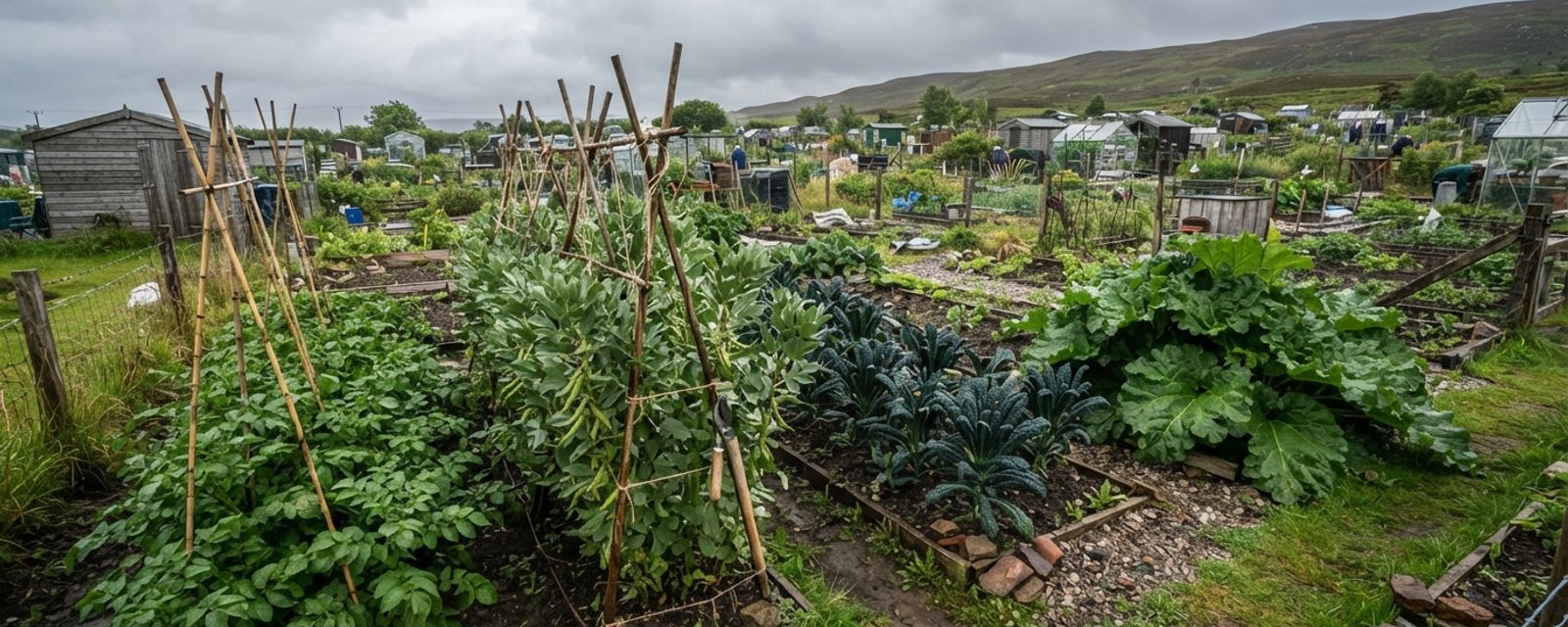
If your tomatoes are still hard and green at the end of August, or your squash never got past a few pale leaves before the wind knocked it flat, you're not doing anything wrong. You've just been growing the wrong crops for this climate. A Scottish summer rarely delivers the sustained heat that tomatoes, squash and sweetcorn evolved to expect, and no amount of feeding or fussing fixes that. We've already covered how far you have to go to get those crops to perform outdoors here, from hand-pollinating tomatoes to drying them under cover. Left unprotected, they sulk.
The good news is that a short, cool, wet and windy season isn't a growing season without winners, it's a growing season with different winners. Each of the five crops below has a real, RHS-documented trait, a hardiness ratingThe RHS's H1a–H7 scale for how much cold a plant can survive outdoors, H1a being tender indoor-only and H7 hardy anywhere in the UK. Full definition →, a short time to harvest, a tolerance for wind and cold, or a dislike of heat, that lines up specifically with what Scotland actually offers in June, July and August.
Why "survives a Scottish summer" is a different bar
Central and southern England routinely get more sunshine hours and higher average summer temperatures than most of Scotland, and Scotland's growing season, the stretch where soil and air are reliably warm enough for tender crops to put on real growth, is shorter and starts later. Add coastal and upland wind exposure and summer rainfall that arrives unpredictably rather than as a dry spell, and you get a set of conditions that reward crops which either don't need much heat to begin with, finish their job quickly before conditions turn, or are simply built to shrug off cold and wet. Late frosts running into spring are also more of a live risk here than further south, which matters for anything planted early. West coast gardens, warmed somewhat by the Gulf Stream, tend to run milder than east coast and inland sites, but the short-season, wind and rain pressures below apply across most of the country to some degree. One thing does work in Scotland's favour: at this latitude, summer daylight runs noticeably longer than further south, which helps offset some of the lost warmth by giving plants more hours of light to grow in even on a dull day. Below, "hardiness" refers to the RHS's own scale, from tender (killed by any frost) to fully hardy (survives a normal UK winter outdoors).
The five picks compared
| Crop | RHS hardiness / trait | Time to harvest | Typical harvest window |
|---|---|---|---|
| Potatoes (first earlies) | Foliage frost-sensitive when young, but fast-cropping | As little as 12 weeks | June-July |
| Broad beans | Hardy varieties overwinterKeeping a plant alive and intact through the cold months, whether left outdoors, moved under cover, or stored dormant. Full definition →; dwarf types suited to windy sites | Autumn-sown crops ready from May | May-September |
| Kale | "One of the hardiest leafy vegetables"; braced for winter gales | Continuous picking once established | September onwards (into winter) |
| Rhubarb | Fully hardy; growth stalls above 32°C | Established plants crop for months | April-July/August |
| Blackcurrants | Modern cultivarsA plant variety that arose or was bred under cultivation and is kept true by deliberate propagation, rather than a naturally occurring wild species. Full definition → bred to flower late, avoiding frost damage | Perennial shrub, crops once established | Mid-to-late summer |
Potatoes (first earlies)
Potatoes, especially first early varieties, are the clearest fit for a short season. According to the RHS, first earlies are "faster growing, ready to harvest in as little as 12 weeks," and should be ready to lift in June and July, six to eight weeks ahead of maincropThe main, usually latest-sown and longest-growing type of a crop, grown for bulk and storage rather than an early harvest. Full definition → varieties that aren't ready until late August through October. That means a first early crop can go from planting to plate well within even a compressed Scottish summer, with much less exposure to the unpredictable, weather-dependent middle stretch of the season. The RHS does note that young shoots are vulnerable to a late frost and may need covering with a clocheA small, portable clear cover placed over an individual plant or short row to trap warmth and keep off wind, rain and pests. Full definition → or fleeceA lightweight, breathable fabric laid or draped over plants to trap a little warmth and keep off frost, wind and some flying pests. Full definition → if a cold snap is forecast after they emerge, worth keeping an eye on since a Scottish last-frost date can run later than further south. ChittingPre-sprouting seed potatoes in a light, cool, frost-free place before planting, so they go in the ground with short sturdy shoots already growing. Full definition → seed potatoes first, standing them somewhere cool and light until short shoots form before they go in the ground, gives an early variety a further head start on a short season. Slugs can also go for the tubersA swollen underground stem or root a plant uses to store energy, which can also grow into a new plant, the classic example being a potato. Full definition → in a wet summer, so earthing upDrawing soil up around a plant's base as it grows, most often potatoes, to keep light off developing tubers and support tall stems. Full definition → well and lifting promptly once ready helps. Scotland is also a major producer of certified seed potatoes, and its cooler climate is commonly credited with helping keep down the aphids that spread potato viruses between plants. For full planting and earthing-up instructions, see our growing guide for potatoes.
Broad beans
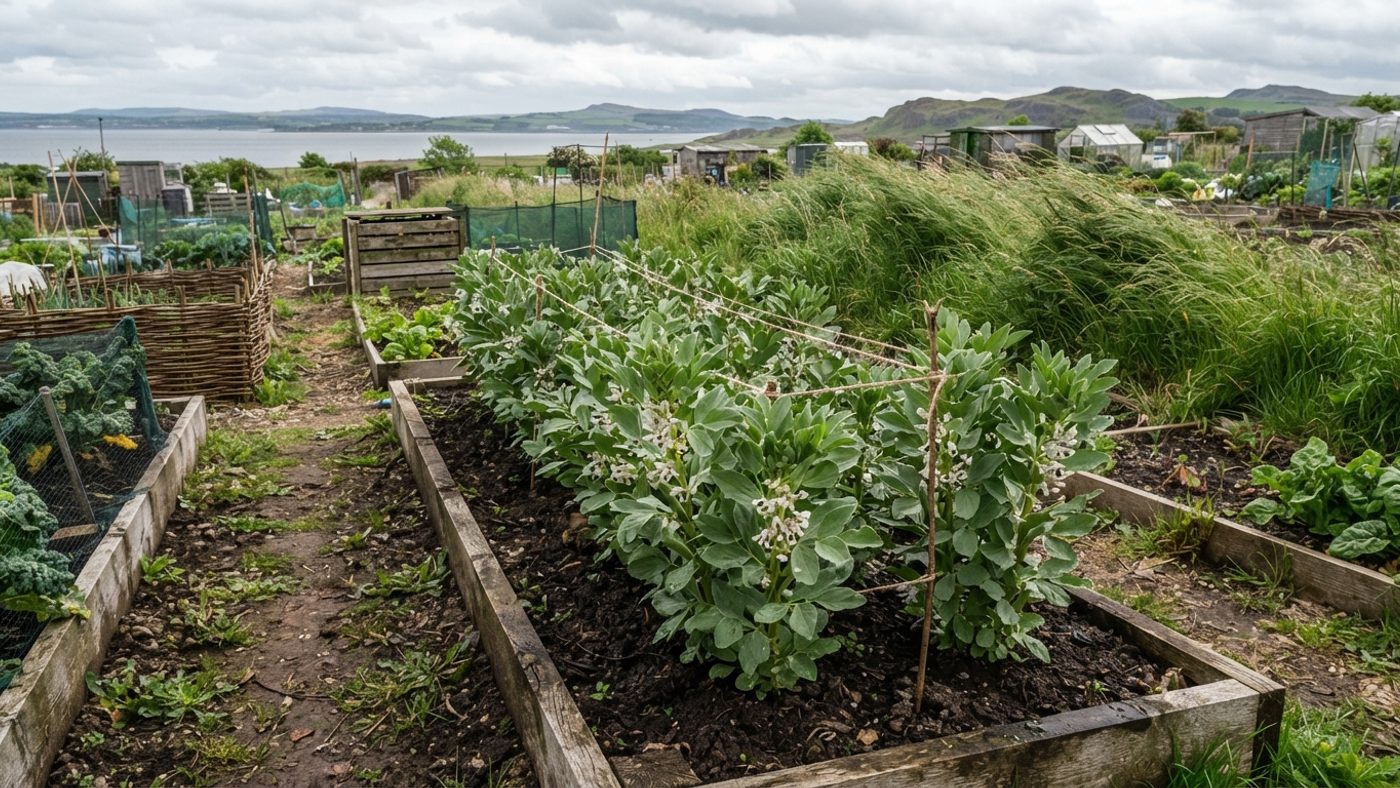
Broad beans do well here for two separate reasons. First, hardy varieties can be autumn-sown, with the RHS naming 'Aquadulce Claudia' as "the best variety for autumn sowing and overwintering," which lets the plant get most of its growing done before summer's unpredictability even arrives, and deliver harvests "as early as May." Second, for anyone sowing in spring instead, dwarf broad bean varieties are specifically recommended by the RHS for exposed conditions: compact types reaching only around 50cm are described as "ideal in containers and windy sites," which matters a great deal on an exposed plot or an allotment that catches the wind off the coast. Either way, broad beans are typically finished cropping by late summer, sidestepping the season's worst weather rather than needing to survive it. Slugs are the main threat to young plants in a wet Scottish start to the season, so it's worth checking seedlings regularly until they're established. See our full growing guide for sowing windows and spacing.
Kale
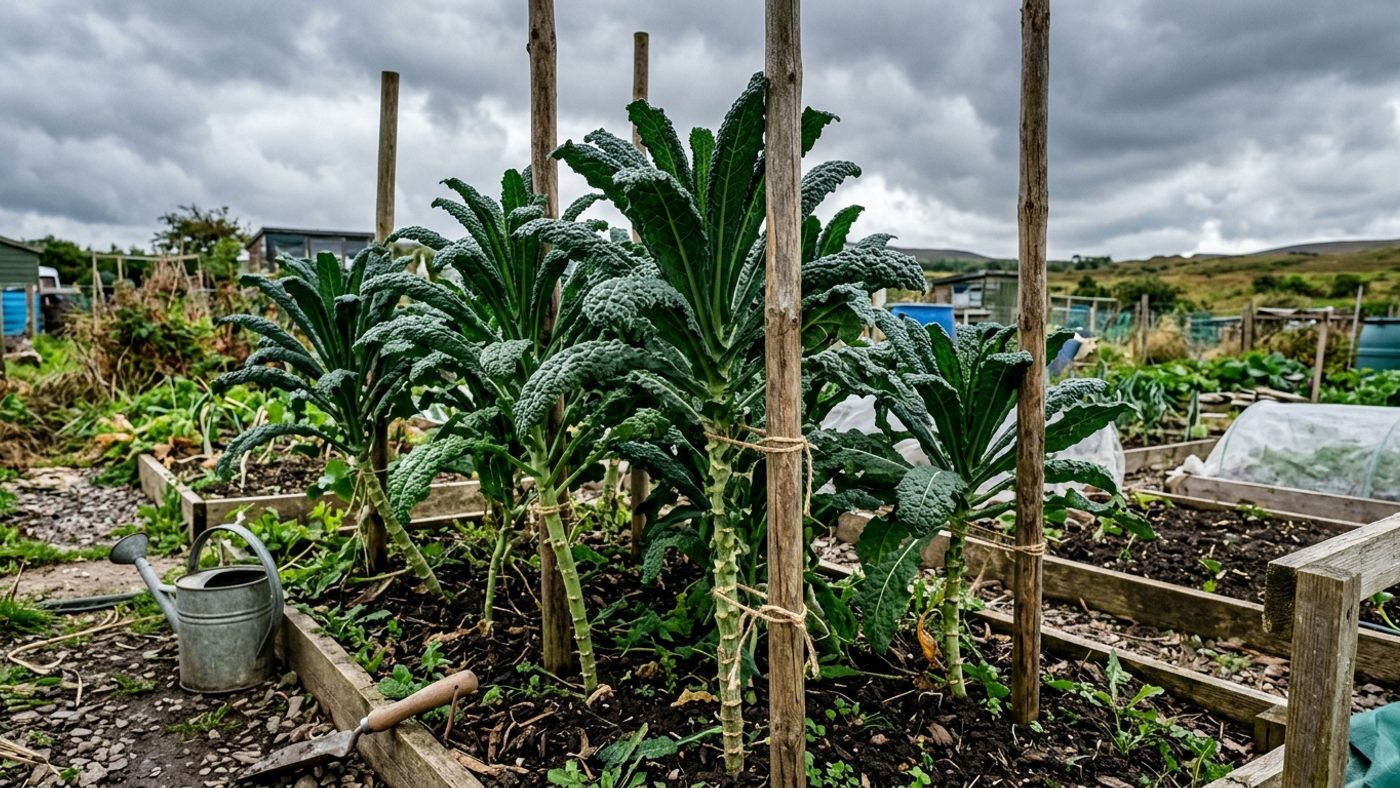
Kale's case rests on cold tolerance rather than speed. The RHS calls it "one of the hardiest leafy vegetables," valuable specifically because it keeps producing through the coldest months, and its guide advises staking tall varieties in autumn so "winter gales" don't flatten top-heavy plants, a strong signal it's built to take wind. Crucially, kale isn't chasing summer heat at all: it grows through spring and summer to a harvest that typically starts in September and continues for months, so a lukewarm, overcast Scottish summer doesn't stall it the way it stalls a heat-lover. It still does best in an open, sunny spot rather than shade: with fewer sunshine hours on offer here to begin with, it's worth not giving any of them away to a shady corner. Slugs will happily strip young kale seedlings in a wet spell, so it's worth protecting plants until they're big enough to shrug off the odd bite. Full sowing and spacing details are in our kale growing guide.
Rhubarb
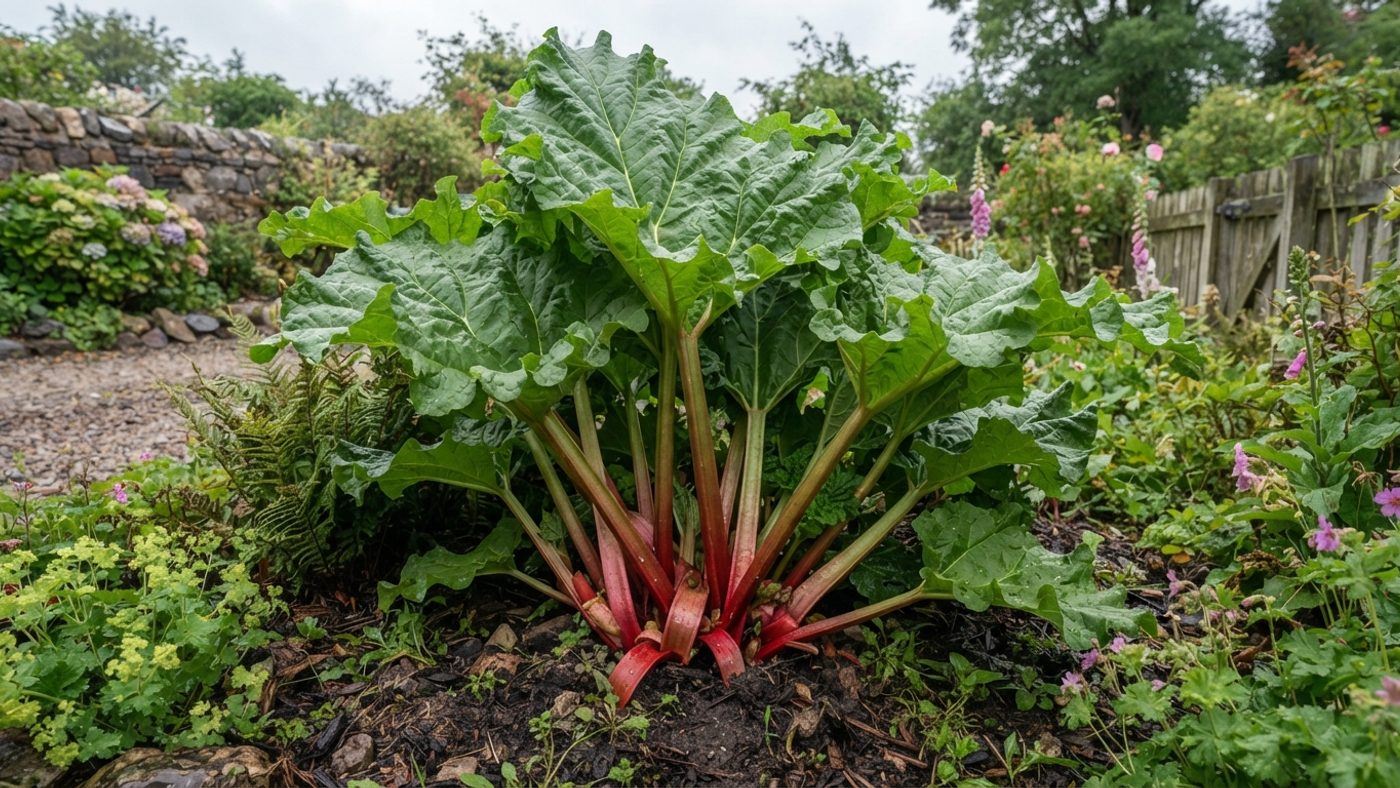
Rhubarb is arguably the most cold-adapted plant on this list, and it's the one crop here that actively dislikes a hot summer rather than merely tolerating a cool one. The RHS rates it "fully hardy" and notes it needs seven to nine weeks of cold weather below 3°C to break dormancy properly, a chilling period a normal Scottish winter is well suited to providing. More tellingly, the RHS warns that rhubarb "will stop growing if the temperature rises above 32°C," and that "warm, dry summers can give rise to poorly-coloured, bad-tasting stalks." In other words, the conditions that ruin a tomato crop barely touch rhubarb, and a cool, damp summer is closer to its preference than a hot, dry one. Harvest runs from around April through July or August, and an established clump can also be forcedCovering plants to exclude light and speed early, tender growth in the dark, most associated with rhubarb and sea kale in late winter. Full definition → for an earlier, more tender crop under a pot or bucket in late winter. See our full growing guide for planting and forcing.
Blackcurrants
Blackcurrants round out the list as a genuinely hardy fruiting shrub rather than an annual crop, which matters because once established they don't need to complete an entire life cycle within one short summer. The RHS notes that modern cultivars have been "bred to flower later, so are a better choice in cold locations, as frost at flowering time can lead to poor fruiting," a trait developed specifically for climates like this one. They're described as "generally robust, healthy and trouble free" once settled in. One real limitation: the RHS advises against sites "prone to cold winds," since wind at flowering time can damage blossom and knock back the crop, so a bit of shelter at flowering time genuinely pays off on an exposed plot. Keep an eye out for currant sawfly (caterpillars that can strip a bush of leaves fast) and big bud mite (swollen, rounded buds that fail to open properly) too, both more of a nuisance in damp Scottish gardens than in a hot, dry summer. Full planting and pruning notes are in our blackcurrant growing guide.
What else is worth considering
Raspberries are a strong honourable mention. Cane fruit generally suits a cool, damp summer better than a hot dry one, and Scotland's east-coast growing areas are well known for raspberry production on that basis, so it would be a fair sixth pick on a longer list. See our raspberries growing guide.
Heavy or waterlogged soil is also worth planning around, since it compounds everything above: none of the five crops here do well sitting in cold, wet ground for long. A raised bed or well-drained spot helps all five cope with a wet summer rather than just tolerating the cold and wind.
Common questions
Can I still grow tomatoes or squash in Scotland at all?
Yes, with cover. A polytunnel, greenhouse, or at minimum a cloche traps enough extra heat to get them through a Scottish summer, and even then some growers still need to hand-pollinate flowers. Our existing articles on hand-pollinating tomatoes and squash, and on sun-drying tomatoes, go into the detail.
Why isn't sweetcorn or courgette on this list?
Both are heat-hungry crops that need sustained warmth to size up and ripen. They can work in a warm, sheltered Scottish garden or under cover, but they don't have the cold tolerance or short-season trait the five picks above are chosen for.
Is a "short growing season" the same thing everywhere in Scotland?
No. Coastal, upland and northern sites tend to have a shorter and cooler effective season than sheltered, low-lying or more southerly parts of the country. The picks above are chosen to be resilient across that range, but a very exposed site will still benefit from windbreaks or cloches, particularly for broad beans and blackcurrants at flowering time.
Do any of these crops need full sun?
Yes. Unlike shade-tolerant picks such as chard or gooseberries, all five crops here do best in an open, sunny site, which matters more in Scotland than somewhere with sunshine to spare. Their advantage is cold, wind and short-season resilience, not an ability to grow well in shade.
Which of these is easiest for a first-time grower?
Broad beans and potatoes are usually the most forgiving starting points: both have a defined, relatively short window from planting to harvest, so mistakes don't compound over a whole season the way they can with a crop like kale that's in the ground for months.
Sources
5 sources, recorded with what each was used for
- RHS: How to grow potatoes: First early days-to-maturity, harvest timing against maincrop, frost sensitivity of young shoots
- RHS: How to grow broad beans: Autumn-sowing hardiness, 'Aquadulce Claudia' variety recommendation, dwarf variety wind tolerance, harvest window
- RHS: How to grow kale: Cold hardiness claim, wind/gale guidance for exposed sites, harvest timing
- RHS: Rhubarb: "Fully hardy" rating, cold dormancy requirement, heat sensitivity above 32°C, harvest window
- RHS: How to grow blackcurrants: Late-flowering cold-climate breeding trait, general robustness, cold-wind siting caveat