
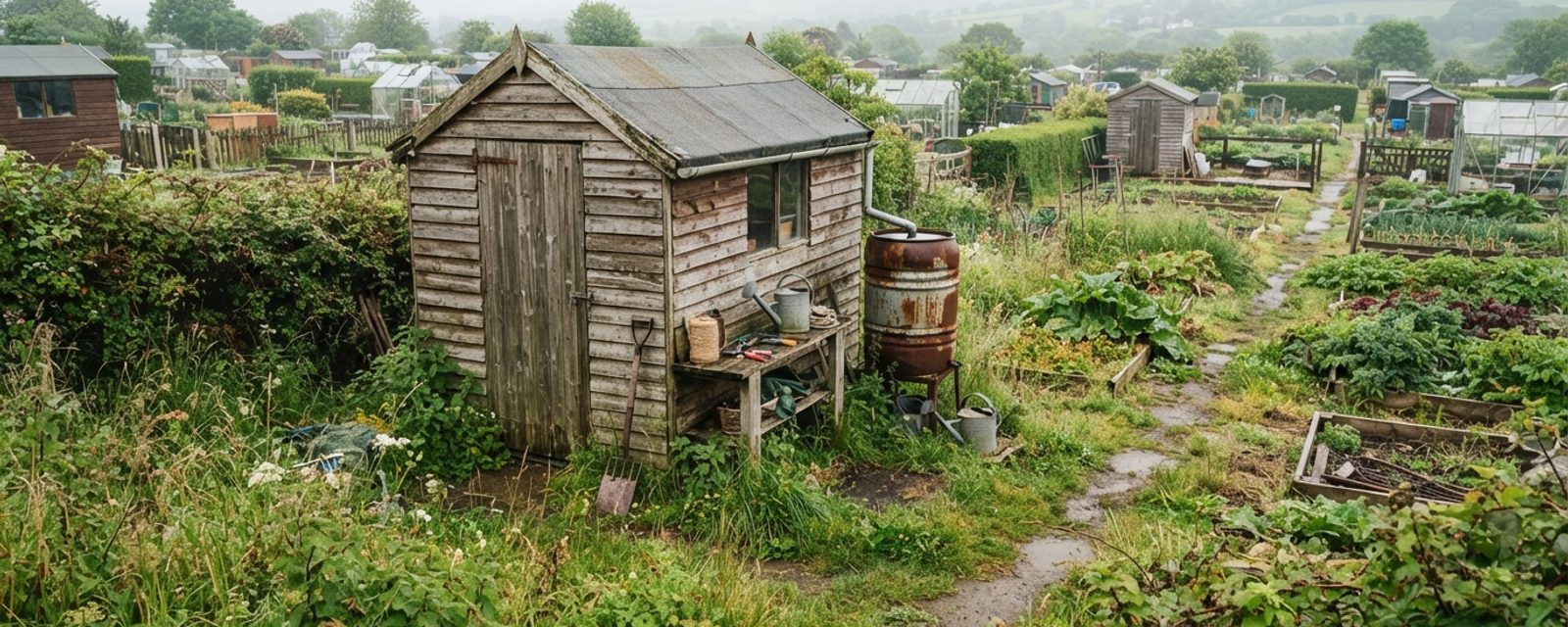
The letter, email or phone call telling you a plot is finally yours can land in any month of the year. Scottish waiting lists don't clear on a schedule, so your first day as a plot holder might be a frost-hardened January morning, a lush and midge-ridden July evening, or a blustery October afternoon with six weeks of daylight left before the clocks change. That timing matters more than almost anything else in this guide.
A plot handed over in January gives you months to plan and order seed before you need to sow anything. A plot handed over in June means things are already growing, including whatever weeds the previous tenant left, and you're starting mid-race. A plot handed over in October means your first real job is winter-proofing, not planting, and it needs to happen quickly: Scotland's more northerly latitude means the evenings draw in noticeably earlier through autumn than further south, particularly north of the Central Belt, so the useful after-work daylight for an October start narrows fast. Whichever month it lands in, the practical priorities below hold, starting with what to sort before you've dug a single spadeful.
If you're still waiting for a plot, or want the background on how Scottish allotment waiting lists and statutory rights work, that's covered in our guide to getting an allotment in the UK. This piece picks up from the moment you have the keys.
Before day one
Get the paperwork and the plot number straight. Confirm exactly which plot is yours and where its boundaries run, ideally by walking it with someone from the site rather than relying on a written description alone. Note who your first point of contact is, a site rep, an association secretary, or the council's allotments team, so you already know who to go to if a boundary or neighbour issue comes up later. Sites are rarely signposted well, and turning up to dig the wrong plot is a genuinely common new-tenant mistake.
Read the site's rules before you buy anything. Every Scottish allotment site sets its own tenancy rules on top of the council's general regulations, covering things like structure sizes, keeping animals, bonfires and subletting, our guide to allotment rules covers the detail. Read your specific site's version before you build anything or bring a dog along, because local variations exist.
Budget for the first year properly. This is separate from the rent itself. New plot holders consistently underestimate the setup cost on top of rent. A reasonable first-year budget covers: a basic tool set (fork, spade, hoe, rake, hand trowel, watering can), a padlock, some plant labels, seed or plug plants for a small first-season planting, and money held back for soil improvement (compost, manure) rather than spent entirely upfront on tools. Don't buy a shed, a greenhouse, raised bed kits and a full seed catalogue in week one. Buy what you need to clear ground and get a soil sample done, and let everything else follow the plot's actual pace.
Check the water situation before you rely on it. Find out where the nearest tap or standpipe is, whether it's shared with several plots, and whether the site allows or expects you to install your own water butts. A plot at the far end of a site from the only tap changes how realistic hand-watering a full bed actually is, and it's much easier to plan around before you've committed to thirsty crops than after.
Do not plan your whole layout yet. It's tempting to sketch beds, a rotationMoving each crop family to different ground each year, on a multi-year cycle, so pests and diseases that build up in soil don't get a repeat host. Full definition → plan and a fruit cage before you've even seen the plot in daylight. Wait. You need to see how water sits on the ground after rain, where shade falls in different seasons, and what's actually growing there before any of that planning is worth doing. Note wind exposure too: many Scottish sites sit open to the weather, coastal, hillside, or just unsheltered, and a plot that gets hammered by wind needs a windbreak or hedge line worked into the plan before tall crops, canes or a greenhouse go anywhere near it.
Ask about site security. Tool theft and produce theft happen on allotment sites, Scottish ones included. Find out what the site's own arrangements are, shared lockup, CCTV, gate codes, before you leave anything valuable in an unlocked shed.
What to do in month one, whatever season you start in
Get a soil test done before you plan anything
This is the single most commonly skipped step, and it's the one that should come first. Soil across a single allotment site can vary significantly, and a plot that was neglected for a year or two may have compacted, waterlogged or nutrient-stripped soil that no amount of enthusiasm will fix by guesswork. A basic pH testing kit from a garden centre is cheap, easy to use, and gives a good general indication, but it's worth doing several tests across different areas of the plot rather than one in a single spot, since pH can vary widely even within a small area. If you want proper detail on texture, organic matter and nutrient levels (potassium, phosphorus, magnesium), a laboratory soil analysis service gives a fuller picture, and is worth the extra cost on an older urban site where historical contamination (lead from old paint or fuel, industrial residue) is a realistic possibility a basic pH kit won't pick up. Either way, wait until at least three months after anyone has added lime, fertiliser or manure to that patch of ground, since recent additions skew the reading.
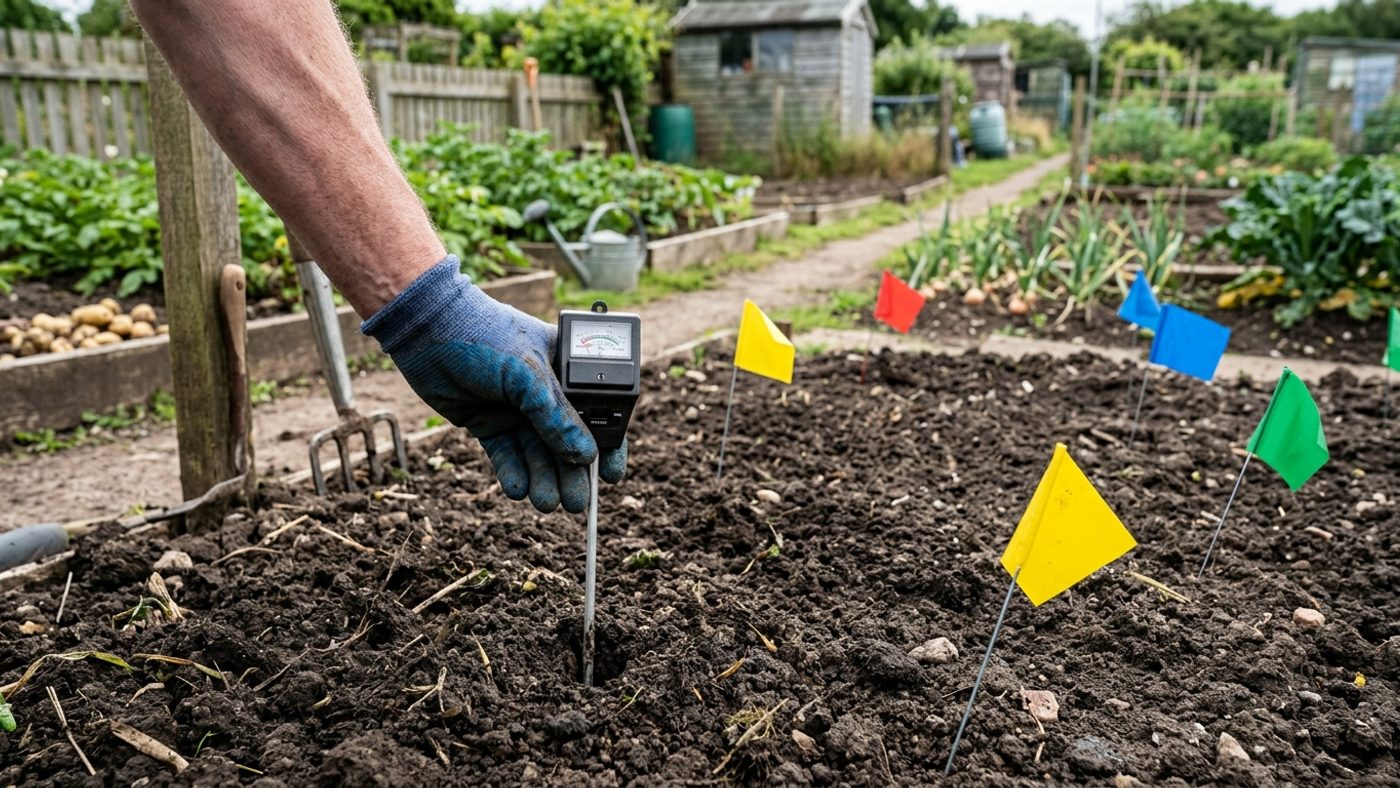
A pH around 6.5 is the general-purpose sweet spot most vegetables want; well below that and you're looking at lime before you plant anything hungry, well above it and certain nutrients become harder for plants to take up. Testing matters more here than a generic UK guide suggests: higher-rainfall ground, which describes a lot of upland and western Scotland, tends to leach towards more acidic soil over time, so an inherited plot in those areas can need lime just to bring it into range before anything else you do makes much difference. That's a general pattern rather than a fixed rule for every site, which is exactly why testing your own plot matters more than assuming.
If the plot has a long history growing brassicasThe cabbage family: cabbage, kale, broccoli, cauliflower, Brussels sprouts, kohlrabi, swede, turnip and more, sharing the same pests, diseases and rotation rules. Full definition → or potatoes, and you can find out from the site or a neighbour, it's worth knowing before you commit to those crops yourself. ClubrootA soil-borne fungal disease of the brassica family that swells and distorts roots, and survives in soil for years. Full definition →, a soil-borne disease affecting brassicas, and potato cyst eelworm can both persist in soil for years after the crops that caused them have gone, and neither shows up in a basic pH or nutrient test. There's no quick fix for either once established, so a known history is a reason to rotate away from that crop family for a season or two, not a reason to avoid the plot.
Don't plant the whole plot
Every experienced allotment voice says some version of this, and it's worth taking seriously in year one specifically. A realistic target is to clear and properly prepare a portion of the plot in year one, get it productive, and extend in year two once you understand how the ground behaves through a full season. Trying to cultivate an entire full-size plot from a standing start, on top of a day job, is the most common reason new plot holders burn out and give the plot back within twelve months. It's genuinely fine, and arguably smarter, to clear roughly half in year one and use the rest as a working area or leave it under weed-suppressing cover while you build up compost and confidence. Whatever you do plant, favour varieties bred for a cooler, shorter, wetter growing season over whatever looks best on a seed packet photographed somewhere sunnier: blight-resistant potato varieties in particular are worth seeking out, given how reliably Scotland's damp summers favour the disease.
Month-by-month starting point by season
| Plot offered in... | First two weeks | Rest of month one |
|---|---|---|
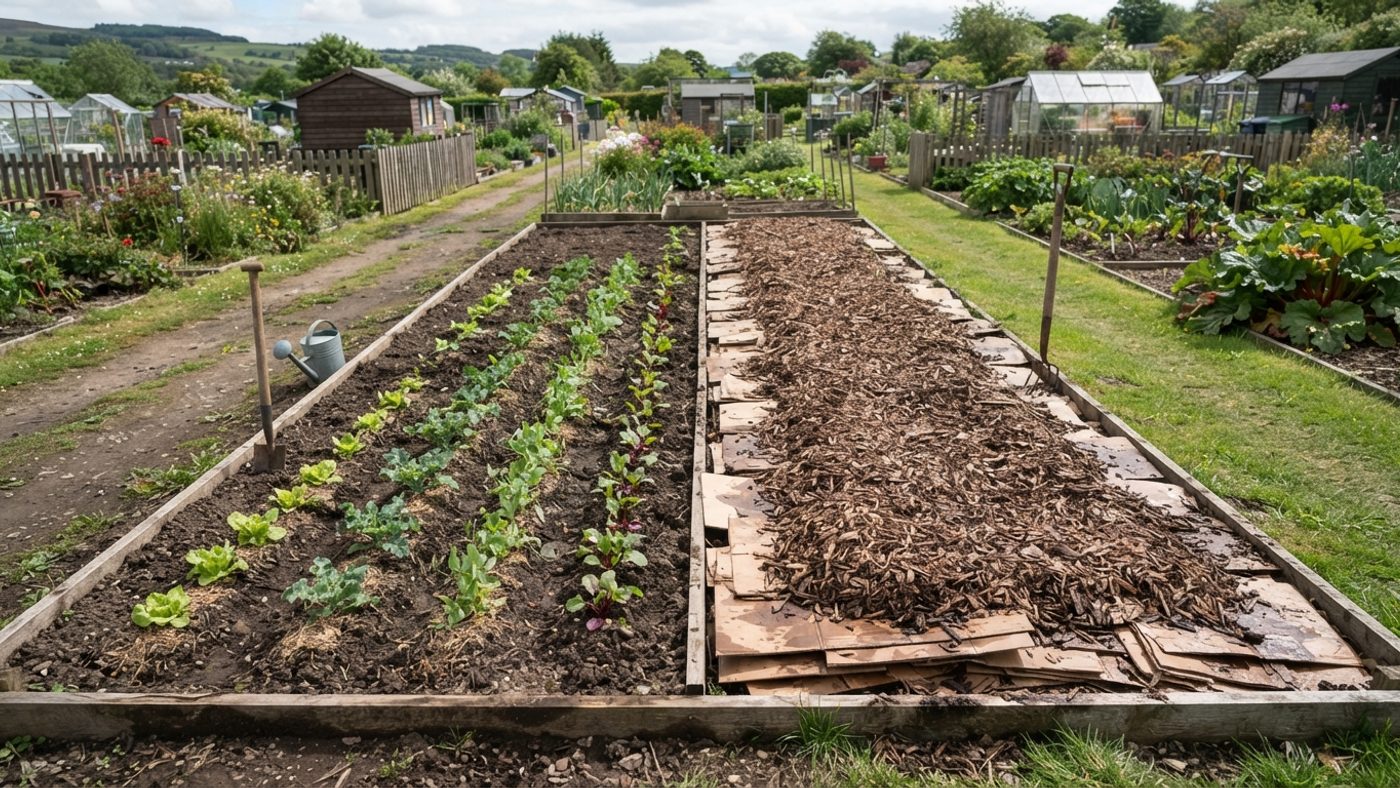
| Winter (Dec-Feb) | Walk the plot, note drainage, sun, existing structures. Take soil samples once ground isn't frozen or waterlogged. Order seed for spring. | Clear paths and access. Smother the worst weed patches with cardboard and mulchA layer of material spread over the soil around plants to suppress weeds, retain moisture, and improve soil structure as it breaks down. Full definition → so they're suppressed by spring. Assess any shed/greenhouse left behind. |
| Spring (Mar-May) | Prioritise clearing a small bed immediately; get something quick-growing in (salad leaves, radishes, early potatoes). Soil test in parallel. | Keep clearing in stages. Sow or plant out beans, courgettes and brassicas once frost risk has passed for your area. Start a compost bin or heap. |
| Summer (Jun-Aug) | Expect the plot to look overwhelming: everything is growing, including weeds. Cut back growth to see what you're dealing with before digging. | Focus on control, not expansion: keep weeds from seeding, don't dig heavy clay in dry conditions. Plan properly for next spring. |
| Autumn (Sep-Nov) | Clear and cover ground for winter rather than planting much. Broad beans and garlic are realistic autumn sowings once a bed is ready. | Get a compost system going with the season's leaf fall. Use the quieter season to fix paths, edging and damaged fencing. |
The exact dates in the table are a starting point, not a fixed calendar. Last-frost timing varies considerably within Scotland itself, a Highland or North-East plot can run several weeks behind a Central Belt or coastal one, so check our regional frost dates guide for a station near your site before you treat any of the above as gospel for your specific plot.
Dealing with what the previous tenant left
Almost no plot arrives clean. Expect one or more of: overgrown grass and perennial weeds, an old shed or greenhouse in uncertain condition, a water butt, leftover canes or netting, and volunteer plants you can't identify.
Overgrown ground. The weeds that actually cause trouble on a neglected plot are the ones that spread by root rather than seed, particularly bindweed, ground elder and couch grass. Cutting these back doesn't kill them; they regrow from any root fragment left in the soil. There are three realistic approaches, and most new plot holders end up combining them: digging out roots by hand (slow, thorough, satisfying, but you must sift for fragments or they regrow), smothering with cardboard and a thick mulch on top, or spot-treating persistent regrowth. The smothering method: lay light-excluding cardboard directly over cut-back growth, then add a 15-20cm layer of compost, manure or other organic mulch on top. Leave it for at least six months; stubborn perennial weeds can take closer to a year to fully die back. Whichever method you use, don't try to clear a full plot's worth of established perennial weed in one go. Clear and cover what you can manage, plant that, and extend the cleared area gradually. One thing to expect on newly cleared, freshly mulched ground in particular: Scotland's generally higher rainfall than much of the UK tends to favour slugs and snails, especially in damper western areas, and bare soil that's just had cardboard and mulch lifted off it is exactly where they'll be waiting, so protect young plants going into a freshly cleared bed rather than assuming clearing the weeds was the hard part done. For a genuinely severe case, waist-high growth throughout rather than ordinary neglect, see clearing an overgrown allotment plot for a fuller staged approach and the specific technique for bramble, horsetail and the other perennial weeds not covered in depth here.
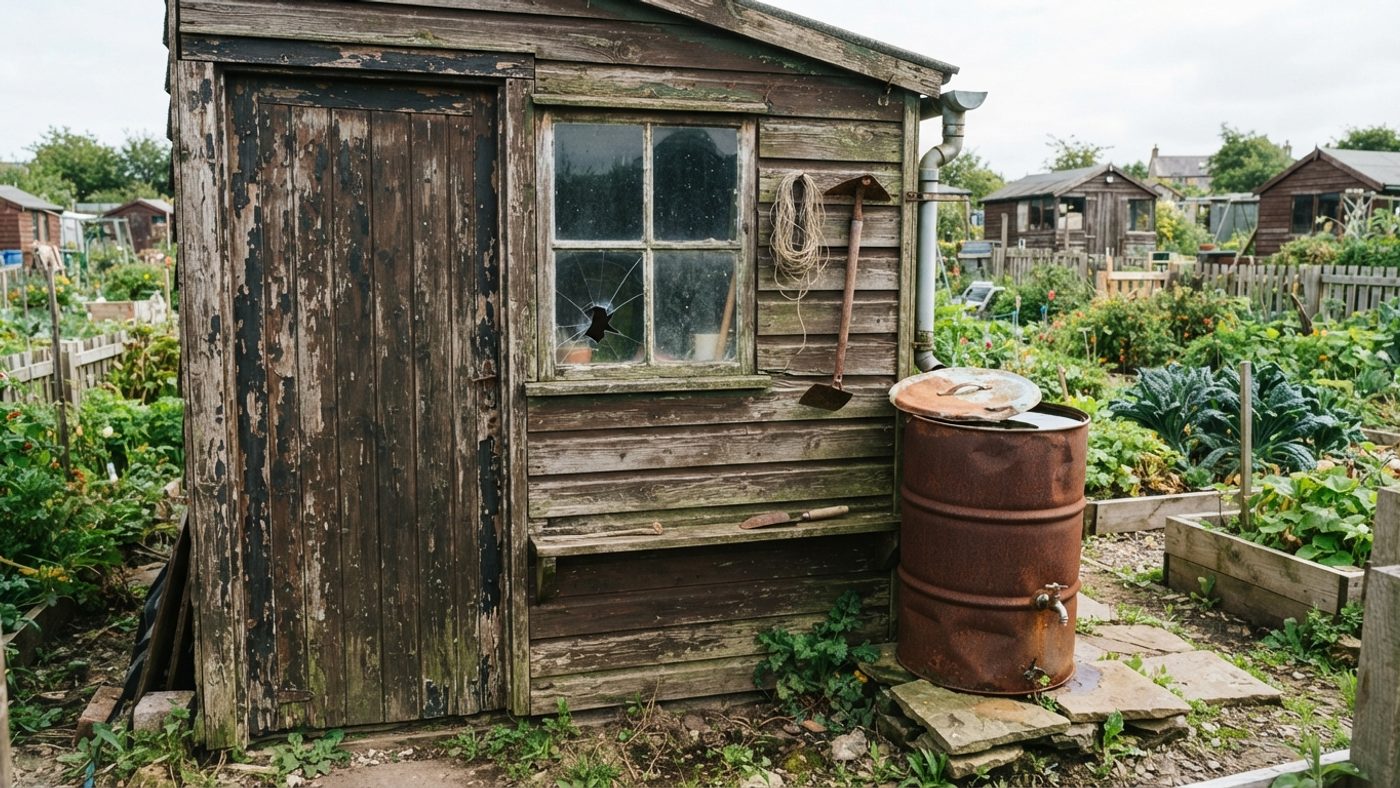
Old structures. Check anything left behind for safety before use: rotten shed floors, glass in poor condition in an old greenhouse frame, rusted water butts. Most tenancy agreements make the current plot holder responsible for what's on the plot, so it's worth doing that check in week one rather than discovering a problem later; our allotment rules guide covers structure rules, sizes and tenancy obligations in full.
Unknown plants. Established fruit bushes, rhubarb crownsThe base of a perennial plant where roots and shoots meet, often sold and planted as a ready-made dormant plant rather than grown from seed. Full definition → or asparagus beds are common finds and often worth keeping even if you don't know what they are yet; let anything unfamiliar grow on for a season before pulling it out, since perennial edibles planted by a previous tenant can be a genuine head start. If you do end up with a pile of woody or diseased debris you can't compost, burning is sometimes an option depending on your site and the time of year; see our guide to bonfires on allotments for the rules on that rather than assuming you can just light a fire.
Plot etiquette and inspections: what to actually expect
Many Scottish allotment sites run periodic cultivation inspections, usually carried out by a site or allotment officer a few times a year, checking that plots are being kept in reasonable productive order rather than left derelict. Edinburgh's council-run sites are one documented example: their rules set a minimum proportion of the plot that must be under cultivation at all times. Other sites set their own version of this, sometimes with a published figure for how much of a plot a new tenant is expected to have under cultivation within their first few months, sometimes without a fixed number at all. Check your own site's published rules for what actually applies to you; our allotment rules guide covers the legal detail of cultivation duties and what happens if a plot falls into serious neglect.
What this means practically for a first inspection: officers are checking for visible effort and a plan, not a finished show garden. A newly cleared bed with young plants in it, a compost heap started, and a covered area you're working through in stages all read as active cultivation. Bare, weed-choked ground with no sign of activity is what triggers concern. Beyond inspections, ordinary etiquette matters just as much day to day: keep paths and shared areas tidy, don't let spreading plants like mint or comfrey cross into a neighbour's plot uncontained, don't let taller crops shade a neighbour's beds without warning them, and introduce yourself to the plot holders either side of you early. Most sites have a plot-holder association or committee, and joining it, or at least turning up to a work party in your first few weeks, is one of the fastest ways to learn a site's unwritten rules, borrow tools you haven't bought yet, and find out who to ask when something on the plot doesn't make sense. Most sites run on goodwill between neighbours as much as on formal rules.
First season, realistically
By the end of a first season, a reasonable outcome looks like: part of the plot cleared and productive, part still being worked on or under cover, a compost system started, a rough sense of how the ground drains and where the sun falls through the year, and a short list of what to do differently next year. That's a good first season. A fully planted, weed-free, four-bed-rotation plot by autumn of year one is not the bar, whatever the more polished allotment blogs might imply, and trying to hit it is the fastest route to giving the plot up.
Common questions
Do I need to soil test before I plant anything?
Not strictly before you plant anything at all, but it's worth doing before you commit to a layout or spend money on soil improvers. A cheap pH kit tested across a few spots on the plot, done at least three months after any recent fertiliser or manure was added, will tell you enough to start. A full laboratory analysis is worth it if you want detail on nutrient levels as well.
How much of my new plot should I actually try to cultivate in year one?
Roughly half, cleared and properly planted, is a realistic and commonly recommended target. Leaving the rest under a suppressing mulch or cover while you extend into it in year two is a normal, sensible approach, not a sign you're behind.
What do I do with an old shed or greenhouse left by the previous tenant?
Check it for basic safety, rotten timber, broken glass, an unstable structure, before using it. If you want to replace or resize it, check your specific site's rules on structures first, since these vary by site.
Will I get in trouble at my first inspection if the plot still looks rough?
Not usually, provided there's visible evidence of active work: a cleared and planted bed, a compost heap, ground under covering material as part of a clearing plan. Inspectors on most sites are checking for effort and progress, not a finished plot.
Can I burn the weeds and old material I clear off the plot?
Sometimes, depending on your site and the time of year, but rules on this vary and some sites restrict bonfires seasonally.
Sources
4 sources, recorded with what each was used for
- RHS: Soil — understanding pH and testing: Soil pH testing method, sampling advice and pH range guidance
- RHS: How to start an allotment: Clearing-in-stages advice, year-one realism, basic infrastructure
- Garden Organic: No-dig gardening: Cardboard-and-mulch smothering method for overgrown ground, mulch depth and timeline for perennial weeds
- Edinburgh Outdoors (City of Edinburgh Council): Rules for allotment plot holders: A documented Scottish council example of a minimum cultivation proportion and structure-upkeep responsibility in site rules