
Every tomato and squash fruit begins the same way: pollen has to move from the anther, the male part of a flower, to the stigma, the female part, before an ovary can start swelling into fruit. Outdoors this movement happens without anyone noticing. Wind rocks the plant and jars pollen loose. Bees and other insects clamber over flowers collecting nectar and carry pollen from one bloom to the next, sometimes from one plant to another. Neither process requires the gardener to do anything.
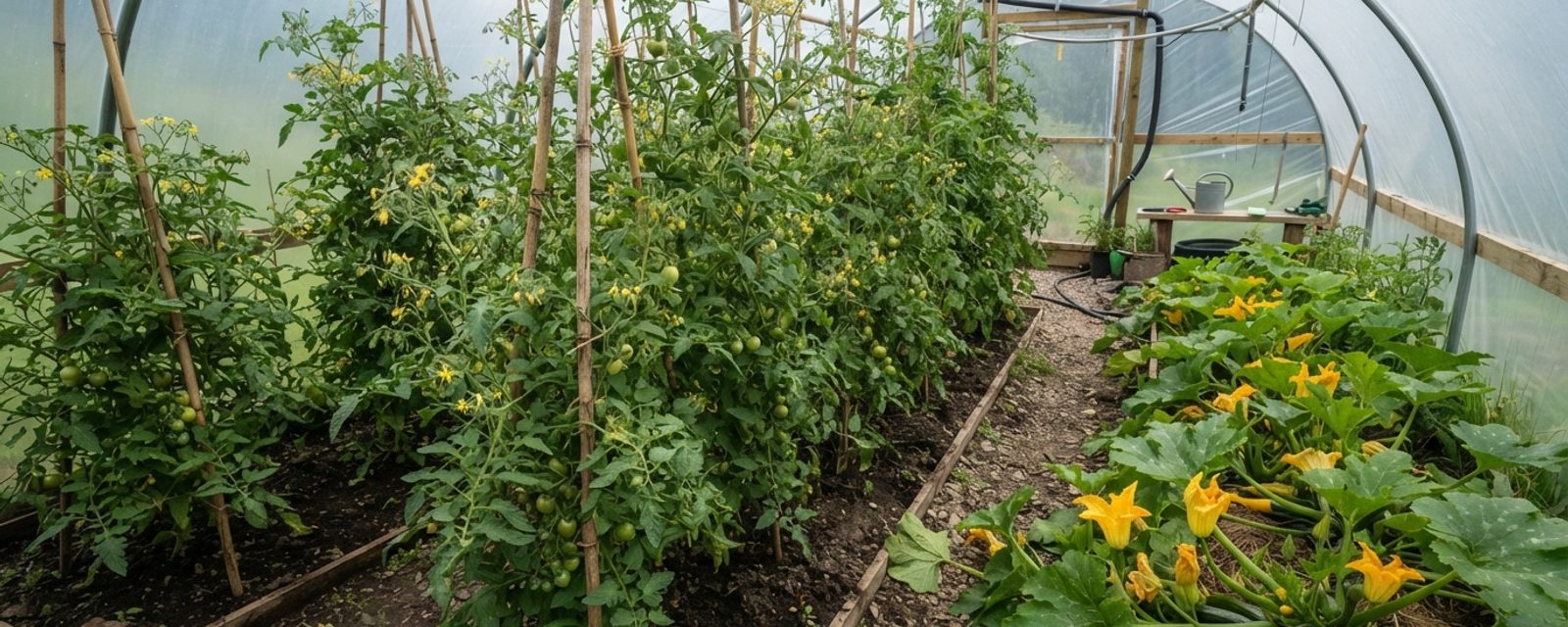
An enclosed polytunnel or greenhouse changes that. The polythene or glass itself blocks the wind that would otherwise rock the plant, and with the doors and vents shut for most of the day, far fewer bees find their way in to forage than would visit the same crop in an open bed. Take away wind and take away regular insect traffic, and you've taken away both of the natural mechanisms that move pollen from anther to stigma.
That's the reason hand-pollination comes up so often for tomatoes and squash in Scotland specifically: cool summers are why so many Scottish growers put these two crops under cover in the first place, see our polytunnel vs greenhouse guide for that case, and once the crop is under cover, pollination stops being automatic. It becomes a job.
Using the wrong technique on either crop won't set fruit, so it's worth knowing exactly what each one needs before you start: tapping a tomato flower does nothing for a squash flower, and vice versa.
Tomatoes: shaking pollen loose within the same flower
A tomato flower carries both male and female parts in the one bloom, and for the most part a tomato plant pollinates itself. The anther forms a cone around the stigma, and when pollen is released it only has to fall a short distance to reach the flower's own stigma. What triggers that release outdoors is vibration: wind, an insect landing, a bumblebee's buzz. Nothing needs to travel between flowers, and nothing needs to travel between plants.
Indoors, without wind, that vibration often just doesn't happen, and flowers can hang on the trussThe flowering, then fruiting, stem cluster on a tomato plant; each truss ripens its fruit together. Full definition →, the flowering stem that later carries the cluster of fruit, without setting fruit at all. RHS growing advice for tomatoes puts it plainly: outdoor plants can generally rely on bee visits, but indoor plants "will benefit from a gentle shake on sunny afternoons to transfer pollen."
In practice that means:
- Wait until the flowers are fully open. Pollen isn't reliably viable in a bud that hasn't opened yet.
- Tap or flick the flower truss firmly with a finger, or tap the cane or stake the plant is tied to so the vibration runs through the stem. A few sharp taps is enough.
- An electric toothbrush held briefly against the truss does the same job and gives a more consistent vibration than a finger, which some growers find sets fruit more reliably.
- Do this around midday or into a sunny afternoon, when the flowers are open and pollen is at its most viable, and repeat every day or two while trusses are flowering.
- Open doors and vents on warm days too. Airflow alone won't replace hand pollination reliably in a still tunnel, but it helps, and it costs nothing.
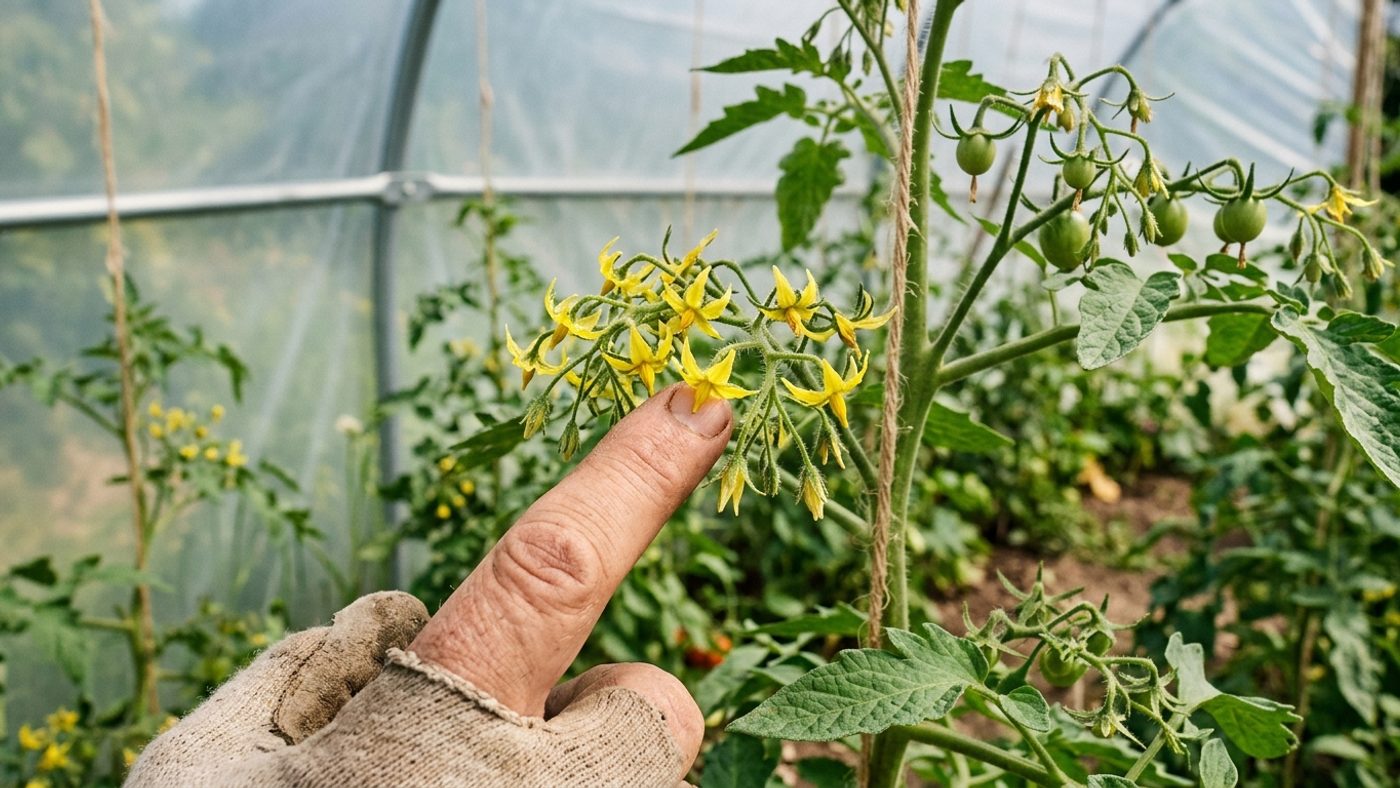
It's a quick job, a few seconds per truss, not a chore, so working along a row of plants on your way past takes minutes, not an hour. There's no transfer between separate flowers involved here. You're moving pollen a few millimetres within one flower, not carrying it anywhere.
Not every case of flowers failing to set fruit under cover is a pollination problem. Tomato pollen needs warmth to release well, and a run of cool nights, the more common failure in a Scottish polytunnel than heat, can leave flowers sitting unset even after tapping. The opposite problem shows up on a hot, still, humid day, when pollen clumps together instead of shaking loose and flowers can drop on their own regardless of how much they're tapped. Ventilating on warm days and, where possible, keeping the structure frost-free and reasonably warm overnight, not just tapping trusses, is part of the same job.
Squash: moving pollen from a male flower to a female flower
Squash, courgettes, pumpkins and marrows work on an entirely different system, and the missing-bees problem plays out very differently as a result. They're monoecious, meaning a single plant carries separate male and female flowers rather than combined ones. Only a female flower can develop into fruit, and it can only do that if pollen physically arrives from a male flower elsewhere on the plant, so it's the transfer between two flowers, not vibration within one, that a grower has to replace by hand.
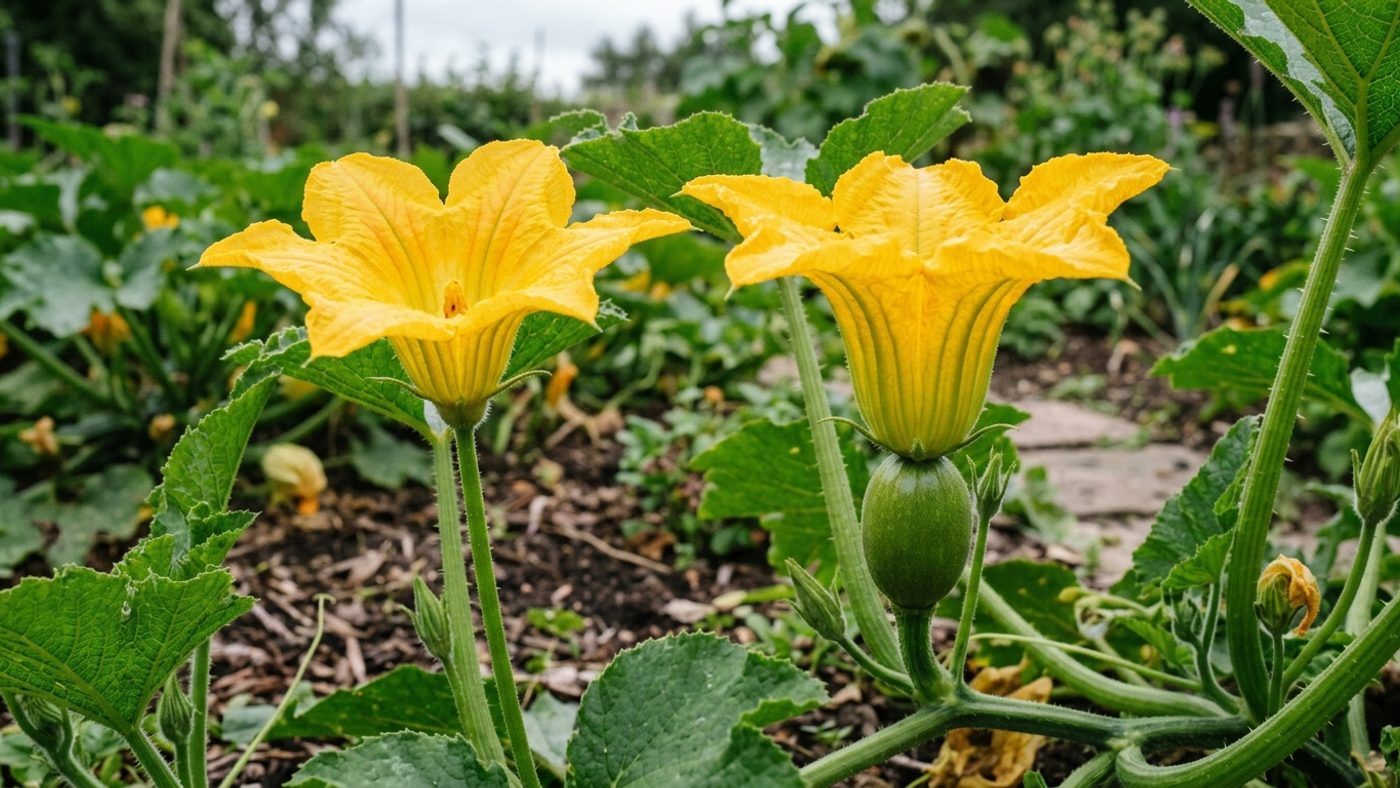
The two flower types are simple to tell apart. Female flowers can be identified by the swelling of the immature fruit at the base of the flower, while male flowers have a plain, thin stem with no swelling at all, usually on a longer, thinner stalk than the female's.
| Male flower | Female flower | |
|---|---|---|
| Base of flower | Plain, no swelling | Visible swelling (the immature fruit) |
| Stalk | Longer, thinner | Shorter, thicker |
| Role | Provides pollen | Develops into fruit once pollinated |
| Usual timing | Often opens first, in greater numbers | Opens once the plant is established and fruiting |
To hand-pollinate:
- Pick a freshly opened male flower in the morning; squash flowers typically open early and close by afternoon, so timing matters more here than it does with tomatoes. If no female flower is open yet, stand the male flower in a glass of water rather than lose it, ready for whenever a female flower opens. Male flowers usually appear well before the first female ones, sometimes by a couple of weeks, so a few days with only males open is normal early in the season.
- Strip the petals off the male flower to expose the pollen-covered anther in the centre.
- Press the anther directly into the centre of an open female flower, against the stigma. One male flower carries enough pollen to pollinate several female flowers, so you don't need a fresh male for each one.
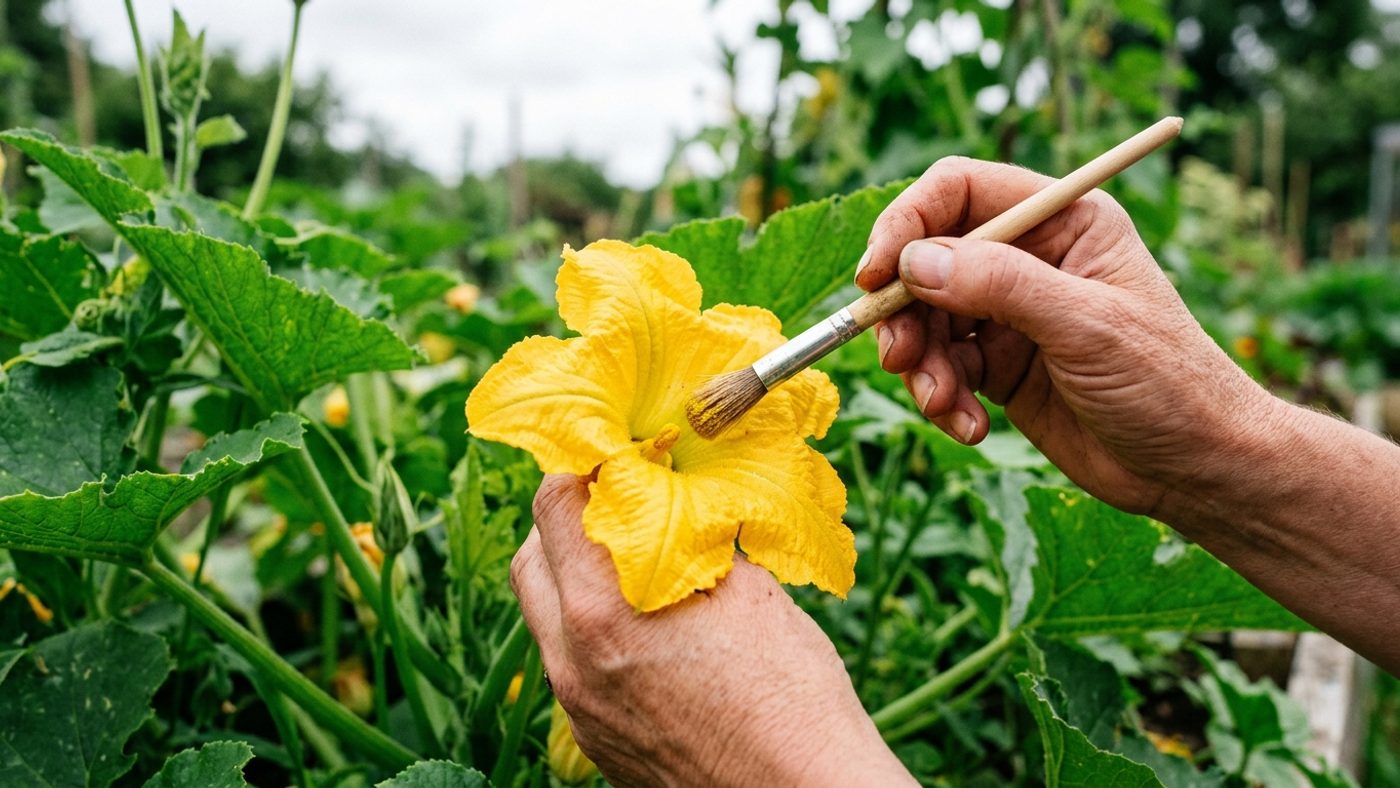
- If you'd rather not sacrifice a male flower, or want to work between separate plants, use a small soft paintbrush instead: dab it into the male flower to pick up pollen, then transfer it to the centre of the female flower.
- Work through open flowers each morning while the plant is fruiting. Female flowers that don't get pollinated on the day they open will usually shrivel and drop rather than wait for the next chance.
Confusing the two techniques, tapping a squash flower instead of transferring pollen, or trying to brush pollen onto a tomato bloom that doesn't need it, won't set fruit.
Signs it's worked, and signs it hasn't
For tomatoes, a pollinated flower typically shrivels and drops its petals within a day or two while the small green fruit behind it starts to swell. If flowers are dropping without any fruit forming behind them, pollination hasn't happened and it's worth increasing how often you're tapping trusses.
For squash, a successful hand-pollination shows within a couple of days as the swelling behind the female flower visibly enlarges evenly. If a young squash swells slightly and then yellows and rots from the tip, that's the classic sign of a female flower that opened without being pollinated in time. A fruit that's pollinated only partway, say if just part of the stigma received pollen, often grows lopsided or club-shaped rather than failing outright. Neither of these is the same as blossom end rot, which is a calcium and watering problem that affects fruit after it's already been pollinated and set, so don't mistake one for the other when troubleshooting.
At a glance
| Best time of day | How often | What you're doing | |
|---|---|---|---|
| Tomatoes | Midday to sunny afternoon | Every day or two while trusses flower | Tapping/vibrating within one flower |
| Squash | Morning, before flowers close | Every morning while the plant is fruiting | Carrying pollen between two flowers |
For the rest of each crop's growing detail, see our tomatoes growing guide, squash growing guide, and courgettes growing guide.
Common questions
Do I need to hand-pollinate every flower, every day?
Only while the crop is flowering and set is poor. Once a polytunnel or greenhouse has a few bumblebees or hoverflies finding their way in, natural pollination often picks up and hand-pollination becomes a backup rather than a daily task. Check trusses and female squash flowers every couple of days and step in if fruit isn't forming.
Can I use the same technique for tomatoes and squash?
No, and using the wrong one won't work. A tomato flower carries both male and female parts in one bloom, so it just needs shaking. A squash flower is single-sex, so pollen has to be carried by hand from a separate male flower to a separate female one; shaking a squash flower does nothing.
Why does my squash plant have lots of flowers but no fruit?
Squash plants commonly produce male flowers first, sometimes for a couple of weeks, before the first female flowers appear. Plenty of flowers with no fruit usually just means the female flowers haven't started yet, not that pollination has failed.
What time of day should I hand-pollinate?
For squash, do it in the morning, since the flowers open early and often close by afternoon and rarely last more than a day. For tomatoes, a sunny afternoon works well, when flowers are fully open and pollen is most viable.
Will hand-pollinating affect the flavour or size of the fruit?
No. Hand-pollination does the same job an insect would, moving the same pollen to the same place. It doesn't change the genetics or flavour of the fruit that develops, provided you're using pollen from the same variety.
Sources
3 sources, recorded with what each was used for
- RHS: Courgette, marrow & squash problems: Identifying male and female squash flowers, the hand-pollination method, and the note that poor pollination under cover is linked to low pollinating-insect activity
- RHS: Fast tomatoes — experts' tips for the quickest route to picking your own: The tomato hand-pollination method (gentle shake on sunny afternoons) and the outdoor-versus-indoor pollination distinction
- RHS: How to grow courgettes: Context on poor pollination during cool weather and general squash flower background