
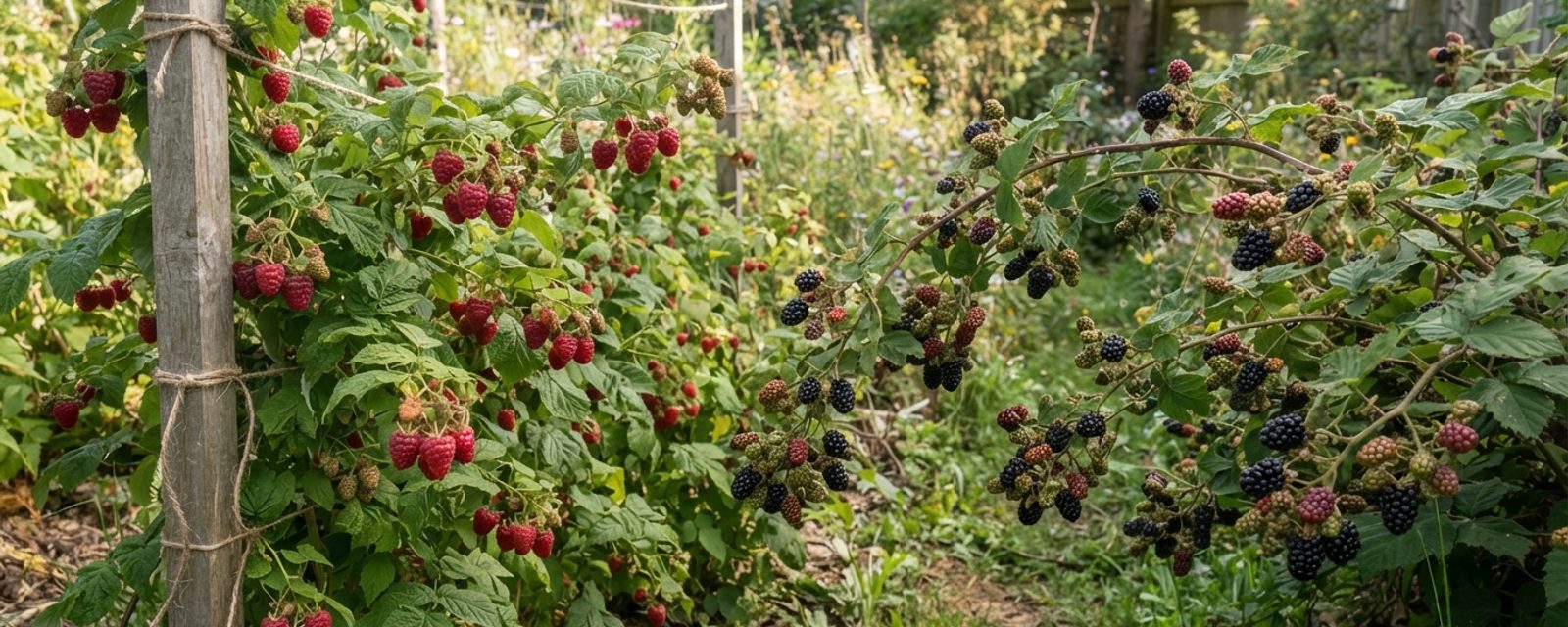
The cane by the fence has gone from a scatter of pink to a solid run of dark red almost overnight, and half of what's ripe today will be overripe, squashed, or gone to wasps by the time you're back out there tomorrow. A few feet along, the bramble is doing something different again: it's not one big flush at all, just a slow, relentless trickle of a dozen ripe berries every couple of days, for weeks on end, with no obvious end point in sight.
That's not the same problem twice. Both are cane fruit, both get netted against the same birds, but the shape of the glut each one produces, and what actually causes it, is genuinely different. How long the fruit will actually hold before it's lost, whether picking more often does anything useful, how to spread the harvest out using variety choice, and how to keep what's picked for a few days once it's off the plant, that's the ground worth covering for each.
Why raspberries come in a rush
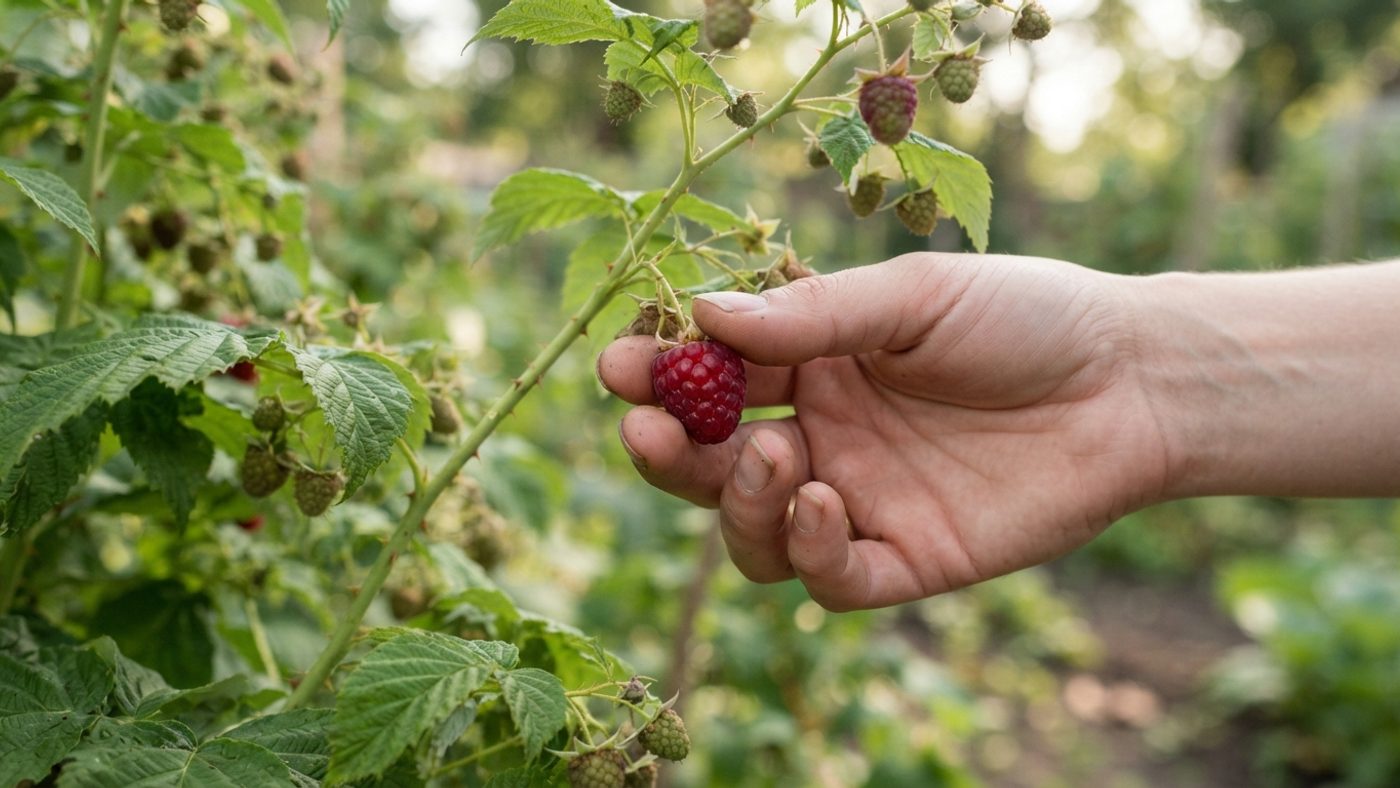
Harvest raspberries regularly, to get fruit at the peak of ripeness; fruit "come away easily when fully ripe" and should be "richly coloured, plump and easy to pull off." Picking more often doesn't make a raspberry cane produce more fruit the way it does with courgettes or beans; the real driver is the ripening calendar. A single raspberry cane doesn't ripen its fruit one berry at a time in a leisurely queue: a whole run of berries that set around the same time in early summer tends to ripen within days of each other, so a bed with several canes can go from "a few ready" to "all ready" in under a week. Picking often isn't stimulating new fruit; it's damage control, catching each berry at its short peak before it turns to mush, drops, or draws wasps, since split or overripe fruit is what draws wasps in rather than the sound berries around it.
Left unpicked, an overripe raspberry doesn't hold its shape, it softens and weeps juice, on top of whatever birds and squirrels take first. Netting against birds and squirrels is worth having, and raspberry beetle, whose grubs work inside the fruit, and raspberry aphid, which spreads virus in the crop, are pests to watch for. Wet weather adds a separate risk on top of that: pick "on a dry day, as damp berries can soon turn mouldy," since grey mould is the fungus behind it, so a ripe patch caught between showers is worth picking there and then rather than waiting for drier conditions. The same damp conditions favour raspberry cane blight and raspberry spur blight too, two further fungal cane diseases; neither is something picking frequency changes, but a badly affected cane is one reason a wet year's overall glut can come in smaller than expected. Fruit that's already spoiled, mouldy or wasp-damaged is worth removing and binning as you find it rather than leaving it in place, since it's not going to recover and it only adds to what's attracting pests to the rest of the crop.
Why blackberries trickle instead of rush
Blackberries behave differently: a blackberry "won't ripen any further after picking," so it has to be picked exactly when ripe, and the advice is to harvest "every few days, picking any fruits that are plump and juicy." Crucially, the cropping period for blackberries runs from "mid-summer to early autumn, depending on the species and variety," a span of weeks to a couple of months, not a single flush. A bramble doesn't ripen all its fruit together the way a raspberry cane's early crop tends to; it keeps producing new ripe berries in small batches for as long as the season runs.
As with raspberries, nothing suggests picking more often increases the amount the plant produces; the "every few days" advice is about catching fruit at its brief ripe stage, not about coaxing more of it.
Summer vs autumn raspberries, and whether growing both actually helps
Two raspberry types matter for glut planning:
| Summer-fruiting | Autumn-fruiting | |
|---|---|---|
| Height | Around 1.8m (6ft) | 1.2–1.5m (4–5ft) |
| Cropping window | Early to late summer | Late summer into autumn |
| First crop | From the second year onward | In the first year |
| Pruning | After harvest | Cut down in February |
Summer-fruiting types start in June and later varieties run into September; autumn types start in August and often extend into October. Grow both together and you get "harvests for months on end," June through October rather than one concentrated block. That's a genuine staggering effect, but it's a variety-and-type choice made at planting time, not something picking habits after the fact can replicate. Where a bed is currently one summer-fruiting variety and the annual glut is unmanageable, the fix sits at the planting stage: adding an autumn-fruiting variety alongside it, or choosing summer varieties with staggered ripening times, spreads the load across the season instead of concentrating it into a fortnight. The raspberry growing guide and the best raspberry varieties for Scotland comparison both cover named varieties for each type.
Blackberries don't have this same summer/autumn split. Variety differences in timing sit within a single mid-summer-to-early-autumn window (boysenberries ripen around July, as an early example) rather than two distinct fruiting types. Choosing an earlier- and a later-ripening blackberry variety can shift the picking window slightly but won't produce the same length of season extension that pairing summer and autumn raspberries does; named varieties are in the blackberry growing guide and the best blackberry varieties for Scotland article.
How often to check the crop
Neither crop gives much grace once ripe, so both reward checking every couple of days at minimum during the peak of the season, and daily during the heaviest week or two, rather than trying to time one big picking session.
Short-term storage once picked
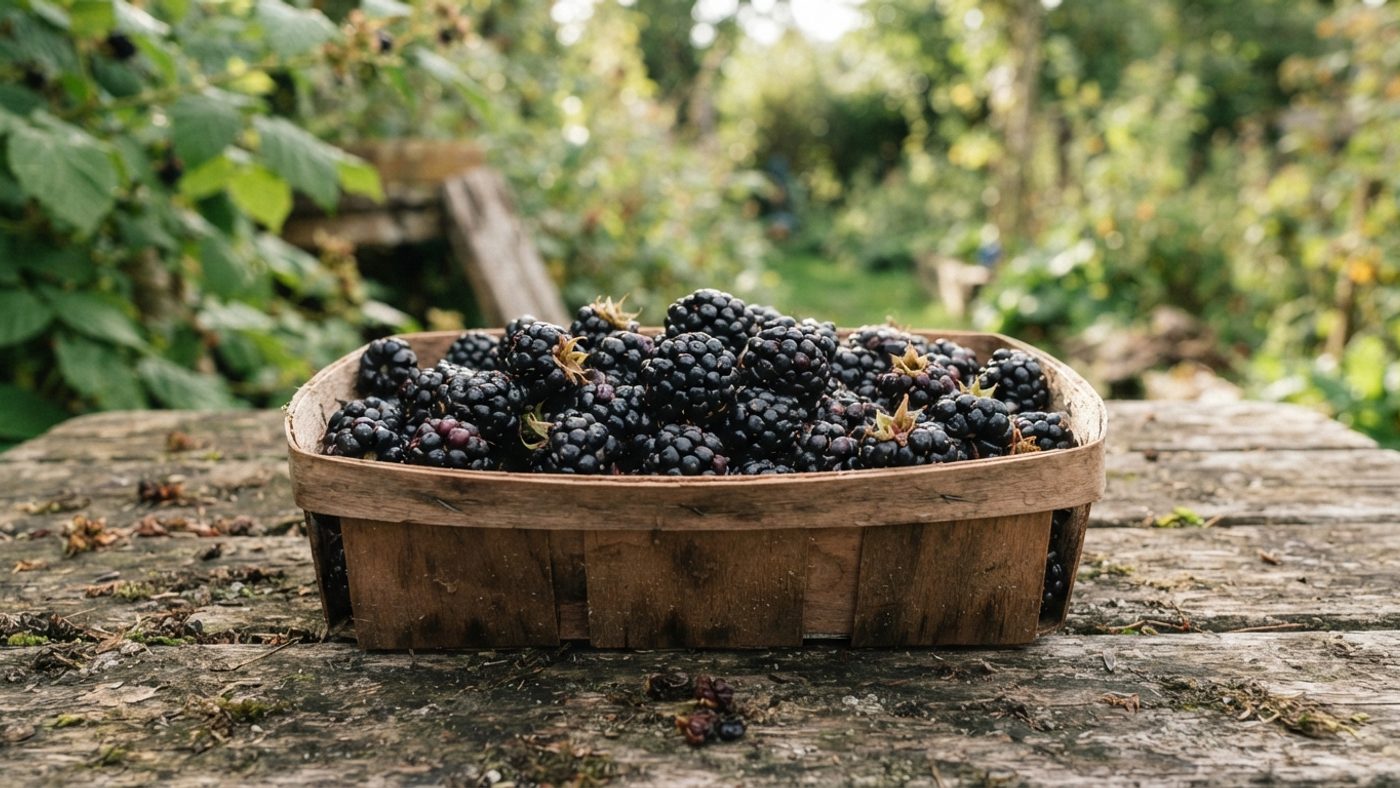
Once off the plant, both raspberries and blackberries are short-lived and best treated as a use-soon crop rather than something to bank in the fridge for a week. Keep picked blackberries in "a shallow bowl or punnet, keeping them only two or three layers deep" so the berries at the bottom aren't crushed by the weight of the ones above, and the same logic applies well to raspberries, which bruise even more easily. For both, that means a shallow, uncovered container in the fridge rather than a deep bowl or a sealed bag, which traps condensation and speeds up mould. Raspberries are blunter still: they are "best eaten fresh, when juicy, sweet and delicious."
The Scottish breeding behind the varieties
Sowing and variety timing for both crops is general UK advice, not Scotland-specific. The genuinely Scottish angle sits one step back, in the breeding behind some of the raspberry varieties in circulation: the James Hutton Institute in Dundee bred the Glen series (Glen Ample, Glen Doll, Glen Lyon, Glen Magna, Glen Rosa and Glen Shee among them), using a single dominant gene, A10, to build resistance to four biotypes of the aphid that spreads virus in the crop, the same raspberry aphid named above as a pest to watch for. The same programme is working on resistance to Phytophthora fragariae var. rubi (raspberry root rot), which it puts at around 20% of losses in Scottish raspberry crops, work that goes into which varieties end up on sale here rather than into how a glut behaves once you're growing them.
Common questions
Does picking raspberries or blackberries more often make the plant produce more fruit?
There's no indication of that. Regular picking is recommended to catch each fruit at peak ripeness before it spoils, not because harvesting stimulates further flowering or fruiting the way it does with courgettes or beans.
Why does a blackberry glut feel never-ending compared to raspberries?
Because fruit on a bramble doesn't all set at once the way it does on a raspberry cane, so new berries keep reaching ripeness in small batches for weeks after the raspberry bed's first rush has already passed.
Will an unpicked blackberry ripen further if I leave it a bit longer?
No, blackberries "won't ripen any further after picking," so a berry that looks slightly underripe on the bush needs to stay there until it's fully coloured; picking early doesn't buy any extra ripening time indoors.
Can I extend the raspberry season by growing more than one variety?
Yes, but it's a decision made at planting time, not something picking habits can achieve on their own: an established summer-fruiting bed paired with a newly planted autumn-fruiting variety is the combination to aim for.
How long will picked raspberries or blackberries keep before they need eating?
A day or two in the fridge is realistic for both, kept shallow and unstacked rather than piled into a deep bowl. Neither crop is worth planning around as a longer-term store.
Sources
4 sources, recorded with what each was used for
- RHS: Raspberries, grow your own: Harvesting method and frequency, picking on a dry day and mould risk, summer- vs autumn-fruiting differences, cropping season length, netting/pest notes (raspberry beetle, raspberry aphid), raspberry cane blight and spur blight, storage note
- RHS: Blackberries, grow your own: Ripening behaviour after picking, harvesting frequency, cropping season length, shallow-container storage advice
- James Hutton Institute: Raspberry Breeding: A10 aphid-resistance gene and biotype coverage, raspberry root rot (Phytophthora fragariae var. rubi) losses in Scottish crops
- James Hutton Institute: FruitBreeding: Glen series raspberry variety names, commercial licensing via James Hutton Limited