
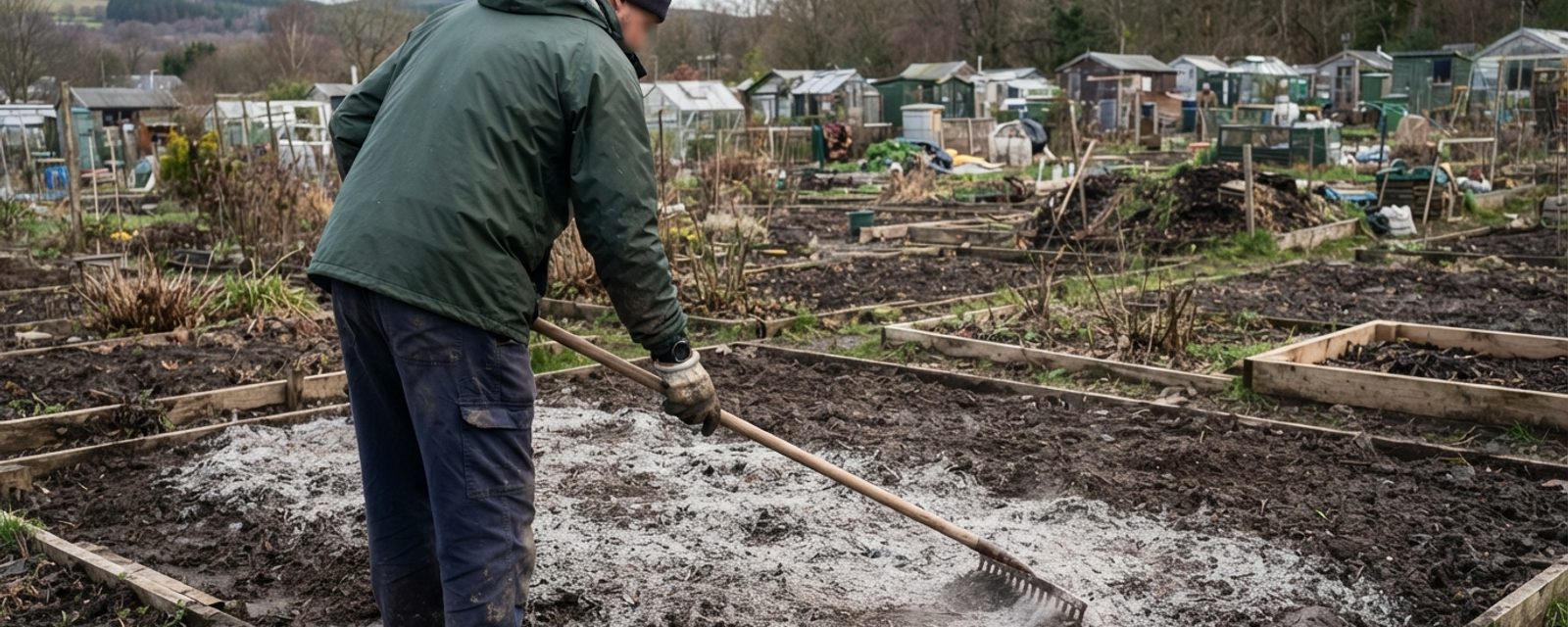
Wood ash is the mineral residue left behind once a fire has burned off everything combustible, the carbon, the water, the volatile compounds that make up the bulk of a log's structure. What remains is mostly inorganic: calcium, potassium, and a scatter of trace elements that were locked into the wood's cell structure while the tree was alive. Because potassium salts survive combustion and end up concentrated in the ash, wood ash functions horticulturally as a source of potash, the same nutrient sold in shop-bought potassium fertilisers, plus a liming effect from the calcium compounds it also contains.
Wood-burning stoves are a common heating choice in rural Scotland, so that residue is often a steady, recurring byproduct through the winter rather than an occasional bonfire leftover. A stove burning several bags of logs a week produces ash regularly enough that it's worth understanding properly, rather than either binning it or spreading it on autopilot.
What's in it
Wood ash contains roughly 3% potassium along with trace elements, with younger wood, prunings and smaller branches rather than thick trunk wood, yielding ash that's richer in nutrients. Hardwood ash (birch, oak, ash) is generally more nutrient-dense than softwood ash (pine, spruce, fir). That potassium is present in a water-soluble form, which is useful for plant uptake but also means it leaches out fast if the ash sits exposed to rain before you use it.
Wood ash is not a source of nitrogen, so it won't push leafy growth the way a general fertiliser would.
The non-negotiable sourcing rule
Only ash from clean, untreated wood belongs anywhere near the garden. Using wood ash from preserved, painted, stained, or chemically treated timber is not recommended, because toxic elements from the treatment can remain in the ash after burning, that ash should go to council waste collection, not onto a bed or into the compost. Coal ash and ash from smokeless fuel are a different, more contaminated material entirely and are not suitable for garden use under any circumstances. The one carved-out exception is ash from lumpwood charcoal, which can be treated the same as wood ash.
The same logic extends past what most people think to check. If pallet wood, chipboard, painted skirting, or old furniture ever goes into the stove alongside proper logs, the resulting ash carries the same contamination risk as ash from deliberately treated timber, whatever nutrient content the clean fuel would otherwise have given it, and shouldn't be assumed safe just because it burned in the same appliance as clean fuel. The clean-fuel-in, clean-ash-out principle is the one to hold onto: kiln-dried, seasoned logs sold as ready to burn leave ash worth using; anything burned as a way of getting rid of waste timber does not.
Cooling and storing ash from the stove
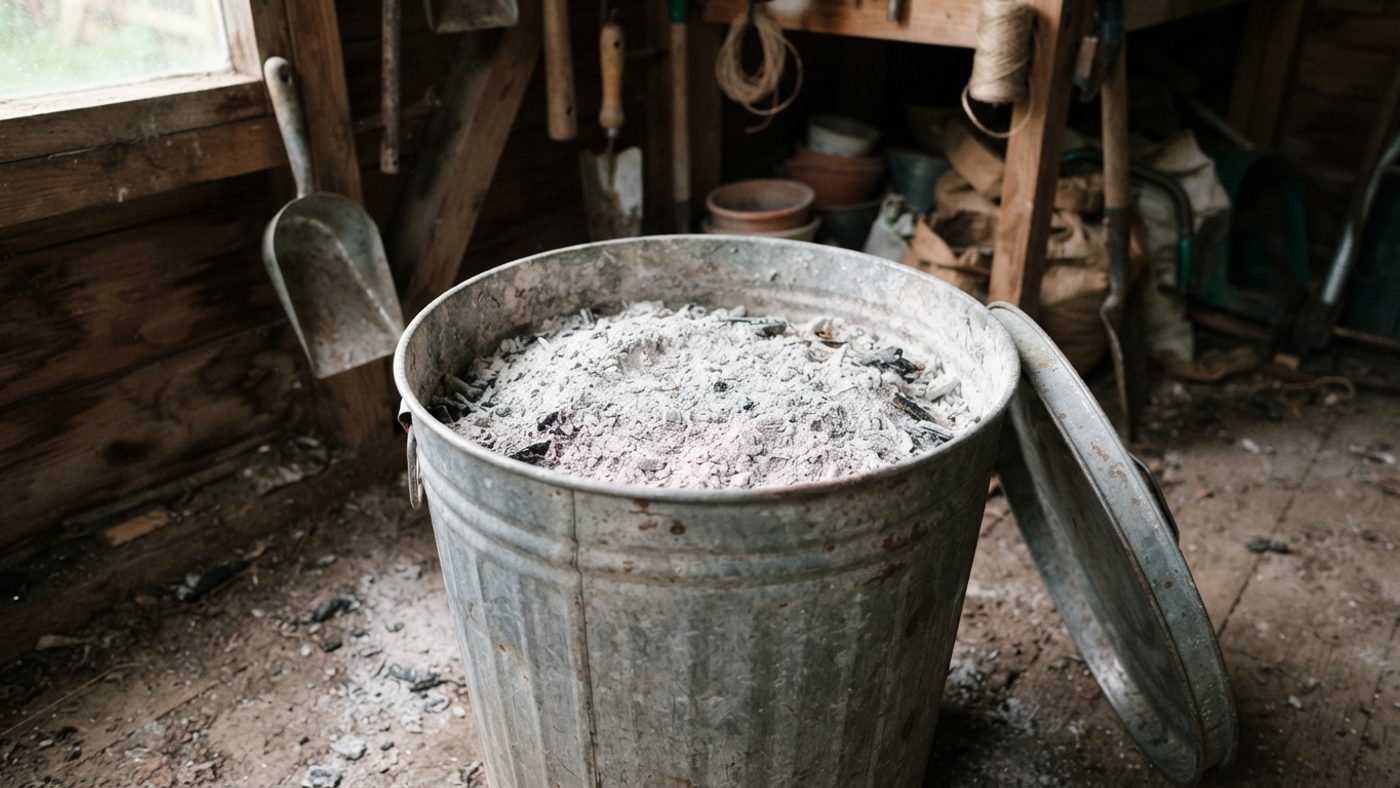
Ash raked from a stove's firebox or ashpan can hold live embers for a surprisingly long time, what looks grey and spent on top can still be hot underneath. Let it cool fully in a metal container, away from anything flammable, before transferring it anywhere near the garden or a compost bin; ash that goes into a plastic bucket or a paper sack while still warm is a genuine fire risk, not a theoretical one.
Once cooled, store it dry. Because the potassium in wood ash is water-soluble, ash left exposed to rain, even in an open bucket outside for a single wet spell, loses much of its value before it ever reaches the soil; keep it under cover in a lidded container until you're ready to use it. That same dryness makes it a fine, powdery dust that can irritate eyes and lungs when spread on a windy day, so gloves and a dust mask are worth wearing while handling and spreading it.
Direct to soil, or via the compost heap
There are two established routes, and they carry different tradeoffs.
Applied straight to bare soil, wood ash works best spread thinly in late winter, at 50-70g per square metre, then raked or dug in, timed so any short-term pH shift has settled before spring sowing or planting rather than shocking roots that are already in the ground.
Routed through the compost heap instead, the ash's nutrients bind to organic matter and humus rather than washing straight through the soil profile: the same soluble potassium that makes wood ash useful is also what gets leached out fastest by rain when it's applied loose to bare earth, and composting it first avoids that loss. If you go this way, add it sparingly and occasionally, roughly every 15cm of material, since heavier use risks pushing the whole heap toward excess alkalinity and soluble salts that can damage the compost itself.
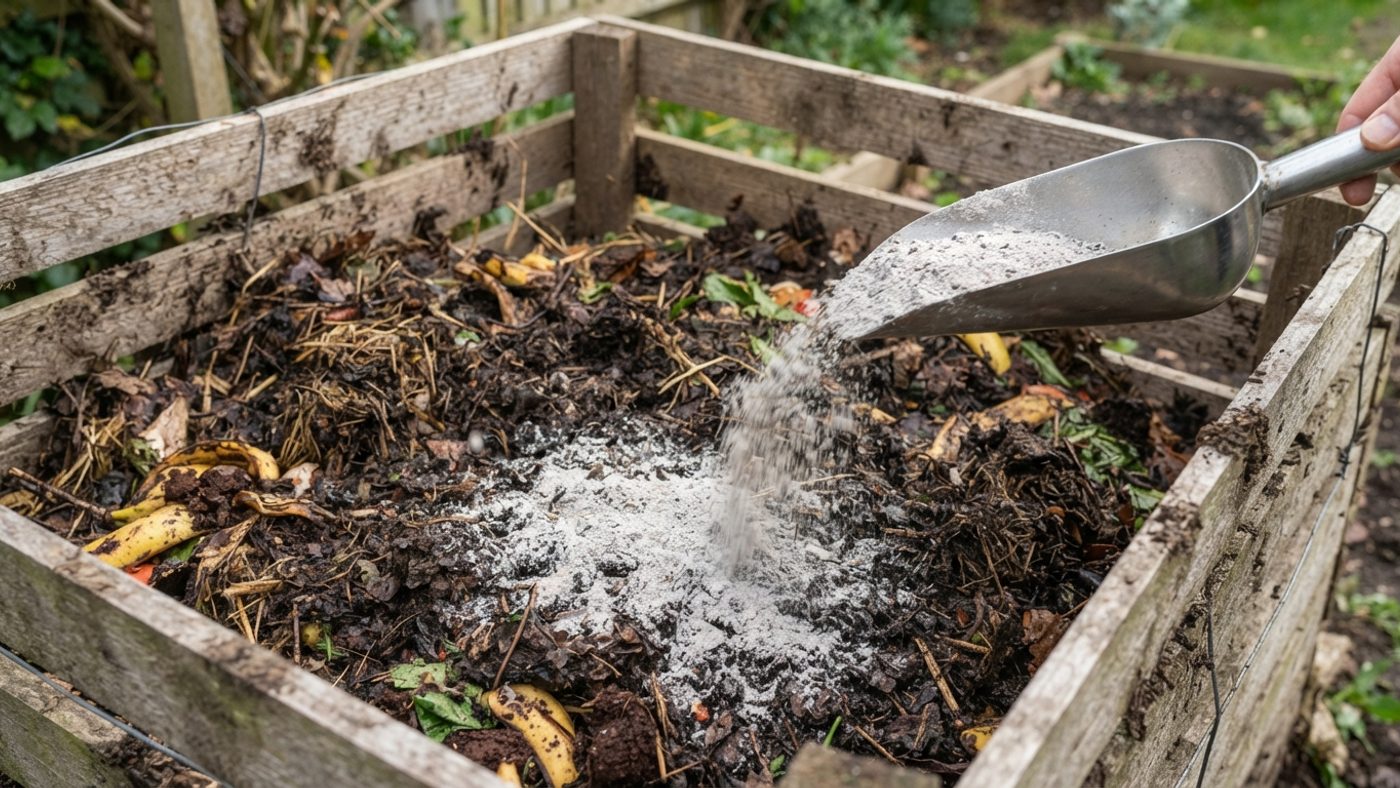
Either method works; the choice mostly comes down to whether you have bare soil due a late-winter feed or an active compost system to fold it into.
What to keep it away from
The plants to keep wood ash away from are the acid-loving ones: raspberries, rhododendrons, and other ericaceous plants (the acid-soil family that also includes blueberries and camellias) need acidic soil to thrive, and repeated ash applications will work against them. Fruit growing generally does best in slightly acidic soil too, which makes wood ash a poor fit for most of the fruit garden even where it suits the vegetable beds, brassicasThe cabbage family: cabbage, kale, broccoli, cauliflower, Brussels sprouts, kohlrabi, swede, turnip and more, sharing the same pests, diseases and rotation rules. Full definition → and alliums, which prefer a more neutral-to-alkaline soil, are typically where it does the most good. The same liming effect applies whether the alkalinity comes from lime or ash, see garden lime: when and how much for how far that shift can go. Check identifying your soil type and soil pH testing and adjustment before applying ash regularly, rather than guessing at your starting point.
The other soil to avoid is anything freshly limed. Both lime and wood ash raise pH, stacking them risks tipping soil into over-alkaline territory, which locks up other nutrients and can trigger problems like potato scab. If you've limed a bed this season, that bed doesn't need ash on top of it. The same scab risk is worth remembering when planning ahead, not just when checking what's already been limed: skip ash on ground you're planting potatoes into that season, for the same reason.
Don't treat these as one-off checks either. Applied to the same bed most winters, wood ash's liming effect compounds over the years even at the modest rates above, a bed that took ash happily five winters running can drift alkaline enough to start suiting the ash badly itself. Retest soil pH every couple of years if ash is a regular part of the routine, not just before the first application, and treat 50-70g per square metre a year as a ceiling for any one bed rather than a figure to repeat at every opportunity through the winter.
Application at a glance
| Scenario | Rate / method | Timing |
|---|---|---|
| Bare vegetable soil, direct application | 50-70g per m², raked or dug in | Late winter, well before spring sowing |
| Compost heap | Thin layer, roughly every 15cm of material | Ongoing, as the heap fills |
| Acid-loving plants (rhododendrons, raspberries, blueberries) | Do not apply | — |
| Freshly limed soil | Do not apply | Wait until the following season |
| Soil about to be planted | Avoid direct application | Apply weeks ahead, not immediately before planting |
Wood ash and slugs
Some gardeners scatter dry wood ash around vulnerable seedlings as a slug and snail deterrent, on the theory that the fine, alkaline dust is unpleasant for a slug to cross. It's worth knowing the limits of this before relying on it: ash loses the effect completely once it's damp, which in a typically wet Scottish spell can mean a fresh application needs redoing after every rain shower rather than once being enough, and repeated applications right around the same few plants add up quickly against the acid-loving plants and freshly-limed soil to avoid, covered above. Treat it as a minor, short-lived extra rather than a real slug-control method.
Why potash matters in Scottish soil
Potassium removed by growth has to be replaced or soils run down. Scotland's clay soils hold potash reserves but release them poorly, so they can't be relied on as a potash source on their own; lighter sandy soils retain potash weakly and lose it easily. Both cases favour frequent, smaller potash inputs over occasional large ones. Wood ash, used at the modest rates above rather than dumped on in bulk, fits that pattern reasonably well as a supplementary potash source, provided it isn't relied on as the sole source of potassium for hungry crops.
Common questions
Can I use ash from a wood-burning stove the same way as bonfire ash?
Yes, provided the fuel was clean, untreated wood, the source (stove firebox or open bonfire) doesn't change the chemistry, only the fuel does.
How do I know if my ash is contaminated?
The safest rule is to track what went into the fire, not to try to judge the ash afterward. If anything painted, varnished, glued, or chemically treated was burned, treat the whole batch of ash as unsuitable for the garden.
Is wood ash the same as the ash from a garden incinerator or bonfire of mixed garden waste?
Not necessarily, ash quality depends on what was burned. Ash from clean prunings and untreated logs is fine; ash from a bonfire that also included painted fence panels, glossy paper, or other household waste is not.
How often can I apply wood ash to the same bed?
Sparingly, and with attention to pH over time, repeated applications compound the alkaline effect, so testing soil pH periodically is worth doing if you apply ash most winters rather than occasionally.
Does wood ash replace the need for a general fertiliser?
No, it supplies potash and trace elements but essentially no nitrogen, so it won't support leafy growth on its own and works best alongside, not instead of, other feeding.
Sources
3 sources, recorded with what each was used for
- RHS: Wood Ash, Using in the Garden: Nutrient content (~3% potassium), application rate (50-70g/m²), timing, plants to avoid (raspberries, rhododendrons, fruit garden), treated-timber and coal/smokeless-fuel ash cautions, lumpwood charcoal exception, pH monitoring guidance
- Garden Organic: Wood ash and the organic garden: Leaching risk of direct soil application, compost-heap routing method, dry storage advice, treated-wood and coal/smokeless-fuel safety warnings
- Farm Advisory Service Scotland: Practical use of potash on the farm: Potassium's role in plant growth, the need to replace potash removed by cropping, Scottish clay soils' poor potash release, sandy soils' weak potash retention favouring frequent smaller applications