
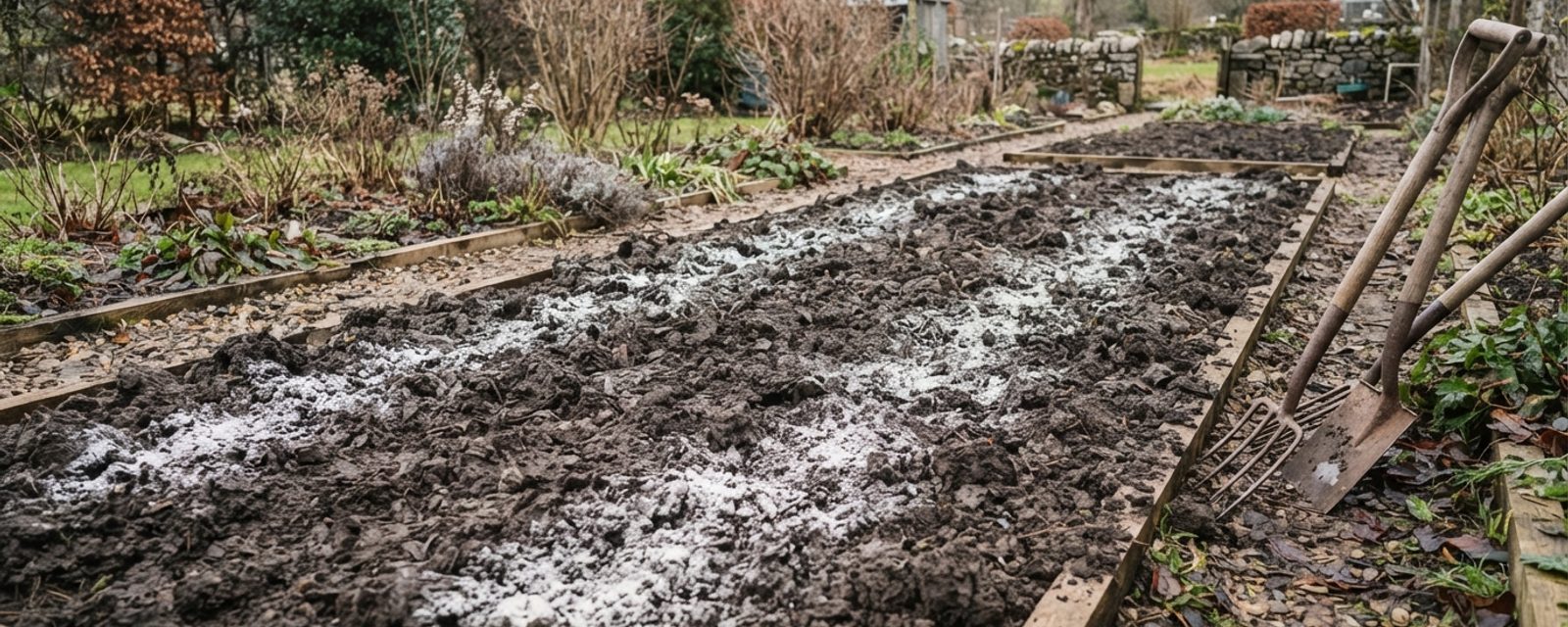
You've just got a soil test result back, a number, maybe 5.4 or 5.8, and a bag of well-rotted manure sitting by the shed waiting to go on the same bed. The question that actually matters isn't whether to lime. It's whether you can do both jobs this weekend, or whether doing them together undoes the point of either one. The honest answer is no, not together, and the reason why is worth understanding before you open either bag.
This covers vegetable and ornamental beds specifically, lawns are a different job with their own rules and aren't covered here.
What your soil test number actually tells you
A pH reading on its own doesn't tell you how much lime to add, only whether you need to, and roughly how far you have to move. Most garden plants do best around pH 6.5, and below about pH 6.0 a general vegetable bed usually benefits from liming. Test with a cheap home kit rather than guessing, and don't test again within about three months of adding lime, fertiliser or fresh organic matter, the reading won't reflect where the soil has actually settled yet. For how that acidity happens in Scottish soil in the first place, and how to test for it, see our guide to soil pH testing and adjustment.
That target isn't universal, and it's worth knowing before you calculate anything. Scottish mineral soil is worked to a lower target, pH 6.0 to 6.2, not the general-purpose 6.5, and peaty soil lower again, 5.3 to 5.5. That second figure matters more here than it would further south: peat soils cover roughly a fifth of Scotland's land area, so a genuinely peaty bed is a real possibility, not an edge case. Peaty ground can sit that much more acidic without the same harm because it holds far less of the soluble aluminium that makes low pH damaging to roots in mineral soil. If your soil is genuinely peaty rather than just dark and rich-looking, don't chase the same number a clay or loam bed would.
Three kinds of lime, and which one you actually want
"Garden lime" isn't one product. Three materials account for almost everything sold under that name, and they don't behave the same way in the ground.
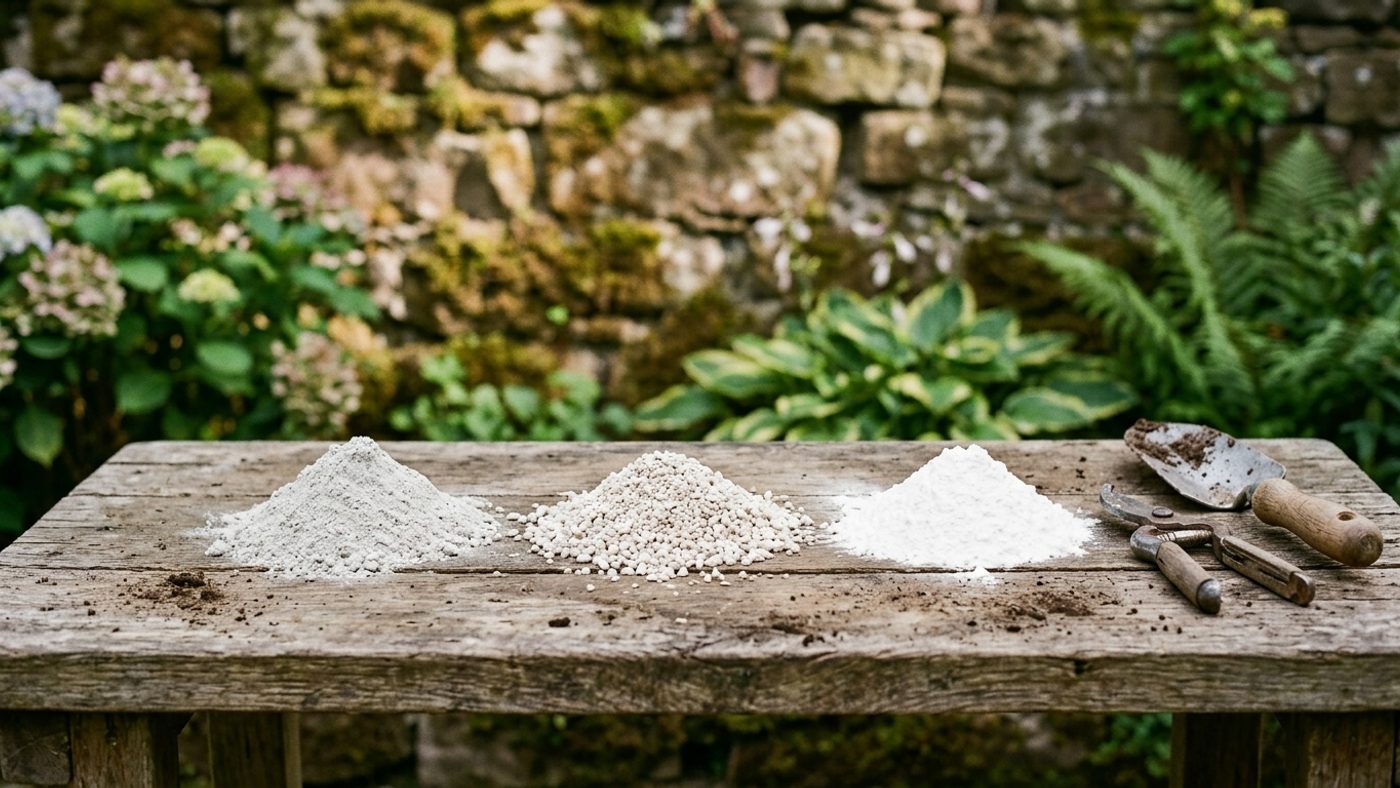
Ground limestone (garden lime)
This is calcium carbonate, ground fine, and it's the one to reach for by default. It's the standard product on garden centre shelves, gentle enough to handle without protection, and slow-acting enough that it's hard to badly overdose by accident. Every rate given below is based on this material.
Dolomitic (magnesian) limestone
Chemically similar but includes magnesium carbonate alongside the calcium, so it raises pH and adds magnesium in one pass. Its neutralising value (56) sits close enough to ground limestone's (50–55) that swapping it in at the same rate is a reasonable substitution, not just a rough guess. Worth reaching for specifically if a soil test flags low magnesium; otherwise ground limestone does the same job without adding magnesium you may not need.
Hydrated lime (quicklime, calcium hydroxide)
A builders' material, not a garden one really, its neutralising value (roughly 70) is well above the other two, meaning it reacts far more strongly gram for gram, and it's caustic enough that gloves and eye protection matter when handling it. It corrects pH fast, which is exactly the problem: fast-acting and strongly alkaline right where it lands means a real risk of scorching roots and foliage if it touches a growing plant. Unless there's a specific reason to want speed, ground limestone does the same eventual job with far less to go wrong.
Ground chalk and calcified seaweed turn up occasionally too, both with much the same neutralising value as ground limestone (50–55), treat either as a straightforward substitute at the same rate rather than a different calculation.
How much to apply, by soil type
Lime works differently depending on what it's going into: clay holds onto acidity more stubbornly than sand does, so it takes more lime to shift the same distance on the pH scale. The table below gives a rate per square metre, not a total for your bed. Using ground limestone to bring soil up to the general 6.5 target:
| Soil type | Starting pH 6.0 | Starting pH 5.5 | Starting pH 5.0 | Starting pH 4.5 |
|---|---|---|---|---|
| Clay | 0.6 kg/m² | 1.0 kg/m² | 1.4 kg/m² | 1.8 kg/m² |
| Loam | 0.5 kg/m² | 0.8 kg/m² | 1.2 kg/m² | 1.5 kg/m² |
| Sandy | 0.4 kg/m² | 0.7 kg/m² | 1.0 kg/m² | 1.3 kg/m² |
A 6m² clay bed starting at pH 5.5, for example, needs roughly 6kg altogether, not the 1.0kg per-square-metre figure in the cell. Once the rate goes past about half a kilogram per square metre, split the dose: dig half into the top 20cm of soil and sprinkle the rest on the surface afterwards, rather than trying to work the whole amount in at once.
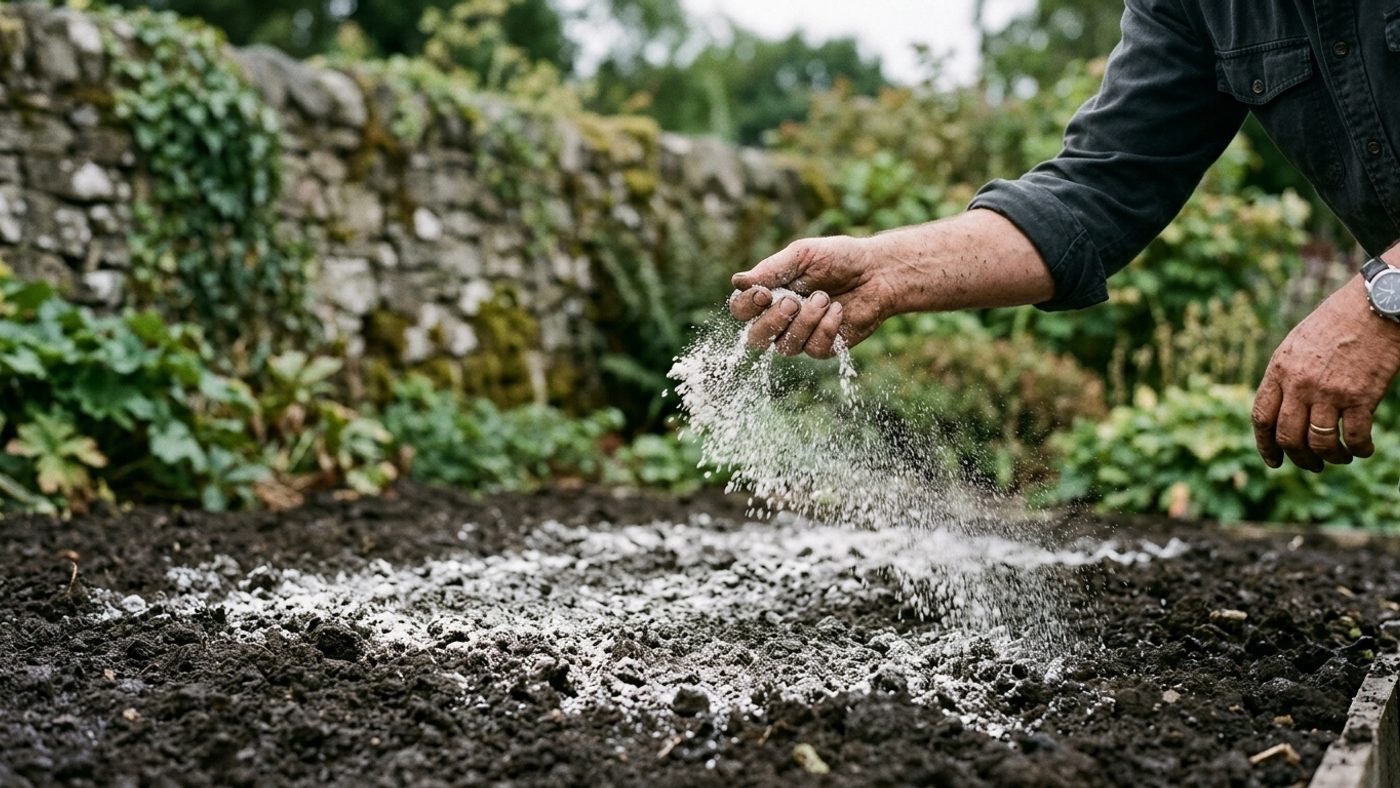
These rates are calibrated to the general 6.5 target, not Scotland's lower 6.0–6.2 mineral-soil target mentioned above. Reaching 6.5 isn't harmful for most plants, but it's more lime than the Scottish target strictly calls for. No separate published rate table exists for stopping at 6.0–6.2 specifically, so the more reliable approach on Scottish mineral soil is to apply a partial amount, retest, and add the rest only if you're still below target, rather than assuming a fixed fraction of the table's figure will land you exactly there.
Peaty soil isn't in that table. No published source gives a reliable kilogram-per-square-metre dose for peaty garden soil, the only figures available are farm-scale, tonnes-per-hectare tables built for agricultural fields, not gardens. If you're on genuinely peaty ground, work toward the lower 5.3–5.5 target in small, cautious additions and retest rather than borrowing a mineral-soil number.
BrassicasThe cabbage family: cabbage, kale, broccoli, cauliflower, Brussels sprouts, kohlrabi, swede, turnip and more, sharing the same pests, diseases and rotation rules. Full definition → and potatoes pull this calculation in opposite directions, covered below, worth knowing before you lime a bed that grows both in rotationMoving each crop family to different ground each year, on a multi-year cycle, so pests and diseases that build up in soil don't get a repeat host. Full definition →.
Timing: why lime and manure don't mix
This is the part that trips up gardeners doing everything else right. Lime and fresh manure both improve soil, but not on the same afternoon, and not even close together.
The mechanism is straightforward chemistry: manure's nitrogen sits mostly in ammonium form, which plant roots can use. Raise the pH sharply right next to it, which is exactly what lime does, and that ammonium converts to ammonia gas and escapes into the air instead of staying in the soil for your plants. Field-scale measurements of this exact interaction, easiest to quantify at that scale, have recorded up to half the available nitrogen in slurry lost this way when it's spread onto recently limed ground. The recommended gap is at least a week between the two if manure or slurry goes down first, or a full three months if lime went down first. A domestic vegetable bed isn't dosed at that scale, but the chemistry doesn't know the difference, the same reaction happens in a raised bed as in a field.
In practice, that means picking one job for autumn and the other for a different point in the rotation, not doing both before winter digging. A workable pattern: lime in late autumn or winter, well ahead of spring planting, and add manure or garden compost separately, either well before the lime goes on, or left until spring closer to planting time. Lime for annual vegetable beds is usually best added in winter anyway, just ahead of digging, which naturally puts distance between the two jobs if manure already went on earlier in the year.
The real risk of over-liming
Lime is easy to treat as a one-way fix, acidic soil is a problem, so more lime is more correction. That's not quite true, and the risk cuts in three directions.
The first is nutrient lockout. Push soil pH too far up and iron, manganese and boron all become harder for roots to take up, even though they're still physically present in the soil. The symptoms look like a deficiency because functionally they are one: yellowing between leaf veins, worst on the newest growth for iron, on older leaves for manganese. It's a genuinely easy mistake to make on a bed that's been limed repeatedly over years without ever being retested.
The second is any bed that already holds, or will hold, acid-loving (ericaceous) plants: rhododendrons, camellias, heathers and blueberries all want soil around pH 4.5–6.0 and suffer badly if lime reaches their roots. The mechanism is the same iron lockout as above, but visibly worse, chlorosis, poor growth, and a plant that can eventually die rather than just underperform for a season. Keep lime well away from these beds, or better, don't lime a bed you know is earmarked for them.
The third is more specific to a mixed vegetable plot: brassicas and potatoes want opposite things from the same soil. Liming to raise pH is a recognised way to make clubrootA soil-borne fungal disease of the brassica family that swells and distorts roots, and survives in soil for years. Full definition → (the most damaging soil-borne disease of the cabbage family) less severe in brassicas, but that same higher pH makes potato common scab (the rough, corky patches that turn up on potato skins) worse. Growing both crops in the same rotation means liming has to be timed around which crop is coming next, not applied as a blanket yearly habit, apply it after the potato slot in the rotation, ahead of brassicas, rather than on a fixed calendar regardless of what's about to go in.
The practical guard against all three is the same one that applies to the whole process: test before you lime, apply the calculated amount rather than a guess, and retest before adding any more. Lime moves soil chemistry slowly, even surface-applied lime around established plants can take years to have any real effect, so it's much easier to add a bit more later than to correct an overshoot.
Common questions
Will liming harm blueberries, rhododendrons or other acid-loving plants nearby?
Yes, potentially. These plants want soil around pH 4.5–6.0 and lock up iron and manganese if lime pushes the soil more alkaline, which shows as yellowing leaves and poor growth. Keep them in their own bed or container well away from any area you’re liming, rather than sharing a border.
How long after liming can I plant?
Ground limestone needs time to react with soil moisture before it changes the pH meaningfully, treat winter application, well ahead of spring sowing, as the safe default rather than liming right before planting.
How often do I need to lime?
There's no fixed yearly schedule to follow, retest is the actual guide, not a calendar. Lime reacts slowly, and surface-applied lime around established plantings can take years to fully take effect, so adding more before retesting risks pushing well past the target rather than correcting it. Scotland's wetter climate washes elements out of the soil faster than a drier climate would, leaving it more acid and nutrient-poor to begin with, part of why testing regularly rather than assuming a fix lasts indefinitely matters more here.
What if I don't know whether my soil is clay, loam or sand?
A rough feel test tells you enough to pick the right row in the dose table: clay rolls into a smooth, sticky sausage shape; sandy soil is gritty and won’t hold together; loam sits in between, gritty but holding briefly before crumbling.
Is peaty soil treated the same as the rest?
No, peaty soil is best kept more acidic than clay, loam or sand (around pH 5.3–5.5 rather than 6.0–6.5), and there's no reliable garden-scale dose published for it, so small, cautious additions with retesting are the safer approach than applying a mineral-soil rate.
Sources
11 sources, recorded with what each was used for
- RHS: Lime and liming: Lime types (ground limestone, dolomitic, hydrated, plus ground chalk and calcified seaweed) and their neutralising values, application method, winter timing for vegetable beds, lime’s slow surface-application effect over years, the three-month soil-test caveat
- RHS: Soil pH and testing: General pH scale interpretation and the 6.5 general-purpose target
- gov.scot: The Scottish Soil Framework: Peat soils covering roughly 22.5% of Scotland's land area
- Scotland's Soils (Scottish Government soils portal): Scotland's wetter climate leaching elements out of soil, leaving it more acidic and nutrient-poor
- RHS: Acidifying soil: Corroborating detail on the general 6.0–6.5 target range
- RHS: Potato scabs: The clubroot-liming vs potato-scab trade-off and rotation timing advice
- RHS: Nutrient deficiencies: Iron, manganese and boron lockout in alkaline soil and its symptoms
- RHS: Rhododendrons on alkaline soils: Ericaceous plants named (rhododendrons, camellias, heathers, blueberries), their pH 4.5–6.0 preference, and lime-induced chlorosis
- FAS Scotland (SAC Consulting/SRUC): Best use of limited supplies, lime: Scotland-specific target pH for mineral soil (6.0–6.2) and peaty soil (5.3–5.5), magnesian lime guidance
- Teagasc: The lime, silage and slurry quandary: The ammonia-loss mechanism and the recommended time gap between liming and manure/slurry application
- Teagasc: Lime, the forgotten fertiliser: The three-month buffer after liming before further nitrogen application