
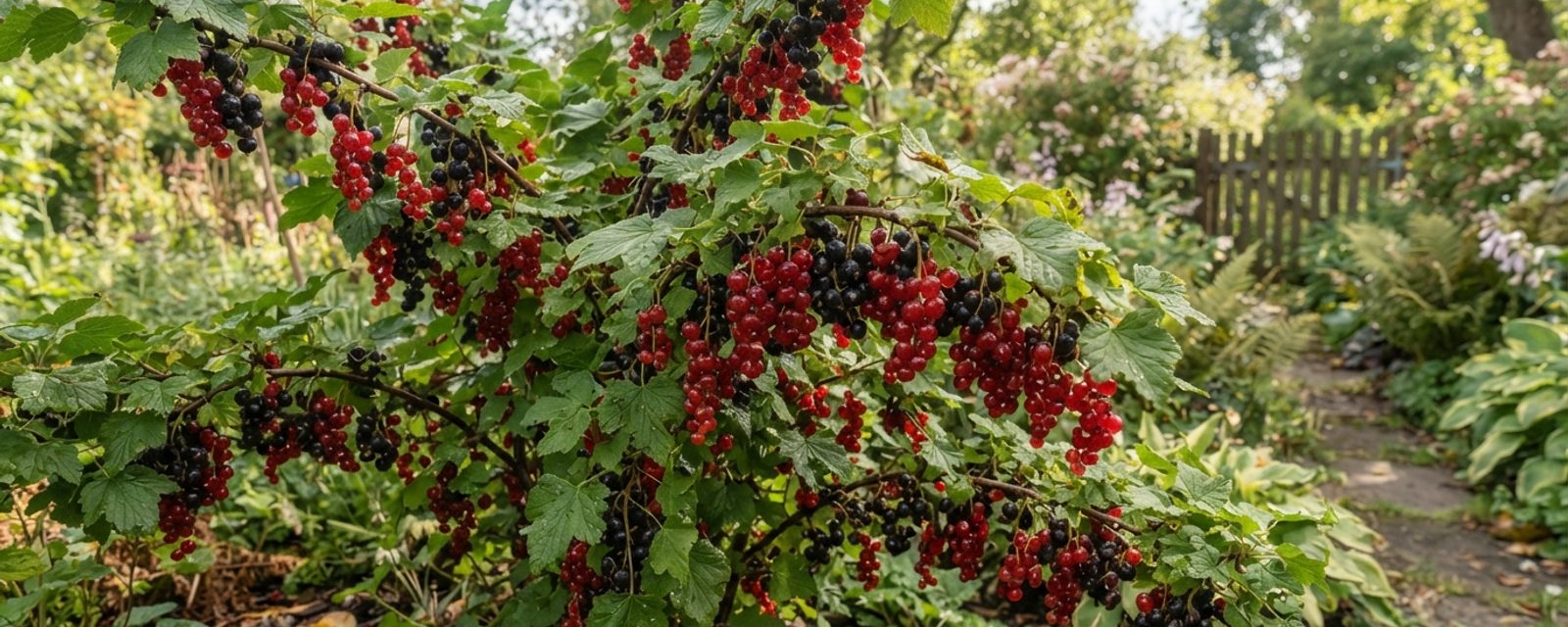
A blackcurrant bush can carry 4.5kg of ripe fruit, and the window to bring it in cleanly is measured in days, not weeks. Ripen too fast in a warm spell and the birds find it before you do. Let a wet week roll through right as the strigs turn, and the skins start to split and drop. Unlike a crop you can keep cutting to buy yourself more time, a currant bush ripens its fruit in one concentrated pulse, miss it, and there's no second flush waiting behind it. The question isn't how to keep the plant producing. It's how to get the fruit off the bush before the calendar and the weather close the gap.
Does the whole bunch ripen at once?
Blackcurrants ripen "from midsummer onwards, depending on the variety," and redcurrants are ready "once the fruits are richly coloured, firm and juicy, usually from July onwards depending on the variety." Once that window opens, the detail that actually changes how you pick is this: currants form in tight clusters along a short stalk, called a strig, and on modern varieties the whole strig ripens together. For blackcurrants, the RHS is explicit: on varieties such as Ben Connan, Ben Hope and Big Ben, "the whole bunch of currants (also known as a strig) ripens at the same time, so simply cut it off once the currants turn black." The same applies to redcurrants and whitecurrants, pick "whole fruit trussesThe flowering, then fruiting, stem cluster on a tomato plant; each truss ripens its fruit together. Full definition → (known as strigs) rather than individual currants," snipping the entire cluster once it has coloured up, rather than combing through for individually ripe fruit.
Older, less modern varieties are the exception: their strigs ripen unevenly, starting at the top, and need picking currant by currant over several visits as each one comes ready. Newer varieties carrying the RHS Award of Garden Merit (AGMThe RHS's Award of Garden Merit: a UK-wide trials award for reliable performance, not a Scotland-specific recommendation. Full definition →), including the Scottish-bred Ben series covered below, are the ones that ripen as a single decisive cut per strig rather than a repeat-picking job. That's good news for the glut, but it also means there's no way to spread one bush's harvest by picking it gradually: the whole crop arrives together, and it has to be dealt with together.
How long does the fruit hold before it's lost
Once a strig has fully coloured, it doesn't hold indefinitely. Two things work against you: birds, and weather.
Birds will strip a currant bush fast once fruit starts to change colour, which is why the RHS recommends covering plants with netting or a fruit cage before ripening begins, not once it's under way, for blackcurrants "before fruit starts to ripen," and for redcurrants "as soon as fruit starts to change colour."
Weather is the other pressure. The RHS states that heavy watering while fruit is ripening "can cause the skins to split," the fruit takes up water faster than the skin can stretch to accommodate it. Rain soaking the root zone during a wet spell puts the same kind of sudden water load on ripening fruit that heavy irrigation does, so the same splitting risk applies: a currant bush doesn't distinguish between a hose and a fortnight of rain. A run of wet, unsettled weather in July or August is common enough in a Scottish summer, and a currant crop that's ready to pick has no buffer against it: fruit already split or dropped from a soaking doesn't recover, and a fully ripe strig left on the bush through a few more wet, bird-active days is a bet against both problems at once.
Picking dry, ripe strigs on a dry day, rather than straight after rain or with dew still on the fruit, avoids adding handling damage on top of any splitting the weather has already caused. Snip strigs off with scissors or secateurs rather than pulling them free by hand, which risks tearing the spur the strig grows from, the same wood the bush needs for next year's crop.
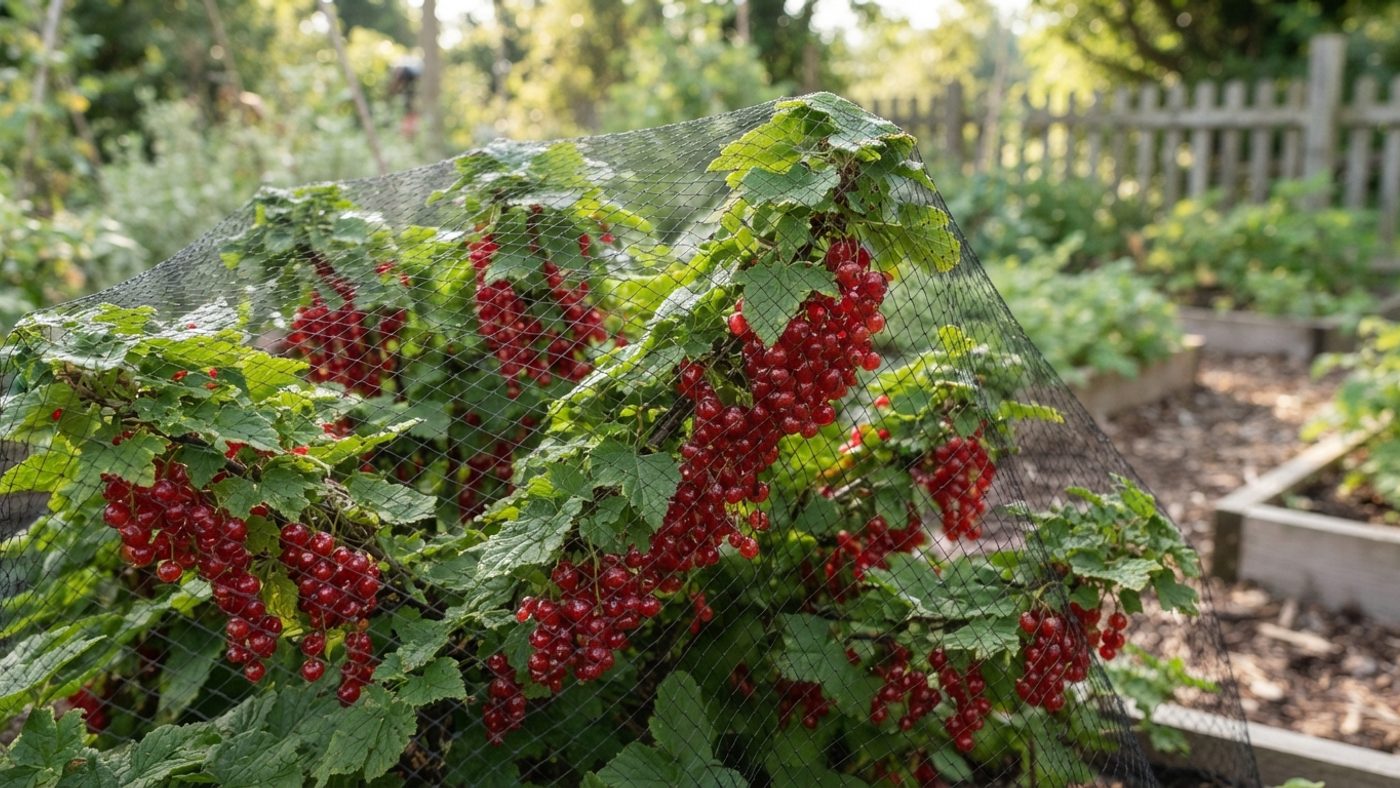
Ripening windows compared
| Fruit | Ripens | Ripening pattern (modern varieties) | Typical yield (established bush) |
|---|---|---|---|
| Blackcurrant | Midsummer onwards | Whole strig ripens together | ~4.5kg (10lb) |
| Redcurrant, early varieties | From early July | Whole strig ripens together | ~4.5kg (10lb) |
| Redcurrant, late varieties | To late August | Whole strig ripens together | ~4.5kg (10lb) |
| Whitecurrant | Early July to late August, variety-dependent | Whole strig ripens together | ~4.5kg (10lb) |
Whitecurrants are a form of redcurrant (Ribes rubrum) rather than a separate species, grown and harvested the same way. Only two whitecurrant varieties carry an AGM, Blanka and White Grape, so the choice there is a short one either way.
At around 4.5kg per established bush, it doesn't take more than one or two bushes ripening in the same week to produce more currants than most households get through fresh, which is the whole reason the timing pressure in this article matters at garden scale, not just for anyone growing rows of bushes.
Real ways to spread the harvest
The only genuine ways to stretch a currant harvest over more than a few days involve the planting itself, not the picking technique:
- Grow more than one bush, ideally of different varieties. Redcurrants come in early, mid-season and late varieties spanning early July to late August, choosing across that range turns one short glut into several smaller, staggered ones.
- Mix blackcurrants and redcurrants/whitecurrants. Their ripening windows overlap but aren't identical, so growing both spreads the workload rather than concentrating it on one week.
- Prioritise by exposure. A bush in a warmer, more sheltered spot will ripen ahead of one in a cooler corner of the same garden, which naturally staggers picking if you've got more than one planting site.
- Check strigs every couple of days once colour starts to turn, rather than waiting for a single harvest day, on a bush with several strigs at slightly different stages, this catches each one close to its peak instead of leaving the earliest ripening fruit exposed to birds and weather while you wait for the rest to catch up.
For planting choices, spacing and pruning that set a bush up to crop well in the first place, see the blackcurrant growing guide and the redcurrant and whitecurrant growing guide.
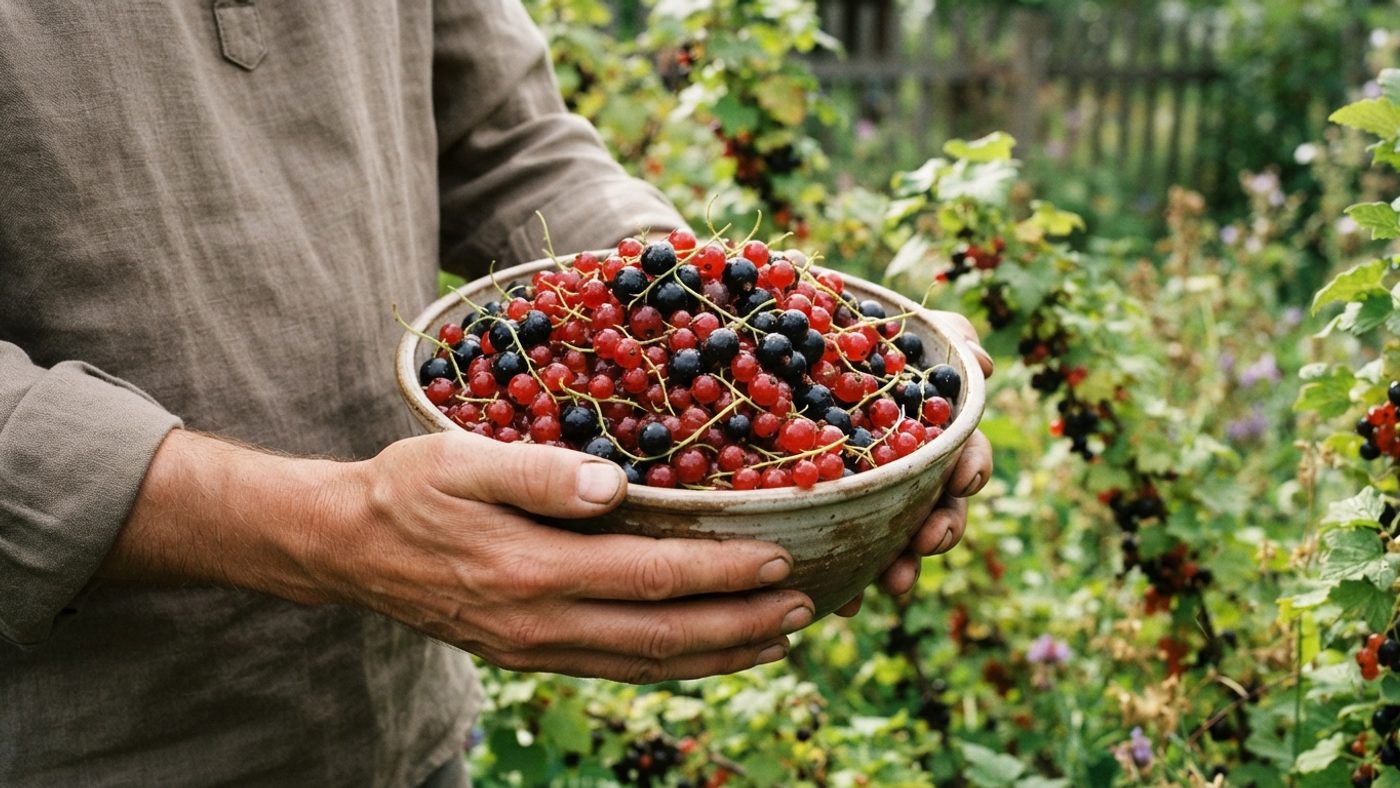
Keeping the harvest a few extra days
Once picked, currants don't hold for long. Eat blackcurrants within a few days of picking, refrigerating them if there's a short gap before use, the RHS's own guidance. Treat redcurrants and whitecurrants the same way: a cool spot or the fridge, used within a few days.
Why the latest-flowering varieties need closer watching
Many blackcurrant varieties grown in Scotland belong to the Ben series, including Ben Connan, Ben Hope and Big Ben, bred by the James Hutton Institute in Dundee, a programme running since the 1950s specifically to produce varieties suited to northern UK growing conditions. A central aim was introducing later flowering to reduce frost damage to blossom, reaching, in the Institute's own account, "its highest expression in Ben Tirran," released in 1990, though the Institute also notes that "further delays in flowering are likely to compromise eventual yield" beyond that point.
Flowering later pushes the whole season later behind it, ripening included: a variety bred to flower later is, other things being equal, also going into its ripening window later in the summer. In practice, that means a later-flowering Ben variety is worth checking on sooner rather than later once it does start to colour up, the frost protection it gave the blossom doesn't carry over to give the ripe fruit any extra grace period once the weather turns.
Common questions
Do I need to pick blackcurrants one at a time?
Not on modern varieties. Where the whole strig ripens together, as it does on Ben Connan, Ben Hope and Big Ben, you cut the entire cluster once it has turned black. Only older varieties, which ripen unevenly from the top of the strig downwards, need picking fruit by fruit.
How long can I leave ripe currants on the bush?
There’s no fixed number of days, but the margin is narrow. Once a strig is fully coloured, it’s exposed to birds immediately and to skin-splitting if heavy rain follows. Treat a ripe strig as due for picking within a few days, not weeks.
Will picking more often make the bush produce more fruit?
No. A currant bush doesn’t respond to picking with further flowering or fruit-set, it ripens one crop per season in a fixed window, and picking sooner or later doesn’t change how much fruit the bush produces overall.
What’s the best way to protect a currant crop from birds?
Netting or a fruit cage, put up before the fruit starts to change colour rather than once it’s already ripening. Waiting until currants are visibly ripe to net them is often too late.
How do whitecurrants differ from redcurrants in terms of harvest?
They don’t, in any way that changes how you pick them. Whitecurrants are a form of redcurrant, grown and harvested the same way, whole trusses cut together on modern varieties such as Blanka and White Grape, both AGM holders.
Sources
4 sources, recorded with what each was used for
- RHS: Blackcurrants, grow your own: Ripening timing, whole-strig ripening on modern varieties, splitting from heavy watering, bird protection timing, yield, eat-within-days storage guidance
- RHS: Redcurrants, grow your own: Ripening timing, whole-truss harvesting, early/mid/late variety succession from early July to late August, yield, bird protection timing
- RHS: Whitecurrants, grow your own: Ripening window, whole-truss ripening on modern varieties, AGM varieties Blanka and White Grape, yield, bird protection
- James Hutton Institute: Blackcurrant Breeding: Origin of the Ben series, breeding for later flowering to reduce frost damage, and the stated yield trade-off limiting how far that can be pushed