
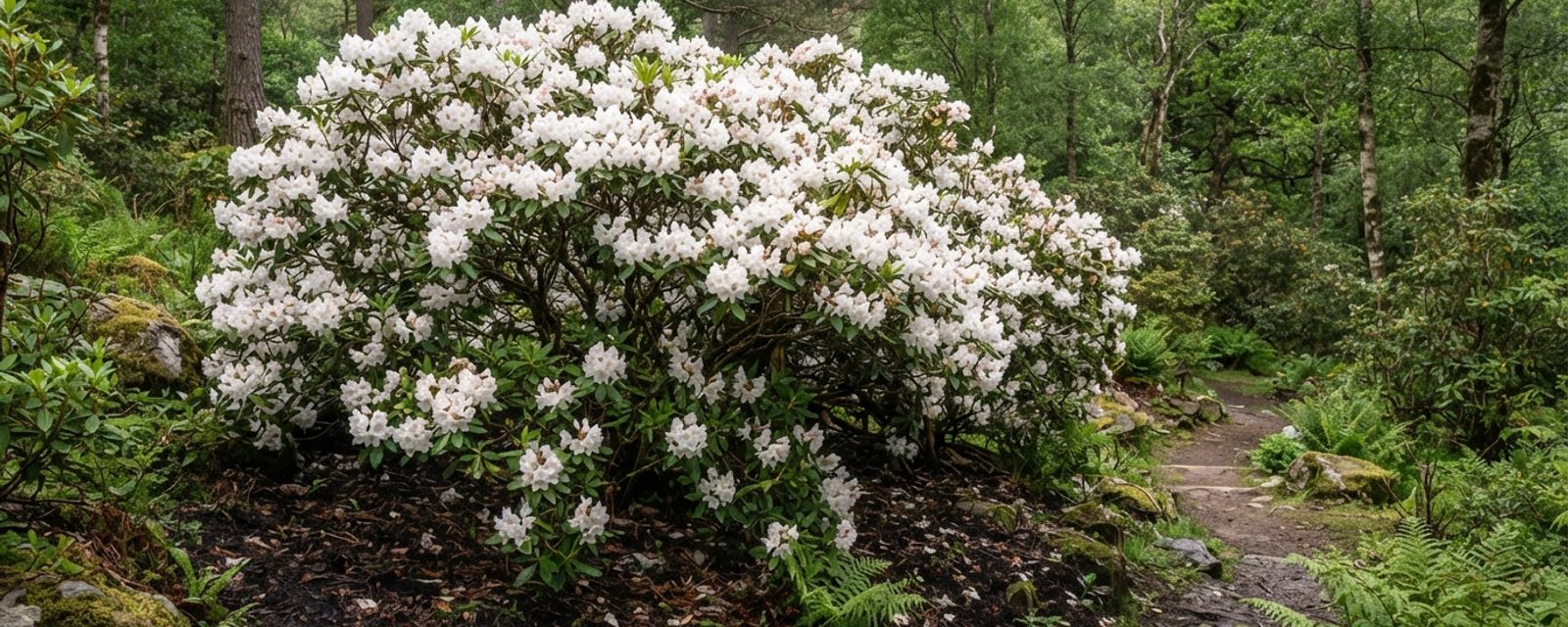
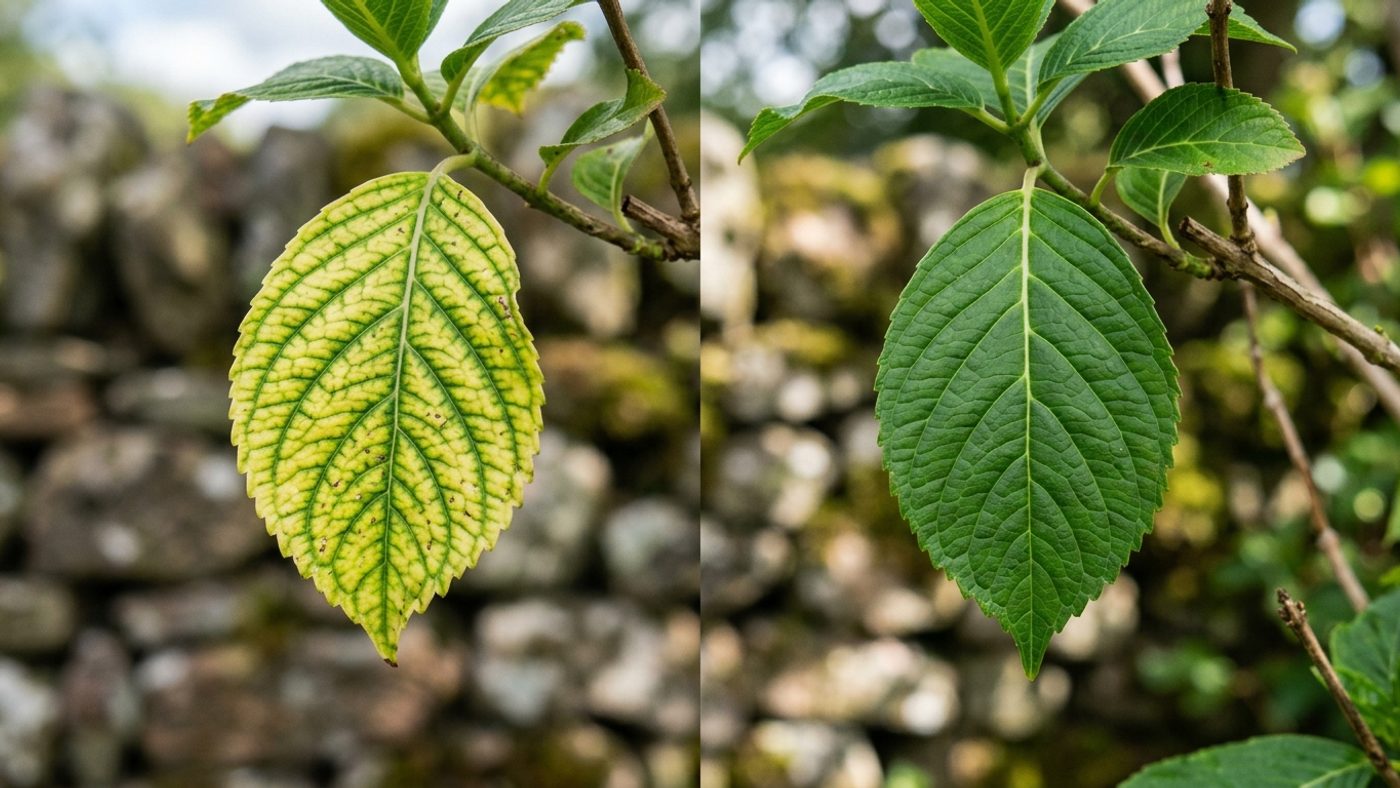
A nutrient can be sitting in your soil in perfectly adequate quantities and still be useless to a plant. That's not a contradiction, it's chemistry. Phosphorus, iron, manganese and several other nutrients only dissolve into a form plant roots can actually absorb within a fairly narrow band of soil acidity. Outside that band, the same atoms are still there, just locked into compounds that won't dissolve in soil water, so roots can sit right next to them and take up nothing. Below pH 5.1, most phosphates lock up this way; below pH 4.7, soil bacteria stop being able to break down organic matter at all, cutting off another nutrient supply route. At the other end, once soil tips past about pH 7.1, iron and manganese fall out of solution and stop being available, which is what produces lime-induced chlorosis, the yellowing between the veins of new leaves that looks like a feeding problem but is really a pH problem.
That's why testing and adjusting pH earns its own article, distinct from feeding: a gardener who keeps adding fertiliser to a plant that looks starved, without ever checking pH, can spend years feeding a lock they never open.
What pH actually does to nutrient uptake
Soil pH measures hydrogen ion concentration, and it's a logarithmic scale, a soil at pH 5 is ten times more acidic than one at pH 6, not just "a bit more." Around pH 6.5, the largest number of nutrients sit in a chemical form roots can take up at once, which is why it's usually quoted as the best general-purpose target: major nutrient availability and soil bacterial and earthworm activity both peak close to that figure. Move away from it in either direction and specific nutrients start dropping out.
Too acid
Very acid soil doesn't just fail to supply nutrients, it can actively wash the wrong ones away. Calcium, potassium, magnesium and copper all become more soluble as soil turns acid, which sounds like an advantage until you realise "more soluble" also means "more easily leached out of the root zone by rain" rather than held for the plant to use gradually. Below pH 5.1 most phosphates become insoluble instead, and below pH 4.7 the soil bacteria responsible for breaking down organic matter into usable nutrients largely stop working. Below pH 5.5, aluminium becomes soluble and directly toxic to roots, alongside calcium and magnesium shortages, a different channel of damage on top of the nutrient lock-up.
Too alkaline
Push past neutral and the problem flips. Phosphorus availability falls again, and iron and manganese become significantly less available, the specific cause of lime-induced chlorosis. This is also why liming a bed to suppress clubrootA soil-borne fungal disease of the brassica family that swells and distorts roots, and survives in soil for years. Full definition → in brassicasThe cabbage family: cabbage, kale, broccoli, cauliflower, Brussels sprouts, kohlrabi, swede, turnip and more, sharing the same pests, diseases and rotation rules. Full definition → (clubroot struggles above roughly pH 7.2–7.3) is a genuine trade-off rather than a free fix: raise the pH enough to control the disease and you're moving toward the range where iron and manganese start locking up for whatever else is planted nearby.
| Soil pH | What's happening | Effect on the plant |
|---|---|---|
| Below 4.7 | Soil bacteria can't decompose organic matter | Nutrient cycling from compost/organic matter stalls |
| Below 5.1 | Most phosphates become insoluble | Phosphorus present but unavailable |
| Below 5.5 | Aluminium becomes soluble and toxic to roots | Root damage independent of nutrient supply |
| ~6.5 | Broadest window of nutrient solubility | Peak nutrient availability for most plants |
| Above 7.1 | Iron and manganese drop out of solution | Lime-induced chlorosis (yellowing between leaf veins) |
Is Scottish soil really more acidic?
Yes, and it's worth being specific about why, because "Scottish soil is acidic" gets said often enough to sound like folklore rather than a checked fact. Scotland's soils "tend to contain more organic matter and be more acidic than soils in the rest of the UK," a plain statement from the country's own nature agency, not an inference. A survey of soil samples from Scottish farms found close to half sitting below pH 5.8, with only around one in five above pH 6.2, a very different distribution from the "aim for 6.5" figure quoted as general UK advice.
Three things drive it, and they compound each other. Much of upland and western Scotland sits on granite and other acid parent rock, and soils that weather from acid rock start acid before anything else happens to them. Scotland's high rainfall then keeps washing calcium and magnesium, the "base cations" that buffer soil against acidity, out through drainage water faster than they can be replenished, a process soil scientists call leaching; this is the same mechanism that makes any soil drift acidic over time, just running harder here because there's more rain to drive it. And the wetter, cooler conditions across much of the country favour peat and other organic-rich soils, which hold onto acidity rather than buffering it the way a mineral-rich lowland soil would.
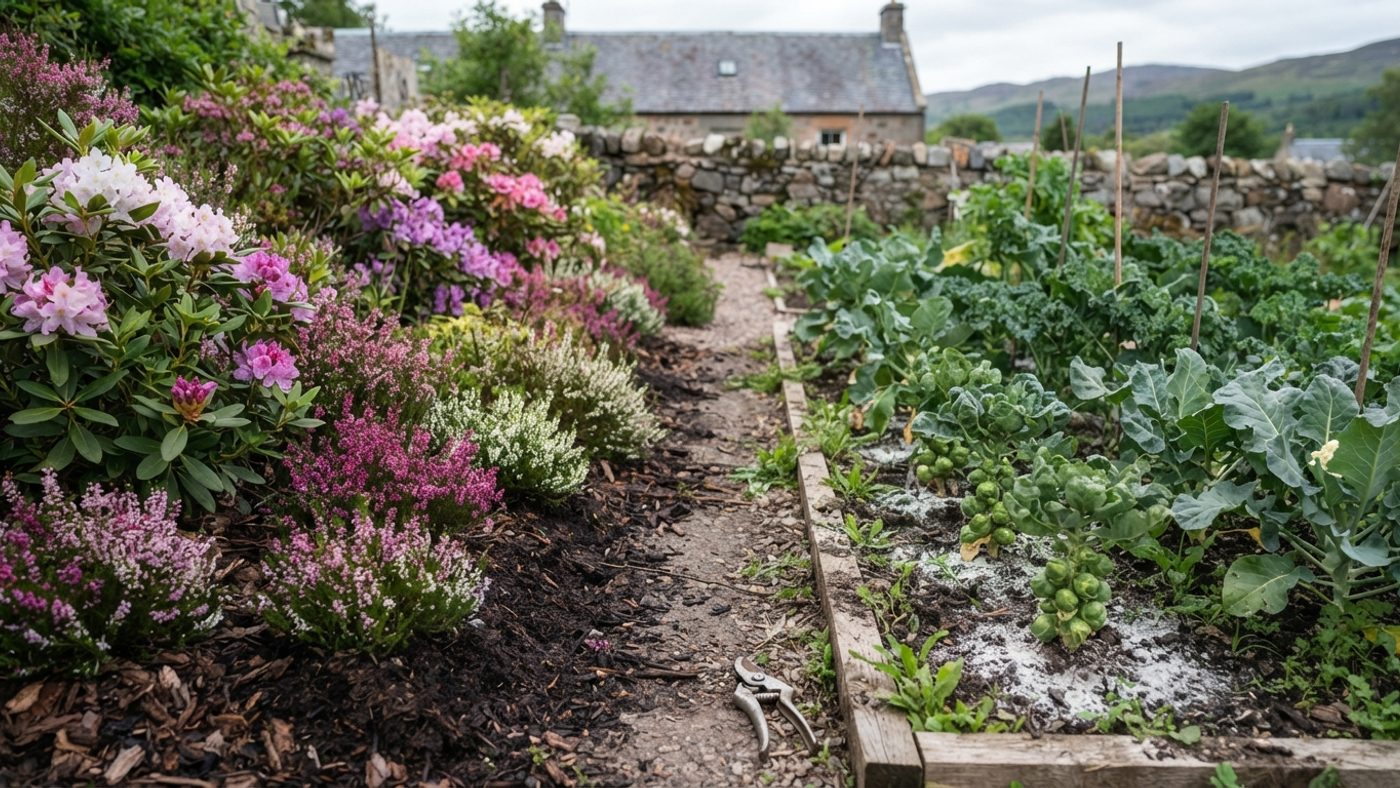
The practical upshot cuts both ways. Rhododendrons, camellias, blueberries and other genuinely ericaceous (acid-loving) plants that struggle in much of lowland England often do well here without any soil amendment at all, the acid soil they need already exists. Working the other way, brassicas (already prone to clubroot, which is worse on acid soil) and anything that wants a neutral-to-alkaline root run can need more consistent liming here than the same advice written for a chalky southern English garden assumes, and it's worth testing before assuming a "generic" pH note applies to your plot.
| Plant | Prefers | What Scotland's natural acidity means for it |
|---|---|---|
| Rhododendron, camellia, blueberry | Strongly acid (roughly pH 4.5–5.5) | Often thrives here with no amendment at all |
| Heather, azalea | Acid | Same advantage, acid soil is the default rather than something to create |
| Brassicas | Neutral-to-alkaline, toward pH 7 | More consistently at clubroot risk here; usually the crop that needs liming |
| Potatoes | Tolerates acid soil; avoid liming | Naturally acidic ground is actually a modest advantage, lower scab risk |
| Asparagus, lavender | Neutral-to-alkaline | Can need more deliberate correction on unamended Scottish ground than the same UK-wide advice assumes |
Testing your soil
Don't guess, and don't rely on how a plant looks, chlorosis, stunting and poor cropping have other causes too. Testing is cheap and the only way to know which direction, if any, you actually need to move.
Home testing kits
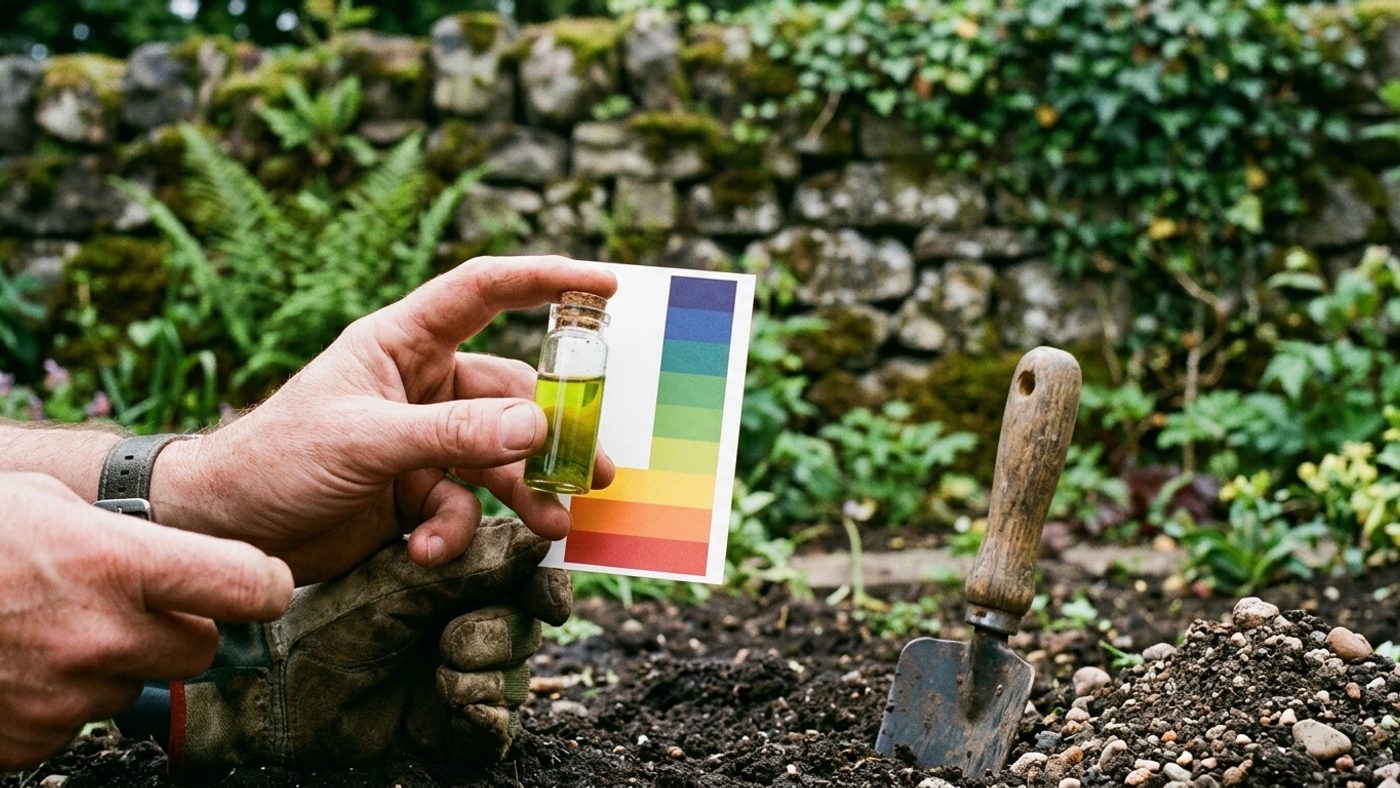
Garden-centre kits are relatively cheap, easy to use, and give a good indication of soil pH, good enough to tell you which side of neutral you're on and roughly how far off. They're the right tool for a first check on a new plot or before choosing what to plant where.
The vinegar spot-check
A quick way to catch one specific thing a colour kit can miss: add vinegar to a soil sample, and if it fizzes, free calcium carbonate (chalk or limestone) is present. That matters because a soil can carry a buffering reserve of chalk that keeps pulling pH back toward alkaline even after you've acidified it, worth knowing before you commit to a sulphur programme.
Laboratory analysis
For anything you're planning to spend money correcting, a full lab test is worth the fee. It reports texture, organic matter and major nutrients alongside pH, and specifically picks up free calcium carbonate that DIY kits can miss, the difference between a one-off correction and a soil that keeps drifting back because of chalk sitting deeper in the profile.
| Method | What it tells you | Best used for |
|---|---|---|
| Colour/kit test | Approximate pH reading | Quick first check, choosing what to plant |
| Vinegar spot-check | Presence of free chalk/limestone | Checking for a buffering reserve before amending |
| Laboratory analysis | Precise pH, texture, organic matter, major nutrients, free chalk | Before committing to a correction programme |
Test at any time of year, but not within three months of adding lime, fertiliser or a lot of organic matter, the result will read differently from the soil's settled state. On Scottish ground worth reading twice: rerun the same test every four to five years, because pH drifts with weather and cropping over time, not just once and forget it.
Raising pH: lime, in principle
Where soil is more acidic than a crop wants, lime is the standard fix, it supplies calcium (and, as dolomitic/magnesian lime, magnesium too) that neutralises the acid directly. The general principle: how much you need depends heavily on soil type, because clay resists pH change far more than sandy soil does (its particles buffer against the shift), so the same starting pH and the same target figure calls for noticeably more lime on clay than on sand. Apply it in winter, well ahead of spring sowing or before planting perennials, shrubs, fruit or trees, and don't expect an instant result, it takes time to react through the soil. Exact rates by soil type and starting pH are worth checking against a proper lime calculator or supplier chart rather than guessing, since applying too much overshoots the target as reliably as applying too little undershoots it.
Wood Ash from the Stove: Using It Safely in the Garden → covers a milder alkaline option some gardeners already have on hand from a wood-burning stove, along with the application limits and what to keep it away from.
One genuine trap worth knowing before you reach for the bag: don't lime ground you're about to plant potatoes into. Common scab is worse on alkaline soil, and liming to knock back clubroot in a brassica bed can leave that same ground more scab-prone for potatoes the following year, the standard advice is to apply lime after the potato year in a rotationMoving each crop family to different ground each year, on a multi-year cycle, so pests and diseases that build up in soil don't get a repeat host. Full definition →, not before it.
Lowering pH: sulphur and ericaceous compost
Where soil needs to go the other way, for blueberries, rhododendrons, camellias or other ericaceous plants, elemental sulphur is the standard corrective. Soil organisms convert it to sulphuric acid, which is why it works gradually rather than instantly: moving from neutral to slightly acid (roughly pH 6.0–6.5) in the top 15cm takes around 135g per square metre on sandy soil, up to around 270g per square metre on the more resistant clay end, the same clay-buffering effect that applies to lime, just working against you now instead of for you. It's slow even when it's working: acidification takes weeks in warm soil and can take months when applied in a cold winter, so on a cool Scottish spring it's worth budgeting for the slower end of that range rather than the faster one. Dig it in ahead of planting rather than expecting a quick fix, and don't apply it to the surface and walk away, surface application can take years to reach the root zone. Aluminium sulphate acidifies faster but needs roughly seven times as much material to do the same job as sulphur, and repeated heavy use risks building aluminium up to toxic levels in the soil, sulphur is the safer default for anything but a one-off quick correction.
Ericaceous compost is the other route, and the easiest for a single bed or container: it's manufactured to sit around pH 5.0–6.0 from the start, so topping up or potting into it sidesteps adjusting the existing ground entirely. It doesn't stay acid forever, though, it will drift back toward the surrounding soil's pH over time, so a permanently planted acid-lover in ericaceous compost still needs its pH rechecked periodically rather than assumed fixed for good.
Common questions
How often should I test my soil pH?
Every four to five years for an established bed, or before planting anything new to ground you haven’t tested before. Retest three months after any liming or sulphur treatment, not sooner, a fresh application will give a misleadingly extreme reading before it’s settled into the soil.
Can I tell soil pH just by looking at what grows there already?
It's a hint, not a test. Thriving heather, rhododendrons or bracken suggest acid ground; vigorous clematis or self-sown poppies lean alkaline. But plenty of ordinary garden plants tolerate a wide range without showing it, so use it to decide whether testing is worth the effort, not as a substitute for testing.
Does compost or manure change soil pH?
Most well-rotted garden compost and manure are close to neutral and have only a mild, gradual effect either way. Ericaceous (acidic) compost is the exception, deliberately made and sold at pH 5.0–6.0 specifically to lower pH in the bed or container it’s used in.
Why does my soil keep drifting back to acid after I’ve limed it?
Scotland's rainfall is part of the reason, the same leaching that helped make soils here acidic in the first place keeps washing calcium and magnesium back out of limed ground over the following seasons, so a one-off application isn't a permanent fix. Retesting every few years and topping up rather than assuming a single correction lasts indefinitely is the realistic approach.
Is it worth adjusting pH for one plant, or only for a whole bed?
Both are done in practice. A single acid-loving shrub is usually easier and more reliable to grow in a container of ericaceous compost than to acidify a patch of open ground around it, since open ground keeps drifting back toward its natural pH. Whole-bed adjustment makes more sense for a crop rotation area or a bed being converted to a specific planting style.
Sources
9 sources, recorded with what each was used for
- RHS: Soil, understanding pH and testing: pH scale definition, nutrient availability by pH band, testing kit vs laboratory vs vinegar spot-check methods, retest timing after amendment
- RHS: Acidifying soil: Sulphur application rates by soil type, how sulphur works via soil bacteria, timing/speed of acidification, aluminium sulphate cautions, ericaceous compost pH range
- RHS: Lime and liming: The general principle that clay soil needs more lime than sandy soil, lime timing (winter, before planting), types of lime
- RHS: Potato scabs: The potato scab/liming caution and the advice to lime after the potato year in a rotation
- RHS: Club root: Clubroot being suppressed by liming toward pH 7.2–7.3
- UC IPM: pH Problems: Independent corroboration of the pH/nutrient-lockup mechanism, the pH 6.0–7.5 optimal range, aluminium toxicity below pH 5.5
- NatureScot: Scotland's soils: Direct statement that Scotland's soils are more acidic and higher in organic matter than the rest of the UK
- Farm Advisory Service (FAS) Scotland: Understanding Soil pH: Rainfall/leaching as a driver of soil acidification in Scotland, recommendation to retest every 4-5 years
- SRUC: Acidic soils could be affecting production on many Scottish farms: Scottish soil-sample pH distribution (nearly half below pH 5.8)