
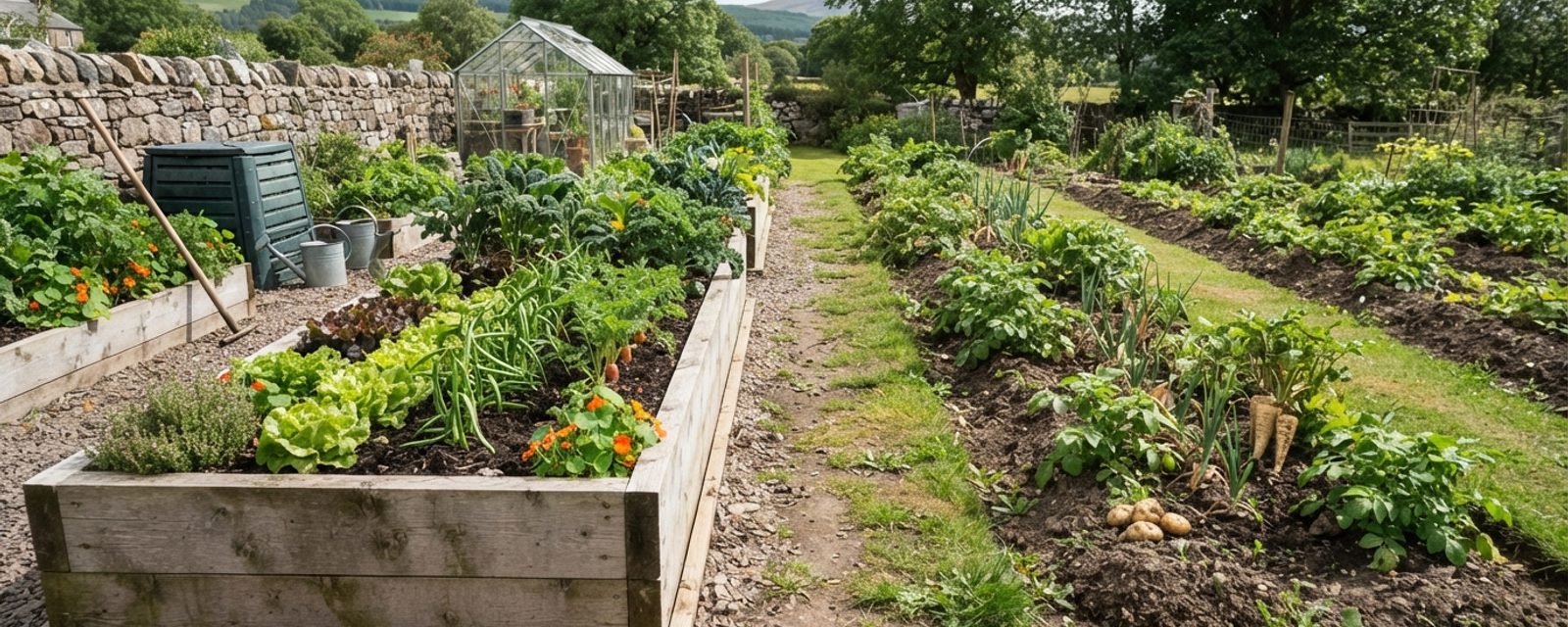
There are two ways most people arrive at this question. Either there's bare ground and a decision to make before anything gets planted, or there's an existing bed already causing problems: slow to dry out in spring, hard on the knees and back, weedy along the edges, or permanently sodden no matter what gets dug into it. In both cases the instinct is the same, build up, or dig in and fix what's there. That instinct is worth checking before committing a weekend and a stack of timber to it, because a raised bed answers some of those problems well and does nothing at all for others.
What a raised bed actually buys you
The case for raised beds isn't invented, the RHS lists a specific, real set of benefits, and most of them hold up in a Scottish garden as well as anywhere else.
Faster spring soil, a genuine head start
The RHS states plainly that raised beds "increase soil temperature in spring," because the higher, better-drained profile warms through faster than the surrounding ground. That's a real advantage against a short, cool Scottish growing season, an earlier start to workable soil temperature is exactly the constraint that shortens what can be sown and when. The RHS doesn't give a specific number of days or weeks of head start.
Drainage you control, up to a point
Lifting the growing area above the surrounding ground genuinely drains better, and the RHS is specific about when this matters most: it recommends raised beds particularly for permanent crops like rhubarb and asparagus that would otherwise rot over a wet winter, a real risk on Scottish ground through a long, wet winter, not a one-off bad year, and generally where garden soil is "poor, or heavy and prone to waterlogging." Filling the bed also means choosing the soil mix directly, rather than working with whatever is already in the ground. That control matters just as much on the peaty, acidic upland soils common across large parts of Scotland as it does on clay: a raised bed lets you bring in soil at the pH and structure a crop actually needs, rather than fighting what's underfoot.
Size and shape, so you never stand on the soil
The RHS recommends keeping a bed no more than 1.5m (5ft) wide, so you can reach the centre from either side without stepping onto the growing soil, a large part of why raised beds keep soil structure and compaction under control, alongside the defined paths around them. For depth, the RHS gives 30cm (1ft) as enough for shallow-rooted crops like salad leaves and strawberries, but 45cm (18in) or more for most vegetables, fruit bushes and small trees.
Less bending, clearer paths, less compaction
Raised beds sit closer to a working height, which the RHS notes makes them "more accessible for gardeners with restricted mobility" and generally easier to manage than open ground because of their limited size. Working from defined paths rather than walking across the whole growing area also keeps foot traffic off the soil that plants are rooting into, which matters on any soil prone to compacting underfoot, clay most of all, but not only clay.
Slug pressure
A raised bed's height gives some separation from ground-level slug traffic, though it's a partial effect at best: slugs climb readily, and the RHS's own findings on slug behaviour point to damp, sheltered conditions mattering more than height. In a climate as consistently damp as Scotland's, slug pressure stays high through more of the growing season than in a drier region, so the modest edge a raised bed gives is worth having, without relying on it as pest control on its own.
What raised height gives up
Raising a bed above the surrounding ground doesn't only work in the bed's favour. More of its surface, the walls especially, sits exposed to the air rather than insulated by the mass of ground around it, so on a still, frosty night a raised bed can lose heat faster than flush ground once the sun's gone, the same physical trade-off explored for metal beds specifically in our raised bed materials comparison, though less pronounced in timber. A framed bed standing proud of the surrounding ground also catches more wind than flat ground, worth knowing on an exposed coastal or upland site, though it rarely outweighs the drainage or access reasons for building one in the first place.
What it costs you
None of that is free, and the RHS's own advice is unusually candid about the trade-offs.
Money and materials
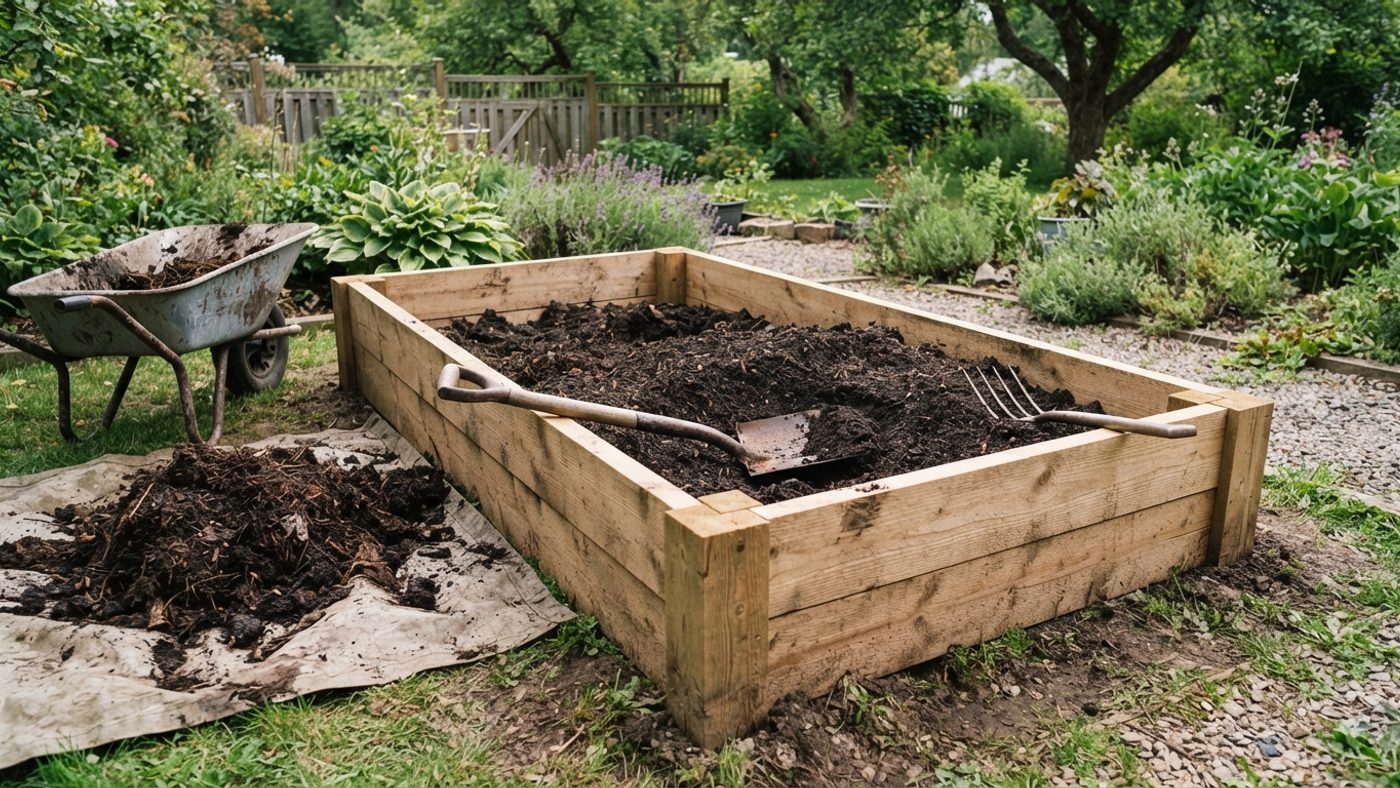
A raised bed needs both a structure and enough soil or compost to fill it, and the RHS's own guidance notes that timber prices "have gone through the roof in recent years," while filling a bed to the 45cm depth most vegetables need is an ongoing cost as much as a one-off. A modest timber-and-soil raised bed easily runs into real money once material and fill are both accounted for. Digging over the same footprint of existing ground costs nothing beyond the compost or manure you'd choose to add anyway, and the labour. Our raised bed materials comparison covers the wood-vs-sleepers-vs-metal-vs-stone cost breakdown at the material level in detail.
A framed raised bed isn't the only way to raise a growing surface, either: mounding soil into a raised ridge without any timber or stone sides at all gets some of the same drainage benefit for the cost of labour alone, at the expense of the neat edges and full depth control a framed bed gives. Our guide to no-dig gardening on heavy clay covers that approach in more depth.
Water
This is the most consistently understated cost of a raised bed. The RHS is direct that "plants in raised beds tend to suffer more quickly and more severely from drought than plants growing in the garden soil, owing to improved drainage," and separately warns that raised beds "dry out quicker than soil at ground level," recommending water butts to keep up with it. The same free drainageSoil that lets water pass through quickly rather than pooling, so roots aren't sitting in wet ground after rain. Full definition → that solves a waterlogging problem also means the bed holds less reserve moisture through a dry spell.
Growing area for a given budget
A raised bed's footprint is smaller than the equivalent ground would be, because part of the budget goes into walls and fill rather than growing space. For a small garden this rarely matters much. For anything approaching allotment scale, it adds up fast: the cost of building and filling several raised beds across a large plot climbs a lot faster than the cost of just cultivating the ground that's already there.
The one thing a raised bed doesn't fix
General gardening advice tends to skip past this part. Lifting the growing zone above the surrounding ground changes nothing about what's happening underneath it. If the ground beneath and around the bed is genuinely waterlogged, sitting on heavy clay or gley (waterlogged, poorly-draining ground that stays wet for long stretches) with nowhere for water to go, a raised bed manages the symptom at the surface while the same blocked drainage, or the same compacted subsoil, sits underneath it unchanged. Roots that reach the base of a raised bed on top of permanently saturated ground still hit the same wet layer eventually, and the bed's timber sides will spend their working life sitting in wet soil regardless of what's happening inside them. Where the underlying land genuinely doesn't drain, that's a site-level problem, and our guide to improving clay soil goes into what that actually takes, a raised bed can be part of the answer there, but it isn't the whole answer on its own. The RHS does recommend digging out the underlying topsoil and replacing it with rubble under a deep bed, mainly to reduce how much fill soil you need, and that rubble layer does help water move away from the base a little faster than solid clay would on its own, but it's a genuine partial improvement, not a substitute for fixing drainage across the site.
It varies across Scotland, too
The west coast gets significantly higher rainfall than the drier, colder east, so clay or gley ground has less chance to dry out between spells of rain in Ayrshire or Argyll than it would in Angus or the Lothians. That doesn't change which option fixes what, but it does mean the west is where a raised bed's drainage advantage is felt most, and where the extra watering demand in a dry spell is also, in practice, needed least often, since dry spells there are rarer to begin with.
Where ground growing wins outright
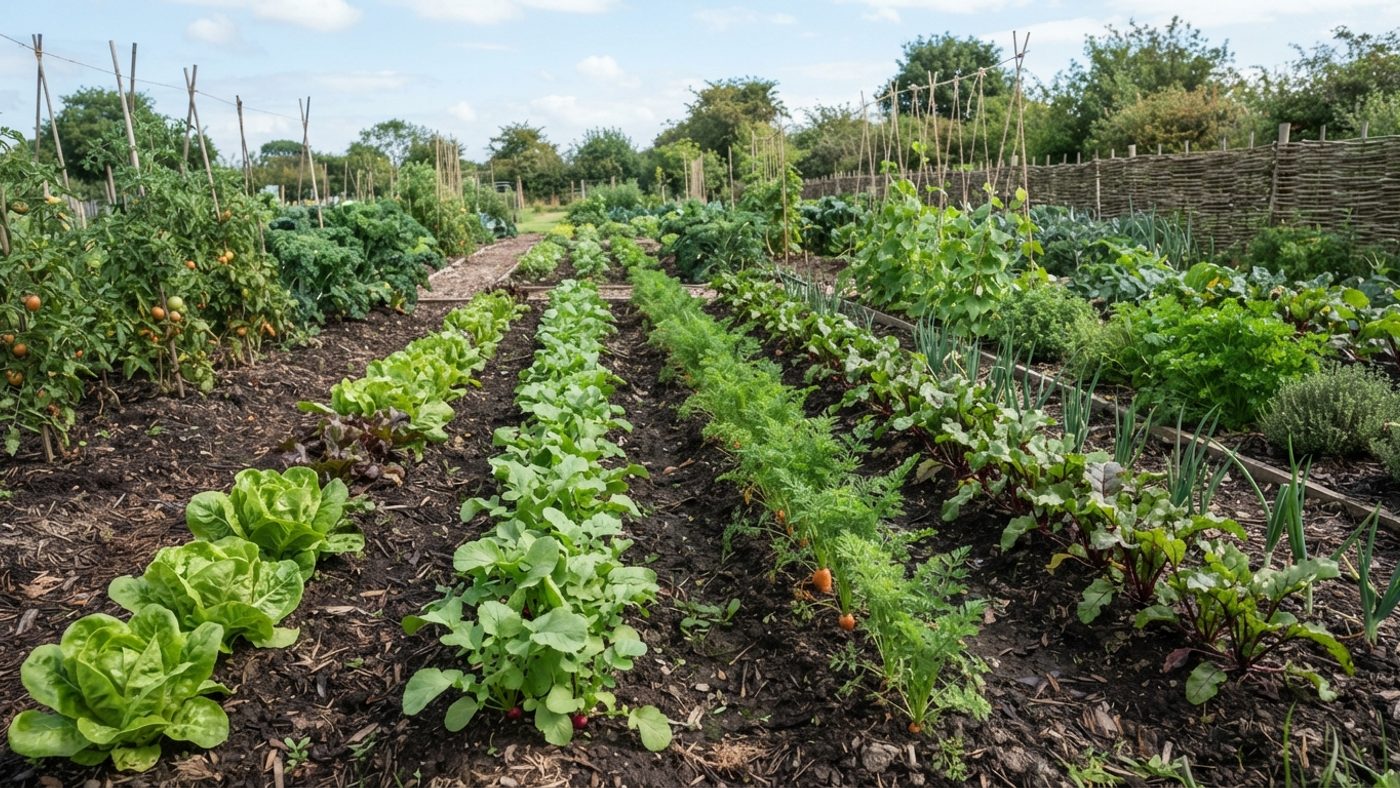
None of this makes ground growing the lesser option by default. There are conditions where it's clearly the better call.
Decent soil already. A garden with workable loam (a well-balanced, crumbly soil that's neither heavy clay nor thin and sandy) gains very little from raising the bed, the drainage and warming problems a raised bed solves largely don't exist there, and the smaller growing area and extra cost buy nothing back.
Large growing areas. An allotment-sized plot is the clearest case: raised beds at that scale multiply material cost fast, while digging and improving the ground scales for the price of compost and time.
Deep-rooted crops. The RHS's own growing guides for carrots and parsnips are specific that long-rooted types need "deep, light soil," parsnips regularly reaching well over 30cm, with short-rooted varieties recommended specifically where soil is shallow or stony. A raised bed built deep enough for full-length root crops means filling a genuinely deep structure (45cm or more, not the 30cm shallow-crop minimum), which is expensive; ground that's already deep and reasonably stone-free gives that depth for nothing.
No drainage problem to begin with. If water was never the issue, none of the raised bed's real advantages are solving anything that was actually broken.
Raised bed vs ground growing at a glance
| Factor | Raised bed | Ground growing |
|---|---|---|
| Cost to establish | Structure plus enough soil/compost to fill it, a modest bed runs into real money | Cost of compost/manure to improve what’s there; digging itself is free |
| Drainage control | Full control over the growing medium, independent of what’s underneath | Limited to the native soil and site unless actively improved |
| Spring soil warming | Warms faster, a genuine early-season advantage (RHS) | Warms at the pace of the surrounding ground |
| Watering frequency | More frequent, the same drainage that helps also dries it out faster (RHS) | Less frequent once soil structure is decent |
| Growing area for a given budget | Smaller, cost goes into walls and fill, not growing space | Larger, the whole dug footprint is usable |
| Accessibility / back strain | Easier, raised height reduces bending (RHS) | More bending and kneeling at ground level |
| Deep-rooted crops | Limited to bed depth, full-length carrots/parsnips need 45cm+ fill (RHS) | Effectively unlimited if the ground itself is deep and stone-free |
| Fixes an underlying waterlogged site | No, raises the growing zone above the problem without draining it | No on its own, needs active drainage improvement |
Which one, honestly
A raised bed makes sense if:
- the native soil is genuinely poor or heavy, and improving it in place would take longer than you want to wait to start growing
- you need the reduced bending and easier access a raised height gives
- an earlier spring start matters enough to accept more frequent watering through summer
- the growing area you need is modest enough that the extra cost per square metre is affordable
- the site's underlying drainage is already fine, or has been fixed separately, and the bed is there to give a controlled, defined growing zone on top of that, not to solve drainage itself
Ground growing makes sense if:
- the soil is already loam, or clay that's had a season or two of proper improvement
- the growing area is large, allotment-sized or bigger, where raised-bed material costs multiply fast
- long root crops are a priority and the ground already has real depth and reasonably few stones
- there's no drainage problem to begin with
- budget and total growing area matter more than convenience
The garden with a genuinely waterlogged clay problem, sitting on ground that doesn't drain no matter what's dug into it, is the one case where the standard advice is right for the right reason. Our guides to improving clay soil and no-dig gardening on heavy clay go into that specific problem in full.
Common questions
Do raised beds really warm up faster in a Scottish spring?
Yes, the RHS states that raised beds increase soil temperature in spring, a real advantage given how short and cool the growing season is here. The RHS doesn’t give a specific figure for how many days or weeks earlier that translates to in practice.
Will a raised bed fix a waterlogged garden?
Not on its own. It lifts the growing zone above the problem, which helps roots avoid standing water, but it doesn’t drain the ground underneath or around it. If the site itself doesn’t drain, that’s a problem to solve at the site level, see our guide to improving clay soil.
How much more watering does a raised bed need than ground growing?
The RHS is clear that raised beds dry out faster and that plants in them suffer more quickly from drought than the same plants in garden soil, recommending water butts to keep up with it. There’s no sourced frequency figure, but the direction is consistent and worth planning for.
Is it cheaper to dig a bed or build a raised one?
Digging existing ground costs little beyond compost or manure and your own labour. A raised bed needs a structure plus enough soil to fill it, and timber costs have risen sharply in recent years. For soil that’s already reasonably workable, ground growing is the cheaper route by a wide margin.
How deep and wide should a raised bed actually be?
The RHS recommends no more than 1.5m (5ft) wide so you can reach the centre from either side without standing on the soil. For depth, 30cm (1ft) suits shallow-rooted crops like salad leaves and strawberries, but most vegetables, fruit bushes and small trees need 45cm (18in) or more.
Can I grow carrots and parsnips properly in a raised bed?
Yes, but depth matters. Stony, shallow or heavy soil pushes long-rooted carrots and parsnips towards forking and misshapen roots. A shallow raised bed has the same effect as shallow ground, full-length varieties need the bed filled to 45cm or more to match good, deep open ground.
What if I already have decent soil, is a raised bed still worth building?
If the soil is already loam, or clay that’s been improved, most of a raised bed’s real advantages, drainage and soil control, aren’t solving a problem that exists. The back-friendly height and defined paths remain genuine advantages if either matters, but the drainage case for building one over decent ground is weak.
Sources
8 sources, recorded with what each was used for
- RHS: Raised beds (garden features): Spring soil warming, accessibility for gardeners with restricted mobility, general benefits
- RHS: Growing veg in raised beds: When raised beds are recommended (waterlogged soil, rhubarb/asparagus), drought sensitivity, timber cost rise
- RHS: How to make a raised bed: 1.5m maximum width, 30cm minimum / 45cm+ recommended depth, drying-out-faster warning, water butt recommendation
- RHS: How to grow Carrots: Deep, light soil requirement, forking in shallow/stony/heavy soil, short-rooted variety guidance
- RHS: How to grow Parsnips: Deep, light soil requirement, root length, short-rooted variety guidance
- RHS: Slugs and snails: Slug-favouring conditions (damp, shelter) versus height as a barrier
- Met Office: Eastern Scotland climate: Eastern Scotland rainfall figures
- Met Office: Western Scotland climate: Western Scotland rainfall figures