
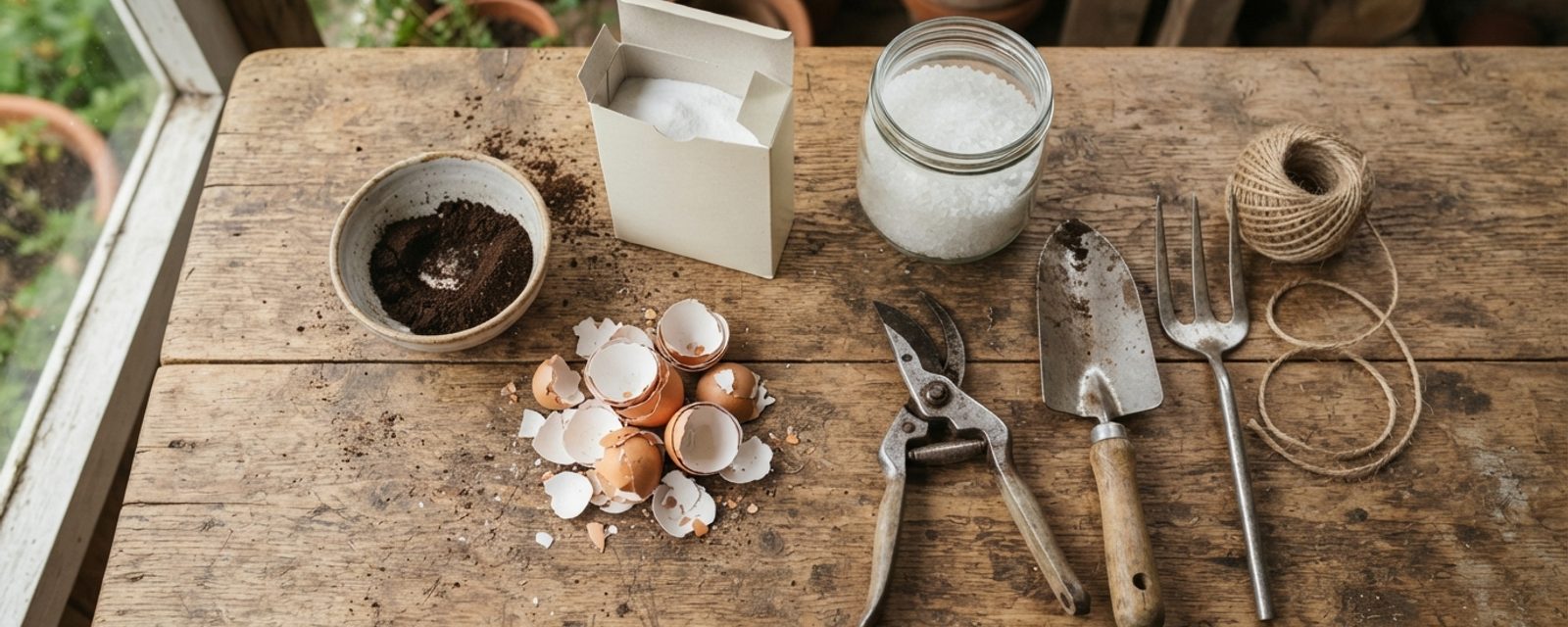
You're standing at the kitchen sink with yesterday's coffee grounds still damp in the filter, and somewhere in the back of your mind is a half-remembered tip about tipping them round the base of a tomato plant. Acidify the soil, feed the roots, keep the slugs off, pick whichever version you heard. The grounds go in a jar by the back door "for the garden" instead of the bin, and there they sit, because nobody's actually sure what they do.
That jar is basically this whole article in miniature. Kitchen-cupboard garden hacks travel by word of mouth and repetition, not evidence, and repetition is not the same as being right. Ten of the most common ones, checked against the research institutions and trials that actually tested them, are below, some hold up, most don't, and a couple only work if you're using them somewhere specific.
Quick reference
| Hack | Verdict | In one line |
|---|---|---|
| Coffee grounds to acidify/feed soil | Busted (mixed) | Feeds a little, barely acidifies anything |
| Coffee grounds against slugs | Busted | No published evidence it repels or kills pests |
| Baking soda for potato blight | Unproven | Never tested against this specific pathogen |
| Baking soda for powdery mildew | Disputed | Works better with oil than alone, and can scorch leaves |
| Eggshells for slugs / blossom end rot | Busted | Doesn't stop slugs; doesn't fix a calcium problem you don't have |
| Epsom salts for greening / blossom end rot | Busted | No calcium in the bag, and it can make BER worse |
| Copper tape against slugs | Disputed | Fails in open beds, defensible on pots |
| Cinnamon powder for damping offA fungal disease that kills seedlings at soil level, usually caused by overwatering, poor airflow, or reused unsterilised compost or trays. Full definition → | Unproven | Real lab antifungal activity, never tested as actually used |
| Beer traps for slugs | Unproven | Catches slugs, never shown to reduce overall damage |
| Washing-up liquid against aphids | Busted (nuanced) | Kills aphids fine; "safely" is the false part |
Hacks that don't hold up
Coffee grounds on soil: feed a bit, acidify barely at all
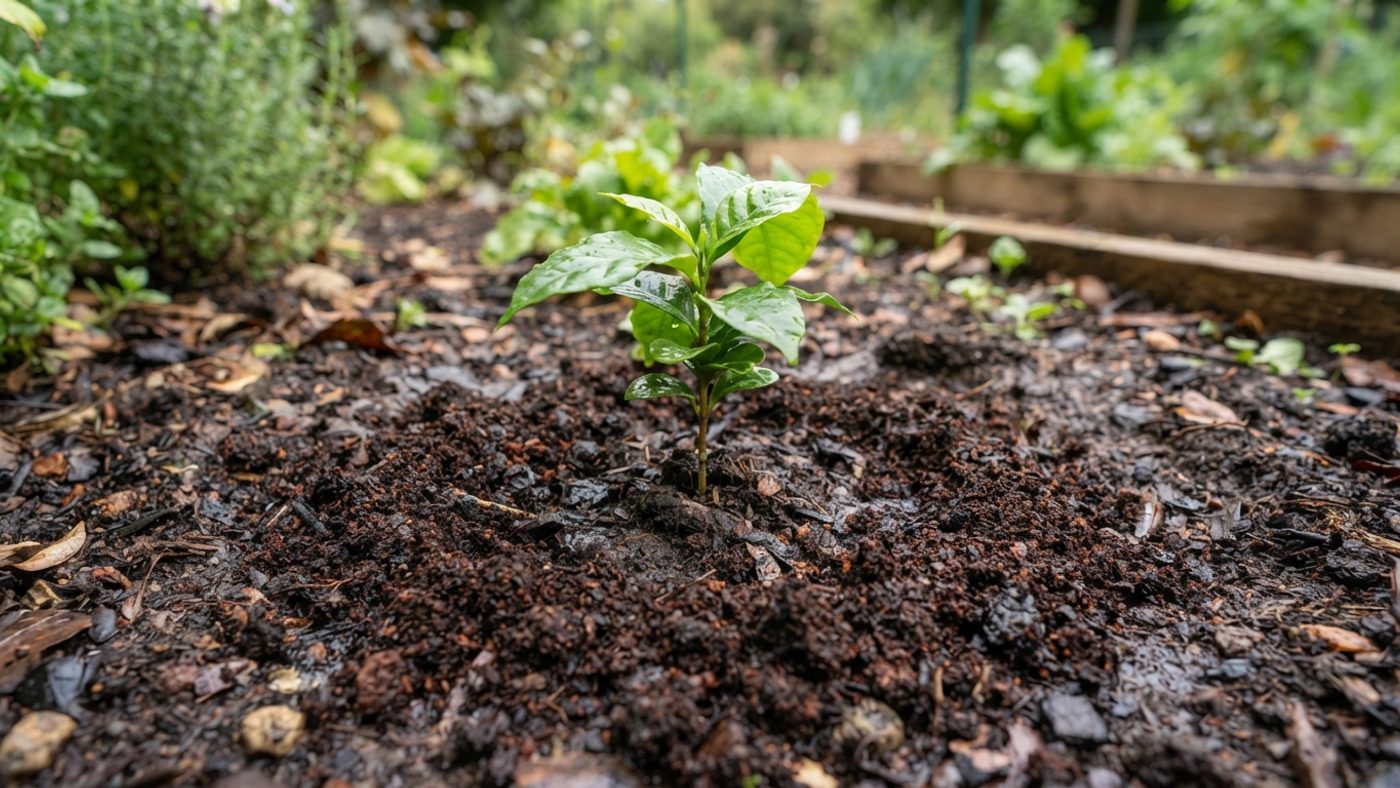
Coffee grounds do contain nitrogen, phosphorus, potassium and magnesium, so the feeding half of this claim isn't baseless. The acidifying half is: their effect on soil pH is very minor and temporary. Spread thick, grounds cap the soil surface and block water and air from reaching roots, and residual caffeine can suppress root and shoot growth.
The better move is to put grounds in the compost bin rather than straight on a bed. If you actually need to shift pH, that's a job for lime or sulphur guided by a proper soil test, not coffee. Much of Scotland's soil already runs acidic, so on ground like that the acidifying claim is solving a problem you probably don't have, and could tip you into one you do.
Worth a note on blueberries specifically, since they're the plant most often singled out for a coffee-grounds treatment because gardeners know blueberries want acid soil: testing on used coffee grounds has found pH ranging from mildly acidic to distinctly alkaline depending on the study, shifting unpredictably as the grounds decompose. For blueberries, use proper ericaceous compost or mulchA layer of material spread over the soil around plants to suppress weeds, retain moisture, and improve soil structure as it breaks down. Full definition →, or a confirmed acidifier like elemental sulfur, instead.
Coffee grounds against slugs: no evidence at all
There is no published evidence that coffee grounds repel or kill any garden pest. Dry grounds don't reliably deter slugs, and there's a reasonable case that damp grounds do the opposite, adding surface moisture and organic matter that draws slugs in rather than keeping them off. Caffeine is genuinely toxic to slugs, but only at concentrations delivered as a liquid drench, not from scattering used grounds around a plant.
Skip spent coffee grounds as a slug barrier and use tested non-chemical controls instead: physical barriers, nematodes, or encouraging natural predators.
Crushed eggshells: doesn't stop slugs, doesn't fix blossom end rot
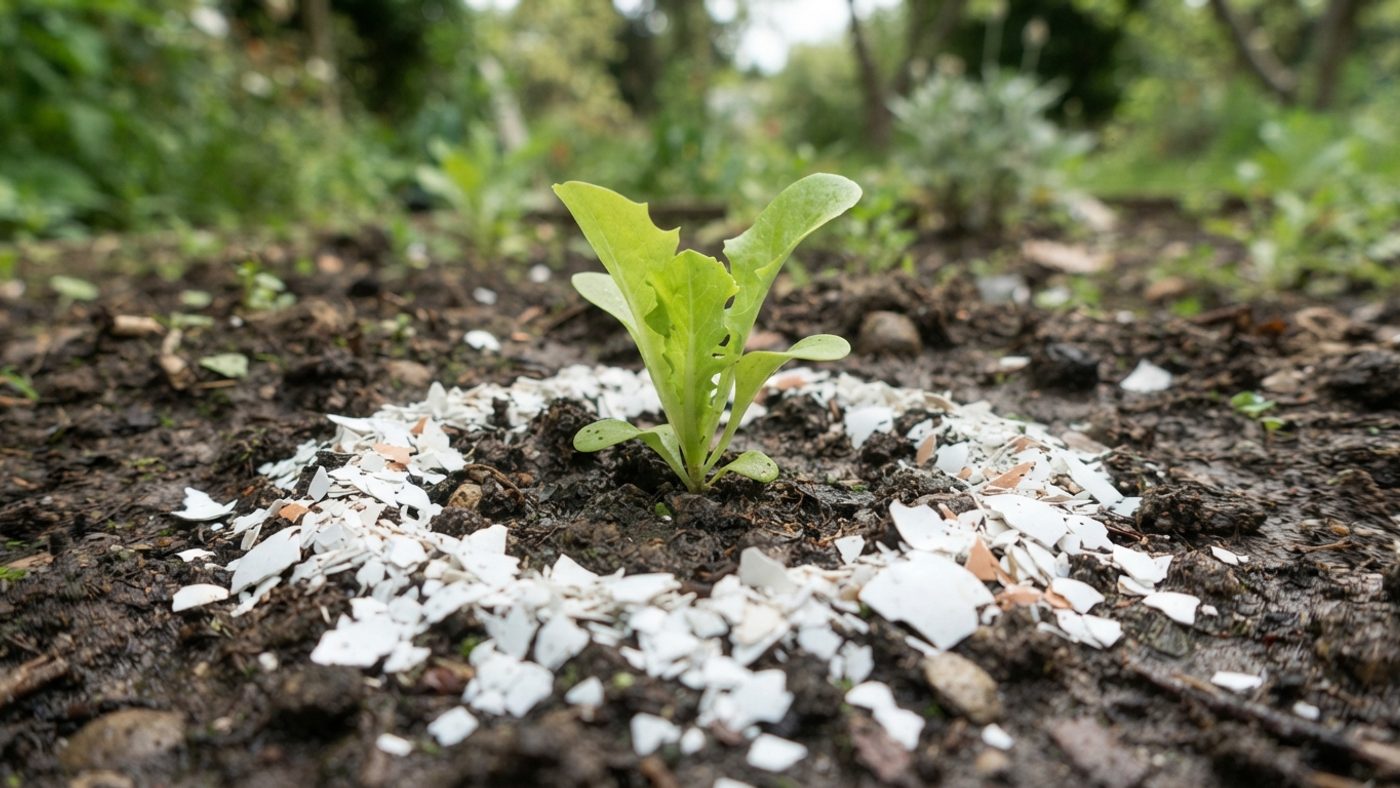
Two separate claims, both false, for different reasons. Against slugs: testing of the most popular home barriers found no reduction in damage from crushed eggshells, bark mulch or wool pellets. This is arguably Britain's most repeated slug tip, and it simply doesn't work.
For blossom end rot: eggshells do contain calcium, but they break down far too slowly to supply it on any timescale that matters to a fruiting plant in one season. Even in the rare case where soil calcium is genuinely short, eggshells aren't a practical fix, and in the much more common case, where soil already has enough calcium, adding more does nothing for a problem actually caused by inconsistent watering.
For slugs, nematodes, evening hand-collection, and raising plants to a decent size in modulesA tray divided into small individual cells, each sown with its own seed or seedling, so each plant grows undisturbed roots until it's ready to plant out. Full definition → before planting out all do more good than a barrier that doesn't work. For blossom end rot, put the effort into watering consistency, and only reach for a fast-acting calcium source like gypsum if a soil test actually shows a shortfall. Scotland's wet, mild climate is close to ideal for slugs, so a barrier that does nothing costs more here than in a drier southern garden where the pressure is lighter to begin with.
Epsom salts: no calcium, and can make things worse
Epsom salts are magnesium sulfate, they contain no calcium whatsoever, so they cannot address a calcium problem. The greening half of the claim rests on magnesium being a component of chlorophyll, but most garden soils already hold plenty of magnesium, so a scatter of Epsom salts isn't fixing a shortage that usually isn't there. Worse, magnesium and calcium compete for uptake in the plant, so adding magnesium can make blossom end rot more likely, not less.
Blossom end rot isn't a soil shortage to begin with, it's about calcium reaching the fruit, which is governed by steady watering. The fix is a watering can and mulch, not anything bought in. Use Epsom salts only if a soil test has actually shown a magnesium deficiency, uncommon, and skip them for blossom end rot entirely.
It's complicated
Baking soda for potato blight: no evidence either way
A university-compiled bibliography of sodium bicarbonate research covers a long list of true fungal diseases, powdery mildews, apple scab, early blight, postharvest rots, but contains no study on late blight specifically. That gap matters: potato blight is caused by an oomycete, a fungus-like organism that behaves differently from a true fungus, so the mechanisms documented for bicarbonate against fungal pathogens were never tested against the organism that actually causes this disease.
Absence of a study isn't proof the claim is false, but there's no research base to point to for this specific use. That gap matters especially here: blight favours the cool, humid, showery spells a Scottish summer reliably delivers, and it can wreck a crop within days once conditions turn, not something to gamble on an unproven spray for.
Baking soda for powdery mildew: genuinely mixed
The research here is mixed rather than a clean yes or no. Some trials found bicarbonate suppressed mildew on crops including cucumbers, tomatoes and peppers, but plain bicarbonate sprayed alone has also failed outright in other trials, and has caused leaf damage on sensitive plants when overused. Where it performed best, it was combined with a horticultural oil rather than used alone, and even then, some researchers found the combination worked no better than the oil by itself. Homemade fungicide products more broadly aren't recommended, because they're unregulated and usually untested.
Don't treat a baking soda spray as a reliable cure once mildew is established. If trying it at all, use it preventatively at low concentration, watch closely for leaf scorch, and don't expect it to outperform simply improving airflow and removing infected growth.
Copper tape against slugs: works on pots, not beds
Two authorities disagree here, and the disagreement narrows once you look at where each was testing. Research into garden conditions found no reduction in slug damage from copper tape or sharp grit, and many barrier methods have no real scientific evidence behind them. A separate assessment calls copper tape the most effective barrier for container growing, if expensive, and reckons copper banding on pots tends to work well.
The open-bed testing and the container endorsement aren't actually contradicting each other, one tested garden beds, the other containers, where a continuous unbroken ring is achievable in a way it never is around an open border. Pots are the one place copper tape has a real supporter, worth knowing given how readily slugs breed in Scotland's wet, mild climate, where a barrier that only works in one setting is still better than one that never works anywhere. Don't ring an open bed with it and expect much; on containers it's at least defensible, provided the tape stays unbroken and clean and no leaf bridges it. Nematodes remain the one slug control both sides endorse.
Cinnamon powder for damping off: nobody's tested it as actually used
Cinnamon bark contains compounds with real antifungal activity under lab conditions, but the closest peer-reviewed test used a concentrated liquid extract against a grain-blight fungus unrelated to damping off, not dry powder against Pythium or Rhizoctonia, the organisms that actually cause it. Even at its strongest concentration, that extract only slowed fungal growth rather than killing it, and the researchers called for further testing before any practical use.
Dusting dry powder on a seed tray is a different application entirely, and no institutional trial of that specific method against damping-off pathogens exists. Growers water cinnamon-dusted trays as normal, which turns the powder into a weak, unmeasured infusion in the compost, nobody has tested whether that delivers enough of the active compounds to matter. There are no fungicides, chemical or otherwise, available to gardeners for controlling damping off at all.
Lean on measures with actual evidence: thin sowing, ventilation, restrained watering, clean pots, all of which matter more here than the powder, since damping off thrives in exactly the cold, damp compost and still air that starting seeds indoors in a Scottish spring tends to produce. If you use cinnamon at all, treat it as a low-risk extra, not a fungicide.
Beer traps for slugs: they catch, but nobody's shown they control
Beer traps are a listed trapping option, but with no claim attached that they actually reduce slug damage overall, and no trial data establishes how much difference they make. They certainly catch slugs, which is exactly why gardeners believe in them, but a trap full of slugs isn't the same as a bed with fewer of them. Beer also attracts slugs in from further afield, so a trap in the middle of a seedling bed may draw in more traffic than it removes.
Treat traps as a way of seeing what's around rather than a control method. If you use them, place them at the edges of a bed rather than among the plants, and sink the rim just above soil level so ground beetles, which eat slug eggs, don't drown in them. Scotland's wet weather fills and dilutes open traps fast, so they need emptying more often here than most advice assumes.
The nuanced one
Washing-up liquid against aphids: kills them fine, "safely" is the lie
Aphids are genuinely among the pests most susceptible to soap sprays, the fatty acids in soap disrupt their cell membranes and dehydrate them. But that effectiveness data comes from commercial insecticidal soap, a refined product, not household washing-up liquid. Dish and laundry detergents contain additives described as far too harsh for plants, carrying a substantially increased risk of leaf damage compared with proper insecticidal soap.
The soap kills the aphids either way, that part of the claim is true. The false part is "safely": dish detergent's extra additives are exactly what puts the plant at risk. Use a proper horticultural soap product rather than kitchen washing-up liquid where possible. If using dish soap anyway, test it on one or two leaves first and wait several days to check for scorch before spraying the whole plant, and avoid spraying in hot weather or on stressed plants.
The bit that gets lost in the retelling is usually the dose, the setting, or the difference between a lab result and an actual garden, coffee grounds do contain nutrients, cinnamon does have antifungal compounds, copper does deter slugs, just not always in the amount, place or form the tip has you using them.
Common questions
Do coffee grounds actually make soil more acidic?
Barely, and not for long. The pH effect is very minor and temporary, and used grounds have tested anywhere from mildly acidic to distinctly alkaline depending on the study. For genuinely acid-loving plants like blueberries, use ericaceous compost or a confirmed acidifier instead.
Is there anything that actually works against slugs from the kitchen cupboard?
Not really. Coffee grounds, eggshells and beer traps have either been tested and failed, or never been shown to reduce overall damage. Copper tape is the one exception, but only in containers with an unbroken ring, not around open beds. Nematodes and hand-collection remain the best-evidenced controls.
Can I use Epsom salts to fix blossom end rot on my tomatoes?
No. Epsom salts contain no calcium, and adding magnesium can make blossom end rot more likely by competing with calcium uptake. Blossom end rot is almost always a watering-consistency issue, not a soil deficiency, so mulch and water evenly instead.
Is baking soda a reliable fungicide for my plants?
It depends what you're treating. There's no evidence it works against potato blight at all. Against powdery mildew, results are genuinely mixed, sometimes helpful when combined with a horticultural oil, sometimes ineffective alone, and it can scorch leaves if overused.
Is washing-up liquid safe to spray on plants for aphids?
It will kill the aphids, but "safely" is the part that doesn't hold up: household detergents contain additives that can damage leaves in a way proper insecticidal soap doesn't. If you use it anyway, test a couple of leaves first and watch for scorch before treating the whole plant.
Sources
15 sources, recorded with what each was used for
- RHS: Using coffee grounds for plants: pH effect and caffeine's impact on growth
- WSU Extension (Linda Chalker-Scott): coffee grounds fact sheet: Instability of coffee-ground pH over time
- WSU Extension: Using Coffee Grounds in Gardens and Landscapes: No published evidence of pest control
- WSU Extension (Linda Chalker-Scott): Literature on Baking Soda: Bicarbonate research coverage and gaps (blight), mildew trial results and leaf-damage risk
- RHS: Powdery mildews: Position on unregulated homemade fungicides
- RHS: Slugs and snails: Barrier testing (eggshells, copper tape, grit) and beer trap listing
- Garden Organic: Slugs and snails: Nematodes/hand-picking recommendation; copper tape effectiveness in containers
- Mississippi State University Extension: Can Eggshells Prevent Blossom End Rot?: Eggshells and calcium delivery timescale
- RHS: Blossom end rot: Rarity of true soil calcium deficiency
- North Dakota State University Extension: Epsom salt myth: Magnesium/calcium competition for uptake
- WSU Extension (Chalker-Scott & Guggenheim): Epsom Salt Use in Home Gardens and Landscapes: Lack of scientific basis for blossom-end-rot use
- PMC: Antifungal Effect of Cinnamon Bark Extract on Fusarium sporotrichioides: Lab antifungal activity and limits of the tested method
- RHS: Damping off: Absence of available fungicide controls
- Clemson Cooperative Extension: Insecticidal Soaps for Garden Pest Control: Household detergent additives vs. refined insecticidal soap
- UC IPM: Aphids pest note: Soap application risks under heat/water stress