
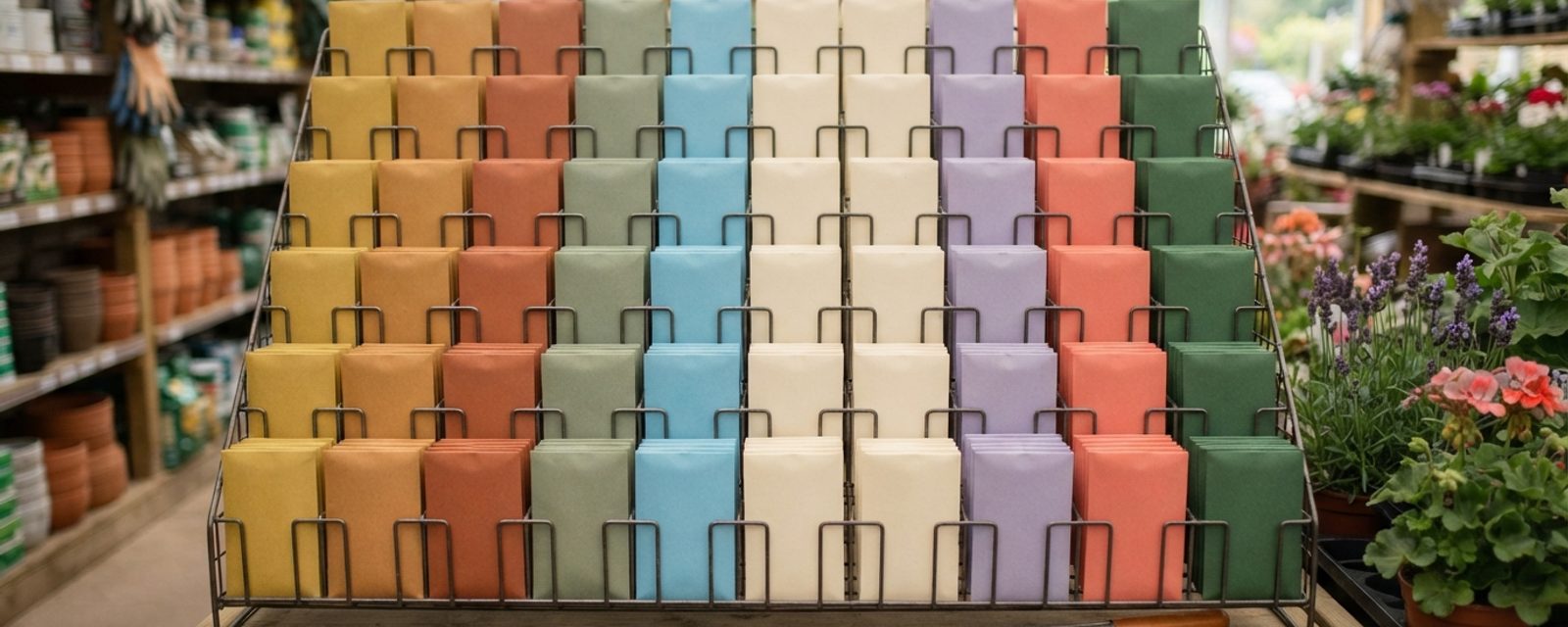
You've either just found out why last year's tomatoes never turned red, or you're standing in front of a seed rack right now trying to work out whether the £1.99 packet in your hand is the same seed as the £4.50 one online with a longer name and a smaller photo.
Both are common ways to end up here. The answer isn't "always buy the expensive one", it's that where you buy seed matters for some crops far more than others, and in Scotland, the reason has less to do with quality snobbery than with how many weeks of growing season you actually have to work with.
The real issue: a shorter season leaves no room for the wrong variety
Exactly how tight that window is varies across Scotland itself, a sheltered west-coast garden and an inland Aberdeenshire plot don't share the same frost dates (the full regional breakdown is at Scotland's frost dates), but every part of Scotland runs a shorter frost-free season than most of southern England. For a fast, forgiving crop like lettuce or radish, that barely registers. For anything that needs a long run to mature, sweetcorn, outdoor tomatoes, squash, some bean varieties, the specific variety you sow can be the entire difference between a ripe crop and a frost-killed one still sitting green on the vine in October.
This is where the garden-centre-vs-specialist question stops being about convenience and becomes about time. A mainstream seed rack is stocked for the UK market as a whole, which skews toward varieties bred for a longer, warmer average season. A specialist supplier selecting varieties for early maturity or a shorter, cooler season is effectively selling you back some of the weeks Scotland's climate doesn't give you.
Real Seeds, a UK specialist seed company based in Wales, states this logic directly on their own product pages: sweetcorn "comes from a much hotter climate than the UK, so in the UK you need early varieties," Scotland's own season runs shorter still than that UK-wide average, which is exactly why they stock early-maturing types selected on that basis. For named variety picks per crop, which sweetcorn, tomato or squash varieties actually suit a short season, see best sweetcorn, best tomato and best squash guides.
Closer to home, Seeds of Scotland, based in Evanton in Easter Ross, sells Scottish-grown open-pollinated seed (seed that breeds true if you save and resow it yourself, rather than the reset-every-year F1The first-generation offspring of two specific, deliberately chosen parent plants, bred for a predictable, uniform result but not worth saving seed from. Full definition → hybrids most garden centres stock, see the F1 vs heirloom breakdown for the full distinction), including a dedicated "Grown in Scotland" range covering vegetables, herbs, flowers, grains and green manureA fast-growing crop sown specifically to be dug back into the soil, adding organic matter and, with legumes, fixing nitrogen. Full definition →. According to the Ross-shire Journal, founders Finlay Keiller and Haley Shepherd grow Scottish heritage and open-pollinated varieties, including 'Scotland Yellow' tomato, 'Musselburgh' leek and 'Ailsa Craig' onion, and their stated approach is to "source and trial varieties that grow well in the Scottish climate."
Not every option splits neatly into "shop shelf" or "specialist mail order," either. Large online seed retailers (Thompson & Morgan, Suttons and similar) sit somewhere between the two: a catalogue closer to garden-centre breadth, but dispatched from central stock rather than sitting on a shop shelf for weeks, which means less time in storage before it reaches you and less risk of the reduced viability that eats into an already-short sowing window. The table below shows the two ends of that spectrum, not the only two options.
Garden centre vs specialist supplier: what actually differs
| Garden centre / mainstream rack | Specialist / heritage supplier | |
|---|---|---|
| Variety range | Narrower, mainstream, UK-wide bestsellers | Much wider, including rare, heirloom and short-season types |
| Availability | Walk in, buy same day | Usually mail order, plan ahead |
| Price | Typically cheaper | Often higher per packet |
| Storage before you buy it | Often on open shop shelving, subject to shop temperature and sometimes direct sunlight | Generally better-controlled storage before dispatch, faster stock turnover |
| Best suited to | Common, fast, forgiving crops | Marginal crops, named heirlooms, anything needing every extra week of season |
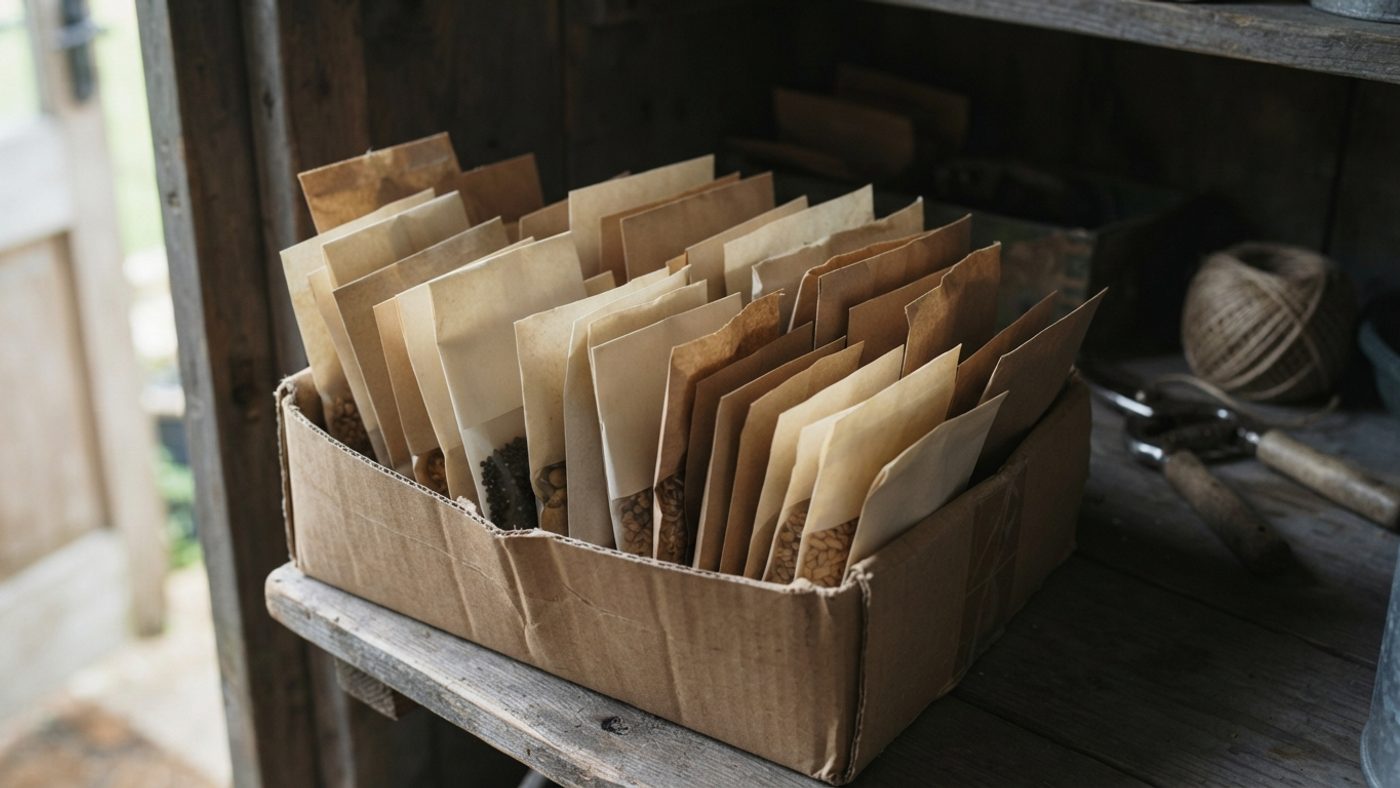
The RHS advises storing seed "in a refrigerator at 5°C (41°F) until required," noting that "excess humidity or warmth can cause seed to deteriorate or die from fungal disease or rotting," which is why they recommend an airtight container with a desiccant such as silica gel. A seed packet sitting on an unclimatised shop shelf, especially anywhere it catches direct sun, is experiencing something close to the opposite of that advice: temperature swings and no humidity control. That doesn't mean every garden-centre packet is compromised, how long it's sat there and what species it is both matter, since the RHS is clear that viable storage life "depends on the condition of the seed when first stored, how long it is stored and what seed is being kept." But it's a genuine, mechanism-backed reason specialist suppliers with faster turnover and controlled storage have an edge on freshness, not just a marketing line, and in a growing season with weeks to spare either way, that difference is easy to shrug off, while for a crop with no spare weeks, seed with reduced germinationA seed sprouting: breaking dormancy and putting out its first root and shoot, given the right warmth and moisture. Full definition → means resowing later and losing even more of the season it can't afford to lose.
What a garden centre structurally can't stock
Even a very good garden centre is working from a commercial catalogue built for broad appeal, which means certain seed simply isn't there to be found regardless of how good the shop is. Garden Organic's Heritage Seed Library is a useful illustration of the scale of what sits outside that catalogue: it maintains a national collection of over 800 heritage vegetable varieties, including rare landrace types (old regional varieties never bred or sold commercially, adapted to specific growing conditions) and varieties dropped from commercial seed lists and no longer otherwise available. Around half the seed the library distributes each year is grown and supplied by its own member "Seed Guardians." That's not seed a garden centre rack was ever going to carry, it's preserved specifically because it fell out of commercial production.
A reasonable way to split your seed shopping
Whichever rack or catalogue you're looking at, check the days-to-maturity figure printed near the sowing depth before you buy: a sweetcorn variety quoting 100 days needs sowing weeks earlier, or swapping for an earlier variety altogether, compared with one quoting 70, and that number is often the clearest single clue to whether a variety was bred with a short season in mind.
- Default to the garden centre for lettuce, radish, spring onion, pak choi, and other fast, forgiving crops where a few weeks either way won't decide the outcome.
- Consider a specialist supplier for sweetcorn, outdoor tomatoes, squash, climbing French beans, and other crops that need a long run to mature, an early or short-season-bred variety is doing real work here.
- Go straight to a specialist or the Heritage Seed Library if you want a named heirloom variety, since it may not exist in mainstream commercial production at all.
- Order specialist or mail-order seed early, not the week you plan to sow, postal delivery time eats into the same tight window a short-season variety is meant to be buying you back.
- Check a local seed swap or allotment society stall before buying, especially for a heritage or locally-adapted variety, this is a genuine free or low-cost route to seed that's already proven itself in a nearby garden. The Scottish Allotments and Gardens Society is a starting point for finding a local allotment association that runs one.
- Buy garden-centre seed with a bit of care, not suspicion: pick a packet from further back in the display, away from a sunny window, and check the sow-by date rather than assuming freshness.
Common questions
Does garden-centre seed germinate less well than specialist seed?
Not inherently, it depends on how the specific packet was stored and for how long. The RHS notes warmth and humidity degrade seed over time, and open shop shelving is more exposed to both than the controlled storage a specialist supplier typically dispatches from. A packet bought early in the season, kept away from a sunny display, isn't meaningfully different from specialist stock.
Do specialist suppliers sell organic seed, and does a garden centre?
Some do. Certified organic seed is more commonly found through specialist and heritage suppliers than on a mainstream rack, which mostly stocks conventionally produced seed regardless of variety. It's a separate certification from open-pollinated or heirloom status, check the packet rather than assuming one implies the other.
What is "Grown in Scotland" seed, and does it matter?
It means the seed itself was harvested from plants grown in Scotland, by suppliers such as Seeds of Scotland, rather than grown elsewhere and sold into the UK market generally. That mainly buys you two things: seed that's already proven it can set and ripen in Scottish conditions in the year it was harvested, and a shorter, more traceable supply chain before it reaches you. It doesn't automatically mean the variety itself was bred for a short season, and Scotland's own growing conditions vary enough that seed grown in one part of the country isn't automatically proven for another, check the variety's own days-to-maturity for the season-length question specifically.
What about seed potatoes, is that the same thing?
No. Seed potatoes are certified tubersA swollen underground stem or root a plant uses to store energy, which can also grow into a new plant, the classic example being a potato. Full definition → grown under disease-free conditions, sold as a separate category from packet seed, usually in early spring alongside, not instead of, the vegetable seed racks covered here. Scotland has its own separate reputation here worth knowing about: it grows a large share of the UK's certified seed potatoes, credited to a cool climate that keeps aphid-spread virus levels low, a different question from where to buy packet seed.
How can I tell if my garden-centre seed packet has been sitting there too long?
Check the packed-for or sow-by date printed on the packet. Beyond that there's no visible test, a packet that looks fine can still have reduced viability if it's been stored somewhere warm.
Where can I find heirloom vegetable varieties I can't get at a garden centre?
Garden Organic's Heritage Seed Library maintains a collection of over 800 heritage varieties, many no longer in commercial seed catalogues at all. Specialist and heritage seed companies are the other main route.
Sources
6 sources, recorded with what each was used for
- RHS: Seed — collecting and storing: Storage temperature/humidity guidance and the viability-degradation mechanism
- Garden Organic: Heritage Seed Library: The scale and nature of heirloom varieties outside commercial seed catalogues
- Seeds of Scotland: A real, verified Scottish "Grown in Scotland" open-pollinated seed supplier and its named heritage varieties
- Ross-shire Journal: Evanton vegetable seed company going for growth across UK: Confirming Seeds of Scotland's founders and their stated approach of trialling varieties for the Scottish climate
- Real Seeds: Illustrating the short-season variety-selection mechanism (non-Scottish, used for the general principle only)
- Scottish Allotments and Gardens Society: A real route to allotment/gardening-club seed swaps in Scotland