
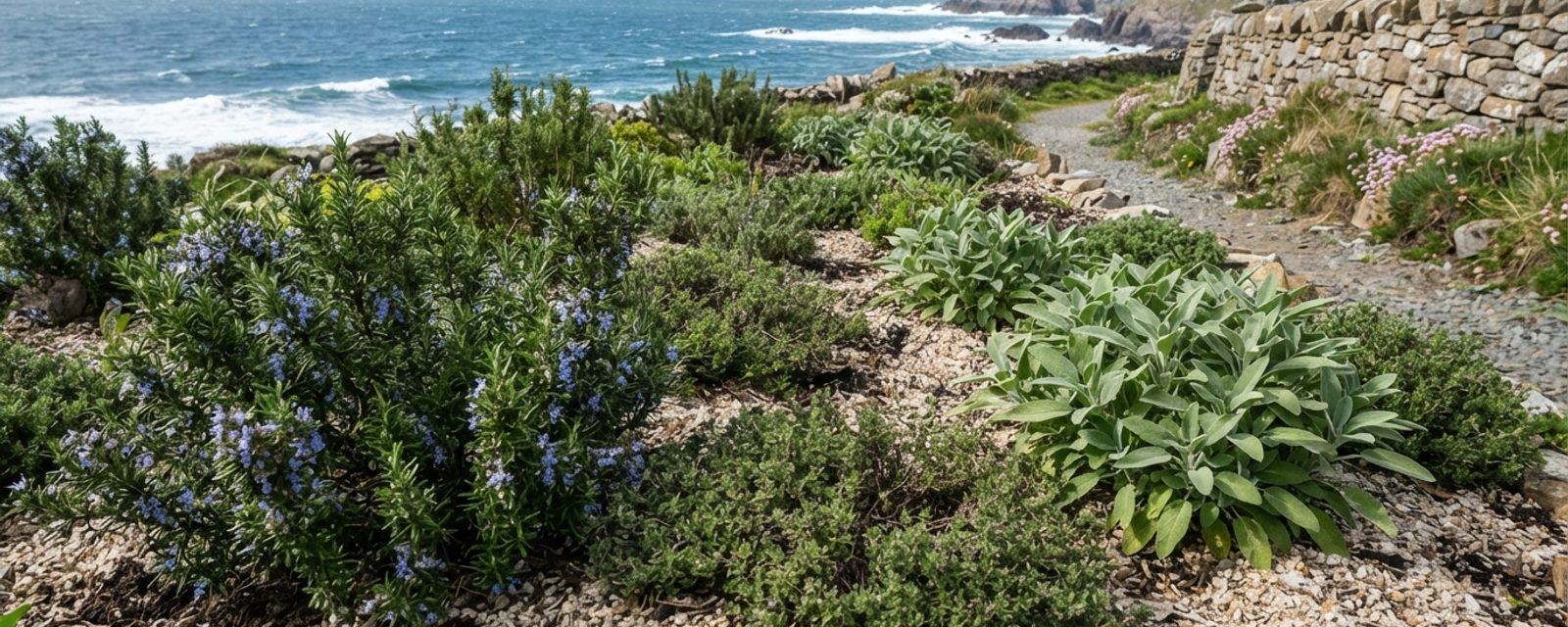
What lets a plant shrug off weeks without rain isn't luck, it's plumbing. Some species route most of their root mass down rather than out, chasing moisture below the layer that dries first. Others cut water loss at the leaf: a waxy cuticle, a felt of fine hairs, or leaves rolled into needles all reduce the surface area exposed to drying wind and sun. A few store water directly in thickened stems or leaves and draw on that reserve when the soil around them gives nothing.
None of this is visible in a garden centre label, "drought tolerant" on a plant tag says nothing about which of these mechanisms a given species actually uses, or how well it holds up once it's out of its native soil and into a Scottish bed, raised box, or pot. Look for a specific, named tolerance claim before trusting the label: a Mediterranean pedigree alone isn't proof once a plant's actually in Scottish ground.
Quick answer: Rosemary is the best all-round pick, it's drought tolerant once established in the ground, in a raised bed, or in a container, and needs almost nothing from you beyond a well-drained spot. If you want a proper vegetable rather than a herb, established asparagus is the better choice, since it needs no supplemental watering except in long dry spells. Globe artichoke is worth choosing over both if you want dramatic, productive size in a border, but budget for watering it specifically during hot, dry stretches when the flower buds are forming, skip that and the harvest shrinks.
Is drought actually a Scottish problem?
Scotland's reputation is wet, and on average it is, but that average hides a lot of variation that matters more to a gardener than a country-wide figure. Much of Eastern Scotland sits in the rain shadow of the western uplands: the hills to the west catch and drop most of the rain arriving off the Atlantic before it reaches the east coast, leaving far less to fall there. The Met Office's regional climate summary for the area states plainly that the coasts of East Lothian, Fife and the Moray Firth "receive less than 700 mm of rainfall in an average year," and that "late winter and spring is normally the driest part of the year" across the region. The scale of that gap is easy to underestimate:
| Region | Annual rainfall | Driest months |
|---|---|---|
| East coast (East Lothian, Fife, Moray Firth) | Under 700mm | Late winter, spring |
| Western Highlands | Can exceed 3,500mm | — |
That's a wider gap than most UK readers would expect from a single country, closer to the difference between England's wettest and driest counties than to a single "Scotland is wet" story. So a garden in Fife or the Lothians isn't hypothetically dry, it's structurally drier than the wet-Scotland image suggests, and driest at exactly the point in the growing calendar (late spring, early summer) when seedlings and newly planted crops are most vulnerable, well before any headline "drought" would be declared.
Soil type compounds this. Free-drainingSoil that lets water pass through quickly rather than pooling, so roots aren't sitting in wet ground after rain. Full definition → sandy or thin soils, found in patches along the east coast and upland fringes, hold far less water reserve than clay or loam, so the same rainfall total translates to more frequent moisture stress at the root. Raised beds and containers, a common choice on a small, sloped, or poor-soil plot, dry out fast regardless of regional rainfall, because they're not connected to the water table and have a much smaller soil volume to buffer a dry week. Put a sandy raised bed on the Fife coast in a dry May, and the crops in it are under real water stress whether or not the country as a whole is having a "drought summer."
The flip side of that matters too, and explains a pattern in the crop picks below: outside that dry spring window, Scotland's ordinary climate really is wet, which is exactly why several of the herbs here list winter waterlogging, not summer drought, as their real risk. A genuinely drier-than-average spring and a genuinely wetter-than-average winter are both true on the same plot, often within the same year.
Water restrictions are also a real, not hypothetical, possibility. Scotland hasn't had a hosepipe ban since 1995; SPICe, the Scottish Parliament's own research service, notes Scottish Water treats one as a genuine last resort rather than a routine response to a dry summer. But 2025 brought a dry winter, record-breaking spring/summer temperatures and low river levels, and reservoir levels in the east of Scotland fell to 51% against a seasonal average of 81%, close to two-thirds of the usual level for the time of year. That's not yet a ban, but it narrows the gap between "hasn't happened since 1995" and "could happen," which matters if your own watering depends on a hose rather than a water butt. The legal mechanism for a ban, a water shortage order under the Water Resources (Scotland) Act 2013, is the power that lets Scottish Water bring in exactly the kind of hosepipe restrictions gardeners south of the border see more often; see the full hosepipe ban rules explainer for how it actually works.
Two crops that look obvious and aren't
Squash and sea kale both look like natural fits for a drought list, squash for its reputation as a deep-rooted, sprawling plant, sea kale for growing wild on coastal shingle. Neither survives a real check against a named source: a genuine tolerance claim for oregano doesn't automatically transfer to a related herb, and "grows wild on shingle" doesn't automatically mean "drought tolerant" either, see "What didn't make the list" below for the specifics on both.
When to plant these
All five are best planted in spring, once the last hard frost has passed, so the roots get a full growing season to establish before facing either a dry spell or their first Scottish winter. Rosemary, thyme, sage and globe artichoke are usually bought as small pot-grown plants rather than raised from seed, so establishment starts from planting out, not sowing, and a pot-grown plant can technically go in at other times of year too, spring just gives the longest run-in before either extreme test arrives. Asparagus is different again: crownsThe base of a perennial plant where roots and shoots meet, often sold and planted as a ready-made dormant plant rather than grown from seed. Full definition → are planted in spring, and the two-to-three-year wait before its drought tolerance applies starts from that planting date.
Rosemary
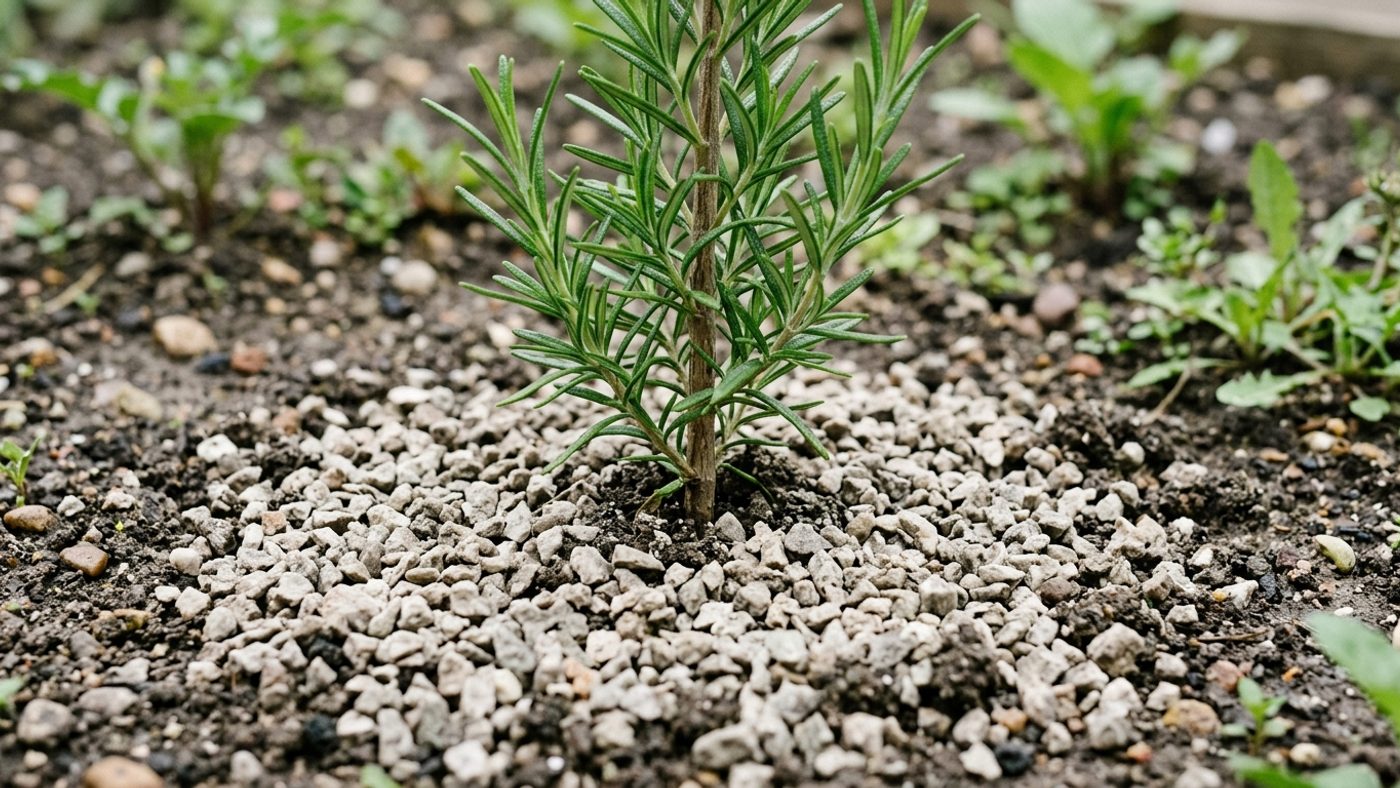
Rosemary is drought tolerant once established and needs little maintenance beyond an annual clip to keep it compact. New plants need watering through dry spells in their first year, but once in, and given a full-sun site with light, free-draining soil, it shouldn't need additional watering in the ground. On heavy soil, the guidance is to move it into a raised bed or container instead of fighting the drainage, rosemary tolerates dry roots far better than wet ones, and a grit mulch around the base helps keep the crown clear of standing winter wet, the same approach used for thyme below. Pot-grown plants still need occasional watering in hot spells, since compost dries faster than open ground.
Thyme
Thyme is drought tolerant and rarely needs watering except when newly planted or grown in containers through hot, dry weather. The bigger risk with thyme on a Scottish plot isn't drying out, it's the opposite: waterlogged roots rot, and a genuinely wet Scottish winter, sitting well outside the dry spring window this article is mainly about, is exactly when that risk is highest. The RHS recommends free-draining soil and a top-dressingAdding fresh compost, feed or grit to the soil surface around an established plant, rather than digging it in. Full definition → of grit or gravel around the plant to keep foliage lifted off damp ground through that wetter season. In a pot, 15cm width is the minimum for a single plant.
Sage
Sage is described directly as "an attractive, drought-tolerant evergreen shrub," and once established in the ground it shouldn't need extra watering. As with rosemary and thyme, the greater danger on a Scottish plot is excess winter wet rotting the roots, not the dry spring this article opened on, so free-draining soil that never sits waterlogged is the non-negotiable condition, not moisture retention; the same grit mulch used for thyme and rosemary suits sage equally well. Container-grown sage needs more attention, since compost dries faster than garden soil and should be kept lightly moist through summer rather than left to fully dry.
Globe Artichoke
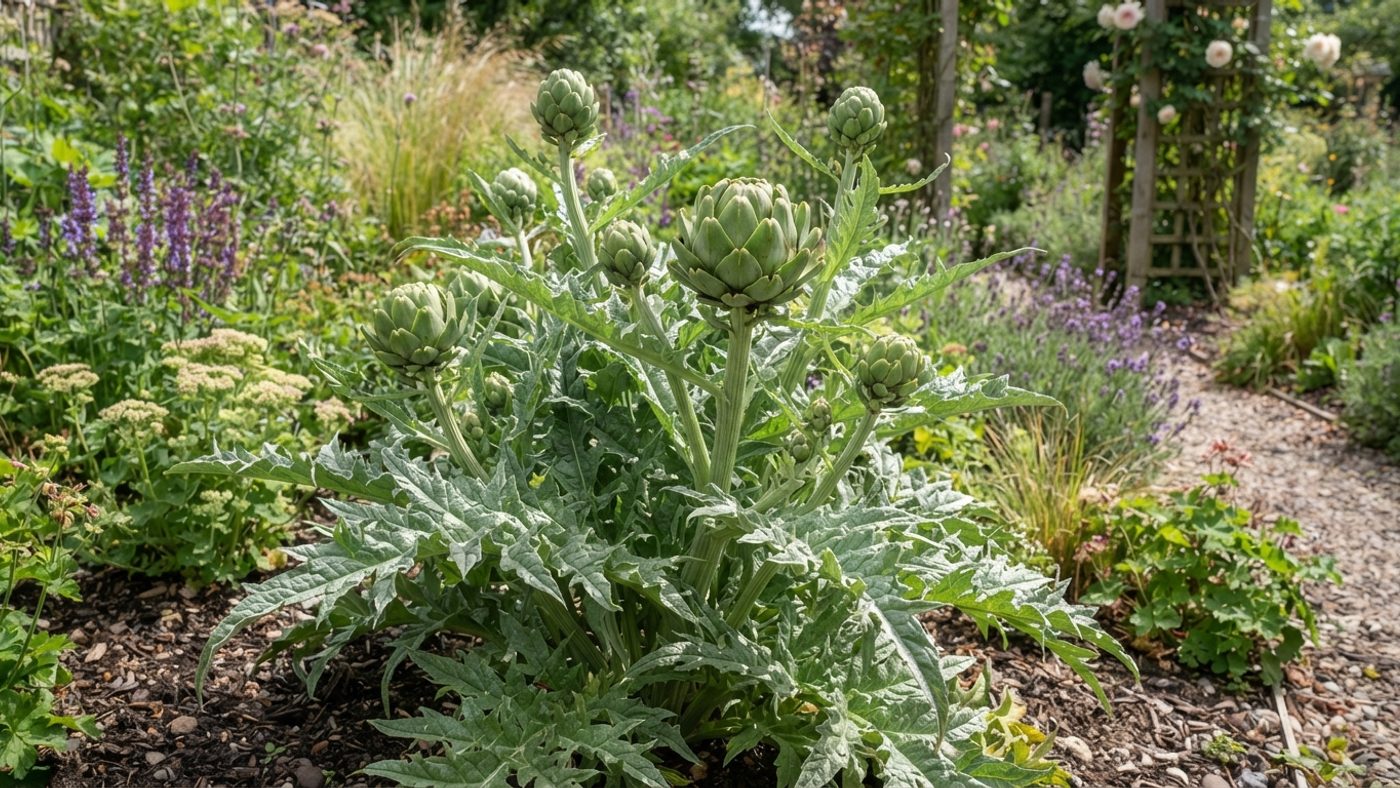
Once a globe artichoke has built a strong root system, it copes with dry conditions reasonably well. That tolerance has a real limit, though: in prolonged hot, dry spells while the flower buds are forming, watering directly improves the crop, and going without can mean fewer, smaller buds. Mulching around the plant in late winter or spring helps hold moisture through that critical stage. New plants need regular watering through their first season regardless.
Asparagus (once established)
Established asparagus is drought tolerant and only needs watering in long dry spells, a meaningfully different profile from most vegetables, which need consistent moisture through the growing season. The trade-off is the wait: an asparagus bed takes two to three years to establish before that tolerance applies, and during that establishment period it needs the same regular watering as anything else. Most soil types suit it as long as they're well drained; on heavy clay, a raised bed is the recommended fix.
When these crops do need watering
Even a drought-tolerant plant benefits from watering the right way during its first year, or in a genuinely prolonged dry spell once established, most likely to actually arrive during that late-spring, early-summer window this article opened on, roughly a couple of weeks or more without meaningful rain. Water at the base of the plant rather than over the foliage, and in the morning or evening rather than the heat of the day, so less is lost to evaporation before it reaches the roots. A slower, deeper soak that wets the full root zone less often does more good than a light daily sprinkle that only ever dampens the surface: a shallow, frequent watering habit only ever wets the top few centimetres of soil, training roots to stay near that damp surface layer instead of growing down to find their own reserve, the opposite of what makes a plant drought tolerant in the first place.
Comparison table
| Crop | Verified drought-tolerance claim | Planting time & spacing | Caveat |
|---|---|---|---|
| Rosemary | "Drought tolerant once established and needs little maintenance" (RHS) | Spring; full sun, free-draining soil; space around 60–90cm apart as it bulks into a shrub | Water new plants through year one; hates wet roots on heavy soil |
| Thyme | "Drought tolerant and rarely needs watering, except when newly planted or when growing in containers" (RHS) | Spring; free-draining soil or pots at least 15cm wide; space plants 15–30cm apart | Winter wet, not summer dry, is the main risk to the plant |
| Sage | "An attractive, drought-tolerant evergreen shrub"; shouldn't need additional watering once established (RHS) | Spring; full sun, sheltered spot, free-draining soil; allow 45–60cm to spread | Pot-grown sage still needs regular checking in summer |
| Globe artichoke | "Once they have a strong root system, they are fairly drought tolerant" (RHS) | Spring; warm, sunny, free-draining but reasonably fertile soil; around 90cm between plants | Needs watering specifically during bud formation in hot, dry spells or yield drops |
| Asparagus | "Once established, asparagus is drought tolerant, so only needs to be watered in long dry spells" (RHS) | Spring; full sun (tolerates dappled shade); well-drained soil, crowns roughly 30–45cm apart in rows 90cm apart | Two to three years to establish; needs normal watering until then |
What didn't make the list, and why
Squash and pumpkin are the crop most people expect on a drought list, thanks to their reputation for deep, drought-adapted roots. The RHS's own growing guide contradicts that reputation directly for cultivation in the UK: squash are "thirsty plants, especially when fruiting," and the advice is to water them regularly in dry spells, not to expect them to cope without. Sea kale looked promising on paper too, a genuinely native coastal edible that grows wild in shingle, but the RHS plant record for it doesn't make an explicit drought-tolerance claim, only that it tolerates poor soil and needs good drainage. Its shingle habitat reads like a drought signal, but no source actually confirms drought tolerance for it specifically, so sea kale isn't included here on the strength of its habitat alone.
Lavender is the other obvious near-miss. RHS states it plainly: "once it's well established, lavender is drought tolerant so rarely needs watering when grown in the ground," and just as plainly that it "will not thrive in heavy clay soil or any soil that becomes waterlogged over winter," almost exactly the same profile as rosemary and sage above. Lavender is left off the five picks here as ground already covered by rosemary and sage, not because the claim is any weaker, it's a genuinely good choice for a border or cut-flower spot rather than a kitchen herb bed.
Related: drought tolerance on a windy balcony
The site's windy-gardens balcony guide touches on drought tolerance only in passing, thyme, oregano and rosemary all get a mention there, but mainly for general hardiness and wind tolerance rather than their water needs specifically. Here, the focus stays on drought specifically: which claims are actually documented, which crops need checking species by species, and why dry-spell stress is a real risk even in a country with Scotland's wet reputation. If your plot is both exposed and free-draining, wind and drought stress often show up together, so it's worth reading both.
Common questions
Does mulching actually help these crops in a Scottish garden?
Yes, for the ones that need it during specific stress points. The RHS recommends mulching around globe artichokes in late winter or spring specifically to help retain moisture through the bud-formation period, when a dry spell has the clearest impact on yield. For rosemary, thyme, and sage, mulching matters less for moisture and more for winter drainage, a layer of grit around the base keeps foliage off damp soil rather than holding water in.
How can I tell if my own soil is actually free-draining?
Dig a hole about 30cm deep and fill it with water. If it's drained away within a few hours, the soil is reasonably free-draining and suits all five picks here well, the kind of thin or sandy soil found in patches along the east coast usually passes this test easily. If water is still sitting in the hole after several hours, or the ground around it stays sodden a day later, your soil holds moisture longer than these five want, and a raised bed or large container filled with a lighter, grittier mix is a more reliable fix than trying to change the ground itself.
Can I grow drought-tolerant herbs in containers, or do they need open ground?
All five of these do fine in containers, but the tolerance profile shifts. Compost in a pot dries out faster than garden soil, so container-grown rosemary, thyme, and sage all need some watering in hot, dry weather even though the same plants in the ground might need none. Thyme specifically needs a pot at least 15cm wide for a single plant.
What's the most drought-tolerant food crop for a Scottish garden, not just a herb?
Asparagus, once it's established. It's the only true vegetable on this list with a direct RHS drought-tolerant claim, though the two-to-three-year establishment period before that tolerance kicks in is a real commitment.
Do rosemary, thyme, and sage need watering in their first year even though they're drought tolerant?
Yes, the drought tolerance in all three cases applies to established plants. Newly planted rosemary, thyme, and sage all need watering through dry spells in their first year while their root systems develop; skipping this undermines the tolerance you're planting them for.
Why isn't courgette or summer squash on this list if pumpkins are sometimes described as drought-adapted?
Because the RHS's own guidance for squash and pumpkin growing in the UK states they are thirsty plants that need regular watering, especially once fruiting, the "deep roots" reputation doesn't translate into low water need in practice, so it isn't included as a pick here, even though it's the crop most people expect on a drought list.
Sources
13 sources, recorded with what each was used for
- RHS: How to grow Rosemary: Rosemary's drought-tolerance claim, first-year watering guidance, and soil/site requirements
- RHS: How to grow Thyme: Thyme's drought-tolerance claim, container pot-size guidance, and winter wet-rot risk
- RHS: How to grow Sage: Sage's drought-tolerance claim and free-draining soil requirement
- RHS: How to grow Marjoram: Corroborating that drought tolerance extends to other Mediterranean herbs
- RHS: How to grow Oregano: The same corroborating purpose as marjoram
- RHS: How to grow lavender: Lavender's drought-tolerance claim and its intolerance of waterlogged/heavy wet soil, in the "what didn't make the list" section
- RHS: How to grow Globe Artichokes: Globe artichoke's drought tolerance once established and the bud-formation watering caveat
- RHS: How to grow Asparagus: Asparagus's established drought tolerance and soil/site requirements
- RHS: How to grow Squashes: The direct contradiction of squash/pumpkin drought-tolerance assumptions
- RHS: Crambe maritima (sea kale) plant details: Confirming sea kale's documented soil/site requirements do not include an explicit drought-tolerance claim
- Met Office: Eastern Scotland climate: The rain-shadow rainfall figures (under 700mm/year on the East Lothian/Fife/Moray Firth coasts) and that late winter/spring are the driest part of the year in the region
- Met Office: Western Scotland climate: The western Highland rainfall figure (can exceed 3,500mm/year), for scale against the eastern figure
- SPICe Spotlight: Why are there no hosepipe bans in Scotland?: The 1995 last-hosepipe-ban fact, Scottish Water's own framing of a ban as a last resort, the 2025 reservoir-level figures, and the Water Resources (Scotland) Act 2013 water shortage order mechanism