
Look closely at almost any seed packet and there's a good chance the variety name is followed by "F1The first-generation offspring of two specific, deliberately chosen parent plants, bred for a predictable, uniform result but not worth saving seed from. Full definition →". If it isn't, the variety is almost always open-pollinated or heirloom instead. The "F1" is a plant-breeding term, not a marketing flourish, and it describes something specific about how that seed was made.
An F1 hybrid is the first-generation offspring of a deliberate cross between two different, deliberately maintained parent lines. Each parent line is bred to be genetically stable by repeated self-pollination over many generations, a process that, on its own, tends to produce plants that are weak and low-yielding. Crossed together, though, those two inbred lines produce offspring that are unusually uniform and unusually vigorous. That jump in vigour from crossing two weak inbred parents is called heterosis, or hybrid vigour, and its precise biological mechanism is still not fully understood even though the effect itself is well documented and reliably repeatable.
That's the entire technical difference in one sentence: F1 is a cross remade from two fixed parent lines every single season; heirloom and other open-pollinated varieties are stable populations that breed true from their own seed, generation after generation, with no parent lines to keep separate. Everything else, cost, uniformity, flavour reputation, whether you can save seed, follows from that one structural fact. Neither is a fake or a corner-cut version of the other; they're two different breeding strategies aimed at two different goals, and which one serves a given gardener better depends on what that gardener actually wants from a crop.
What "F1" actually means, mechanically
To make an F1 variety, a breeder maintains two separate inbred lines, call them Line A and Line B, each kept pure over many generations by only ever pollinating plants within that same line with each other, rather than letting them cross with anything else. Neither line performs well on its own. The point of inbreeding them is purely to lock in a set of traits and eliminate genetic variation within each line, not to produce a plant anyone would grow for a crop.
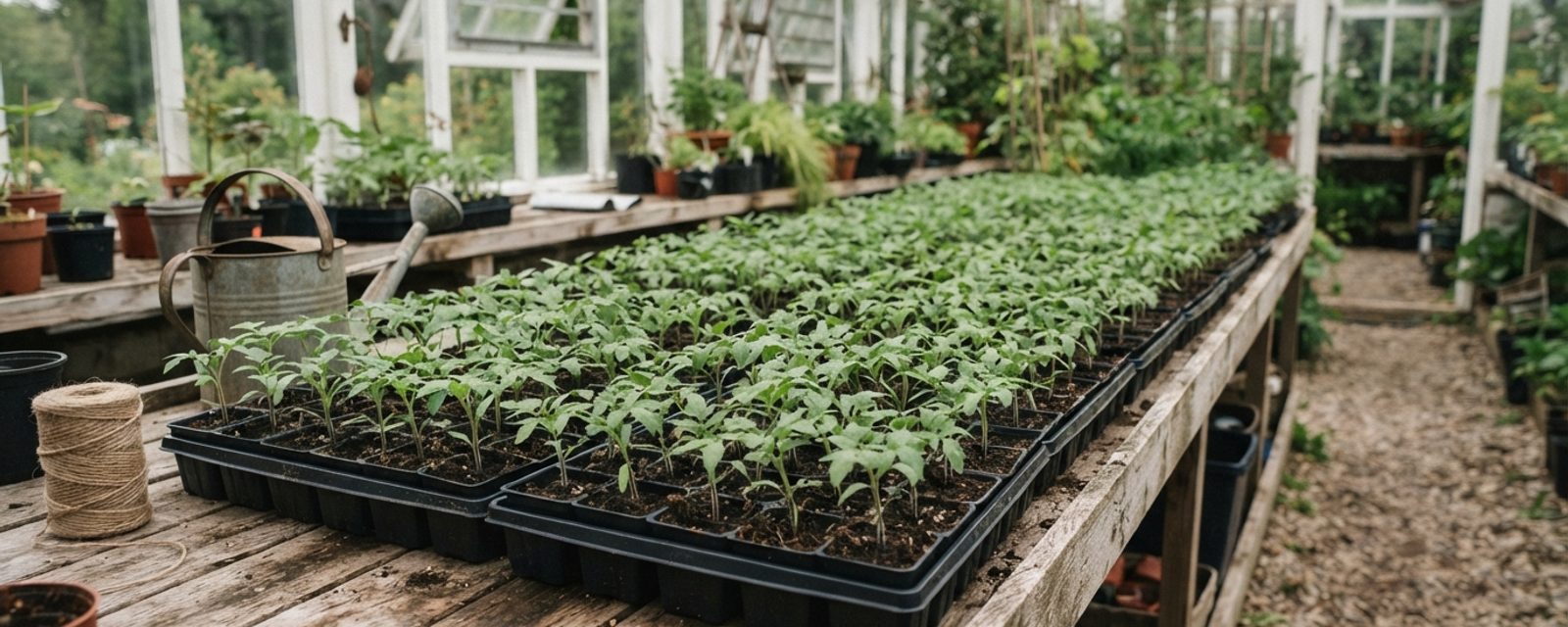
Every season, the breeder crosses a plant from Line A with a plant from Line B under controlled conditions, often by hand-pollination, to produce seed for sale. The resulting plants are the "F1" generation, first filial generation, and they are unusually uniform in flowering time, height, yield and days to maturity, and unusually vigorous compared with either parent line. That uniformity is a direct, predictable outcome of crossing two genetically stable but different parents: every F1 seed carries the same combination of genes from Line A and Line B, so every plant grown from that seed behaves almost identically.
The catch is that this cross has to be recreated from scratch every year, because the useful uniformity and vigour exist only in that one first-generation cross. Maintaining two separate parent lines, and hand-crossing them season after season, is labour-intensive, which is a large part of why F1 seed costs more than open-pollinated seed of the same crop, and why a hybrid variety can disappear from catalogues after only a few years if a breeder judges it no longer worth the cost of keeping both parent lines going.
What "heirloom" and "open-pollinated" actually mean
Open-pollinated (OP) varieties are pollinated naturally, by insects, wind, or self-pollination, without the breeder separating and re-crossing two distinct parent lines each season. Because an OP variety is a genetically stable population rather than a one-off cross, seed saved from an OP plant will breed true to type: the next generation carries its parents' genetic material and, grown under similar conditions, resembles the parent plant. "Heirloom" is not itself a genetic category, it is an open-pollinated variety, usually but not strictly one that has been grown and re-saved for a long time (commonly defined as pre-dating the mid-20th century rise of commercial hybrid breeding), passed down because gardeners kept choosing to save and replant it.
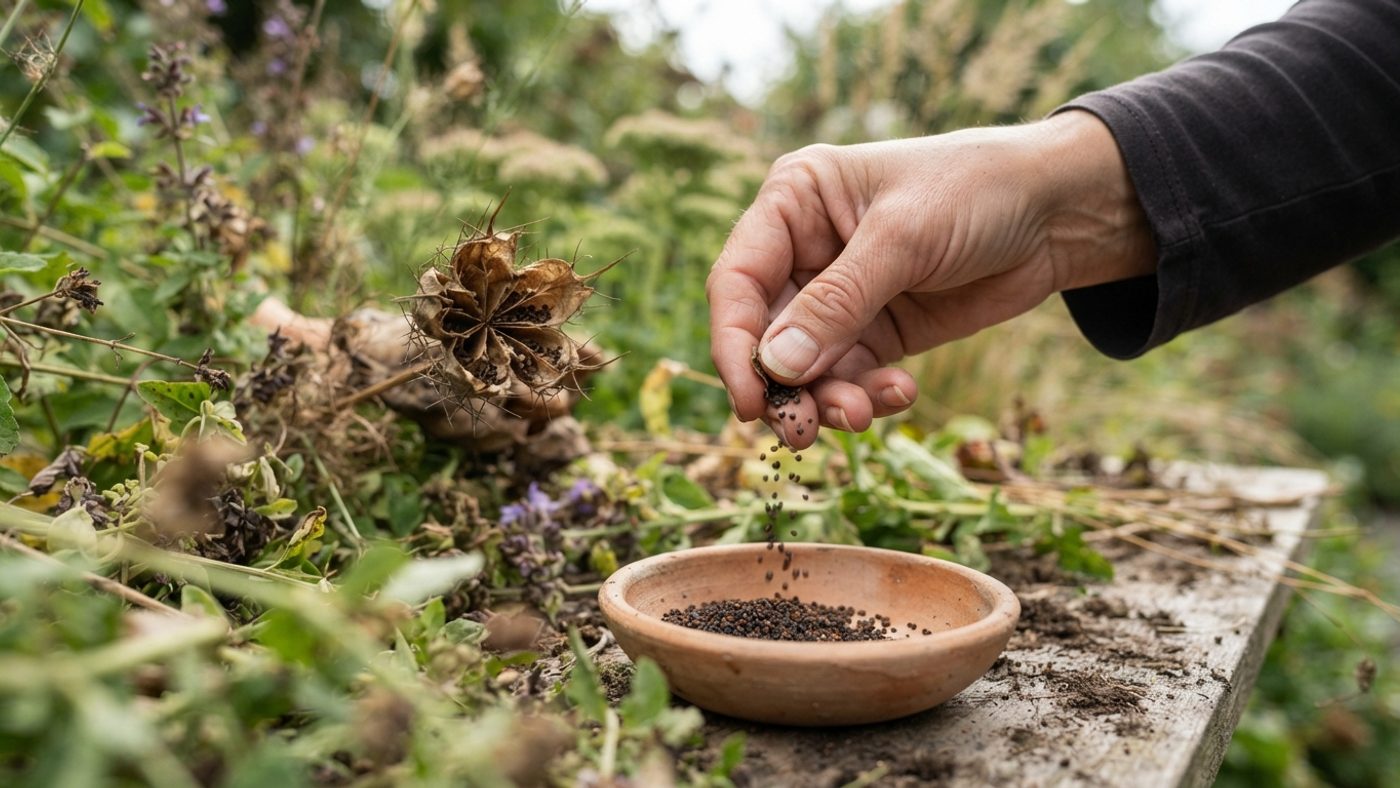
Open-pollinated populations are also, by design, more genetically variable than an F1 cross: individual plants within the same OP variety differ slightly from one another. That internal variation is not a flaw, it is what lets the population adapt to different growing conditions over successive generations and gives it a reservoir of genetic diversity that a uniform F1 cross doesn't have. The trade-off is that OP varieties can cross-pollinatePollen moving from one plant to a different, compatible variety, needed for fruit to set on any variety that isn't self-fertile. Full definition → with other varieties of the same species if pollinating insects or wind move pollen between them, which is a real risk for crops like brassicasThe cabbage family: cabbage, kale, broccoli, cauliflower, Brussels sprouts, kohlrabi, swede, turnip and more, sharing the same pests, diseases and rotation rules. Full definition → and squashes grown near a different variety of the same species, though it isn't a meaningful risk for self-pollinating crops such as peas and French beans, which generally do not cross-pollinate.
Where the "corporate vs authentic" story breaks down
The framing that shows up a lot in gardening chatter, F1 as a corporate trap designed to force repeat purchases, heirloom as the pure and honest alternative, doesn't hold up well against what F1 breeding is actually for. Hybrid vigour and uniformity are genuine, reproducible outcomes of crossing two inbred lines, not marketing claims; a commercial grower who needs a field of sweetcorn to ripen within the same narrow window, or a gardener with limited space who wants every plant in a short row to crop at roughly the same time, is getting a real, useful trait from an F1 variety.
It's also true, and stated plainly by breeders and independent gardening bodies alike, that F1 seed is commercially structured to be re-bought every year: the parent lines are proprietary, the cross has to be redone annually, and saved F1 seed doesn't breed true. That's not a hidden trick, it's the direct, unavoidable consequence of how the uniformity and vigour are produced in the first place, not a business decision layeredPropagating a new plant by pinning a low, flexible stem into the soil while still attached to the parent, so it roots before being cut free. Full definition → on top of neutral genetics. You cannot have the heterosis without redoing the cross, and you cannot redo the cross without keeping the parent lines under control.
The honest version, then, isn't "F1 bad, heirloom good" or the reverse, it's a trade-off engineered deliberately in both directions, not a morality tale.
F1 vs heirloom/open-pollinated at a glance
| Factor | F1 hybrid | Heirloom / open-pollinated |
|---|---|---|
| Genetic basis | First-generation cross of two fixed, separately maintained inbred parent lines | Stable population that breeds true from its own seed |
| Uniformity | High, plants tend to flower, mature and crop within a narrow window | More variable, plants within a variety differ slightly from each other |
| Vigour | Often higher (hybrid vigour/heterosis), varies by cross | No inherent vigour boost from the cross itself |
| Seed cost | Higher, reflects the cost of maintaining two parent lines and re-crossing annually | Generally lower |
| Can you save seed? | No, saved seed will not grow true to the parent plant | Yes, seed saved and replanted will breed true to type |
| Cross-pollination risk | Not a concern for the gardener, the cross is made by the breeder | Real risk for insect/wind-pollinated crops grown near a different variety of the same species |
| Variety longevity | Can be withdrawn from sale after a few years if not worth maintaining | Often available indefinitely, no parent lines to maintain |
| Best suited to | Gardeners who want a uniform, predictable crop and don’t need to save seed | Gardeners who want to save seed, or value flavour and diversity over uniform timing |
The verdict: it's genuinely situational
F1 hybrids are the better choice when uniformity actually matters to what's being grown: a crop meant to mature all at once for a single harvest and freeze session, a small space where staggered ripening would be wasteful, a variety bred specifically for disease resistance against a named risk, or a cross known for a specific, hard-to-breed trait combination. Heirloom and open-pollinated varieties are the better choice when the ability to save and replant seed matters, when flavour or variety diversity is the goal rather than uniform timing, or when the extra cost of buying F1 seed every single year isn't worth it for a crop where staggered ripening is actually convenient, salad leaves or courgettes, for instance, where a single uniform glut is arguably worse than a spread-out one.
In Scotland's shorter, cooler growing season, the uniformity case for F1 carries a bit more weight than it might further south: a crop that ripens together is a crop that has a better chance of finishing before the first autumn frost, rather than leaving a spread of later fruit to be caught out by it. Tomatoes and squash, both already borderline outdoors here, are the clearest examples, an F1 variety bred to crop within a tight window reduces how much depends on a long, mild back end to the season that Scotland doesn't reliably provide. Named disease resistance also carries more practical weight here than the label alone suggests: some F1 tomato varieties are bred specifically for resistance to blight, the fungal disease that spreads fastest in cool, humid conditions of the kind a Scottish summer supplies more often than a drier southern one. That resistance is a trait of the specific named cross, not something to assume of "F1" as a category, so it's worth checking for by name on the seed packet rather than relying on the F1 label alone. Seed potatoes are worth mentioning separately rather than folding into the comparison above: certified seed potatoes are propagated as tubersA swollen underground stem or root a plant uses to store energy, which can also grow into a new plant, the classic example being a potato. Full definition →, not grown from F1 seed crosses, so blight-resistant potato varieties (a genuinely important trait for Scottish growers, given how well blight suits Scotland's climate) sit outside the F1-versus- open-pollinated seed choice this article covers.
None of this makes open-pollinated and heirloom seed any less relevant here. Sharing and swapping seed between plot-holders is a familiar part of allotment culture in Scotland, and that kind of local exchange only works if the seed being passed round actually breeds true, which is also exactly why growing open-pollinated brassicas or squash on a shared or adjacent plot needs the cross-pollination care covered above: a neighbouring plot-holder's different variety of the same crop, flowering at the same time, is the realistic version of that risk on an allotment site, not just a hypothetical. A heirloom variety grown on in one particular spot for several seasons also has a chance to adapt to that spot's own conditions in a way a freshly bought F1 packet, remade identically every year from the same two parent lines, never will.
For most home vegetable plots, a mixed approach is the practical answer: F1 for the crops where uniformity or named disease resistance genuinely pays off, open-pollinated or heirloom where seed-saving or variety matters more than synchronised cropping. Choosing "all F1" or "all heirloom" on principle, rather than crop by crop, usually means picking the wrong tool for at least some jobs in the plot.
A couple of familiar names show roughly where each approach sits in practice. "Sungold" is a well-known F1 cherry tomato, bred for its uniform, early, heavy crop. "Crimson Crush" is an F1 tomato bred specifically for blight resistance, the trait most worth checking for by name in a Scottish garden. On the open-pollinated side, "Moneymaker" and "Ailsa Craig" are both long-established, non-hybrid tomato varieties that breed true from saved seed, which is why they've stayed available and widely grown for over a century despite neither being marketed as an heirloom curiosity. Ailsa Craig has a genuinely Scottish origin: it was bred in Girvan, Ayrshire, in 1908, and named after the island visible from the breeder's nursery.
Common questions
Can I save seed from an F1 hybrid plant?
You can collect it, but it won’t grow into a plant like the parent. Seed saved from an F1 hybrid does not breed true, the next generation reverts to a mixed, unpredictable combination of traits from the original two parent lines. If seed-saving matters, choose an open-pollinated or heirloom variety instead. See the full how-to at saving your own seed.
Is heirloom seed always older than F1 seed?
Usually, but "heirloom" isn’t a strict genetic category, it generally describes an open-pollinated variety with a long history of being grown and re-saved. The deciding factor for how it behaves genetically is that it’s open-pollinated and breeds true, not its age.
Does F1 seed produce healthier or higher-yielding plants than heirloom seed?
Often, but not automatically. Hybrid vigour (heterosis) is a real, reproducible effect of crossing two inbred lines, and many F1 varieties are also bred specifically for disease resistance or yield. But it depends entirely on the specific cross, and some heirloom varieties are prized precisely for traits, like flavour, that hybrid breeding hasn’t matched.
Why is F1 seed more expensive than open-pollinated seed?
The two parent lines have to be kept separate and hand-crossed fresh every season, a labour cost that open-pollinated seed doesn’t carry once a stable variety already exists.
Will my heirloom vegetables cross-pollinate with my neighbour’s plants?
Possibly, for insect- or wind-pollinated crops like brassicas and squashes flowering near a different variety of the same species, much less of a concern for self-pollinators such as peas and French beans. Isolation distances for keeping seed true-to-type are covered in saving your own seed.
Why do some F1 varieties disappear from seed catalogues after a few years?
Keeping two parent lines going indefinitely is expensive, and a breeder may drop one once demand falls or a newer cross performs better, a cost open-pollinated varieties don’t carry, since there are no separate parent lines to maintain.
Is F1 seed genetically modified?
No. An F1 hybrid is produced by conventional cross-pollination between two parent plants, done deliberately and repeated every season by a breeder. Genetic modification, which directly alters an organism’s DNA in a laboratory, is a separate and unrelated technique. The "F1" label says nothing about GM status either way.
Sources
3 sources, recorded with what each was used for
- RHS: F1 Hybrids Explained: Mechanics of inbred parent lines, hybrid vigour/heterosis, uniformity claims, cost and annual re-crossing, saved-seed unpredictability, market longevity of hybrid varieties
- Garden Organic: The difference between open pollinated seeds and F1 hybrids: Open-pollinated breeding-true claims, genetic variability and adaptation in OP populations, cross-pollination risk by crop type, annual re-breeding requirement for F1
- Wikipedia: Ailsa Craig tomato: Ailsa Craig’s 1908 breeding origin in Girvan and its naming after the visible island