
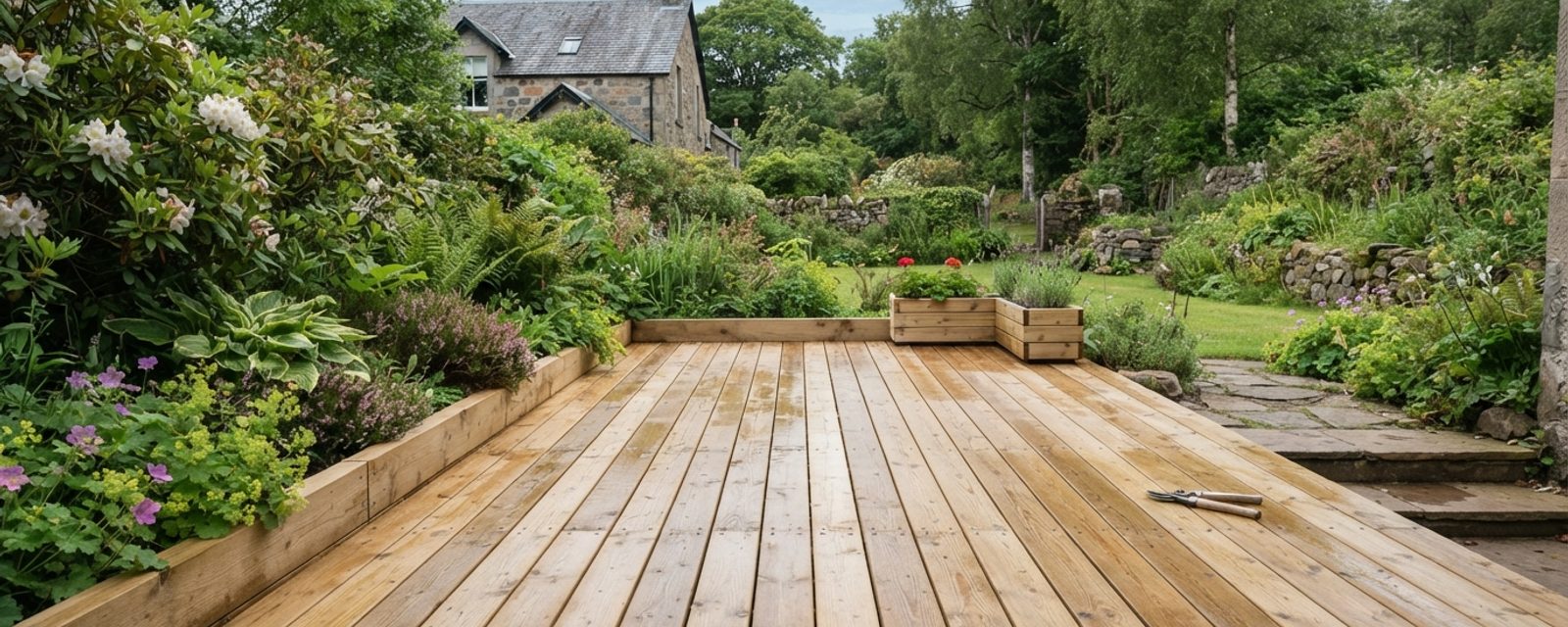
If your decking has gone slippery and green-black even though it hasn't rained in days, or the flagstones by the back door feel greasy underfoot every time you step out in socks, you're not imagining it and you're not doing anything wrong.
In much of Scotland, hard surfaces that sit in shade for any part of the day rarely dry out for long enough between showers to stop moss and algae getting a foothold. Clean it off in April and by autumn it can be back. That's not a failure of technique, it's what the climate does here, and the fix is less about finding the one product that kills it for good and more about setting up a routine that keeps it from building up in the first place.
This guide covers hard surfaces only, decking, paving and patio stone, garden furniture, and fences. If moss is also a problem in your lawn, the separate guide to moss in your lawn covers scarifying and iron sulphate treatment for grass, which works differently to anything on timber or stone.
Why it keeps coming back
Moss doesn't need much to establish: damp, shade, and something to hold onto. On hard surfaces that usually means a slightly rough or porous texture, weathered wood grain, mortar joints, natural stone with a bit of texture, combined with a film of organic debris (leaf litter, algae, wind-blown soil) that gives spores something to root into. Growth tends to be worst after a wet winter, on surfaces that don't get direct sun for much of the day, and anywhere water is slow to drain away rather than running off.
None of that is unusual in a Scottish garden. The real difference from further south isn't necessarily more rain overall, it's that cooler temperatures and a lower sun mean wet surfaces take longer to dry out fully between spells, especially anywhere shaded for part of the day or facing north. Damp, mild weather with limited sustained sunshine is close to ideal moss-growing conditions, which is why a single clean rarely holds. Think of this as maintenance on a cycle, a proper clean once or twice a year, plus small ongoing habits that slow regrowth in between, rather than a one-off job you can tick off and forget.
What actually works, without chemicals
A few genuinely effective methods cover most situations. Which one to reach for depends more on the surface than on how bad the moss looks.
| Method | Best for | How to do it | Watch out for |
|---|---|---|---|
| Stiff-bristle brushing | Light-to-moderate growth on stone, paving, decking | Sweep with a stiff broom (not wire) in the direction of the grain on wood; work paving joints with a pointed tool or old knife | Slow on heavy growth; won't shift ingrained staining |
| Pressure washing | Established growth on paving and stone; decking with care | Use a fan nozzle, not a pinpoint jet, held well back from the surface; test an inconspicuous patch first and work up in pressure only as needed | Blows jointing sand out of paving gaps if aimed too close or directly down a joint; can splinter or fuzz up softwood decking if held too close |
| Diluted white vinegar | Furniture, decking, smaller areas | Mix roughly equal parts white vinegar and water, spray or sponge on, leave to sit for an hour or two, then scrub and rinse well | Repeat applications needed for heavy growth; can etch limestone, sandstone or lime mortar |
| Proprietary moss-safe treatment | Recurring problem areas once cleaned | Follow label dilution and reapplication interval | Choose one intended for the surface (decking-safe vs. patio cleaner aren't always interchangeable) |
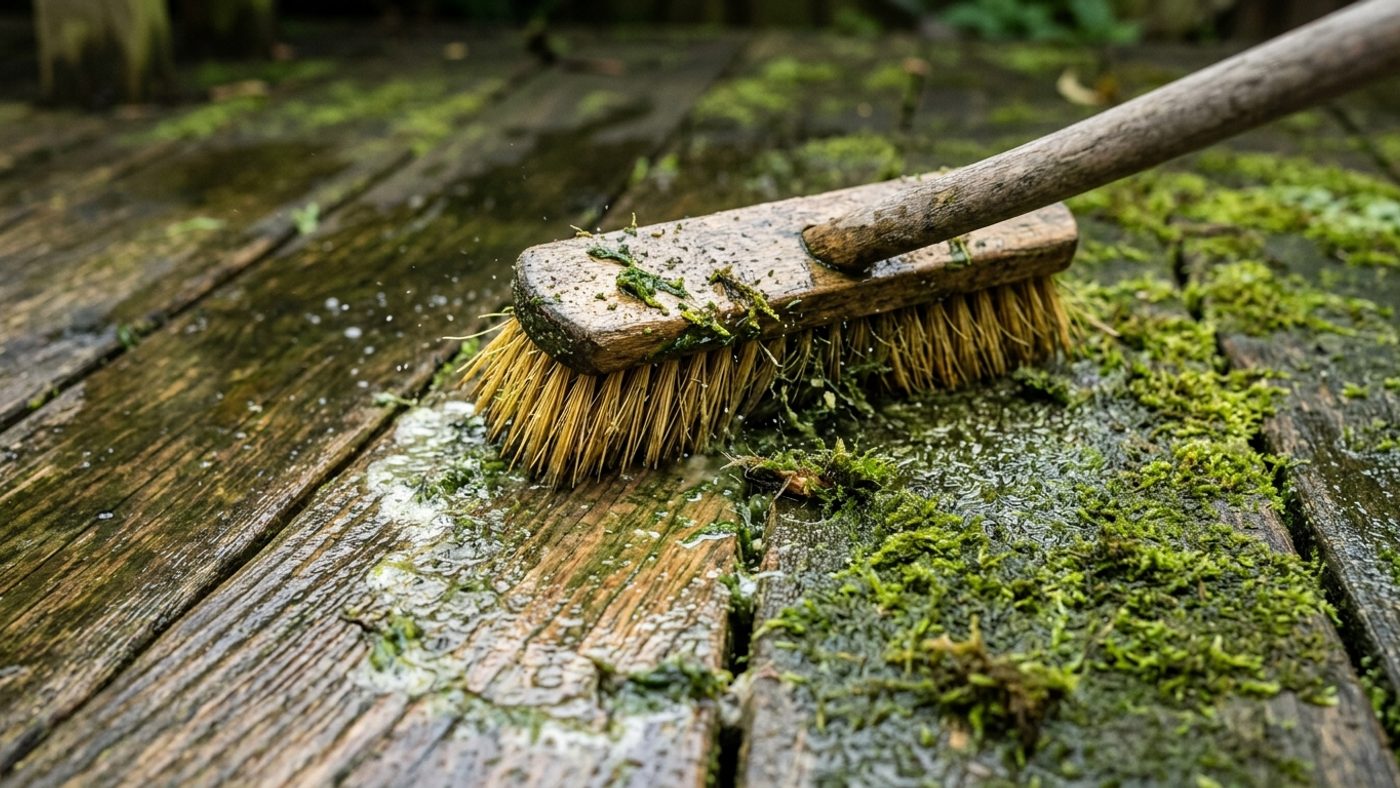
Vinegar works because it's acidic, moss and algae have no protective outer layer like a leafy plant's cuticle, so a strong-enough acid dries and kills the exposed growth on contact, which is also why it needs to sit for a while before scrubbing rather than being rinsed straight off. That same acidity is a problem on limestone, sandstone, or any lime-based mortar or pointing, it can etch and dull the surface, so keep vinegar to timber, concrete and hard non-porous stone, and test an unobtrusive patch first if you're not sure what your paving is made of. A proprietary moss-safe treatment does a similar job with a formulated active ingredient rather than raw acidity, most sold for patios and decking use a quaternary ammonium compound (often listed as benzalkonium chloride on the label) rather than a herbicide, so check the label for that rather than assuming any general household cleaner will do the same job. Wear gloves for any of these methods, and eye protection if you're pressure washing, since spray and dislodged debris come back at you more than you'd expect.
Brushing and pressure washing physically remove growth that's already there; vinegar and proprietary treatments help knock back what regrows in between. A stiff broom or wire brush works well on established growth on masonry and paving, but a wire brush is too aggressive for softwood decking, where it can gouge and fuzz the surface fibres rather than just clearing the moss off them. On timber, a stiff-bristled (non-wire) broom or brush is the safer default.
For pressure washing, the surface matters as much as the machine. Hold the nozzle further back than feels necessary, use the widest fan spray setting available, and test a hidden corner before doing the whole area, you're aiming to lift the moss layer, not blast into the wood or stone underneath it. Pressure washing works quickly but only clears what's already there; it doesn't stop regrowth, and on a surface with poor drainage the extra water sitting around afterwards adds to the same damp, shaded conditions moss needs to establish in the first place, rather than solving them.
Timing matters as much as method. Choose a dry spell rather than cleaning straight after rain, when everything is already saturated and slower to dry out, and avoid working on frozen or icy decking and paving, wet moss on a cold surface is a bad combination underfoot before you've even started.
Surface by surface
| Surface | Pressure wash? | Best routine | Note |
|---|---|---|---|
| Treated softwood decking | Yes, moderate pressure | Wash or brush, then vinegar; oil/seal annually | Keep the nozzle moving, don't linger in one spot |
| Older/untreated/weathered softwood | Avoid | Brush + vinegar | More prone to splintering under pressure |
| Composite (wood-plastic) decking | Yes, wider tolerance | Brush or wash, then vinegar if needed | Check the maker's guidance on nozzle type |
| Paving and patio stone | Yes | Wash, work joints separately with a tool | Never blast straight down into the joints |
| Wood furniture | Avoid aggressive settings | Vinegar + brush | Same caution as decking, especially if older |
| Rattan and wicker | No | Brush + vinegar, then air-dry fully | Water trapped in the weave feeds regrowth |
| Plastic and resin furniture | Yes, lower setting | Scrub or wash | Most forgiving material here |
| Metal furniture | Not needed | Brush + vinegar | Check for rust starting under old moss patches |
| Fences | Careful, younger treated panels only | Brush + vinegar; re-stain periodically | Same rules as decking of the same wood type |
Decking. Treated softwood decking (most modern deck boards) tolerates a moderate pressure wash and diluted vinegar reasonably well, but the wood grain still raises and roughens with repeated high-pressure cleaning, so keep pressure moderate and the nozzle moving. Older, untreated, or already-weathered softwood is more vulnerable to splintering and fuzzing, favour brushing and vinegar over the pressure washer on decking that's past its best. Whichever method you use, an annual decking oil or sealant reapplication afterwards both protects the wood and slows how quickly moss re-establishes. Composite (wood-plastic) decking is different again: it doesn't need oiling and generally tolerates a wider range of pressure settings without the splintering risk timber has, a genuine practical advantage in a climate that demands cleaning this often, but check the manufacturer's guidance before pressure washing, since some composite boards' surface texture can scuff or dull if the wrong nozzle attachment is used.
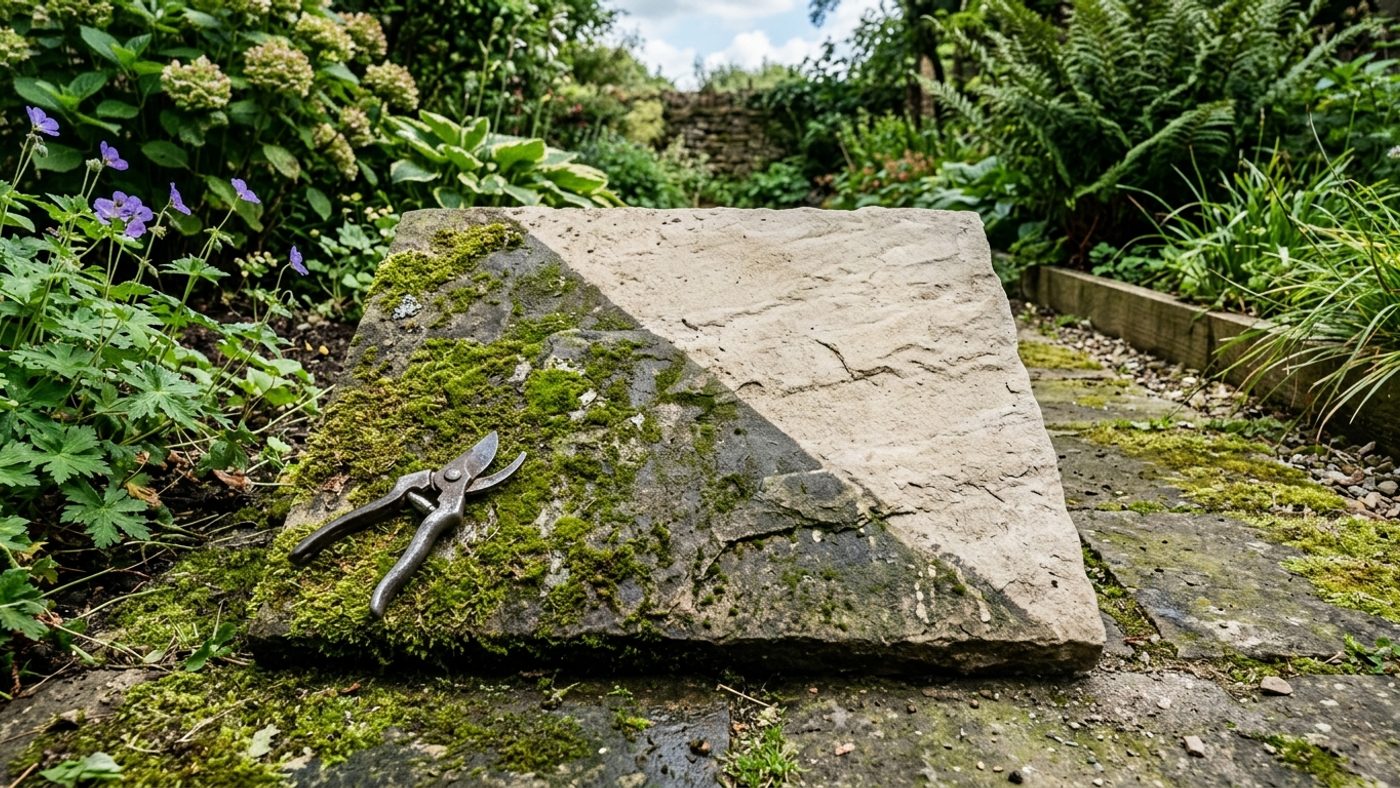
Paving and patio stone. Natural stone and concrete flags tolerate pressure washing well, but keep the jet away from pointing directly into the joints between flags, it will blow out the sand or mortar and leave gaps that need re-filling. Work joints separately with a pointed tool rather than trying to blast them clean.
Garden furniture. Wood furniture follows the same rules as decking, vinegar and brushing over aggressive pressure washing, especially on older or untreated pieces. Rattan and wicker (real or synthetic) don't take well to pressure washing at all: the water forces its way into the weave and is slow to dry out, which encourages more growth rather than less; a stiff brush and diluted vinegar, followed by thorough air-drying, is the safer routine. Plastic and resin furniture is the most forgiving, it can generally take a proper scrub or a pressure wash on a lower setting without damage. Metal furniture cleans up easily with brushing and vinegar, but check for rust forming under any moss patches, in a garden where surfaces rarely get a long enough dry spell to fully dry out, trapped damp against bare or chipped metal is what actually causes long-term damage, not the moss itself.
Fences. Treat fence panels the same way as decking of the same wood type, brushing and vinegar for older or untreated timber, a careful low-pressure wash for younger treated panels, and a periodic re-application of fence treatment or stain to slow regrowth on the shaded side.
What not to do
Don't use bleach. It's sometimes suggested as a quick fix, but it does real damage on two fronts. On wood, bleach breaks down lignin, the compound that holds wood fibres together, which leaves the surface greyed, weakened and more prone to splintering over time, not just discoloured. On stone and concrete it can etch or bleach the surface unevenly. And once it's rinsed off, it doesn't disappear: it runs into the soil and beds around the patio or decking, where it can damage plant roots and harm beneficial soil organisms, the same way any strong chemical treatment applied outdoors can. It's also a hazard to pets that walk across a treated surface and then lick their paws. Whatever you use to clean a hard surface, avoid letting the runoff wash straight into a drain or watercourse rather than soaking away into a bed or lawn, that goes for bleach most of all, but it's good practice with any cleaning product. None of that is necessary when brushing, pressure washing and diluted vinegar do the job without any of the collateral damage.
Don't use a wire brush on softwood. It's fine on stone and hard masonry, but on decking, fences or wooden furniture it tears into the grain, leaving the surface roughened and more absorbent, which, ironically, gives the next round of moss spores an easier surface to grip.
Don't pressure-wash paving joints head-on. Angling the jet straight down into the gaps between flags blows out the jointing sand and leaves the paving loose and prone to weeds establishing in the empty joints.
Keeping it from coming back
Prevention comes down to breaking one of the three things moss needs, damp, shade, or debris to root into. Build these into a seasonal routine rather than a one-off:
- Improve drainage. Check that decking and paving slope slightly so water runs off rather than pooling, in a climate that's already damp and slow to dry, standing water on top of that is what tips a surface from "gets a bit of moss" to "never really dries out." Where puddling is a persistent problem, a shallow gravel-filled channel along the edge can carry water away from the surface.
- Reduce shade where practical. Pruning back overhanging branches and shrubs improves airflow and lets surfaces dry out between wet spells, it doesn't need to be drastic, just enough to stop a permanently damp, still patch forming.
- Clear debris regularly. Sweep leaves, cut grass and general organic litter off decking and paving through autumn and into winter, and keep nearby drains and gutters clear so water isn't backing up onto the surface.
- Re-treat periodically. Oiled or sealed decking, stained fences, and any surface treated with a moss-safe product need reapplication on a schedule, typically annually, rather than once. Treat this the same way as re-oiling a garden bench: routine upkeep, not a failure if moss reappears before the next round.
Kept up over a couple of seasons, this stretches the gap between cleans and keeps each one quicker and lighter than the last, rather than always starting from a full-blown green coating.
Common questions
Is moss on my decking or patio actually dangerous to walk on?
Yes, the main real risk from moss and algae on hard surfaces is slipping, especially when wet. It doesn't damage the wood or stone underneath by itself, but a slick coating on steps or a sloped path is a genuine hazard worth clearing for that reason alone.
How often will I need to clean moss off decking in Scotland?
There's no fixed interval, it depends on how shaded and damp the spot is. As a rule of thumb, a shaded, north-facing area of decking or paving can need attention twice a year, typically spring and autumn, while a sunnier, more open surface might only need an annual clean.
Can I use a pressure washer on decking without damaging it?
Yes, with care: use a wide fan spray rather than a pinpoint jet, keep the nozzle further back than feels necessary, and test a hidden corner first. Older, untreated or already-weathered softwood is more vulnerable to splintering than newer treated boards, so favour brushing and vinegar on decking that's past its best.
Is white vinegar strong enough to actually kill moss, or does it just remove it temporarily?
Diluted vinegar is effective at killing the moss present on treatment, but like every non-chemical method here it doesn't stop new spores settling and regrowing, it needs repeating periodically as part of an ongoing routine rather than a one-time fix.
Why shouldn't I just use bleach if it's cheap and easy to get hold of?
Bleach breaks down the lignin that holds wood fibres together, weakening and greying timber rather than just cleaning it, and it can etch stone unevenly. Once rinsed off it also runs into nearby soil, where it can harm soil organisms and plant roots, and it's a hazard to pets that come into contact with a treated surface.
Will removing moss from my patio also help with moss in the lawn nearby?
No, they're different problems with different fixes. Lawn moss usually points to compacted, poorly drained or shaded turf and is addressed through scarifying and lawn-specific treatment, covered in the separate guide to moss in your lawn; the methods in this guide are for hard surfaces only and shouldn't be used on grass.
Sources
2 sources, recorded with what each was used for
- RHS: Algae and Moss on Hard Surfaces — Prevention and Removal: What causes moss/algae growth on patios, decking and paving; non-chemical removal methods including brushing and pressure washing; prevention advice on drainage, shade and debris clearance
- Garden Organic: Are weed killers safe?: The general principle that chemical treatments applied outdoors can leach into soil and harm beneficial soil organisms, informing the caution against bleach runoff