
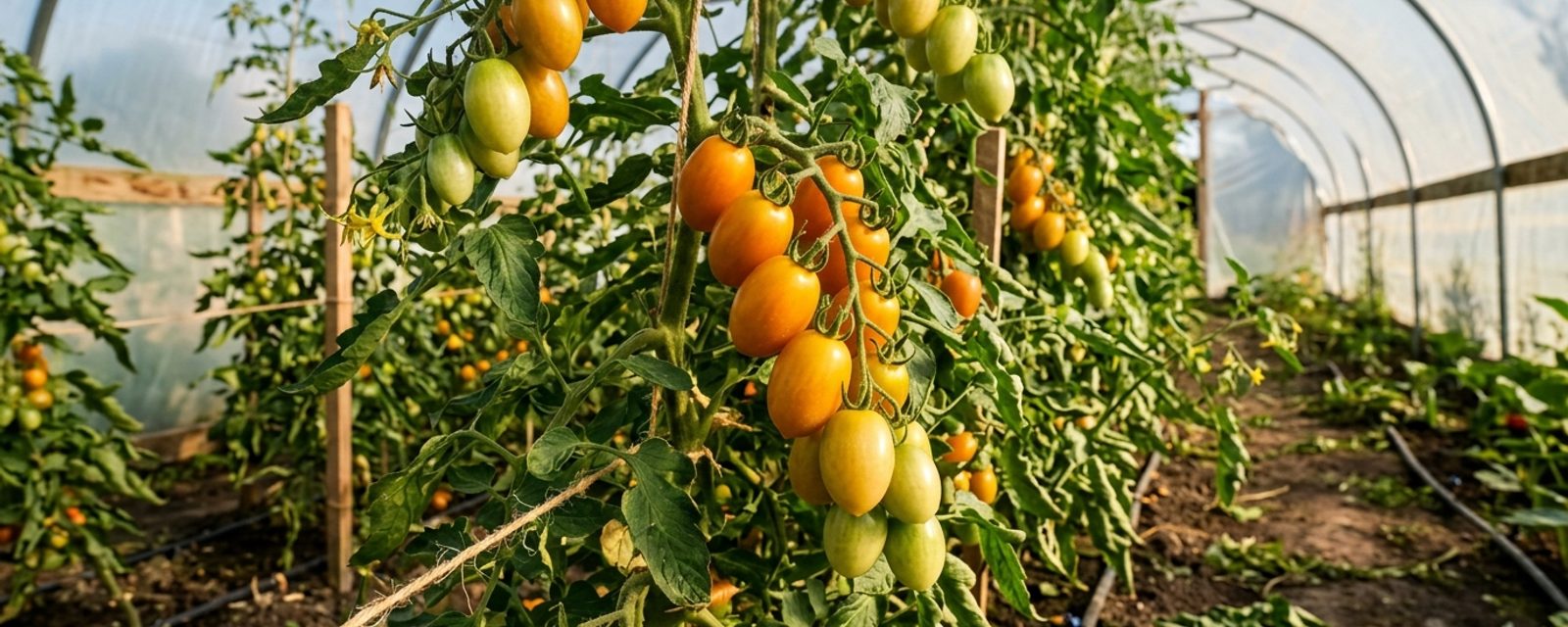
Look out the window in late July or early August and you'll know the moment: leaves on the outdoor tomatoes have gone from healthy green to blotched brown almost overnight, stems are blackening, and the fruit that hasn't already turned to mush is sitting there green and stubborn, weeks from ripe. That's tomato blight, the same fungus-like pathogen that hits potatoes, and it needs nothing more than damp air and mild temperatures to spread, the conditions a wet Scottish spell provides on cue. The plants under cover a few metres away, meanwhile, are often untouched. Before deciding a whole crop has failed, it's worth asking a more specific question than "which tomato is best", which tomato is best for where you're actually growing it.
Quick answer
Sungold remains the best all-round choice for most Scottish growers, ripening earliest and reliably whether grown under cover or outdoors in a sheltered spot. On an exposed, open outdoor plot with no polytunnel or greenhouse, Legend or Crimson Crush are the better answer, both carry documented blight resistance that Sungold's page doesn't claim.
Prefer answering a couple of quick questions instead of reading the full comparison? Try the Variety Selector tool.
Why outdoor tomatoes need a different shortlist
The question that actually matters for anyone growing outdoors in Scotland: which varieties are actually documented as blight-resistant, and does that line up with the varieties everyone recommends by default?
It often doesn't. Tomato blight is a real outdoor threat that occurs "rarely in a greenhouse", which is really the whole story in one sentence. Rain splashing spores onto leaves is the main route of infection outdoors; a roof over the plants removes most of that risk before you've made a single variety choice. But not everyone has a greenhouse or polytunnel, and for those gardening in the open ground, variety selection becomes the main lever left to pull.
There's also a separate trap worth naming directly: the RHS Award of Garden Merit (AGMThe RHS's Award of Garden Merit: a UK-wide trials award for reliable performance, not a Scotland-specific recommendation. Full definition →), which measures general garden performance across the UK, it is not a blight-resistance rating. Some AGM tomatoes are genuinely well-suited to outdoor growing; others are not, and several of the best-documented blight-resistant varieties don't hold the AGM at all. The two are separate questions, and treating them as the same one is a real risk for anyone planning an outdoor crop.
Where you are within Scotland still decides more than any variety can: outdoor cropping is viable in the Central Belt and the sheltered south-west, marginal further north, and unreliable at altitude, and no variety on this list changes that (see the full growing guide for the regional detail). What variety choice actually controls is a narrower question: given that you're growing outdoors somewhere the season allows it, which plant gives you the best odds against blight specifically.
The comparison: AGM status vs blight resistance
Seven varieties cover the real spread of decisions here: cordonA fruit tree or bush trained as a single main stem with short fruiting side-spurs, usually grown at an angle against a wall, fence or wire. Full definition → (tall, single-stemmed, side-shoots removed all season) vs bush (compact, left to sprawl), ground vs container, AGM vs not.
| Variety | AGM | Habit | Hardiness | Blight resistance | Best suited to |
|---|---|---|---|---|---|
| Sungold | Yes | Cordon | — | Not specifically rated | Under cover or a sheltered outdoor spot; earliest ripener |
| Shirley | Yes | Cordon, 1.5–2.5m | H1CThe RHS's H1a–H7 scale for how much cold a plant can survive outdoors, H1a being tender indoor-only and H7 hardy anywhere in the UK. Full definition → | Good resistance | Greenhouse or sheltered outdoor |
| Gold Nugget | Yes | Compact bush | — | Not specifically rated | Pots and baskets, no side-shooting needed |
| Marmande | Yes | Cordon/columnar, beefsteak | H1C | Not specifically rated | Greenhouse or outdoors, a rare AGM beefsteak suitable outside |
| Legend | No | Bush | H1C | Good resistance | Exposed outdoor plots, no side-shooting |
| Losetto | No | Bushy/trailing | H1C | Some resistance | Containers and baskets in a sheltered position |
| Crimson Crush | No | Cordon | H1C | Good resistance | Exposed outdoor cordon growing |
H1C on the standard hardiness scale means a plant can be grown outside in the summer but isn't hardy through a UK winter, every variety here shares that rating, so it doesn't distinguish between them, but it does confirm none of the seven need anything more than a frost-free summer outdoors.
Sungold: best overall
Earliness works as a form of blight avoidance distinct from genetic resistance: a plant that has largely finished cropping before a wet spell arrives has far less exposed, unripe fruit to lose than one still carrying green trussesThe flowering, then fruiting, stem cluster on a tomato plant; each truss ripens its fruit together. Full definition → into a damp August. That's the case for Sungold, which ripens earliest of any variety on this list. No specific blight-resistance claim is made for it, which matters more on a genuinely open, exposed plot than under cover or against a sheltered wall, a different mechanism from Legend or Crimson Crush's documented resistance below, but a real one, and the reason Sungold still earns the top spot without a blight rating of its own.
Legend and Crimson Crush: best for an exposed outdoor plot
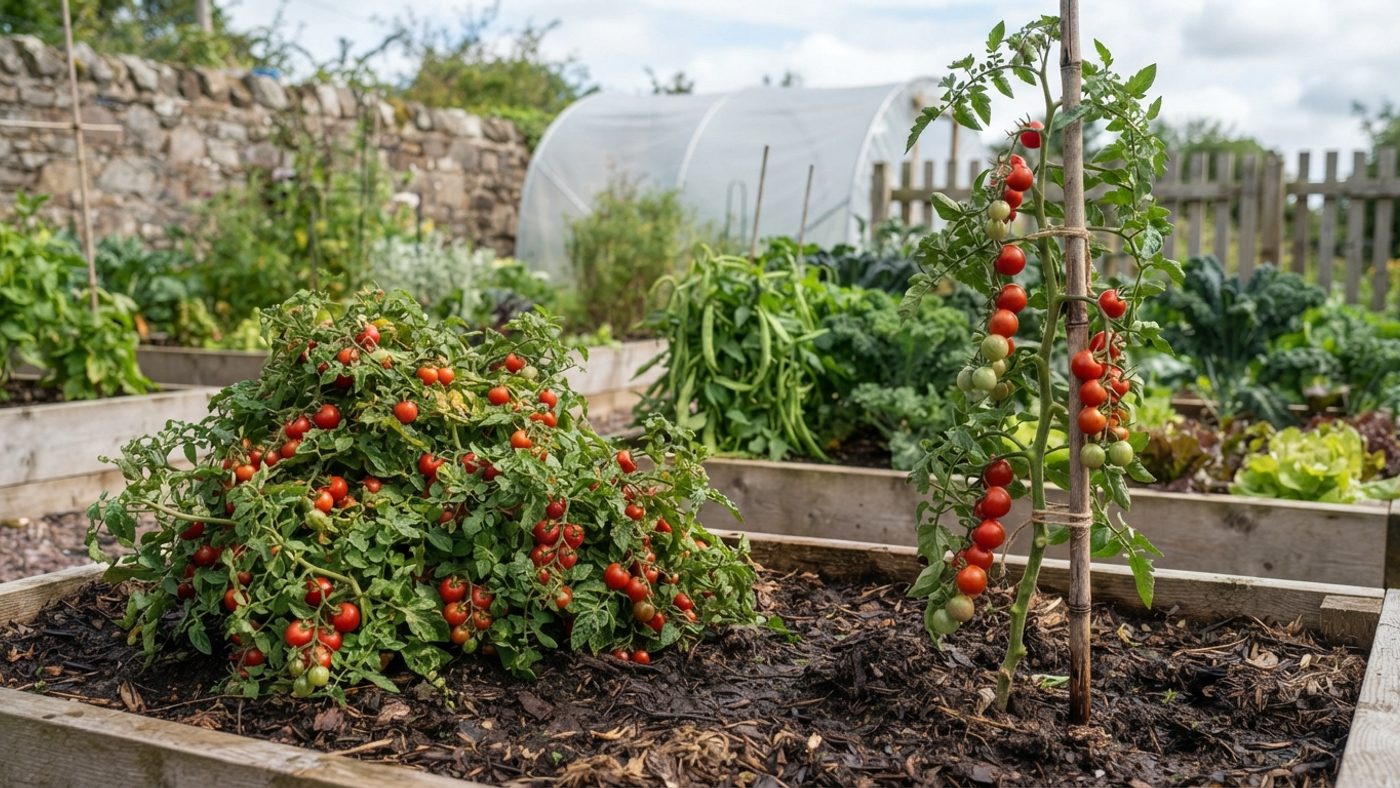
Legend is a bush tomato, no side-shooting required, with "good blight resistance" and described as "great for growing outdoors". It doesn't hold the AGM, which is exactly the point: general garden merit and blight resistance are different questions, and Legend answers the second one better than several AGM varieties do. Crimson Crush covers the same ground for anyone who wants a cordon habit instead of bush, also carrying "good blight resistance", suitable for greenhouse or outdoors, with heavy yields of medium red salad tomatoes.
Between the two, the choice is really about habit rather than resistance: Legend needs no side-shooting and stays compact, Crimson Crush grows tall on a cordon and needs the same staking and stopping the growing guide's instructions already cover.
Pinching Out Tomato Sideshoots: Why It Matters and How to Do It Right → covers the technique itself, telling a sideshoot from a flower truss, and how many trusses a Scottish season actually allows on a cordon like Crimson Crush.
Shirley and Marmande: the AGM varieties that also hold up outdoors
Not every AGM variety leaves outdoor growers exposed. Shirley is one of the few on this list that ticks both boxes, general garden merit and documented blight tolerance, though it can be susceptible to tomato leaf mould and tomato viruses. Marmande is arguably the more interesting find: an AGM beefsteak explicitly listed as suitable for greenhouse or outdoors, which sets it apart from the guide's other beefsteak options (Brandy Boy, Costoluto Fiorentino, Gigantomo), none of which are flagged as outdoor-suitable and which the guide itself notes are the hardest of its AGM list to ripen in a Scottish season. Anyone who wants a proper beefsteak tomato and doesn't have a greenhouse should be looking at Marmande before those three.
Gold Nugget and Losetto: containers, not ground
Gold Nugget and Losetto solve a different problem: growing space rather than blight risk specifically. Losetto's blight tolerance is real but a step down from the "good resistance" language used for Legend, Shirley, and Crimson Crush. Neither variety's container habit does anything to reduce whitefly or red spider mite risk under cover, or aphid and botrytis pressure generally, those risks depend on growing conditions and airflow, not on which pot the plant is in.
Where Gardener's Delight fits: nowhere on this list
Gardener's Delight is a popular cordon cherry tomato prized for flavour, but carries no AGM award and no blight-resistance claim of any kind.
Managing blight risk whatever you grow
Growing in a greenhouse or polytunnel is the single biggest step down in blight risk, because rainfall reaching the leaves is the main way the disease spreads outdoors. For anyone growing outside regardless of variety, watering the soil directly rather than the leaves reduces infection risk further. Once blight does show up, the advice is to remove infected foliage promptly and get rid of it by burying it deep, burning it, or sending it to council green waste collection, never onto the compost heap, since composting doesn't kill the spores and just carries the problem into next year's beds, a real risk on an allotment where the same ground gets replanted year after year. A regional blight forecasting tool, developed for commercial growers but open to anyone, gives advance warning of the damp, mild spells that let it spread, worth checking before a week of Scottish drizzle rather than after the leaves have already blackened.
None of this replaces variety choice, it works alongside it. Blight aside, outdoor and under-cover tomatoes both remain exposed to aphids, whitefly, red spider mite, and botrytis; variety choice here is specifically about blight, not a general disease-proofing strategy.
Soil pH is sometimes floated as another lever for tomato health, but there's no tomato-specific pH figure published anywhere to aim for.
For sowing timing, watering discipline, feeding, pollination under cover, and side-shooting technique, the full growing guide covers all of it in detail.
Common questions
Does the RHS AGM mean a tomato is blight-resistant?
No. The AGM measures general garden performance across the UK and isn't a blight-specific rating. Some AGM varieties, like Shirley and Marmande, also carry documented blight resistance on their own RHS pages; others, like Sungold and Gold Nugget, don't carry a specific blight claim either way.
What's the best tomato for an exposed outdoor plot in Scotland with no greenhouse?
Legend if you want a bush that needs no side-shooting, Crimson Crush if you'd rather grow a cordon, see the comparison above for why.
Is Sungold still worth growing outdoors?
With reasonable shelter, yes. On a fully exposed plot, pair it with the watering precautions above, or choose Legend or Crimson Crush instead.
Can I grow a beefsteak tomato outdoors in Scotland?
Marmande is the strongest option, an AGM beefsteak explicitly listed as suitable for outdoor growing. The guide's other beefsteak varieties (Brandy Boy, Costoluto Fiorentino, Gigantomo) aren't flagged as outdoor-suitable and are noted as harder to ripen in a Scottish season.
Does growing in a pot reduce disease risk?
Not for blight specifically, and not for whitefly, red spider mite, or aphids either, those risks come from growing conditions and airflow rather than container versus ground. Losetto and Gold Nugget are container-suited for space reasons, not disease-resistance reasons.
Sources
10 sources, recorded with what each was used for
- Tomatoes: grow your own: Confirms the 12 AGM tomato varieties and notes blight as an outdoor risk, rare in a greenhouse
- Shirley plant page: AGM, cordon habit, hardiness H1C, good blight resistance, susceptibility to leaf mould and viruses
- Marmande plant page: AGM, beefsteak, cordon/columnar habit, hardiness H1C, suitable for greenhouse or outdoors
- Legend plant page: No AGM, bush habit, hardiness H1C, "great for growing outdoors", good blight resistance
- Losetto plant page: No AGM, bushy/trailing habit, hardiness H1C, some blight resistance, suited to containers
- Crimson Crush plant page: No AGM, cordon habit, hardiness H1C, suitable for greenhouse or outdoors, good blight resistance
- Gardener's Delight plant page: Confirms no AGM, cordon/columnar cherry tomato habit
- Best Tomatoes to Grow: Independently confirms Shirley AGM with good disease resistance and Marmande AGM as suitable outdoors
- How to Solve Tomato Blight Problems: Outdoor tomatoes more exposed to blight than greenhouse-grown ones, watering-soil-not-leaves advice
- Potato and tomato blight: Disposal advice (bury, burn, or council green waste, never compost) and the RHS blight forecasting tool