
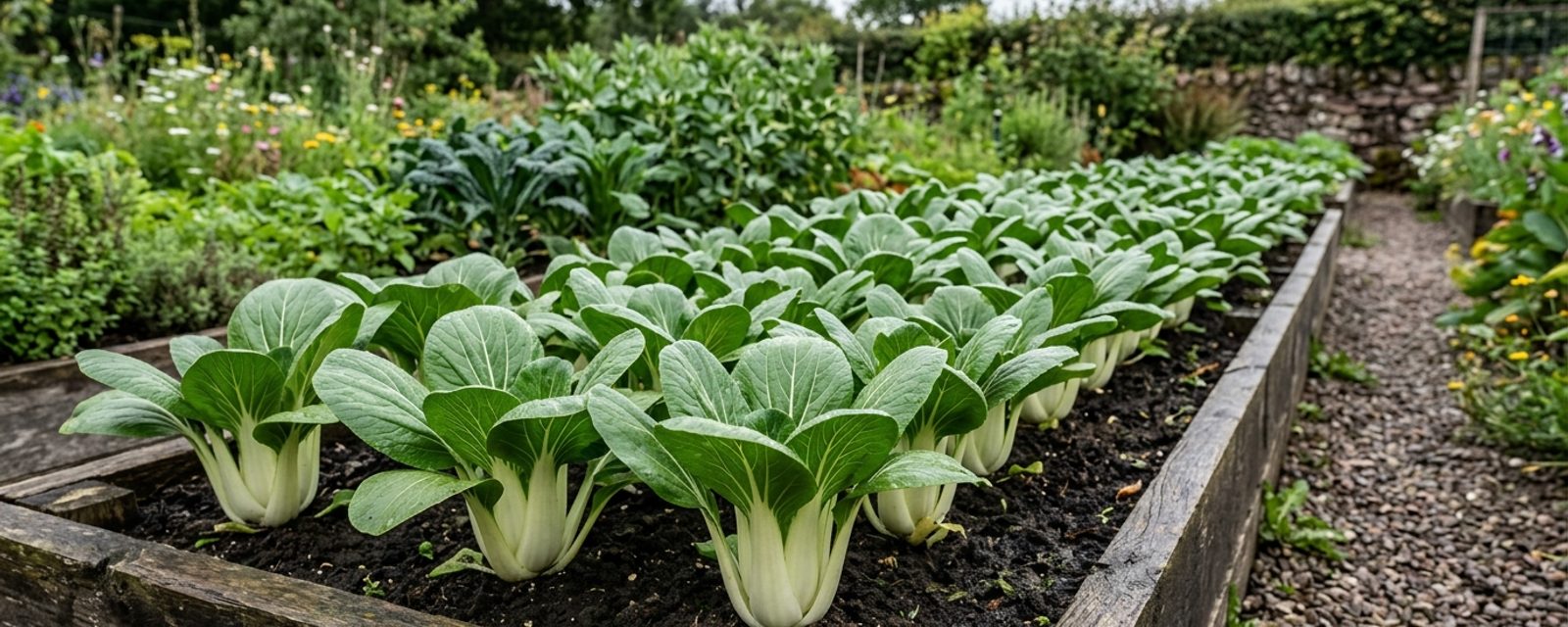
Pak choi has a reputation as a bolter, one hot, dry spell or one check in growth and the whole row runs to flower before you get a harvest. That reputation is largely an England-and-further-south problem. Scotland's cooler, damper summers rarely produce the sustained heat that triggers boltingA plant switching early into flowering and seed production, usually triggered by stress, after which leaves, roots or bulbs turn bitter or unusable. Full page → in the first place, which turns pak choi's biggest weakness elsewhere into a fairly minor risk here. The variety you choose still matters, though, not because Scottish growers need heavy bolt-resistance the way southern growers do, but because the four RHS-recognised varieties worth growing here differ in cold-hardiness, disease exposure, and what they actually look and taste like on the plate.
Quick answer
Glacier is the best overall choice for Scotland, it's the hardiest of the four (H5The RHS's H1a–H7 scale for how much cold a plant can survive outdoors, H1a being tender indoor-only and H7 hardy anywhere in the UK. Full definition →, down to -15°C) and is described as bred to suit the British climate specifically, with slower bolting and a longer cropping season. Summer Breeze is worth choosing instead if you're pushing a crop through an unusually warm or dry patch, since its own page specifically calls out heat resistance. Red Choi is the pick if you want a genuinely different-looking crop, deep red-purple leaves rather than green, and don't mind slightly closer attention to watering.
Why bolt-resistance matters less here than the marketing suggests
Bolting in pak choi and its relatives is driven by heat, warm nights (the threshold is nights averaging above 10-13°C), drought, or the lengthening daylight of high summer. A Scottish summer rarely delivers the first two, the lengthening-daylight trigger still applies at this latitude regardless of temperature, though, so a cold snap or a dry spell can still tip a plant into bolting even without a heatwave. For the full mechanics and prevention steps, see the pest page on bolting; for sowing dates, spacing, and harvest timing, see the full growing guide.
Slug pressure is the other main risk named for pak choi in Scotland, and it isn't something these four varieties' own pages differentiate on, none of the four singles out slug resistance as a trait. The defence is the same regardless of variety: morning watering, moduleA tray divided into small individual cells, each sown with its own seed or seedling, so each plant grows undisturbed roots until it's ready to plant out. Full definition →-raising, or growing in a large pot or trough off the ground, all covered in the full growing guide and the slugs pest page.
The four RHS-recognised varieties compared
All four carry, or are linked to, the RHS Award of Garden Merit (AGMThe RHS's Award of Garden Merit: a UK-wide trials award for reliable performance, not a Scotland-specific recommendation. Full definition →), the mark of a variety judged to perform reliably in UK trials. The "own page" column below shows where that award is confirmed and where it isn't. Hardiness runs on the standard H-scale, where a higher number tolerates a harder frost: H5 survives severe UK winters, H3 only a mild one.
| Variety | AGM on own page? | Hardiness | Bolt / heat / cold trait | Disease susceptibility |
|---|---|---|---|---|
| Glacier | Yes | H5 (to -15°C) | Bred for the British climate; slower to bolt, long cropping season | Downy mildew, white blister, club rootA soil-borne fungal disease of the brassica family that swells and distorts roots, and survives in soil for years. Full definition → |
| Summer Breeze | No (AGM on general page only) | H3 (to -5°C) | Good resistance to heat and cold | Powdery mildew only |
| Choko F1The first-generation offspring of two specific, deliberately chosen parent plants, bred for a predictable, uniform result but not worth saving seed from. Full definition → | No (AGM on general page only) | H3 (to -5°C) | Tolerates warmer weather; sow May-Aug, harvest Jun-Oct | Black rot, club root, downy mildew, grey mould, leaf spot |
| Red Choi | Yes | H3 (to -5°C) | "Keep well-watered to avoid bolting" | Flea beetle, aphids, caterpillars, whitefly, cabbage root fly, club root, powdery mildew, downy mildew |
Glacier and Red Choi carry the AGM on their own individual plant pages, no ambiguity. Summer Breeze and Choko F1 are both listed as AGM on the general pak choi grow-your-own summary page, but neither variety's own individual plant page displays the award.
Best overall: Glacier
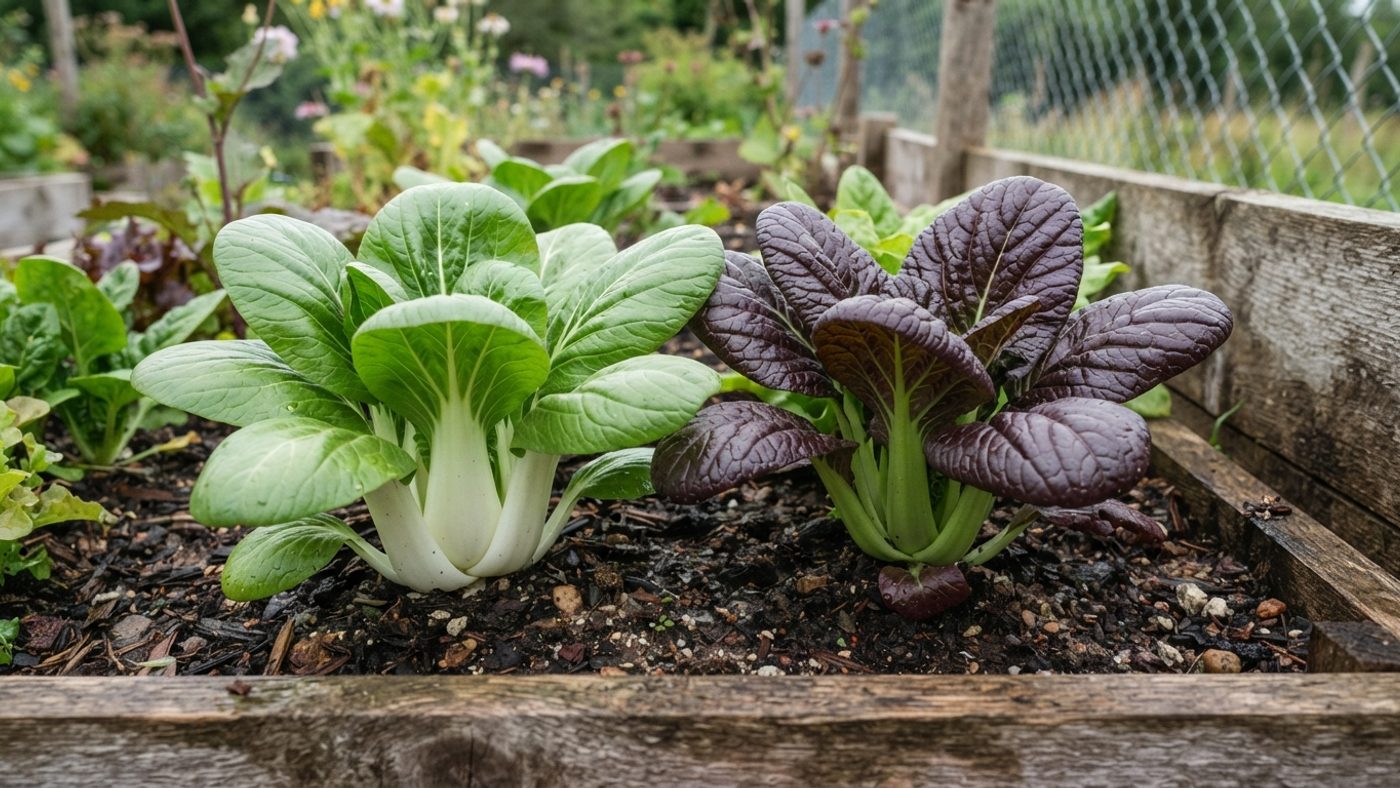
Glacier is the strongest all-round choice for Scotland. It's described as "bred to suit the british climate," with slower bolting and a longer cropping season than typical pak choi, and it carries an undisputed AGM on its own page. Its H5 hardiness rating (down to -15°C) is the highest of the four, which matters less for surviving a Scottish winter outright, pak choi here is a spring-to-autumn crop, not an overwinteredKeeping a plant alive and intact through the cold months, whether left outdoors, moved under cover, or stored dormant. Full definition → one, and more for how far a late, protected sowing can be pushed under clocheA small, portable clear cover placed over an individual plant or short row to trap warmth and keep off wind, rain and pests. Full definition → or fleeceA lightweight, breathable fabric laid or draped over plants to trap a little warmth and keep off frost, wind and some flying pests. Full definition → into a cold autumn, extending the cropping window the growing guide already describes. Its disease list, downy mildew, white blister, and club root, is worth weighing against Scotland's generally damp summers, since downy mildew and white blister are both moisture-driven diseases that a wetter climate makes more likely to show up. Choko F1 shares two of those same moisture-driven diseases (downy mildew and grey mould), so that's a consideration for both varieties, not just Glacier, while Summer Breeze and Red Choi's own pages don't name white blister or grey mould at all. For clubroot risk generally, including which brassicaThe cabbage family: cabbage, kale, broccoli, cauliflower, Brussels sprouts, kohlrabi, swede, turnip and more, sharing the same pests, diseases and rotation rules. Full definition → rotations reduce it, see the clubroot pest page.
When a different variety wins
Summer Breeze, if you're specifically worried about a hot or dry stretch, or want the lowest disease exposure of the four, it's the only one whose own page names no damp-driven disease at all.
Red Choi, if colour and variety in the plot matter to you. Its leaves are dark red to purple on top with green undersides over fleshy green stems, a genuinely different plant on the plate, not just a marketing variant. The trade-off is that its own cultivation note specifically flags watering, "keep well-watered to avoid bolting", a more direct, variety-specific instruction than the general crop guidance offers, so treat consistent watering as slightly more important with this one.
Choko F1, mainly for its stated sowing/harvest window: its own page gives a narrower direct-sow window (May-August, harvesting June-October) than the crop's general February-to-October range, which may suit gardeners planning a single well-timed summer sowing rather than successive batches. Its pest list also names birds specifically, alongside the usual brassica pests, see the pigeons pest page for netting advice.
The club root gap between the crop page and the variety pages
The general pak choi grow-your-own page doesn't list club root among the crop's risks, and the growing guide follows that same crop-level framing, pak choi is often treated as relatively free of it compared with other brassicas. But as the table above shows, three of the four named varieties here (Glacier, Choko F1, Red Choi) do list club root susceptibility on their own individual plant pages; only Summer Breeze's page omits it. Gardeners with known club root in their soil should weigh that variety-level listing over the crop-level summary. See the clubroot pest page for rotationMoving each crop family to different ground each year, on a multi-year cycle, so pests and diseases that build up in soil don't get a repeat host. Full definition → and management advice.
Soil pH
Neither the four varieties' pages nor the general pak choi grow-your-own page publish a specific pH range for the crop. NC State Extension's Plant Toolbox, a US university extension source, gives an optimal soil pH of 6.0-7.5 (neutral to slightly alkaline) for Brassica rapa (Chinensis Group). Garden soil pH varies considerably from plot to plot, so a simple test is worth doing before assuming this figure applies unadjusted, lime brings acidic soil up towards neutral if a test shows it's needed.
Common questions
Is pak choi likely to bolt in a Scottish garden?
Less often than further south, but not never, the full trigger list is heat, warm nights, drought, lengthening daylight, and transplant shock.
Which pak choi variety has the RHS Award of Garden Merit?
Glacier and Red Choi both carry it directly on their own individual plant pages; Summer Breeze and Choko F1 carry it only on RHS's general pak choi summary page.
Is pak choi at risk from club root in Scotland?
Three of the four varieties here list club root on their own RHS plant pages, even though pak choi as a crop is generally treated as lower-risk for it than other brassicas.
What's the difference between Glacier and Summer Breeze?
Glacier is rated hardier (H5 vs H3) and is described as bred specifically for the British climate with slower bolting. Summer Breeze's own page emphasises resistance to both heat and cold and has the shortest disease list of the four. For most Scottish gardens, Glacier's hardiness makes it the safer default; Summer Breeze is worth choosing if you're specifically growing through a warm spell.
Does Red Choi taste different from green pak choi varieties?
Its own description covers appearance rather than flavour, noting fleshy green stems and paddle-shaped leaves with dark red to purple upper surfaces and green undersides. The documented difference is visual and textural, not a flavour claim.
Sources
7 sources, recorded with what each was used for
- How to grow Pak choi: General crop guidance, and the source for the AGM listing on Summer Breeze and Choko F1
- Bolting: Heat/warm-night/drought/day-length triggers, the 10-13°C night-temperature threshold
- Brassica rapa (Chinensis Group) 'Glacier': AGM confirmation, hardiness rating, bolt-resistance description, pest/disease list
- Brassica rapa (Chinensis Group) 'Summer Breeze': Hardiness rating, bolt/heat/cold description, pest/disease list; confirms no AGM badge on this page
- Brassica rapa (Chinensis Group) 'Choko F1': Hardiness rating, sowing/harvest window, pest/disease list; confirms no AGM badge on this page
- Brassica rapa (Chinensis Group) 'Red Choi': AGM confirmation, hardiness rating, appearance description, watering-to-avoid-bolting instruction, pest/disease list
- NC State Extension Gardener Plant Toolbox: Secondary (non-RHS) soil pH figure only