
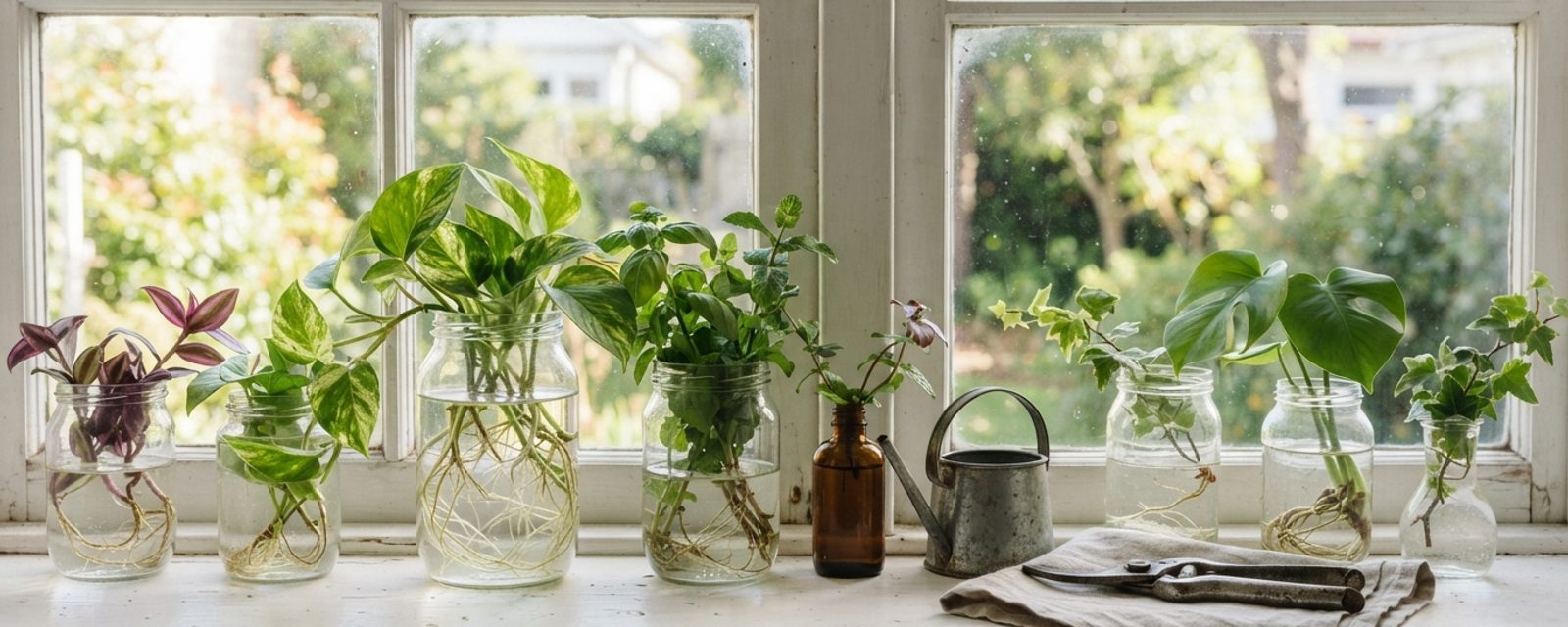
There's a jar on most windowsills that's been there longer than anyone means it to be. A pothos cutting went in back in spring, roots showed up within a couple of weeks, and then it just... stayed. Six months on, the roots have gone from a few pale threads to a tangled white knot pressed against the glass, and the plant has never once seen soil. This is the most common way this technique actually plays out, and it's also where it usually goes wrong: not at the rooting, which is often the easy part, but at the point that comes right after it, the one that keeps getting put off.
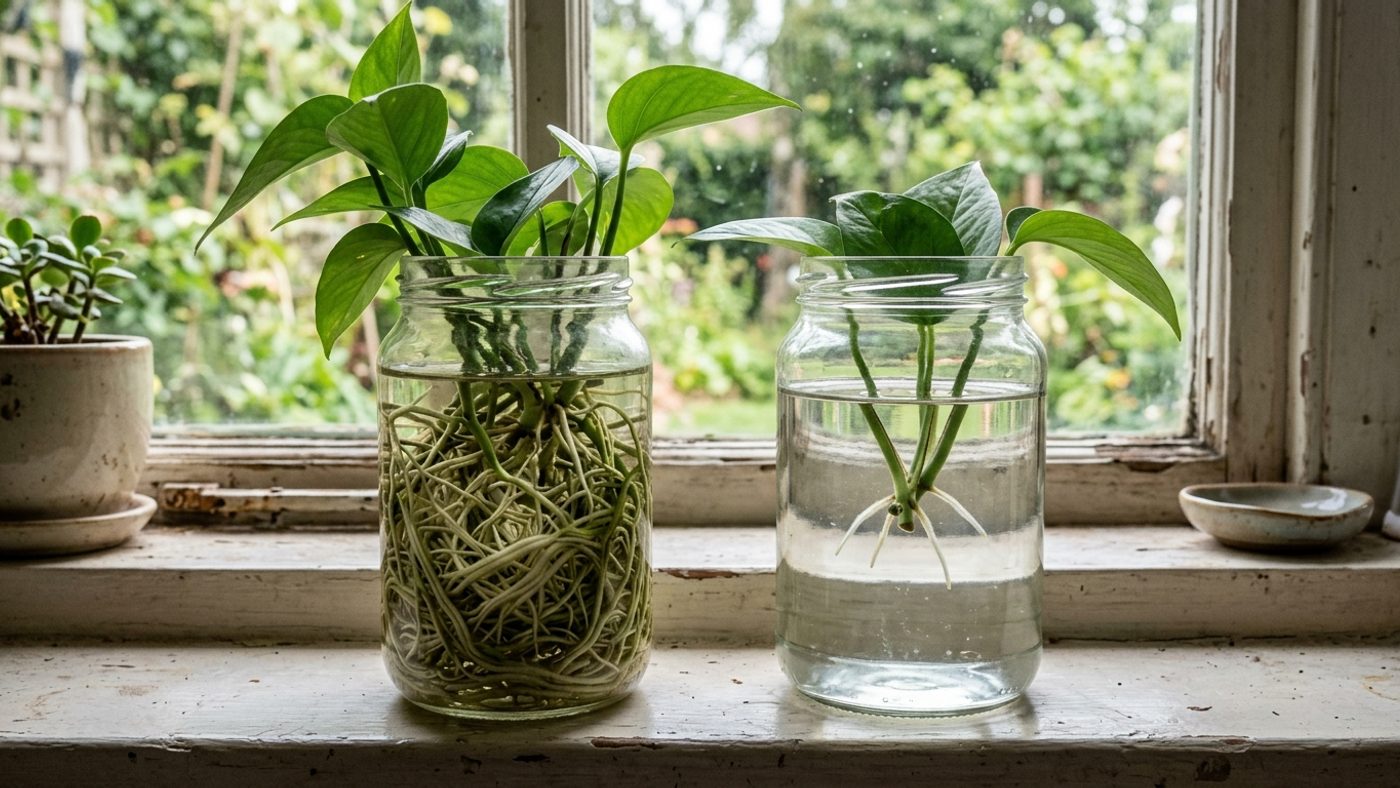
Rooting cuttings in water is a genuinely good technique for a real, specific range of plants. It isn't a shortcut that works for everything, and the plants it doesn't suit fail for a clear reason rather than bad luck. Knowing which is which, and not leaving a rooted cutting in its jar for months past the point it should have moved on, is most of what separates a jar of houseplants that's forever "getting round to" being potted from one that's actually growing.
Which cuttings actually take to a jar of water
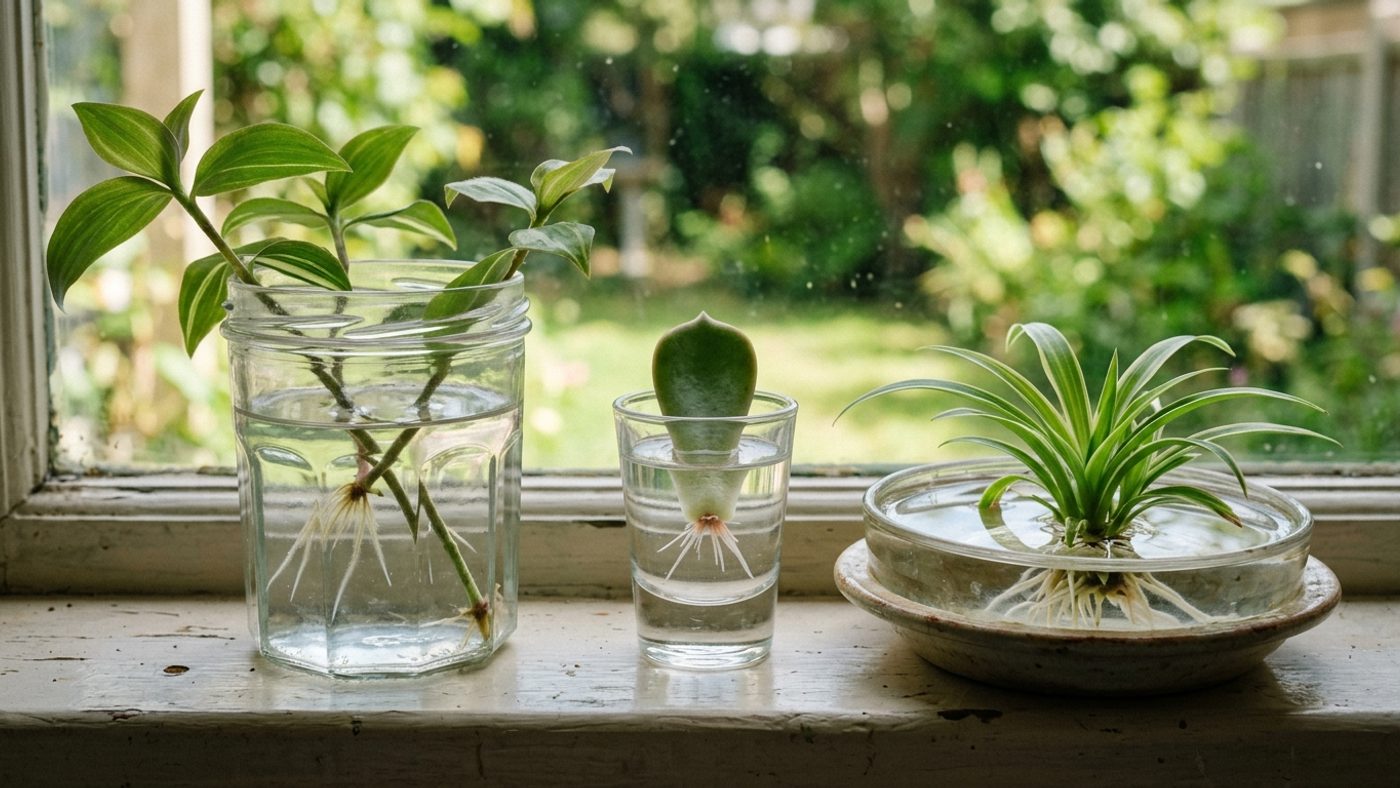
Water rooting isn't one method, it's really three, depending on what part of the plant goes in the jar. Most familiar is a stem cutting with a node, the small swelling where a leaf joins the stem and where new roots form: Epipremnum (pothos) is the plant most associated with this, and it earns the reputation, its own growing guide gives stem cuttings placed in water until roots develop as a standard method, alongside layeringPropagating a new plant by pinning a low, flexible stem into the soil while still attached to the parent, so it roots before being cut free. Full definition → directly into compost. Heptapleurum (umbrella tree) roots the same way. Basil follows an almost identical routine: its own growing advice describes snipping a non-flowering shoot just below a leaf, removing the lower leaves, and standing it in a jar of water, where it quickly forms roots and can be potted into peat-freeCompost made without peat, which is harvested from a slow-forming, carbon-storing wetland habitat that peat extraction damages. Full definition → compost within a few weeks, compost cuttings work too, but water is given as the lead method. Mint is just as reliable, its own growing advice states plainly that stems placed in a jar of water will soon produce roots, on top of the more usual softwood-cutting and rhizome-divisionPropagating a clump-forming perennial by digging it up and splitting it into several smaller pieces, each with roots and shoots attached. Full definition → methods.
A second route is the leaf cutting: Crassula (jade plant) is propagated by removing a whole leaf and either resting it on the surface of a pot of compost, or, just as the growing guide notes, standing it "in a small amount of water," where it develops its own roots before ever being potted. A third route doesn't involve cutting a stem or leaf at all: Chlorophytum (spider plant) produces small plantlets on runnersLong, trailing stems a plant sends out that root where they touch soil, producing a genetically identical new plant for free. Full definition →, and these can simply be snapped off and floated on a shallow plate of water until roots appear, an offset rather than a cutting in the usual sense, but the same jar-of-water principle.
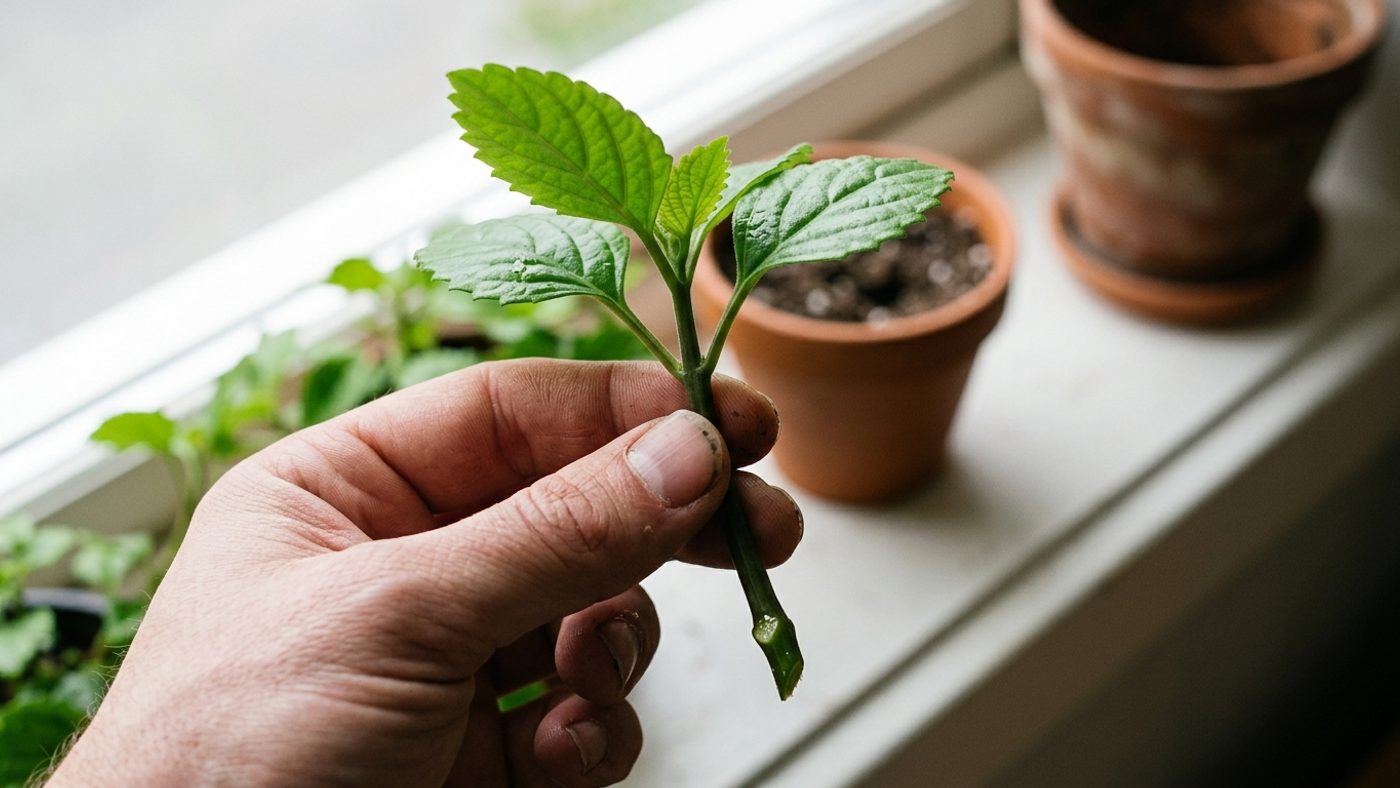
Tomatoes are a genuine, if less obvious, entry on this list, specifically the side-shoots that grow from cordonA fruit tree or bush trained as a single main stem with short fruiting side-spurs, usually grown at an angle against a wall, fence or wire. Full definition → (single-stem, tall-staked) varieties at the joint between leaf and main stem, the growth most gardeners know as suckersA shoot that grows from a plant's roots or lower trunk, separate from the main framework, usually removed before it diverts energy. Full definition → and remove weekly by pinching outRemoving the soft growing tip of a stem to stop upward growth and make the plant branch out sideways instead. Full definition →. Bush tomatoes don't produce them in the same way and don't need this at all. Those pinched-out shoots get thrown away regardless, since a cordon tomato left to keep them turns into a sprawling mass of stems that crowds out fruit, so rather than composting a healthy one, a shoot 10–20cm long can go straight into a glass of water on a bright windowsill instead. A strong root system typically develops in three to four weeks. It's a genuinely free extra plant from material that was getting thrown away anyway, worth doing early in the season while there's still enough summer left for a late plant to actually crop before autumn, less useful from a side-shoot pinched out in August.
Not everything that looks like a candidate is one. Hardwood cuttings, the classic method for willow, roses, currants, gooseberries, forsythia and viburnums, use dormant, woody stem sections taken in the cooler months, and every one of those plants is propagated into soil or a soil/grit mix with a hormone rooting compound, not water. Two frost-tender bedding plants follow the same pattern: pelargonium and fuchsia growing advice both describe softwood cuttings rooted in trays of peat-free compost, with no mention of water at all. That doesn't mean a cutting of either would fail in water, plenty of gardeners try it anyway, but it does mean water isn't the documented, reliable route for them the way it is for pothos, basil, mint or tomato side-shoots.
Coleus is a genuine middle case rather than a confirmed yes or no. It has the same soft, actively growing stem and frequent leaf nodes as the water-rooters above, and its own growing guide confirms it's propagated "by seed or cuttings" without specifying a method for the cuttings, so there's no documented water-versus-compost answer here, only the family resemblance to plants that do root in water.
| Plant / group | Roots well in a jar of water? | Why |
|---|---|---|
| Pothos, Heptapleurum, basil, mint | Yes | Stem cuttings with nodes; each named as a water-rooting method on its own growing guide |
| Crassula (jade plant) | Yes, as a leaf cutting | A whole leaf roots standing in a small amount of water, not a stem cutting |
| Chlorophytum (spider plant) | Yes, as a plantlet | Runner plantlets floated on water, not a cutting in the usual sense |
| Tomato side-shoots (cordon varieties) | Yes | Documented method: 10–20cm shoot, roots in 3–4 weeks |
| Coleus | Likely, but undocumented | Same soft-stem, frequent-node profile; no method specified either way |
| Pelargonium, fuchsia | Not the documented method | Growing advice describes compost-rooted softwood cuttings only |
| Willow, roses, currants, gooseberries (hardwood cuttings) | No | Dormant woody stems root in soil or grit with rooting hormone, a different technique entirely |
Willow is worth a specific word here, since it has a folk reputation as the plant that roots in literally anything. It's an exceptionally vigorous rooter, and the source of a home-made rooting-aid brew some gardeners steep from its twigs and use on other cuttings. But the documented propagation method for willow, on its own growing advice, is a softwood cutting taken in early summer or a hardwood cutting taken in winter, both going into the ground or a pot of compost, not a jar, so that's the reliable route to reach for even though a willow whip left in a bucket of water might well take too.
Why some cuttings rot instead of rooting
The reason the plants above succeed in water and the woody, dormant ones don't comes down to what each type of tissue is set up to do. A node on a leafy, actively growing stem, or a fleshy leaf like Crassula's, is already primed to produce new roots quickly, given water, oxygen and light. A dormant, woody hardwood cutting doesn't have that same active growth to draw on, which is why its own propagation method pairs it with a rooting hormone compound and a free-drainingSoil that lets water pass through quickly rather than pooling, so roots aren't sitting in wet ground after rain. Full definition → soil or grit mix rather than a simple jar: without that helping hand, and without the drainage a jar can't provide, hardwood material is more prone to sitting wet and rotting before it produces a root. The same hormone dip is sometimes used to help a marginal soft-stemmed cutting along too, though it isn't usually necessary for the reliable water-rooters above.
That rot risk isn't limited to hardwood cuttings, either. Even the compost-based softwood method used for fuchsias and pelargoniums carries an explicit warning to check cuttings for dead, rotting or diseased material at least weekly while they're propagating, since soft plant material loses moisture and breaks down quickly in a humid environment. The same hygiene logic applies to a jar: water that's gone cloudy, developed a slimy build-up at the base, or turned green with algae after weeks in a bright spot is a sign to tip it out and refresh it, for the same reason a propagator gets checked over regularly, not because there's a fixed schedule to follow. It's not only a hygiene step: submerged roots draw down the oxygen dissolved in still water as they use it, so a change of water re-oxygenates the jar as much as it cleans it, and stale, oxygen-depleted water is part of why roots left too long without a change can stall or start to rot rather than keep growing.
Why water-rooted cuttings sometimes struggle after potting
This is the part the windowsill jar habit tends to skip past. Roots left in water for months longer than they need to were built for growing in water, soft, and not yet adapted to pushing through the resistance and lower, patchier moisture of actual soil. Moving from a jar into a pot is a real adjustment for those roots, not a formality, which is exactly why the standard advice for newly potted cuttings, houseplant or otherwise, is to go easy on watering at first: new roots are vulnerable to rotting before they're properly established in their new medium, the opposite problem to the one they had in the jar, but a real one all the same. There's no need to feed a cutting while it's still rooting in plain water, it's going into nutrient-bearing compost within weeks regardless; a feed only becomes worth starting once it's potted and growing on.
Potting a cutting once its roots reach a modest length, rather than leaving it to develop a solid tangled mass over many months, makes that adjustment easier: the whole root system has to make the same transition to soil regardless of how large it's grown, and a smaller, younger one does it with less to lose if part of it struggles. Good soil contact around the roots in a properly sized pot, rather than an oversized one, and a fortnight of light, consistent watering and gentler light while the roots settle in, cover the rest of it.
Technique: from cutting to potted plant
Taking the cutting
For most houseplants, a stem cutting of around 8–10cm is the standard length, cut cleanly just below a leaf joint. Strip off the lower leaves so nothing sits below the waterline, since submerged foliage rots and fouls the water, and leave just two or three leaves at the top. Take two or three cuttings rather than one if the plant can spare them, since not every cutting takes, and it costs nothing to have a backup rooting alongside the one you actually want.
The jar and the water
Any clear glass or jar works, and clear glass has the advantage of making root development easy to check without disturbing the cutting, though it also lets in enough light to grow algae in the water after several weeks, worth a rinse and fresh water if that starts happening. Keep the water level just below the remaining leaves, submerging at least one node, and site the jar somewhere bright but not in direct sun, which can scorch a cutting that has no root system yet to draw on if it starts to dry out. Pothos is the one exception worth knowing on water itself: its own growing guide recommends rainwater or filtered water over hard tap water, since the lime in hard water works against the slightly acidic compost this plant prefers once potted; ordinary tap water suits everything else here.
How long it takes, and when to pot on
| Cutting | Length / material taken | Typical time to root | Pot onMoving a plant into a larger pot as its roots fill the current one, giving it more room and fresh compost before it becomes pot-bound. Full definition → into |
|---|---|---|---|
| Pothos, Heptapleurum, basil | 8–10cm stem cutting | A few weeks (basil often 7–10 days to first roots) | 8–10cm pot, peat-free multipurpose compost |
| Mint | 8–10cm stem cutting | Often quick, no fixed figure given | 8–10cm pot, peat-free multipurpose compost |
| Crassula | Single whole leaf | No fixed figure given | Small pot, peat-free compost |
| Chlorophytum | Runner plantlet | No fixed figure given | Small pot, peat-free compost |
| Tomato side-shoots | 10–20cm shoot | 3–4 weeks | 10cm pot, peat-free multipurpose compost |
Pot on once roots reach a few centimetres and, ideally, new top growth has started: firm the compost gently around the roots so there are no air pockets, water in, then keep the compost lightly moist and out of strong direct sun for the first week or two.
Does Scotland's climate make a difference here?
Mostly not. Rooting a cutting in a jar on a windowsill is an indoor technique start to finish, and there's nothing in how pothos, basil, mint or tomato side-shoots root in water that changes between a Scottish windowsill and any other; the room's own warmth matters more than the weather outside the glass.
Light is the one place worth a second look, since Scottish winter daylight genuinely is shorter and duller than further south: even Scotland's sunniest coasts, Fife and East Lothian, average under 1,500 hours of sunshine a year, falling below 1,100 hours over the Grampians, against over 1,750 hours a year on the south coast of England. A cutting rooting for weeks on a dim winter windowsill is more likely to put on weak, pale, stretched growth reaching for the light than one rooted in a genuinely bright spot, the same stretching any houseplant shows in poor winter light. It isn't a reason to avoid rooting cuttings over winter, but a consistently bright windowsill matters more here than it would further south.
The other genuine difference is timing rather than light. Taking cuttings from tender bedding plants like pelargoniums and fuchsias in late summer or autumn, specifically to carry the plant through winter since it won't survive a frost outdoors, roots those cuttings in compost rather than water, as covered above, but the same seasonal logic applies once a rooted cutting is hardened offGradually getting young plants raised indoors used to outdoor conditions over 7–14 days before planting out, so cold, wind and direct sun don't shock or damage them. Full definition → and moved back outside the following year: pelargonium's own growing guide gives the safe planting-out date as the end of May across most of the UK, but not until early-to-mid June in Scotland. A cutting nursed through a Scottish winter needs those extra weeks in its pot, somewhere frost-free, before it goes out. For the fuller regional picture on frost timing, see our Scotland frost dates page.
Common questions
Can any cutting be rooted in water?
No. It works reliably for soft-stemmed, actively growing plants with visible nodes, such as pothos, basil, mint and tomato side-shoots, and for a few other structures, jade plant leaves and spider plant runners among them, that root the same way even though they aren't stem cuttings. Woody, dormant material like hardwood cuttings is documented to root in soil with a rooting hormone instead, and pelargoniums and fuchsias are conventionally rooted in compost too. Trying water on something outside that range isn't dangerous, but it isn't the reliable route either.
How do I know when a water-rooted cutting is ready to pot up?
Once the roots are a few centimetres long and, ideally, new top growth has started. A dense, tangled mass of roots, a common windowsill habit, isn't a sign to wait longer, it's a sign the cutting was ready weeks ago.
Why did my cutting rot instead of growing roots?
Usually stagnant water, often from leaves left submerged below the waterline, or a cutting taken from material that was already stressed or damaged. Strip off any leaves that would sit under the water, and refresh the water if it turns cloudy, slimy or green.
Can I leave a plant growing in water permanently instead of potting it into soil?
Some houseplants can live in water long-term, but most eventually do better potted into soil, where they can draw on nutrients a jar of plain water doesn’t supply. Small, pale new leaves after the first flush of growth are usually the plant asking to be potted on rather than left longer in water.
Does the type of water matter?
For most of the plants here, ordinary tap water is fine. Pothos is the exception worth knowing: its own growing guide recommends rainwater or filtered water over hard tap water, since tap water's lime content works against the slightly acid compost this plant does best in once potted.
For the specific crops named here, see our full growing guides for mint, basil and tomatoes.
Sources
13 sources, recorded with what each was used for
- RHS: How to Take Cuttings from Houseplants: General stem-cutting technique and water-rooting method; Crassula leaf-in-water propagation; Chlorophytum plantlet-in-water propagation; Heptapleurum as a stem-cutting water-rooter; cutting length and water level
- RHS: Epipremnum Growing Guide: Pothos's water-rooting propagation method, and the rainwater/filtered-water-over-hard-tap-water recommendation
- RHS: How to Grow Mint: Mint's explicit water-rooting statement, alongside its softwood-cutting and rhizome-division methods
- RHS: How to Grow Basil: Basil's water-rooting cutting method and timing
- RHS: Propagation Techniques: General softwood-cutting hygiene practice (checking for rot/disease at least weekly)
- RHS: Softwood Cuttings: Fuchsia named among plants rooted from softwood cuttings in compost, with the rot/wilting hygiene warning
- RHS: Hardwood Cuttings: Willow, roses, currants and gooseberries as hardwood-cutting plants; rooting hormone, soil/grit medium, and dormant-season timing
- RHS: Pelargonium Growing Guide: Softwood-cuttings-in-compost propagation method, and the Scotland-specific safe planting-out date
- RHS: Coleus scutellarioides: Confirms propagation "by seed or cuttings" without specifying a method, the basis for treating coleus as undocumented rather than guessed
- RHS: How to Grow Tomatoes: Cordon vs bush side-shoot behaviour and terminology (suckers, pinching out)
- Gardeners' World: How to Grow Tomato Plants from Cuttings: Tomato side-shoot water-rooting method, cutting length, 3–4 week rooting timeline, and potting into 10cm pots
- Gardeners' World: How to Grow Willow: Willow's documented propagation method (softwood/hardwood cuttings into soil, not water)
- Met Office: Eastern Scotland Climate: Regional sunshine-hours data behind the winter-light/etiolation discussion, and the south-of-England comparison figure