
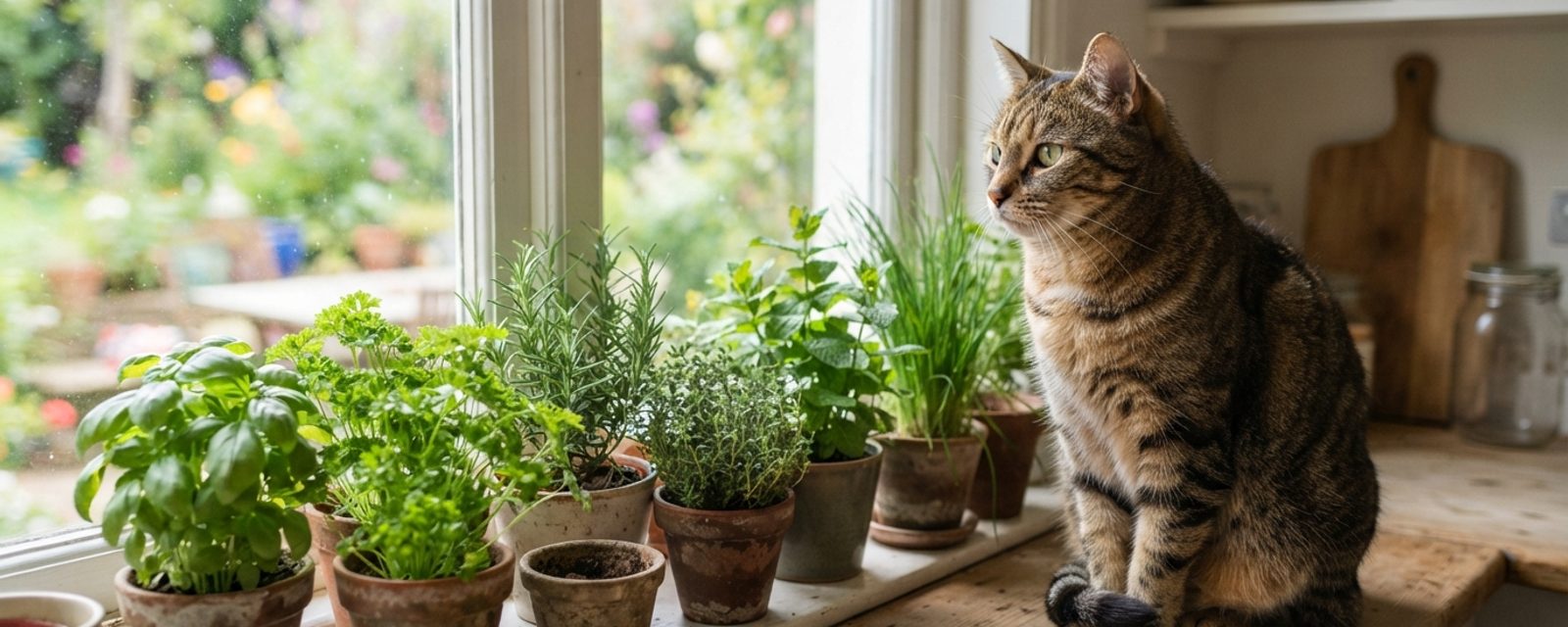
There's a pot of chives on the sill, a cat on the back of the sofa working out the trajectory, and a straightforward question underneath the curiosity: if that cat gets up there and takes a bite, is anyone calling the vet tonight? The honest answer depends entirely on which pot it jumps to. Some of what's growing on a typical Scottish kitchen windowsill is genuinely harmless to a cat. Some of it isn't, and a couple of the riskiest plants are ones people grow specifically because they're easy indoors, which is exactly why this is worth getting straight before the cat does the experiment for you.
Why this matters more here than it might elsewhere
A cat's biology doesn't change at the border, a plant that's toxic to a cat in Cornwall is toxic to a cat in Caithness. What changes is exposure. Edinburgh gets under 7 hours of daylight at midwinter against roughly double that in June, and that gap is what pushes so much more herb-growing indoors here, and for so much more of the year, than in a climate where basil or coriander can sit outside on a patio from spring through autumn (see the windowsill growing guide for the full picture on that). More months of the year with herb pots on a windowsill means more months of a curious cat sharing space with them, not a different level of toxicity, just more time spent next to it.
Safe: common windowsill herbs a cat can nibble without harm
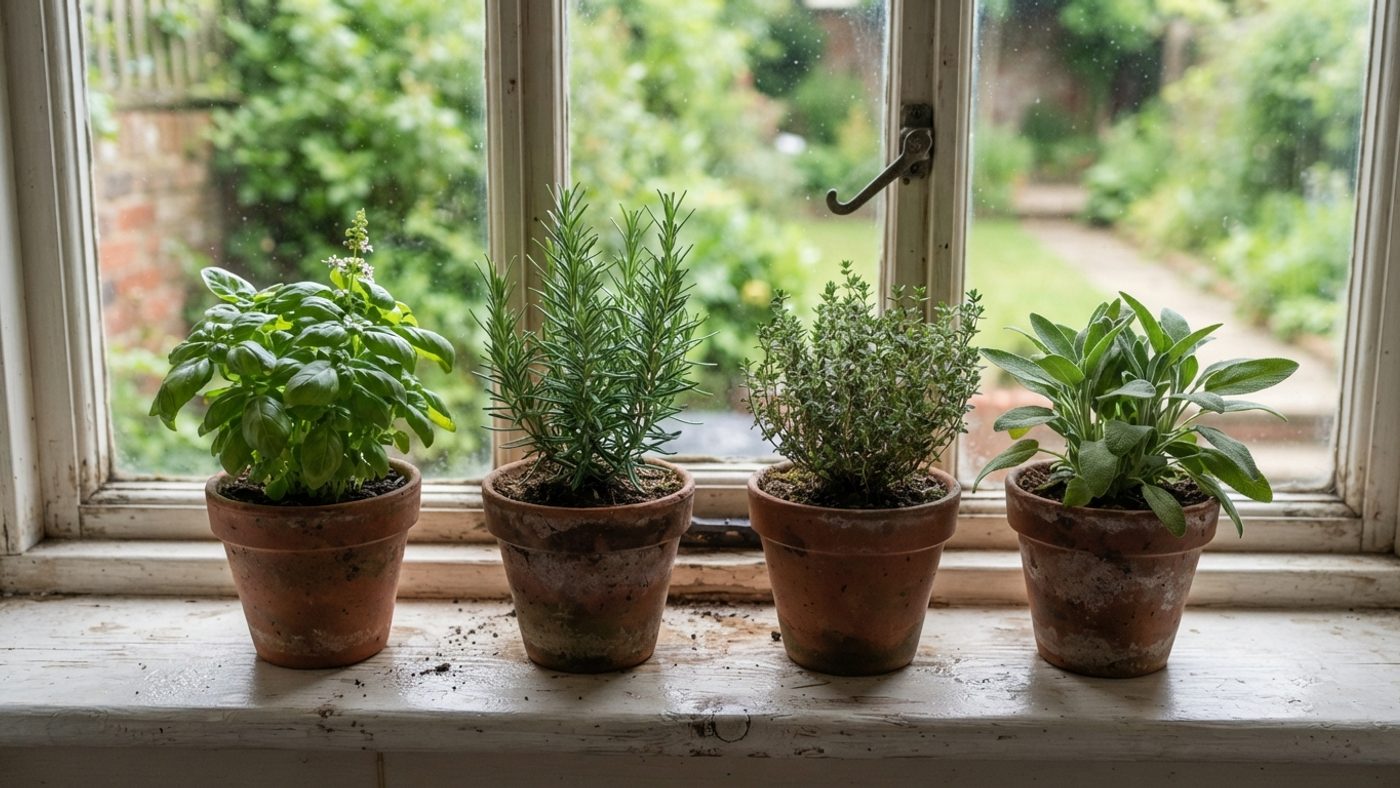
These are all listed by ASPCA Animal Poison Control as non-toxic to cats. "Non-toxic" doesn't mean cats should be eating handfuls of any plant, a cat gorging on foliage of any kind can still get an upset stomach, but none of them contain a compound ASPCA flags as toxic to cats, and none are expected to cause the kind of poisoning that needs a vet call.
| Plant | Botanical name | Status for cats |
|---|---|---|
| Basil | Ocimum basilicum | Non-toxic |
| Rosemary | Rosmarinus officinalis | Non-toxic |
| Thyme | Thymus vulgaris | Non-toxic |
| Sage | Salvia officinalis | Non-toxic |
| Dill | Anethum graveolens | Non-toxic |
| Coriander / cilantro | Coriandrum sativum | Non-toxic |
Two more worth a mention, both of which are grown specifically with cats in mind rather than for the kitchen.
Cat grass, usually a tray of young wheat, oat, barley or rye shoots, is sold and grown deliberately as something for cats to chew. None of the cereal grasses it's typically grown from appear on ASPCA's toxic plant list, consistent with it being sold as a pet product. If you're growing it for the cat, skip pesticides or fertiliser on that tray, since those aren't covered by any non-toxic-to-cats plant rating.
Catnip (Nepeta cataria) is a slightly stranger case. ASPCA's own plant database actually lists catnip as "Toxic to Cats," but the effect described is mild: it can cause vomiting and diarrhoea if a cat eats a large amount, and separately, catnip is well known for making some cats sedated and others stimulated, the rolling, drooling, chasing-nothing behaviour most cat owners recognise. ASPCA's own classification is toxic, not non-toxic, so treat a cat with unrestricted access to a lot of catnip the same way as any other mild-tier plant on this list, worth keeping an eye on quantity, not the same clean non-toxic rating as basil or thyme.
Toxic: windowsill plants to keep away from cats
One plant belongs at the top of this list even though it's flowers, not a herb: lilies. True lilies and daylilies (Lilium and Hemerocallis species) are the single most dangerous common houseplant for cats, and the danger isn't limited to eating the leaves, ASPCA lists any part as a risk, including pollen brushed off onto fur and later groomed off, and the water in a vase of cut lilies. Clinical signs include vomiting, loss of appetite and lethargy, progressing to kidney failure, and death is possible. If a cat has had any contact with a lily, whether cut flowers in the house or a plant on a sill, treat it as an emergency and contact a vet straight away rather than waiting for symptoms.
| Plant | Botanical name | Severity | Amount of concern | Clinical signs |
|---|---|---|---|---|
| Lily (tiger, Easter, Asiatic, daylily and other true lilies) | Lilium and Hemerocallis species | Severe, can be fatal | Any part, including pollen and vase water | Vomiting, loss of appetite, lethargy, kidney failure, death is possible |
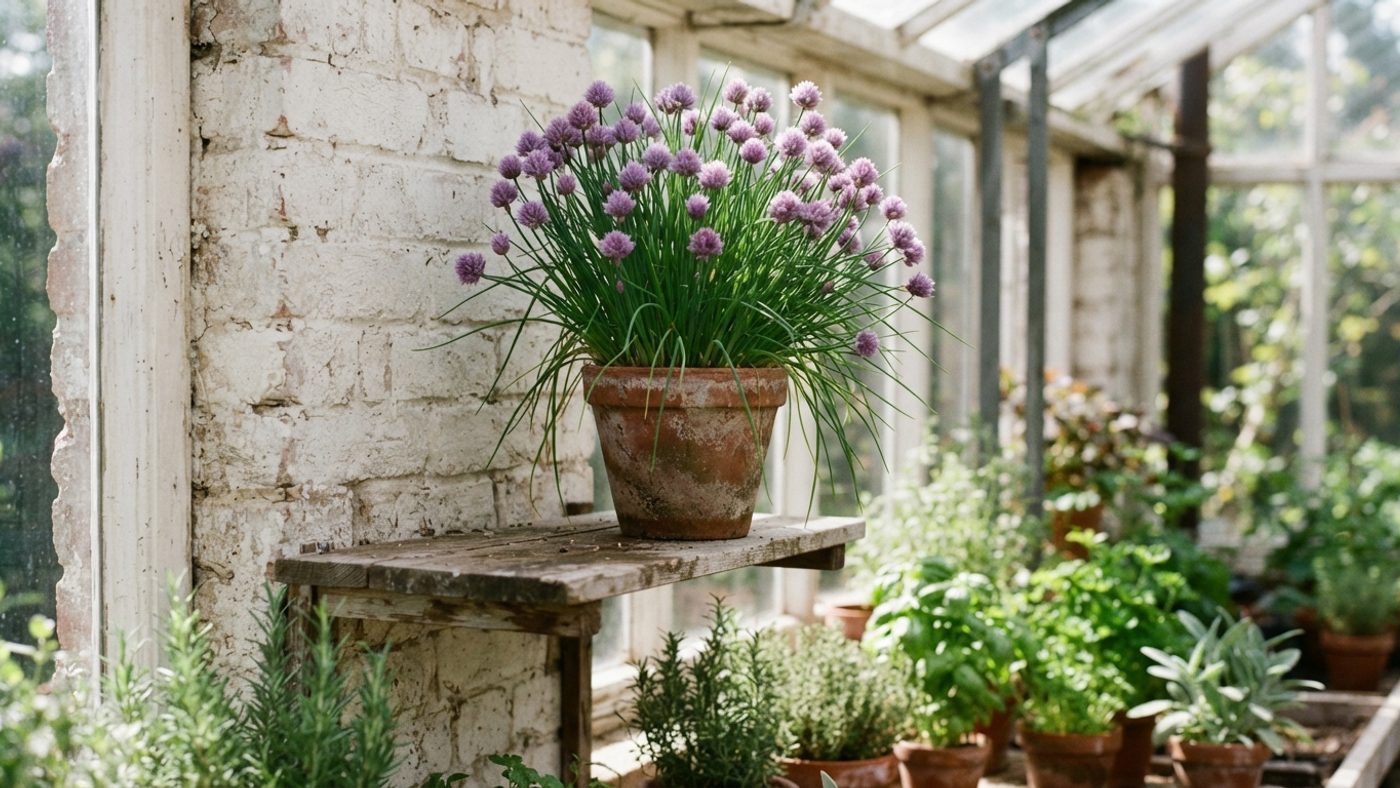
| Chives | Allium schoenoprasum | Serious | Small amounts | Vomiting, red blood cell breakdown (haemolytic anaemia), blood in urine, weakness, high heart rate, panting |
| Garlic | Allium sativum | Serious | Small amounts | Same as chives |
| Onion | Allium cepa | Serious | Small amounts | Same as chives |
| Leek | Allium ampeloprasum | Serious | Small amounts | Same as chives |
| Lemongrass | Cymbopogon citratus | Mild-moderate | Not specified | Stomach upset |
| Oregano | Origanum vulgare | Mild | Not specified | Vomiting, diarrhoea |
| Tarragon | Artemisia dracunculus | Mild | Not specified | Vomiting, diarrhoea |
| Mint | Mentha sp. | Mild | Large amount | Vomiting, diarrhoea |
| Parsley | Petroselinum crispum | Mild | Large amount | Photosensitisation (sunburn-like skin reaction) |
| Bay laurel | Laurus nobilis | Mild-moderate | Whole leaves swallowed | Vomiting, diarrhoea; blockage risk from whole leaves |
| Lavender | Lavandula sp. | Mild | Not specified | Nausea, vomiting, loss of appetite |
| Chamomile | Matricaria/Chamaemelum sp. | Mild-moderate | Not specified | Contact dermatitis, vomiting, diarrhoea, loss of appetite, allergic reactions; bleeding problems with prolonged exposure |
The alliums are the ones to actually worry about, and they're exactly the plants the exposure problem above lands hardest on: chives in particular are a compact, easy indoor pot herb, and alliums generally are exactly the kind of thing a keen home cook keeps within arm's reach of the hob, which usually means within jumping reach of a cat. ASPCA and RSPCA both describe the same mechanism: compounds in the allium family damage a cat's red blood cells, causing haemolytic anaemia (RSPCA lists pale gums and a fast heart and breathing rate as signs), and this holds even when the plant has been cooked. This isn't in the same tier as a mild tummy upset, it's a genuine, potentially life-threatening toxicity, and it takes a smaller amount than most owners assume.
Lemongrass, oregano, tarragon, mint, parsley and bay laurel are a different, lower tier. ASPCA's own descriptions for these list gastrointestinal upset, vomiting, diarrhoea, or in parsley's case a sunburn-like skin reaction, generally after a larger ingestion, not organ or blood damage. Bay laurel carries one extra physical risk on top of that: a cat that swallows whole leaves rather than just chewing them can get a blockage, separate from the toxicity itself. Worth keeping out of reach, not worth panicking over if a cat takes one curious bite.
Parsley is worth flagging on its own, since it's easy to assume it belongs on the safe list alongside basil and coriander. It doesn't: ASPCA lists it as toxic, though the effect (photosensitisation) needs a large amount and is mild compared with the alliums.
What to actually do about it
If chives, garlic, onion or leek are already growing on the sill, the simplest fix is height and separation: a shelf or hook out of jumping range, not the same surface the cat already treats as territory. For the mild-tier plants (oregano, tarragon, mint, lemongrass, parsley, bay laurel), out-of-reach is still the right default, but an accidental nibble is a watch-and-see, not an emergency.
If a cat has definitely eaten chives, garlic, onion or leek, don't wait for symptoms to confirm it, contact your vet, or an emergency vet if it's out of hours, straightaway, since the red blood cell damage from alliums doesn't always show up immediately. Animal PoisonLine (01202 509 000), the UK's owner-facing poisoning triage line, is another route if you need advice before you can get to a vet. Note roughly how much was eaten and when, and bring the plant (or what's left of it) with you if you can; it saves time working out what happened.
Common questions
Is a small nibble of chives actually dangerous, or only if a cat eats a lot?
Alliums are toxic to cats even in fairly small amounts and even cooked, according to both ASPCA and RSPCA, neither source states a "safe" minimum amount below which it doesn't matter, unlike the mild-upset herbs, which generally need a large ingestion to cause any reaction. Treat any confirmed nibble of chives, garlic, onion or leek as worth a vet call, not just a large one.
My cat went mad for the catnip and then threw up, is that normal?
It can be. ASPCA lists catnip as technically "toxic to cats" specifically because a large amount can cause vomiting and diarrhoea, on top of the well-known stimulant-or-sedative behavioural effect. Occasional mild vomiting after a catnip session isn't unusual; repeated or severe vomiting is worth a vet check regardless of the cause.
Is basil actually fine, or is that just something people assume?
Basil is listed as non-toxic to cats by ASPCA, along with rosemary, thyme, sage, dill and coriander. None of these are flagged as containing a toxic compound in ASPCA's database.
Is parsley safe, like the other kitchen herbs?
No, and it's an easy one to get wrong by assuming it belongs with basil and coriander. ASPCA lists parsley as toxic to cats, it contains a compound that can cause photosensitisation, a sunburn-like skin reaction, but only after a cat eats a large amount. It's a mild-tier risk, not an emergency, but it belongs on the toxic side of the list.
What about cat grass, is it actually safe, or just marketed that way?
Cat grass is usually young wheat, oat, barley or rye shoots. None of those cereal grasses appear on ASPCA's toxic plant list, which lines up with it being sold as a pet product; skip any pesticide or fertiliser on a tray you're growing for the cat to eat, since that isn't covered by the plant's own non-toxic rating.
Sources
22 sources, recorded with what each was used for
- ASPCA Animal Poison Control: Chives: Toxicity status, scientific name, clinical signs for chives
- ASPCA Animal Poison Control: Garlic: Toxicity status, scientific name, clinical signs for garlic
- ASPCA Animal Poison Control: Onion: Toxicity status, scientific name, clinical signs for onion
- ASPCA Animal Poison Control: Basil: Non-toxic status and scientific name for basil
- ASPCA Animal Poison Control: Rosemary: Non-toxic status and scientific name for rosemary
- ASPCA Animal Poison Control: Thyme: Non-toxic status and scientific name for thyme
- ASPCA Animal Poison Control: Sage: Non-toxic status for sage
- ASPCA Animal Poison Control: Dill: Non-toxic status and scientific name for dill
- ASPCA Animal Poison Control: Cilantro: Non-toxic status and scientific name for coriander/cilantro
- ASPCA Animal Poison Control: Lemon Grass: Toxicity status, scientific name, clinical signs for lemongrass
- ASPCA Animal Poison Control: Oregano: Toxicity status and scientific name for oregano
- ASPCA Animal Poison Control: Tarragon: Toxicity status and scientific name for tarragon
- ASPCA Animal Poison Control: Mint: Toxicity status, scientific name, clinical signs for mint
- ASPCA Animal Poison Control: Catnip: Toxicity status and behavioural/GI effects for catnip
- ASPCA Animal Poison Control: Parsley: Toxicity status, toxic principle and clinical signs for parsley
- ASPCA Animal Poison Control: Bay Laurel: Toxicity status, scientific name and clinical signs for bay laurel
- ASPCA Animal Poison Control: Tiger Lily: Lily toxicity status, severity (kidney failure, death possible), and that any part including pollen and vase water poses a risk
- ASPCA Animal Poison Control: Lavender: Toxicity status, toxic principle and clinical signs for lavender
- ASPCA Animal Poison Control: Chamomile: Toxicity status, toxic principle and clinical signs for chamomile
- RSPCA: Christmas dangers for pets: Confirms onion, garlic, leek and chive toxicity mechanism (red blood cell damage/anaemia) and that toxicity persists when cooked
- timeanddate.com: Sunrise and sunset times in Edinburgh, December: Edinburgh's winter solstice day length, the same figure and source used in the windowsill growing guide
- VPIS (Veterinary Poisons Information Service): Animal PoisonLine: The UK owner-facing emergency poisoning triage line