
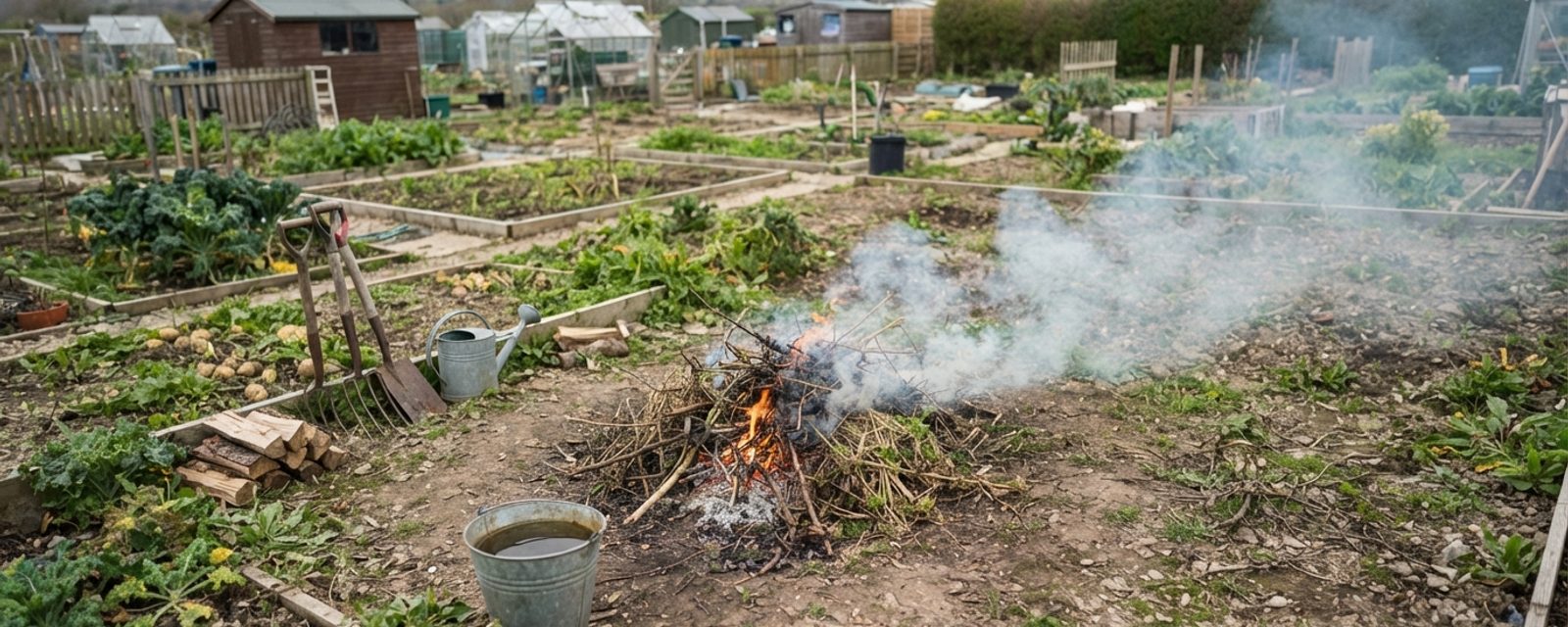
There is no permit to apply for, no licence to buy, and no national register of approved burn days for an ordinary garden or allotment bonfire anywhere in the UK. The myth persists because the thing that actually regulates bonfires, nuisance law, only switches on after smoke becomes a problem, so it looks from the outside like permission-seeking behaviour: people ring the council "to check," get told the fire is fine as long as it doesn't bother anyone, and remember that as "I got permission." What they actually got was a description of the nuisance threshold.
Why "you need council permission for a bonfire" refuses to die
That threshold is the real mechanism. Environmental health teams do not pre-approve bonfires. They respond to complaints, and only act once a fire is judged to be more than a one-off irritation. Scottish Borders Council puts it plainly: "There are no laws against having bonfires, though it is an offence for the smoke, or the smell of the smoke, to cause a statutory nuisance." Argyll and Bute Council's guidance on enforcement is similarly clear that bonfires "must happen frequently" before an abatement notice becomes realistic, a single smoky afternoon almost never crosses that line.
Two other things happen alongside nuisance law, and conflating them causes most of the confusion: a separate "dark smoke" offence attaches to what you burn, regardless of whether anyone complains, and allotment sites layer their own rules on top of both. And for anyone gardening in Scotland, there's a specific legal question worth answering properly rather than assuming: does Scotland's separate "muirburn" fire law have anything to do with a plot bonfire? No, muirburn is a different regime entirely, for a different kind of burning, and it does not touch your allotment fire.
The three layers of law that actually apply
1. Statutory nuisance. Smoke, fumes or gas from a bonfire can be a statutory nuisance, a legal category for something that substantially interferes with a neighbour's ability to enjoy their own property, distinct from ordinary bad manners. It's set out in Part III of the Environmental Protection Act 1990 (EPA 1990): section 79 lists "smoke, fumes or gases emitted from premises" as a nuisance category, and section 80 lets a council serve an abatement notice once satisfied a nuisance exists or is likely to recur. This is genuinely UK-wide law, not England-only, Part III was extended to Scotland by the Environment Act 1995, so a Scottish council relies on the same EPA 1990 provisions as one in England or Wales. Failing to comply with an abatement notice is itself an offence, with fines that vary by council: Argyll and Bute cites a maximum of £5,000 for a serious breach, while North Ayrshire's guidance quotes a lower £150 domestic-scale fine as more typical of what actually gets issued.
Scotland also has its own, additional statutory nuisance category under Part 9 of the Public Health etc. (Scotland) Act 2008, but that covers insect nuisance, artificial light and land covered with water, not smoke, so it sits alongside EPA 1990 rather than replacing it for bonfires.
Council enforcement isn't the only route, either: a persistently affected neighbour can in principle pursue a private nuisance claim through the civil courts independently of any council action, though in practice most complaints go through the council route above because it doesn't require the neighbour to fund their own case.
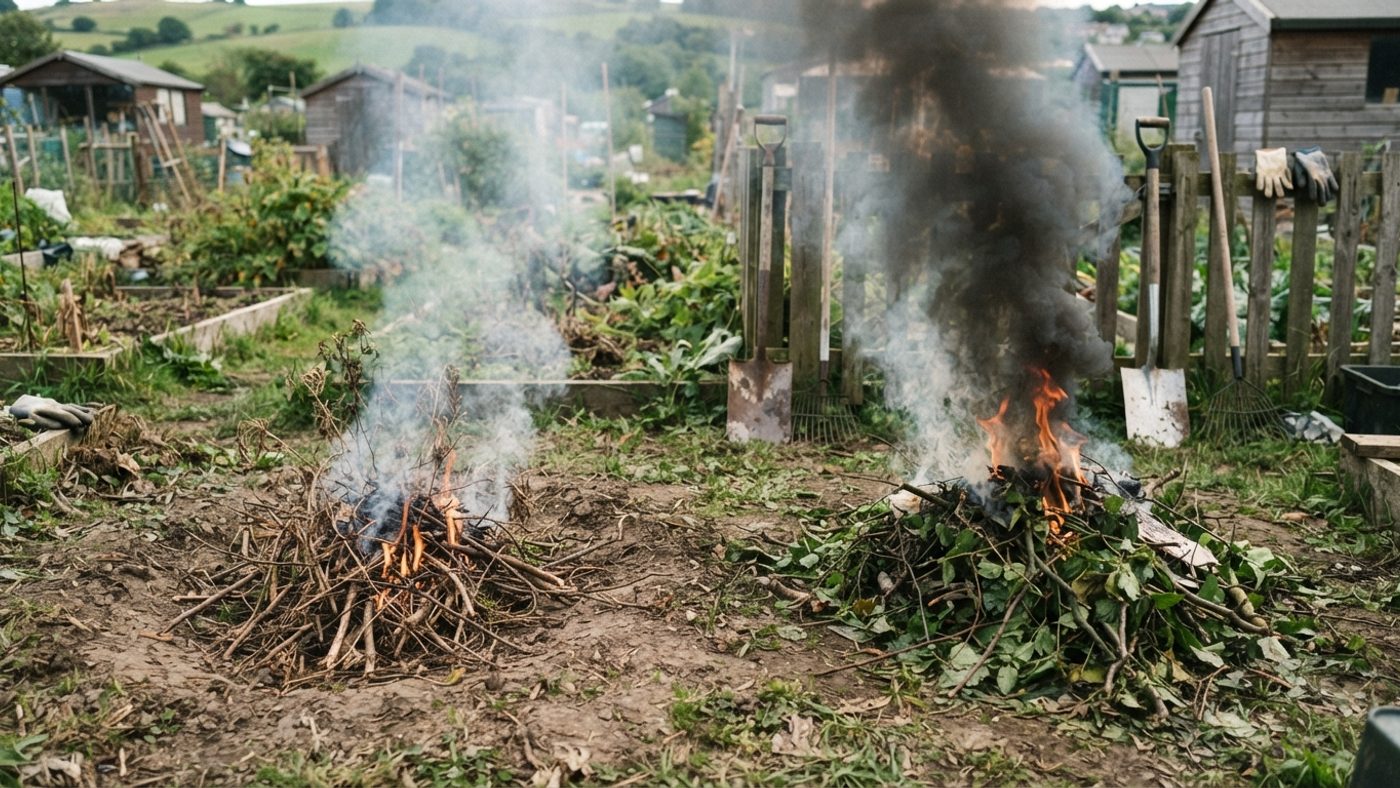
2. The dark smoke offence. Separately from nuisance, the Clean Air Act 1993 makes it an offence to emit "dark smoke", in practice, black or heavily sooty smoke, from a chimney (section 1, fine up to level 3 on the standard scale for a private dwelling, level 5 for other cases) or from industrial/trade premises (section 2), and this Act extends to Scotland too. The offence is really aimed at chimneys and industrial sites rather than garden fires directly, but it's the standard Scottish regulators point to when a bonfire is burning the wrong materials, which is exactly the Scotland-specific reason it matters here: SEPA (the Scottish Environment Protection Agency) is the body that actually enforces it north of the border, and via its NetRegs guidance service (run jointly with Northern Ireland's environment agency, not Scotland-only) it names tyres, plastics, cable with plastic insulation, oils and paints as materials that produce dark smoke, stating plainly that causing it is an offence.
One more wrinkle worth naming so it isn't mistaken for something it's not: some Scottish towns and cities have Smoke Control Areas declared under a different part of the Clean Air Act 1993, but those primarily restrict what fuel can be burned in a building's chimney, they aren't generally the mechanism that regulates an outdoor bonfire, which is why this piece focuses on nuisance and dark smoke above rather than smoke control designation.
3. Local and site-level rules. Individual councils publish their own bonfire guidance, Edinburgh's page confirms no local byelaw bans or time-restricts garden bonfires there, while Argyll and Bute and North Ayrshire both set out their own restricted-materials lists and enforcement thresholds, and none of it amounts to new law: it's practical application of the nuisance and dark-smoke framework above, sometimes with locally suggested burn times (Argyll and Bute suggests after 6pm). Allotments add a further layer again: sites are typically run by a local authority or an allotment association under a tenancy agreement, and it is entirely normal for that agreement to restrict bonfires further than national law does, specific burn days, incinerator-only rules, or an outright ban on open fires on a shared site where plots sit close together and smoke has nowhere to go. Check your own site's tenancy agreement or committee, since that's the document that actually governs what you can do on your plot, above and beyond the general law, and check your own council's bonfire guidance too, since it varies by area and the councils named here are only examples.
| Law | What it actually covers | Scotland position |
|---|---|---|
| Environmental Protection Act 1990, Part III (ss.79-80) | Statutory nuisance from smoke/fumes; council can serve an abatement notice | Applies in Scotland since 1 April 1996, same provisions as England/Wales |
| Clean Air Act 1993 | "Dark smoke" offence, burning the wrong materials, regardless of nuisance | Extends to Scotland (s.68) |
| Public Health etc. (Scotland) Act 2008, Part 9 | Statutory nuisance for insect nuisance, light, standing water | Scotland-only; doesn't cover smoke, sits alongside EPA 1990 |
| Council bonfire guidance / byelaws | Locally suggested burn times, enforcement thresholds | Varies by council, check your own, not just the examples here |
| Allotment tenancy agreement / site rules | Burn days, incinerator-only policy, outright bans | Set by your specific site's local authority or allotment association |
Muirburn: why it doesn't apply here
Scotland does have its own separate fire-related legal regime called muirburn, but it isn't the right frame for an allotment bonfire.
Muirburn is the controlled burning of heather and other moorland vegetation, carried out by land managers, farmers, crofters, gamekeepers, for grouse-moor and agricultural land management, governed by the Muirburn Code and the Hill Farming Act 1946 as amended, with a new licensing regime introduced by the Wildlife Management and Muirburn (Scotland) Act 2024. Scottish Fire and Rescue Service's own guidance describes it as burning carried out "from autumn into spring," on a scale that requires calling the Fire and Rescue Control Room in advance to report the burn location, and its wildfire and muirburn pages are framed entirely around landscape-scale land management and wildfire risk, none of it has anything to do with a bin-sized fire on a 250 m² allotment plot, and there is no crossover provision in it for allotment or garden fires. If your plot bonfire is heather or moorland vegetation on agricultural or sporting land, muirburn rules could apply, but that is not what "bonfires on allotments" means for the overwhelming majority of readers, and the two shouldn't be conflated.
What does genuinely differ in Scotland is narrower and less dramatic than a "muirburn law for gardens" headline would suggest: England and Wales use Community Protection Notices (Anti-social Behaviour, Crime and Policing Act 2014, Part 4) to compel someone to stop persistent nuisance behaviour, but that Act doesn't extend to Scotland for this purpose. Scotland instead relies on the EPA 1990 abatement notice route above, backed by its own Antisocial Behaviour etc. (Scotland) Act 2004, a different toolkit working toward the same outcome, not a stricter or laxer standard on bonfires specifically.
What's restricted, and why
| Restricted or risky | Why it's restricted | Legal basis |
|---|---|---|
| Regular, large or prolonged bonfires that affect neighbours | Can be judged a statutory nuisance if it substantially interferes with someone's enjoyment of their property | Environmental Protection Act 1990, s.79 (nuisance) and s.80 (abatement notice), applies in Scotland from 1 April 1996 |
| Black, sooty or heavily particulate smoke ("dark smoke") | Separate criminal offence regardless of nuisance, historically aimed at chimneys/industrial sites but the standard regulators cite for bonfires burning the wrong materials | Clean Air Act 1993, ss.1-2 (extends to Scotland, s.68) |
| Tyres, plastics, cable insulation, oils, paints, foam | These produce dark smoke and release toxic fumes when burned | Clean Air Act 1993 dark smoke offence; council guidance explicitly bans these materials on garden fires |
| Painted or chemically treated wood | Chemical treatments and coatings release harmful pollutants on burning; only "visibly clean" untreated wood is normally acceptable | Same dark smoke/nuisance framework; confirmed in council and business-compliance guidance |
| Household rubbish | Burning waste that causes pollution or harm to health is itself unlawful, separate from any bonfire-specific issue | gov.uk household waste guidance; NetRegs (SEPA's joint guidance service with Northern Ireland's environment agency) |
| Smoke drifting across a public road | Can obscure driver visibility and endanger traffic | Not a distinct Scottish offence with its own statute, the specific Highways Act 1980 s.161A offence is England & Wales-only, but treat it as a practical hazard to avoid regardless |
| Bonfires beyond what your allotment tenancy allows | Site rules can be stricter than national law, incinerator-only policy, banned dates, size limits | Individual allotment tenancy agreement / site rules |
Considerate, low-risk bonfire practice
Even where a bonfire is entirely legal, a handful of practical habits are what actually keep it that way, they're what stands between "an occasional fire nobody minds" and the frequency or scale that tips into nuisance territory:
- Ask whether you need a fire at all. Composting, a council green-waste collection, or a chipper for woody prunings deal with most garden and plot waste without smoke, and many allotment sites actively steer plot-holders toward composting first. A bonfire earns its place mainly for material a home compost heap won't reliably deal with, diseased plant material that risks surviving an ordinary compost heap and spreading the same problem back round the plot in the finished compost, rather than everyday prunings and weeds, which compost perfectly well.
- Keep basic fire safety in place regardless of the legal position. Site it well clear of sheds, compost bins, fences and neighbouring plots, keep water or a hose within reach, and never leave a lit fire unattended, none of this is a legal requirement specific to bonfires, but it's the standard practice that keeps a fire from becoming a genuine hazard, not just a nuisance complaint.
- Check for a wildfire danger assessment before you light up. Scottish Fire and Rescue Service's wildfire prevention advice says plainly: "Don't have campfires or any outdoor fire when a wildfire danger assessment is in place or during prolonged dry periods," a separate caution from the nuisance and dark-smoke rules above, and worth checking if the ground's been dry for a while, peaty ground in particular can smoulder and spread underground once alight, which is why SFRS names it specifically.
- Time it well. Avoid weekends and evenings when neighbouring plot-holders or households are likely to be outside, and check the guidance for your specific site, some allotment associations set fixed burn days.
- Read the wind, not just the sky. Burn only when wind is carrying smoke away from neighbouring gardens, plots, houses and any nearby road, and avoid still, damp conditions where smoke sits low and lingers rather than dispersing.
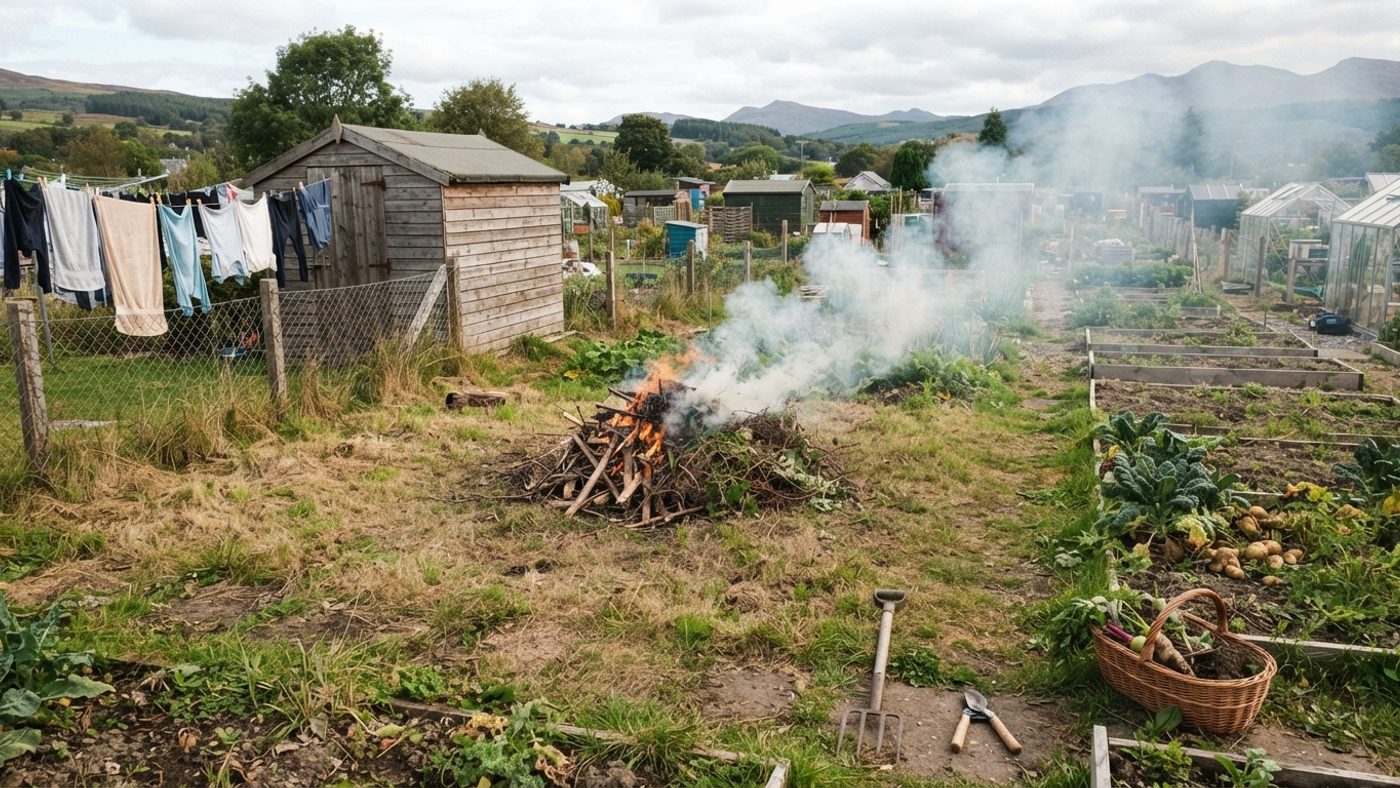
- Keep it away from washing lines and open windows. This is the single most common trigger for a neighbour complaint, and it's avoidable simply by checking before you light up.
- Burn only dry, clean plant material. Prunings, weeds and diseased plant matter are the appropriate fuel for a plot bonfire; anything wet smoulders and produces more smoke for longer.
- Never burn plastics, rubber, treated wood, foam or household rubbish. These produce dark smoke and, for household waste specifically, breach separate rules against burning waste that causes pollution or harm to health.
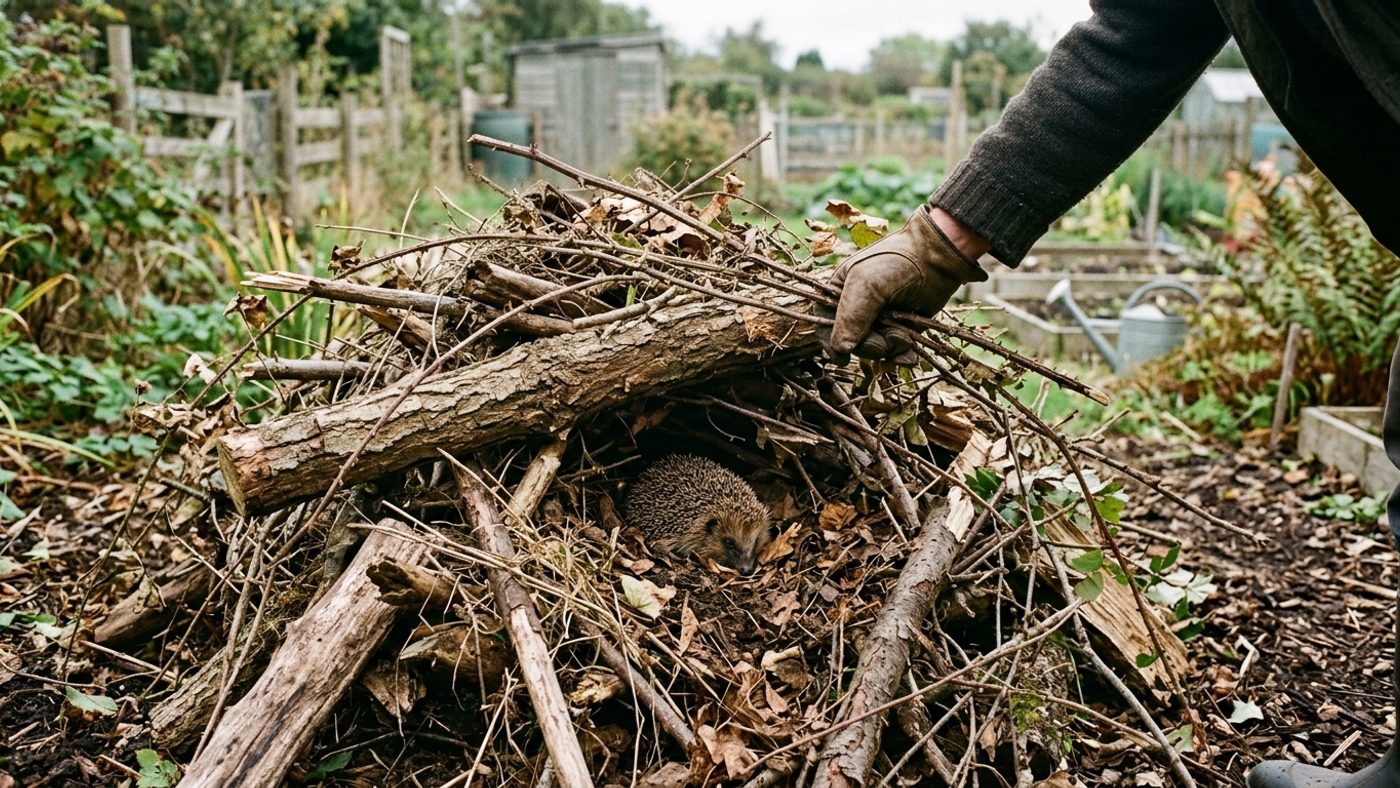
- Check the pile for hedgehogs before lighting, every time. Hedgehog Street (run by the British Hedgehog Preservation Society and PTES) warns that a pile of logs or garden waste looks like a perfect nest to a hedgehog going into winter. Their core advice is simple: build the bonfire on the day you intend to light it rather than leaving it standing, or if that's not possible, move the whole pile to a fresh spot and check it thoroughly immediately before lighting. If you find a hedgehog, move it gently, with any nesting material, to a safe spot away from the fire, and if in doubt, Hedgehog Street's welfare line can advise.
Common questions
Do I need permission from my council to have a bonfire on my allotment?
No, check your tenancy agreement instead. It's what actually decides what you can do on your plot, and it can be stricter than the general law covered above.
Can a neighbour actually get my bonfire banned?
A single complaint about one fire is very unlikely to result in formal action. Councils generally only intervene, typically with an abatement notice under section 80 of the Environmental Protection Act 1990, once a fire is shown to be a recurring, substantial interference with someone's ability to use their own property, not a one-off inconvenience.
Does Scotland's muirburn law affect my allotment bonfire?
No. Muirburn governs the controlled burning of heather and moorland vegetation by land managers under the Muirburn Code and related legislation, and Scottish Fire and Rescue Service's own guidance frames it entirely around landscape and wildfire management, not garden or allotment burning. An ordinary plot bonfire is covered by nuisance and dark-smoke law, not muirburn rules.
Is it illegal to burn plastic or treated wood on a bonfire?
Burning these materials risks the dark smoke offence under the Clean Air Act 1993 and, for household waste specifically, separate rules against burning waste that causes pollution or harm to health. Multiple Scottish council pages explicitly list tyres, plastics, foam, painted or treated wood and household rubbish as materials not to burn.
What should I do if I find a hedgehog in my bonfire pile?
Stop, and don't light the fire. Move the hedgehog gently, with any nesting material, to a safe spot well away from the bonfire site, and check the rest of the pile carefully before lighting, advice given directly by Hedgehog Street (British Hedgehog Preservation Society/PTES).
Sources
14 sources, recorded with what each was used for
- Environmental Protection Act 1990, Part III: Statutory nuisance definition (s.79), abatement notices (s.80), and confirmation Part III extends to Scotland from 1 April 1996
- Clean Air Act 1993 (contents): Dark smoke offence structure and confirmation the Act extends to Scotland (s.68; s.17 on Scottish smoke nuisance abatement)
- Clean Air Act 1993, section 1: Specific wording and penalties of the dark smoke prohibition from chimneys
- Antisocial Behaviour etc. (Scotland) Act 2004: Scotland's noise nuisance and environmental enforcement framework, distinct from England & Wales's Community Protection Notice system
- Public Health etc. (Scotland) Act 2008: Scotland's additional statutory nuisance categories, sitting alongside, not instead of, EPA 1990 for smoke
- gov.uk: Garden bonfires — the rules: Baseline framing and household waste burning restriction
- Scottish Borders Council: Bonfires and burning outdoors: The "no laws against bonfires, but statutory nuisance applies" quote
- Argyll and Bute Council: Bonfire advice: Abatement notice/£5,000 fine detail, restricted materials list, suggested after-6pm timing
- North Ayrshire Council: Air pollution and bonfires: Clean Air Act/EPA 1990 dual legal basis, £150 domestic fine figure, restricted materials list
- City of Edinburgh Council: Bonfires: Confirmation no local byelaw bans or time-restricts garden bonfires in Edinburgh
- NetRegs (joint SEPA/NIEA guidance): Controls on burning waste in the open: List of materials that produce dark smoke; SEPA's practical enforcement reference for open burning in Scotland
- Scottish Fire and Rescue Service: Controlled burning and muirburn for land managers: Confirmation muirburn is landscape-scale land management, with no provision addressing domestic garden or allotment bonfires
- Scottish Fire and Rescue Service: Wildfire prevention: Direct quote advising against outdoor fires during a wildfire danger assessment or prolonged dry periods
- Hedgehog Street (British Hedgehog Preservation Society / PTES): Bonfire night hedgehog safety: Core hedgehog-check advice before lighting a pile