
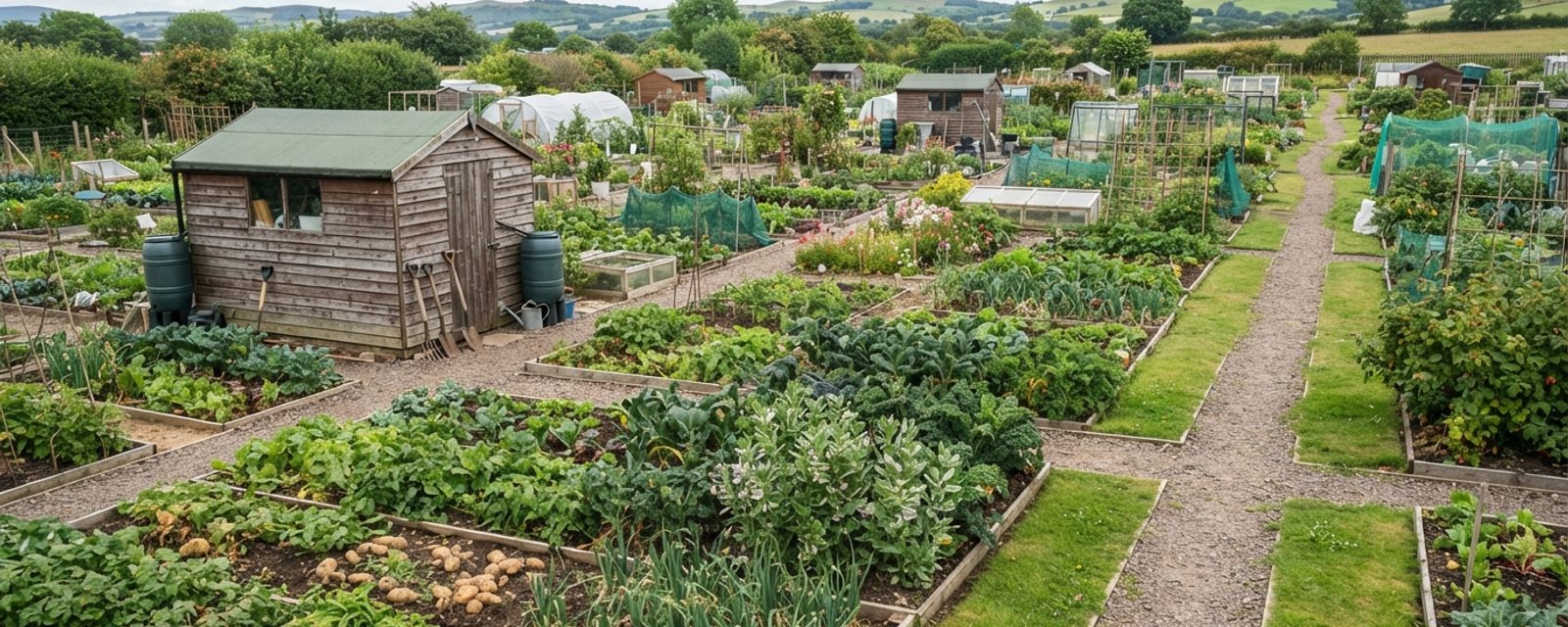
Most people don't think about allotment rules until a letter from the site committee lands, usually about an overgrown plot, sometimes about a shed that looks bigger than the neighbours', occasionally about hens someone heard clucking two rows over. By that point the plot-holder is trying to work out, often for the first time, what the tenancy agreement they signed actually commits them to.
The day-to-day detail, how much of the plot has to be cultivated, how big a shed can be, which animals are allowed, is set locally, by the site or the local authority that runs it, not by a single UK-wide rulebook. But in Scotland, the legal process for what happens if you break those rules is set out in statute with more specificity than the older England and Wales legislation provides.
This article covers the rules that apply once you already hold a plot. If you're still trying to get one, see our guide to getting an allotment in the UK for waiting lists, cost, and the statutory basis behind them.
What tenancy agreements typically cover
| Rule category | Typical position | Notes |
|---|---|---|
| Cultivation | Typically restricted, most agreements require the plot to be kept "substantially" cultivated | The exact standard (how much, by when) is set by the local authority or site's own regulations, not a national figure |
| Structures (sheds, greenhouses, polytunnels) | Varies by site | Usually allowed, but size and height limits are set by the individual site, not a UK or Scotland-wide standard |
| Animals — hens | Varies by site | Commonly permitted on many UK allotment sites, subject to site rules and local bylaws |
| Animals — bees | Varies by site | Often permitted, usually with conditions (siting, neighbour notice, sometimes association membership) |
| Animals — larger livestock | Typically restricted | Generally not permitted on ordinary allotment plots |
| Commercial use / selling produce | Typically restricted | Most tenancies limit use to personal and family consumption; in Scotland, non-profit sale of surplus is explicitly allowed by statute |
| Subletting | Typically restricted or banned | In Scotland, subletting itself has no statutory exception; transferring the whole tenancy to someone else (assignment) is a separate route, and needs council consent |
| Breach of rules / eviction | Typically a notice-and-remedy process | Not usually instant termination, the tenant is normally given a chance to put things right first |
Cultivation, "use it or lose it"
The near-universal principle across allotment tenancies, in Scotland and elsewhere, is that a plot has to be kept substantially cultivated. Letting a plot go to weeds for a season is the single most common reason plot-holders end up in correspondence with their site committee, which is exactly why Scottish law requires every site to have a written standard for it, rather than leaving it to informal judgement.
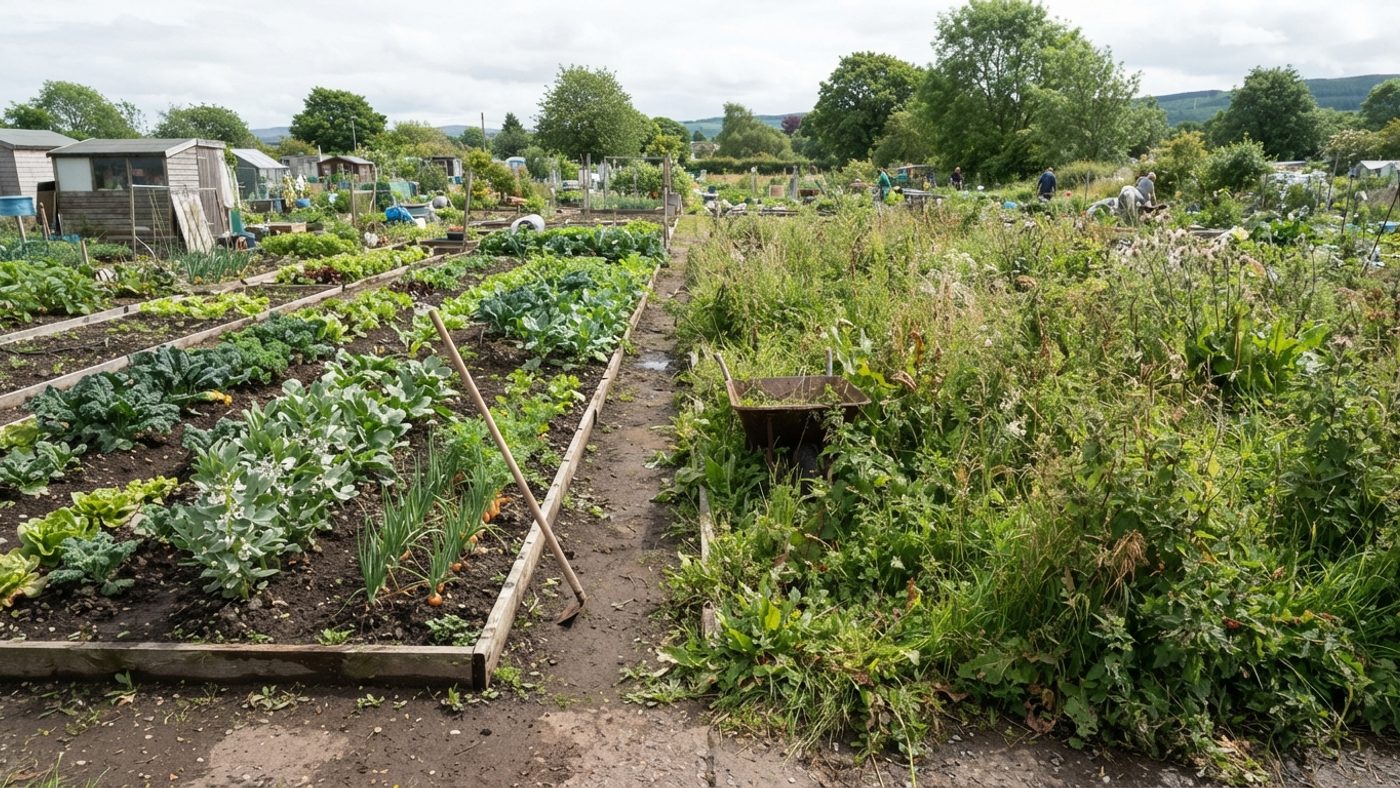
In Scotland, the statutory basis for this is the Community Empowerment (Scotland) Act 2015. Section 115 requires each local authority's allotment site regulations to include provision on "cultivation of allotments" and "maintenance of allotments," alongside rent, structures, livestock and landlord inspections. The Act itself doesn't fix what the cultivation standard is: it mandates that a written rule exists, and leaves the detail (what percentage of the plot needs to be in use, over what period, with what tolerance for illness or bad weather) to each local authority. If you want the precise cultivation standard for your plot, that means reading your own site's regulations, not this article or the Act.
Structures: sheds, greenhouses, polytunnels
Sheds, greenhouses and polytunnels are commonly permitted on allotment plots, but size and height limits are set at site level, and they vary a lot from one allotment to the next. There is no citable UK-wide or Scotland-wide standard dimension for allotment structures, no source publishes one, because none exists; it's a matter for each site's or council's own rules and regulations.
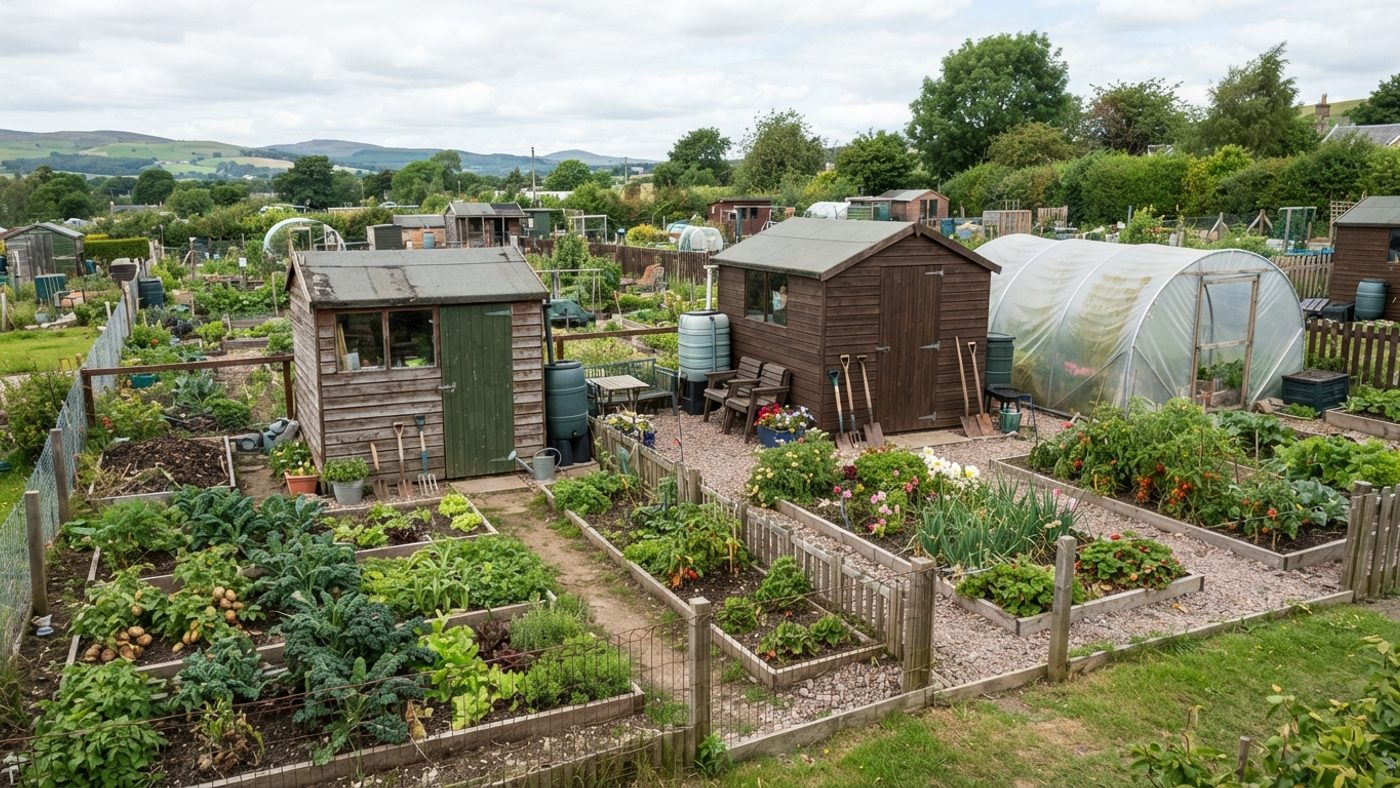
Scottish statute confirms this is deliberately left local rather than fixed nationally. Section 115(3) of the 2015 Act requires each local authority's regulations to cover "buildings or other structures that may be erected on allotments, the modifications that may be made to such structures and the materials that may or may not be used in connection with such structures," a requirement that such rules exist, not a national size limit. And where a structure breaks those local rules, section 122 gives the local authority the power to remove it: the authority must give the tenant at least one month's written notice of its proposed action, and the tenant has the right to appeal to the sheriff within 21 days before removal can go ahead.
Your tenancy allowing a polytunnel is not the same question as whether it needs planning permission, that's decided under permitted development rules, not allotment tenancy law, and it catches people out. See our companion piece, Polytunnel planning permission in Scotland, for that separately.
Keeping animals
Hens are commonly allowed on many UK allotment sites, and bees are often permitted too, usually with conditions such as where hives can be sited or a requirement to notify neighbouring plot-holders. Larger livestock is generally not permitted on ordinary allotment plots.
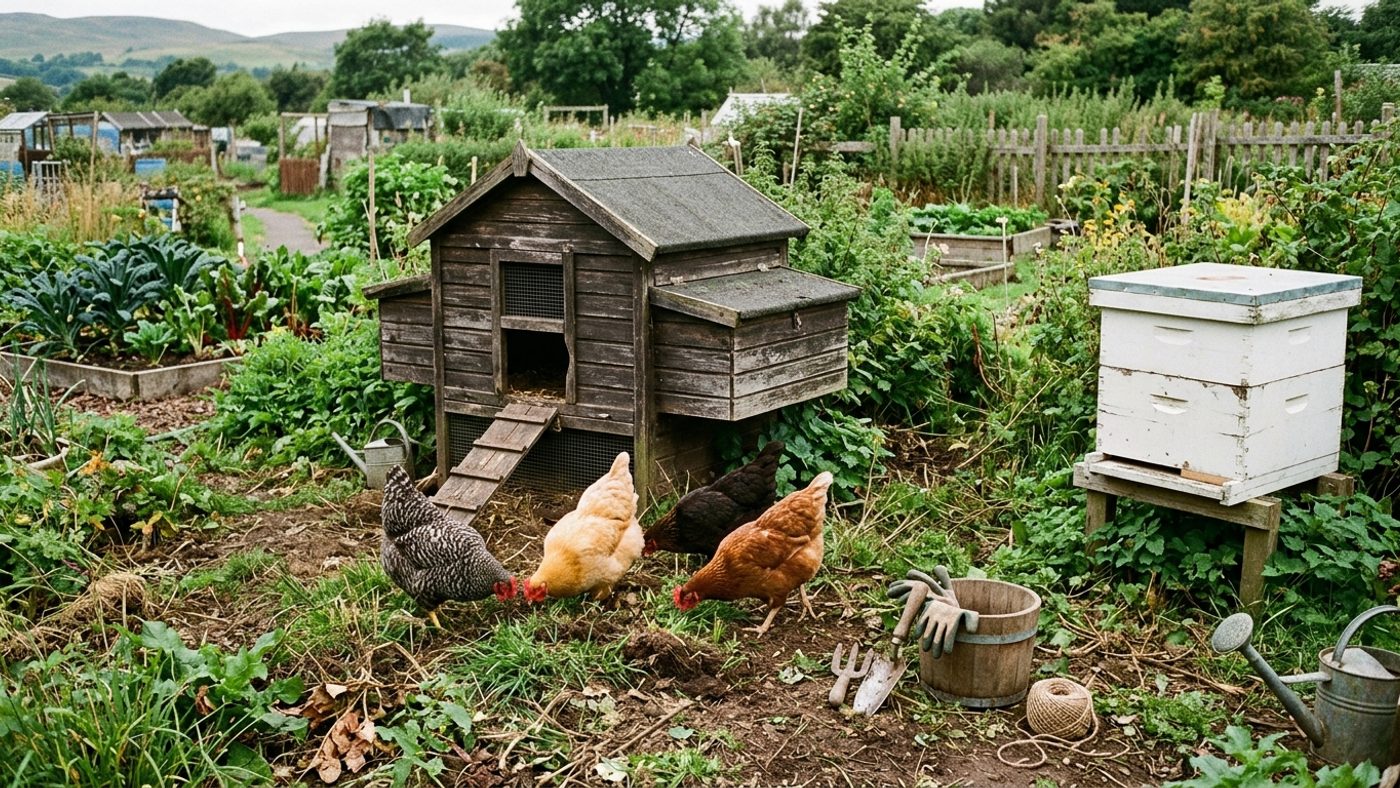
In Scotland, this is another area the 2015 Act explicitly leaves to local regulation rather than settling nationally: section 115(3) requires each local authority's allotment regulations to cover "the keeping of livestock (including poultry)" specifically. So there is a statutory requirement that a rule on animals exists, but, as with structures, the specific list of what's allowed on any given site (which species, how many, what enclosure standards) is set locally, and the only reliable source is your own site's rules.
Commercial use and selling produce
Most allotment tenancy agreements restrict use of the plot to personal and family consumption rather than commercial growing or resale. Scotland's statute is more precise than a blanket "no selling" rule, though. Section 131 of the Community Empowerment (Scotland) Act 2015 says a tenant may sell surplus produce grown on the allotment, but explicitly "other than with a view to making a profit." In practice, that means selling a genuine glut of courgettes to a neighbour or at a site stall is fine; running the plot as a trading operation is not. It's a real, useful distinction, more specific than "personal use only," and worth knowing if a site committee ever raises the question.
Subletting
Subletting an allotment, handing use of it to someone else while remaining the named tenant, is generally restricted or banned outright across UK allotment tenancies. Scotland's statute leaves no room for interpretation on this: section 130 of the Community Empowerment (Scotland) Act 2015 prohibits subletting the whole or any part of an allotment to any other person, and specifies that any purported sublease is legally void. The one narrow exception in Scottish law is assignment, transferring the lease to someone else entirely, which requires the local authority's written consent. That's a different thing from subletting: it means the original tenant steps aside, not that they keep the tenancy while someone else works the plot.
What happens if you break the rules
Day-to-day site rules, cultivation standards, structure limits, which animals are allowed, are set locally under both the Scottish and the England/Wales systems: a genuine similarity, not a difference. Where Scotland actually diverges is the statutory process for eviction when a tenant breaches the rules.
Under section 126 of the Community Empowerment (Scotland) Act 2015, a local authority terminating a lease on the ground that the tenant "has failed to a material extent to comply with any provision of the regulations" must follow a defined process: the authority must write to the tenant no later than one month before giving notice, explaining the proposal and inviting the tenant to make representations, and must consider those representations before proceeding. The termination notice itself must give at least one month's notice. The tenant has a right to appeal to the sheriff, the local civil court that hears this kind of case in Scotland, within 21 days of the notice, and the termination has no effect until that 21-day window passes unused or any appeal is finally decided.
| Step | Minimum time |
|---|---|
| Written explanation to tenant, before any notice is given | At least 1 month before the notice |
| Termination notice itself | At least 1 month |
| Tenant's window to appeal to the sheriff | 21 days from the notice |
| Site closure/repurposing (a site shutting down, not a rule-breach case, needs Ministers' consent) | Up to 1 year |
By contrast, the Allotments Act 1922, which underpins allotment tenancies in England and Wales, allows a landlord to re-enter and terminate a tenancy for "non-payment of rent or breach of any term or condition of the tenancy," but the Act itself does not specify a minimum notice period for that kind of breach-based termination, unlike a general (non-breach) termination, which requires six months' notice expiring on a quarter day. Individual English and Welsh site tenancy agreements can and often do set their own notice terms on top of that statutory gap, so it isn't that a breach eviction happens with no warning in practice, but the 1922 Act itself doesn't guarantee the notice period, explanation-and- representations step, or sheriff appeal that Scotland's 2015 Act writes into law directly.
Other things your tenancy will likely cover
Section 115 of the 2015 Act also requires Scottish local authorities to have rules on rent, on the same basis as cultivation, structures and animals: the Act requires that a rule exists, not what the rule says. One genuinely useful nuance is in the Act itself, though, the required rent rule has to include "a method of determining fair rent" that takes account of the services the council provides, their cost, and "circumstances that affect, or may affect, the ability of a person to pay the rent." In other words, rent isn't meant to be set in isolation from a tenant's ability to actually pay it, at least in Scotland. Section 115 also requires a rule on landlord inspections.
A working allotment tenancy touches plenty of everyday questions beyond the ones above, bonfires and burning, water use (often tied to the site's own standpipe or supply arrangement rather than a national rule), chemical or pesticide restrictions, path and boundary upkeep, what happens to a shed or standing crops if a plot is repossessed, and what happens to the tenancy if the named tenant dies or can no longer manage the plot. None of these are settled by the 2015 Act itself; each is a matter for the individual site's own regulations, the same way cultivation percentages and shed sizes are. Your site committee or the local authority's allotment regulations document is the actual answer for all of them, and if a site committee's decision feels unreasonable, the Scottish Allotments and Gardens Society (SAGS) is Scotland's own allotment advocacy body and a starting point for independent advice on plot-holder disputes.
Common questions
Can I keep chickens on my allotment?
Often, yes, hens are commonly allowed on UK allotment sites, but it's subject to your specific site's rules and any local bylaws, so check with your site committee or local authority before bringing any birds onto the plot.
Can I sell vegetables I grow on my allotment?
Most tenancy agreements limit use of the plot to personal and family consumption. In Scotland, the law is a little more specific: tenants may sell surplus produce, but not with a view to making a profit, so a genuine surplus sale is fine, running the plot as a commercial operation isn't.
How much notice do I need before losing my allotment for breaking the rules?
In Scotland, under section 126 of the Community Empowerment (Scotland) Act 2015, a local authority must give at least one month's notice for a breach-based termination, after first writing to the tenant at least a month earlier to explain the issue and consider their response. The tenant then has 21 days to appeal to the sheriff before the termination can take effect.
Can I put up a shed or polytunnel on my allotment?
Usually, yes, but the size and height limits are set by your individual site or local authority, not by a national standard, check your site's own rules for the specific dimensions allowed. Separately, some structures may also need planning permission depending on size and use.
Can I sublet my allotment to someone else?
No, not in Scotland, section 130 of the Community Empowerment (Scotland) Act 2015 prohibits subletting outright, and any attempt to do so has no legal effect. The one legal route to hand the plot to someone else is assignment of the lease, which needs the local authority's written consent.
Sources
8 sources, recorded with what each was used for
- Community Empowerment (Scotland) Act 2015, Part 9: Statutory basis for Scottish allotment site regulation generally
- Community Empowerment (Scotland) Act 2015, Section 115: Requirement for local authority regulations to cover cultivation, maintenance, structures, and livestock/poultry
- Community Empowerment (Scotland) Act 2015, Section 122: Local authority power to remove unauthorised buildings, with one month's notice and a 21-day sheriff appeal right
- Community Empowerment (Scotland) Act 2015, Section 126: Termination-of-lease notice and sheriff appeal process for breach of regulations
- Community Empowerment (Scotland) Act 2015, Section 130: Prohibition on subletting; assignment requires local authority consent
- Community Empowerment (Scotland) Act 2015, Section 131: Sale of surplus produce permitted other than for profit
- Allotments Act 1922, Section 1: England and Wales comparison on re-entry for breach versus six months' notice for general termination
- Scottish Allotments and Gardens Society (SAGS): Scotland's allotment advocacy body, cited as a starting point for independent advice if a plot-holder disputes a site committee decision