
You've bought a packet of tomato seeds, or a book that says "sow outdoors in April, harvest by August," and by mid-July you're standing over six inches of stubborn green nothing wondering what you did wrong. Nothing, probably. The packet just wasn't written for you.
Most seed packets, gardening books, and generic "how to start a garden" advice are written against a UK-wide or English growing calendar, and Scotland's isn't it: frosts arrive later in spring, summers run cooler, and the season you actually have to work with is shorter than the one the packet assumes. This isn't a vague "Scotland is different" caveat, it shows up in real, checkable numbers, and it's the first thing worth understanding before you plant anything at all.
Growing an individual crop well is its own subject, and there's detailed advice for that once you know what you're planting. What matters first is getting your bearings on Scottish timing, looking properly at the plot you've actually got, and picking a sane number of things to grow in year one.
Why the packet's dates don't apply here
The UK's growing season is the stretch when average daily temperature stays above 5°C for five consecutive days in spring, running until it falls back below that for five days running in autumn, the rough threshold at which most plant growth actually happens. By that measure the season runs longer in the warmer parts of the country, such as southwest England, and shorter in the chillier areas of northern England and Scotland.
Frost timing tells the same story from a different angle, the growing season above is about temperature generally, frost specifically is about what actually kills tender young plants. In Scotland's Eastern region, average annual air-frost days range from under 40 on the Fife coast to more than 90 over the higher ground of the Lammermuirs and Grampians. In Northern Scotland, the frost-free season is often as little as three months. None of that is a single "Scotland" number, a coastal garden in the Central Belt and an inland plot at altitude are genuinely different growing environments, sometimes within the same postcode area. The full regional breakdown, station by station, lives at the Frost Dates page. A few rows to show the range:
| Location type | Typical last spring frost | Safe planting-out |
|---|---|---|
| Central Belt, lowland (Edinburgh) | mid-to-late April | mid May |
| Highlands, coastal (Inverness, Moray Firth) | late April | mid May |
| Central Belt, upland (inland, above ~150m) | mid-to-late May | early June |
| Deeside/Cairngorm fringe, upland (Braemar) | late May to early June | mid June |
That third row is worth sitting with for a moment, because it's the one most beginner advice misses entirely: altitude and distance from the sea move frost dates around far more than which part of Scotland you're in. A coastal Highlands garden can have a milder spring than an inland Central Belt one a few miles from a city centre. As a general pattern, Scotland's west coast runs milder and wetter than the drier, colder east, on top of whatever altitude and coastal effects already apply, one more reason a single national "Scotland" figure hides more than it tells you. Check your own postcode against the Frost Date Calculator rather than go by a packet's printed date or a rough regional guess.
Frost can also vary within one garden, not just between regions: cold air sinks and pools in the lowest part of a plot, so a dip or hollow a few metres from the rest of the ground can frost harder and later into spring than everywhere around it. Worth noticing before deciding where the tender crops go.
One more number worth knowing, separate from frost dates: plant hardiness is rated on the RHS scale from H1aThe RHS's H1a–H7 scale for how much cold a plant can survive outdoors, H1a being tender indoor-only and H7 hardy anywhere in the UK. Full definition → (needs a heated glasshouse) to H7 (survives below -20°C). Most of the UK falls in the H4–H5 range, but the RHS is explicit that even H4 plants are at real risk "in a hard winter," and that elevated or northern sites should plan for colder minimums than the UK average. It's a useful cross-check once you're choosing perennials or shrubs, not just this year's vegetables, a plant labelled hardy for "the UK" isn't automatically hardy for an exposed Scottish site.
Two practical consequences follow directly from this. First: don't sow or plant out anything tender on a seed packet's printed date without checking it against your own last-frost estimate, a "sow outdoors in April" instruction written for the south of England can mean six weeks too early for an inland Scottish plot. Second: a shorter season rewards crops that either grow fast, tolerate cold and wet well, or can sit in the ground waiting rather than needing to hit a narrow window, and within a single crop, an early or quick-maturing variety is often the safer choice over a standard one, for the same reason. More on picking those below.
Look at your own plot before you choose what to grow
Before deciding what to grow, spend an afternoon actually looking at the ground you've got. Three things matter most, and none of them need equipment.
Aspect and sun. Watch your plot across a full day, or at least think back over how the light moves across it. Most fruiting vegetables, tomatoes, beans, courgettes, want a good six hours of direct sun to crop well; leafy crops and many herbs tolerate part-shade. That matters more here than it would somewhere with a longer season: a shaded plot loses ripening time it doesn't have spare to begin with, so a sunny spot is worth prioritising for anything that needs to fruit and ripen before autumn closes the season down. A north-facing garden or one shadowed by a building, hedge, or hill for a large part of the day isn't a dead end, but it does change what's worth attempting first.
Wind. Notice how exposed the plot is, not just how sunny, on an open, upland, or west-coast site, wind is a genuine early problem: it batters young plants, dries out soil faster than the weather alone would explain, and often makes a windbreak or fleeceA lightweight, breathable fabric laid or draped over plants to trap a little warmth and keep off frost, wind and some flying pests. Full definition → a first-season decision rather than an optional extra. A sheltered plot in a built-up area rarely needs to think about this at all; an open allotment on a hillside or near the coast usually does from day one.
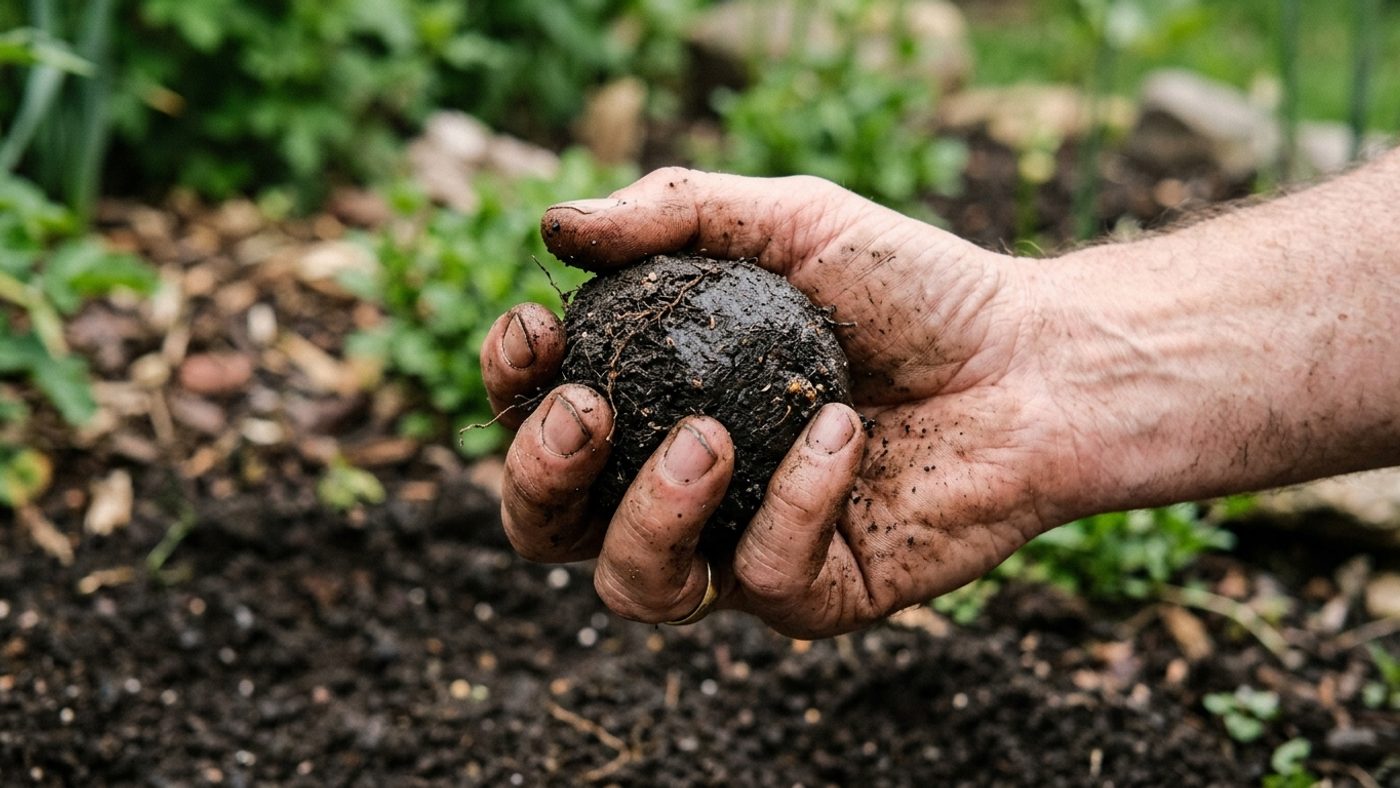
Soil type. The simplest test needs nothing but your hands: pick up a damp handful of soil and roll it. If it smears, feels sticky, and rolls into a long thin sausage you can polish to a shine with a finger, that's clay, heavy, nutrient-rich, slow to drain, and prone to baking hard in a dry spell. If it feels gritty, falls apart when you try to roll it, and won't hold a shape, that's sandy soil, free-drainingSoil that lets water pass through quickly rather than pooling, so roots aren't sitting in wet ground after rain. Full definition → and quick to warm in spring, but low in nutrients and quick to dry out. A slightly soapy, slippery feel that won't clump easily points to silt. Something in between, with none of those extremes, is loam, and it's usually the easiest starting point. The soil type hub covers acidity, liming, and what pH means for specific crops in proper depth, worth a look once you know what you're working with.
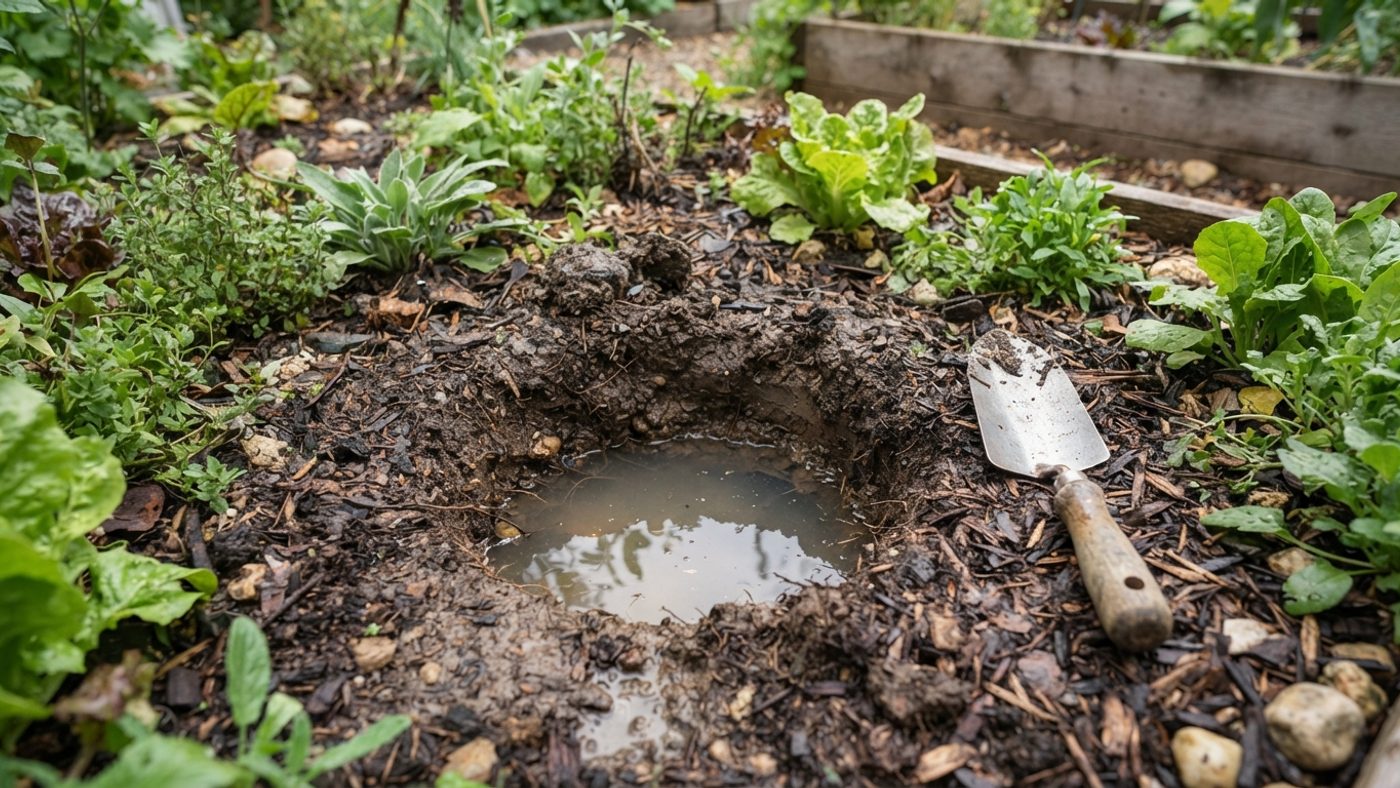
Drainage. Dig a hole roughly 30cm deep, fill it with water, and see how long it takes to disappear. Water still sitting there after several hours points to poor drainage, common on Scottish clay, and worth knowing before you commit to crops that rot in wet ground over winter, like garlic or rhubarb. Water gone within an hour or so suggests free-draining ground, which holds moisture less well through a dry spell instead.
Cool, damp ground is also the reason slugs are usually the first pest problem a beginner meets here, more of a first-season issue than in a drier climate, and worth watching for on anything just planted out, rather than a surprise to figure out later.
None of this needs a lab test or a purchased kit to get started. A soil-testing pH kit is worth adding later if a specific crop's guide flags pH as make-or-break (brassicasThe cabbage family: cabbage, kale, broccoli, cauliflower, Brussels sprouts, kohlrabi, swede, turnip and more, sharing the same pests, diseases and rotation rules. Full definition → and clubrootA soil-borne fungal disease of the brassica family that swells and distorts roots, and survives in soil for years. Full definition → risk, for instance), but the hands-and-a-hole version above is enough to start choosing sensibly.
Pick five things, not twenty
The single most common first-year mistake, across a garden, an allotment, or a set of containers, is the same one: too many crops, sown too early, with no plan for who's watering what while you're away for a fortnight in July. A first year with five crops you actually manage well beats a first year with twenty you half-manage badly, every time.
The site's own comparison of Scotland's most forgiving beginner crops goes through the reasoning in full, which crops tolerate being ignored for a week, which have a wide harvest window instead of a narrow one, and which need almost no feeding, and is worth reading before you buy a single seed packet.
One decision worth making early: seed or young plants (plugs or pot-grown starts from a garden centre). Seed is cheaper and gives more variety choice, but asks more of you, the right sowing date, warmth to germinateA seed sprouting: breaking dormancy and putting out its first root and shoot, given the right warmth and moisture. Full definition →, and a few weeks of looking after seedlings before anything goes in the ground. Young plants cost more per plant but skip that whole stage, which is a reasonable trade in year one, especially for anything that needs an early start indoors in a short season. Neither is the "proper" way to start; picking whichever matches how much time you actually have this year is the practical answer.
If you're starting on an allotment specifically rather than a garden or containers, two other pieces cover the ground this one doesn't: the eight real first-year mistakes worth avoiding, and a month-by-month plan for the first season on a new plot, including what to do with whatever the previous tenant left behind.
Once you've settled on your handful of crops, the Planting Calendar tool turns "what" into "when," matched to Scottish timing rather than a generic UK one, the natural next stop once your list of five is actually decided.
Common questions
Is Scotland's growing season really that much shorter than England's?
Yes, measurably, see the growing-season and frost figures above. One partial offset: further north, summer daylight runs longer, so plants get more hours of light per day once the season does get going, even though it starts later and ends sooner overall.
Can I just use the dates on a seed packet if I add a few weeks?
Roughly, but "a few weeks" varies a lot by exactly where you are, a coastal Highlands garden can have an earlier last frost than an inland Central Belt one. Rather than guess an offset, check your own postcode against the Frost Date Calculator (linked above) and work from that instead of a flat adjustment.
Do I need a polytunnel or greenhouse to grow anything worthwhile in Scotland?
No. A shorter, cooler season narrows what ripens reliably outdoors without protection (tomatoes and other heat-lovers being the classic example), but plenty of genuinely forgiving crops crop well outdoors on an open plot, see the beginner-crops comparison linked above for the specific reasoning behind each one.
What if my garden is mostly shade, or mostly clay, or both?
Neither rules out gardening, but both narrow the first-year list worth attempting. Note what you found in the sun and soil checks above, then choose from crops known to tolerate that condition rather than fighting it in year one, the soil type hub linked above goes into what grows where on Scottish soils specifically.
Should I start with a garden bed, raised beds, or containers?
Whichever matches the ground you've actually got. Poor drainage or heavy clay is a real argument for raised beds or containers, since both let you control the growing medium directly rather than working around what's already there; raised beds also warm up faster in spring than the ground around them, which is worth having in a short-season climate. A well-drained plot with decent loam doesn't need that extra step to get started.
Sources
6 sources, recorded with what each was used for
- RHS: Beginner's guide to gardening: Confirming the "start small," assess-your-space framing against a genuine beginner resource, and what a broad UK-wide hub covers versus what this piece needed to add
- RHS: Soil types explained: The hands-on touch/roll test and the characteristics of clay, sandy, silt, and loam soil
- RHS: RHS hardiness rating: The H1a–H7 hardiness scale and its caveat that H4-rated plants are at real risk in a hard winter, especially at elevated or northern sites
- Met Office: Eastern Scotland climate summary (PDF): The regional air-frost-day range, under 40/year on the Fife coast to over 90/year on high ground
- Met Office: Northern Scotland climate summary (PDF): The frost-free season in Northern Scotland often running as little as three months
- Met Office: location-specific long-term averages: The underlying source behind this site's own frost-dates dataset, and the illustrative last-frost/safe-planting rows in the table above