
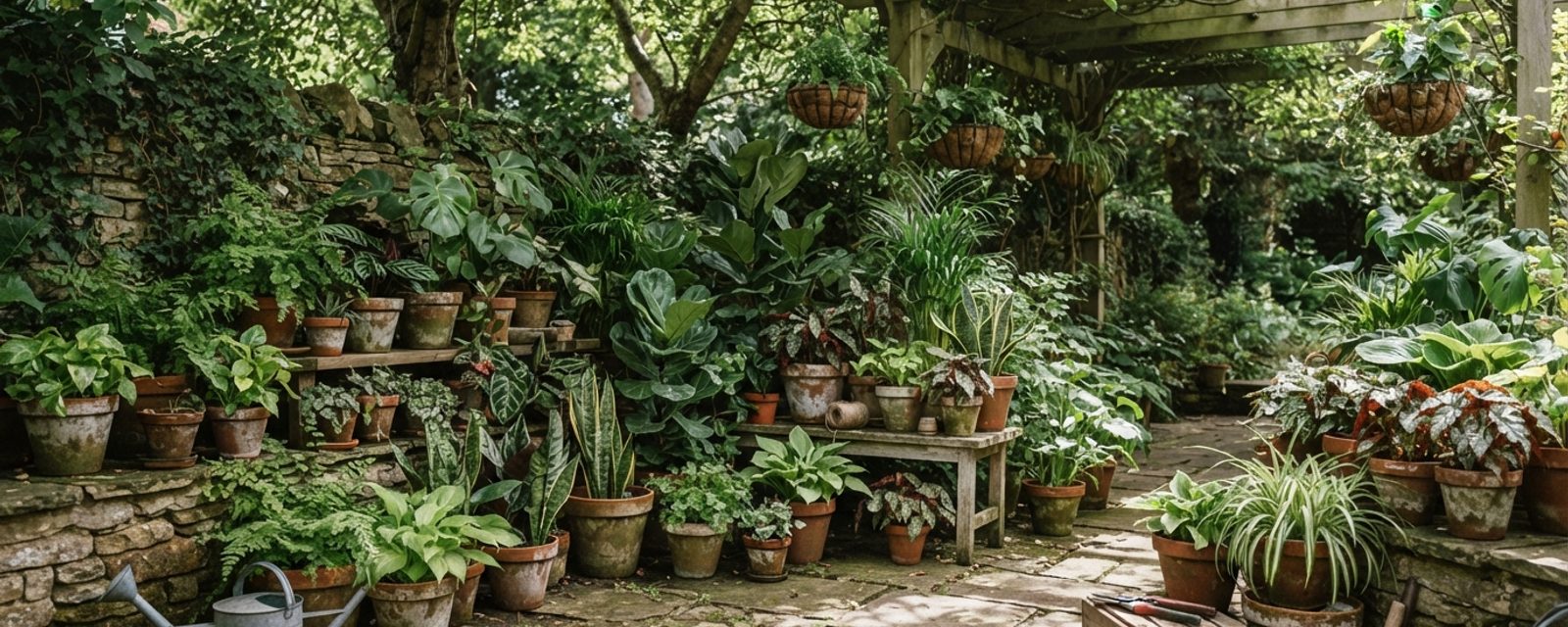
A tropical or subtropical houseplant spends most of the year running on a fairly narrow supply of what it evolved to use. Indoors, light arrives filtered through glass and drops off sharply with distance from a window, so a plant a metre back from the sill is working with a fraction of the intensity it would get in open shade outdoors.
Why a houseplant actually wants to go outside
Central heating strips moisture out of the air, so leaves that evolved to transpire against a humid rainforest understorey are constantly losing water faster than their stomata are built to manage. And indoor air is largely still, no wind, no rain, no fluctuation, which sounds gentle but actually holds a layer of humid, stale air right at the leaf surface, encourages stagnant conditions that fungal and pest problems like, and gives the plant no reason to build sturdier growth.
Move the same plant outside in summer and all three constraints lift at once. Real daylight, even in open shade, is many times brighter than a bright room. Moving air keeps stirring the still layer of humid air that clings to a leaf indoors, which helps the plant breathe more efficiently and tends to produce shorter, sturdier growth than the soft, stretched growth typical of an indoor spell. Rain does what a watering can mostly can't: it flushes salts and dust out of the compost and off the foliage, and outdoor humidity swings are closer to what the plant's leaf structure was built for. Scotland's higher latitude also means longer summer daylight than further south, more hours a day for a plant to actually use that light, but also more hours in which the wrong spot can do damage. None of that makes a houseplant thrive in any position you put it, though, moved too fast, or into the wrong spot, the same plant scorches instead of recovering, which is why the timing and the move itself both need care.
Timing: go by your own nights, not the calendar
The trigger for moving a houseplant outdoors isn't a date on the calendar, it's a night temperature, and it varies by plant, from around 10°C for the most forgiving types up to 15°C for the least cold-tolerant (see the table below). "Consistently" is the operative word, one mild night doesn't clear a plant that's spent months adapted to a stable 18–20°C indoors. A cheap min/max thermometer left outside overnight, or an hourly forecast for your own postcode, is a more reliable check than the daytime temperature you actually feel.
| Plant type | Minimum night temperature before moving out | Note |
|---|---|---|
| Cymbidium, Clivia, Alocasia | Consistently above 10–12°C | Most forgiving of the three bands, still needs a settled run of mild nights |
| Spathiphyllum, Philodendron, Sansevieria, rex begonias | Consistently above 13°C | Mid-tolerance group |
| Calathea, Maranta | 15°C or higher | Least cold-tolerant of the commonly grown houseplants |
UK-wide guidance generally frames the window as May to September, but that's a national average, not a promise for any one garden. The Frost Dates page sets out just how much Scotland's last-frost timing varies station by station, a garden in a frost hollow, on the coast, or at altitude can differ from a neighbouring one by weeks, which is exactly why going by the calendar doesn't work for houseplants here the way it might further south. The safer trigger is a run of consistently mild nights at the specific threshold your plant needs, checked against the forecast for your own area, rather than a fixed date.
If a cold snap catches a plant that's already outside, don't leave it to tough it out, a spell of unseasonably cold nights is common enough in Scotland even after a mild start to the season. Bring the plant back in overnight, or cover it with fleeceA lightweight, breathable fabric laid or draped over plants to trap a little warmth and keep off frost, wind and some flying pests. Full definition →, until temperatures settle again.
Hardening off: staged exposure, not a straight move to a sunny spot
Moving it straight into direct sun causes scorch, pale or bleached patches, sometimes brown and papery, usually within days, because the leaf tissue itself hasn't adjusted yet. The fix is the same staged-exposure principle used for hardening off seedlings before planting them out, run in reverse: start the plant in a sheltered, shaded spot outdoors for its first few days, then shift it into slightly brighter light every three or four days over one to two weeks, rather than putting it straight into the position it'll spend the summer in. For sun-tolerant plants that can take more light once acclimatised, build up on that same few-days-per-stage schedule rather than jumping straight to full midday sun.
Wind needs the same staged treatment as light. Leaves that grew soft in still indoor air can be shredded or bruised by an exposed spot that would barely trouble a plant that's summered outside before, so start any position in relative shelter and only move somewhere more open once the new growth has toughened up.
Where to put it: shade beats a sunny wall
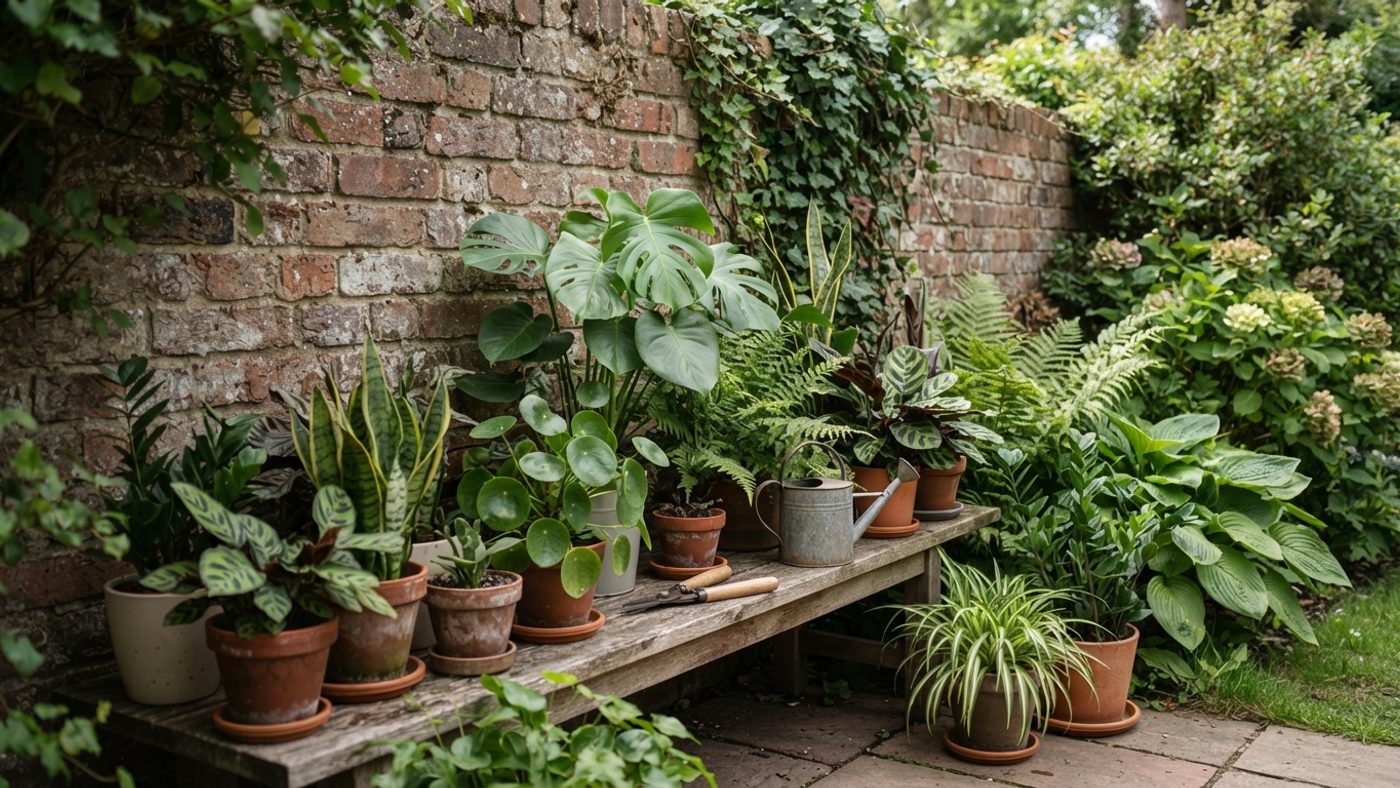
Bright, dappled shade or morning sun is the safer default siting for most houseplants outdoors. A south-facing wall in full midday sun looks like the obvious "warm sheltered spot," but the combination of intense direct light and reflected heat off the brickwork can scorch leaves within a single afternoon, on a day that doesn't even feel especially hot by the air temperature alone. Raise pots on bricks or pot feet so they drain freely and don't sit in trapped water after rain, and check them more often than an indoor plant, sun and wind dry a pot out fast, while a run of Scottish rain can just as easily leave one waterlogged, so water by how the compost actually feels rather than on a fixed schedule.
Before you bring them back in: check for hitchhikers
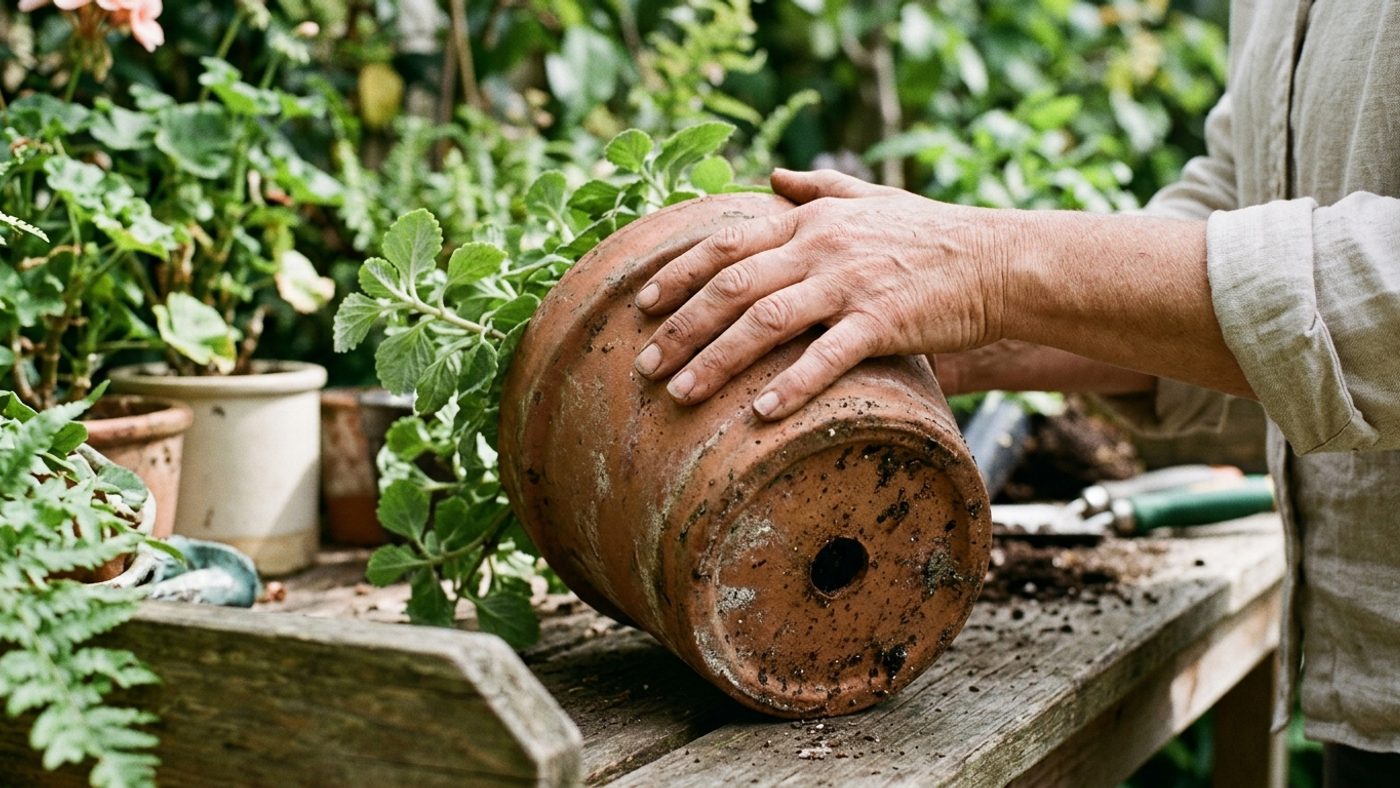
Pots left outdoors all summer pick up passengers. Aphids colonise soft new growth, slugs and snails shelter in the compost surface and underneath the pot itself, and caterpillars can move in unnoticed over several months outside. Inspect each plant carefully before bringing it back indoors, check the underside of leaves, the compost surface, and underneath the pot, and treat any infestation before it comes inside, since a pest that's manageable outdoors, with predators and weather keeping numbers down, can multiply fast in the stable warmth of a house with nothing to check it. Aphids are usually the first sign of trouble on soft new growth; slugs and snails are more likely tucked out of sight under the pot itself; and vine weevil is worth checking for too, adults notch leaf edges at night, while their grubs work unseen in the compost and can go home with the plant. Treating any of the three before the plant comes indoors is worth the extra five minutes, and the aphids and slugs pages cover how. If slug pellets are part of the treatment, use a ferric-phosphate one, metaldehyde pellets are no longer legal to sell or use in the UK.
The move back indoors, like the move out, works best staged rather than abrupt: bring plants in when night temperatures start dropping toward 10°C, and give them a spell in a cooler room before moving them into a fully heated one, so they're not asked to readjust to low indoor humidity and higher temperature in a single step. While the plant is actively growing outdoors it will typically use more feed than it did indoors over winter, a diluted balanced liquid feed every couple of weeks is usually enough, and that can ease off again once it's back inside and growth slows for the year. The outdoor spell is also the easiest window to repot: roots disturbed in bright, airy outdoor conditions recover faster than roots disturbed indoors, so it's worth doing before the plant comes back in rather than waiting.
What should stay indoors all year
Not every houseplant benefits from a Scottish summer outside. Cacti and succulents that come from arid climates generally dislike the amount of rain and ambient humidity a Scottish summer delivers, even a dry one by Scottish standards, sitting wet for extended periods is a bigger risk to them than any cold they'd encounter, so if they do go out they need cover from prolonged rain rather than open exposure. Moth orchids (Phalaenopsis) need a minimum night temperature of around 18°C, which a Scottish summer doesn't reliably offer even at its warmest, so they're better left indoors. Weeping fig (Ficus benjamina) is worth leaving undisturbed altogether, it's prone to dropping leaves in response to any change in light or position, and the disruption of a move out and back isn't worth the benefit. More broadly, genuinely tender tropical plants, African violets, Stephanotis, and other species that sulk at anything below a warm, steady room temperature, need a long, reliably warm season to make the outdoor spell worthwhile, and are working against Scotland's shorter growing season and cooler summer nights. They're usually better off staying indoors near a bright window year-round.
Common questions
Can I put my houseplants outside in Scotland in May?
Only if night temperatures are already consistently sitting above the threshold your specific plant needs, for most subtropical houseplants that's 10–12°C, which many parts of Scotland won't hold reliably until later in the season. Go by a settled run of mild nights, not the calendar date.
Why do my houseplant's leaves go pale and papery after I move it outside?
That's leaf scorch from a sudden jump in light intensity after months of lower indoor light. It's avoided by hardening the plant off, a gradual, staged increase in light exposure over one to two weeks, rather than moving it straight into its intended summer spot.
Do succulents and cacti benefit from going outside in summer?
Less than most other houseplants. They evolved for dry conditions, and Scottish summer rain and ambient humidity are more likely to cause rot or stress than benefit them. If you do put them out, keep them under cover from prolonged rain.
When should I bring my houseplants back indoors in autumn?
As night temperatures start dropping toward 10°C. Move them into a cooler room for a couple of weeks first rather than straight into a heated room, so they can readjust to lower humidity gradually.
How do I stop outdoor pests coming indoors with my houseplants?
Inspect every plant closely before bringing it in, leaf undersides, the compost surface, and underneath the pot, where slugs and snails often shelter, and treat any aphids, slugs or other pests you find before the plant comes inside.
Should I put orchids outside for summer?
It depends on the type. Some orchids such as Cymbidium tolerate outdoor conditions once night temperatures are consistently above 10–12°C. Phalaenopsis (moth orchids) need a minimum of around 18°C and are safer left indoors in a Scottish summer.
Sources
2 sources, recorded with what each was used for
- RHS: Moving houseplants outdoors for summer: Minimum night-temperature thresholds by plant type, the below-10°C trigger and gradual reacclimation for bringing plants back indoors, siting advice (bright shade, gradual sun exposure, pot feet for drainage, rain protection for cacti/succulents), and the named exceptions to leave indoors (Phalaenopsis at minimum 18°C; Ficus benjamina)
- Gardener's World Magazine: Moving House Plants Outdoors in Summer: The May–September UK seasonal window, the pest list to check for on reintroduction (aphids, slugs, snails, caterpillars), and checking under pots for sheltering slugs before bringing plants back indoors