
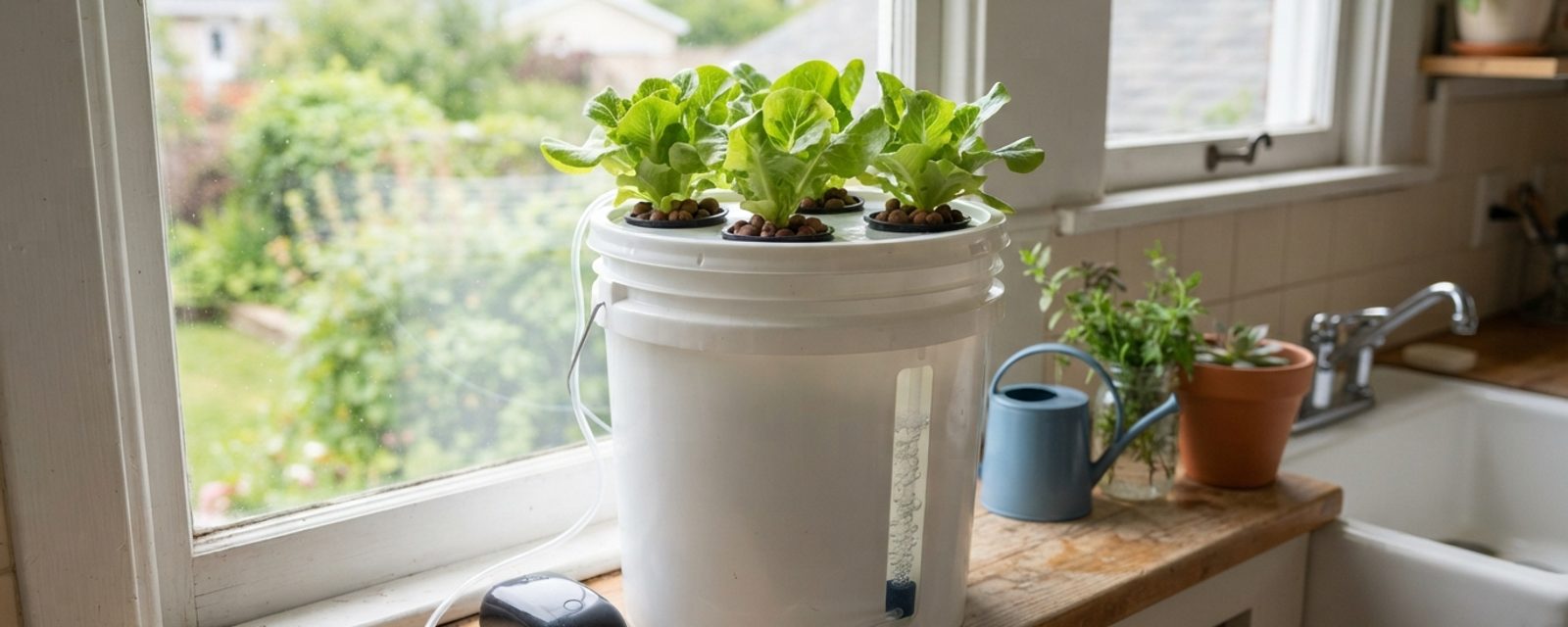
Plenty of Scottish gardeners working heavy clay know the pattern by August: the lettuce boltedA plant switching early into flowering and seed production, usually triggered by stress, after which leaves, roots or bulbs turn bitter or unusable. Full page → before it filled out, the courgette rotted at the stem after three weeks of rain, and the slugs got to the seedlings before you did. Heavy, slow-draining clay holds water around roots for days after a downpour, encouraging exactly the fungal problems and slug pressure that make a short growing season feel even shorter. It's a reasonable moment to wonder whether skipping soil altogether, growing in nutrient solution instead, would sidestep the whole mess.
It would sidestep some of it. Hydroponics removes soil-borne slug pressure, waterlogging, and drainage problems by definition, because there's no soil to drain badly or host slugs in the first place. But it trades those problems for a different set, light, temperature, and electricity, that soil growing never had to deal with, and those are Scotland's real weak points, not its strong ones. This guide covers what a beginner can actually attempt at home, and where the unheated Scottish porch or greenhouse stops being a viable growing space.
What hydroponics solves, and what it doesn't
In a hydroponic system, plant roots sit in an inert medium (rockwool, clay pebbles, or similar) and are fed directly with water containing dissolved mineral nutrients, rather than drawing nutrients from soil. Plants grown this way need the growing medium mainly for physical support, the nutrition and most of the water come from the solution circulating around the roots, and roots need continuous access to oxygen or they die in stagnant water.
That mechanism genuinely fixes the clay-drainage problem: there's no clay, so there's no waterlogging. It also removes slugs and soil-borne diseases like clubrootA soil-borne fungal disease of the brassica family that swells and distorts roots, and survives in soil for years. Full definition → (a fungus-like organism that lives in soil and stunts brassicaThe cabbage family: cabbage, kale, broccoli, cauliflower, Brussels sprouts, kohlrabi, swede, turnip and more, sharing the same pests, diseases and rotation rules. Full definition → roots into swollen galls) from the equation, since the growing medium isn't a habitat for either. What it does not fix is Scotland's light and season length, a hydroponic lettuce still needs roughly the same hours of usable light as a soil-grown one to bulk up, and a system sitting in an unheated space in December is exposed to the same cold nights as anything else outdoors.
How the beginner systems actually work
Three system types come up repeatedly in beginner guidance, and they differ mainly in how much moving machinery is involved.
| System | How it works | Equipment needed | Beginner suitability |
|---|---|---|---|
| Deep Water Culture (DWC) | Roots hang directly into an oxygenated nutrient reservoir; plant sits in a net pot in floating foam or a lid | Reservoir, air pump, air stone, net pots | Simplest -- one moving part (the air pump), easiest to build and troubleshoot |
| Nutrient Film Technique (NFT) | A thin film of nutrient solution is pumped continuously through sloped channels or gutters past bare roots | Water pump, sloped channels/gutters, timer | More setup and plumbing; a pump failure dries roots out fast, no reservoir buffer |
| Ebb and Flow (flood and drain) | A grow tray is periodically flooded with nutrient solution from a reservoir below, then drains back down | Reservoir, pump, timer, flood tray | Moderate complexity; the flood cycle gives roots feed and air, but timers and pump reliability matter |
DWC is the system most consistently recommended for a first attempt because it has the fewest points of failure, a single air pump keeps the reservoir oxygenated, and there's no continuous flow to interrupt. NFT and ebb-and-flow both depend on an uninterrupted pump cycle; a power cut or blocked line dries roots out within hours, which is a harder fault to recover from than anything soil growing throws at a beginner.
A fourth system, aeroponics, roots hang in an enclosed chamber and are misted with nutrient solution at intervals rather than sitting in it. It's a poor fit for a first attempt: it depends on a fine mist nozzle that clogs easily and needs a much shorter, more reliable misting cycle than any of the three systems above, which is why it isn't covered in detail here.
Growing media: rockwool, clay pebbles, and alternatives
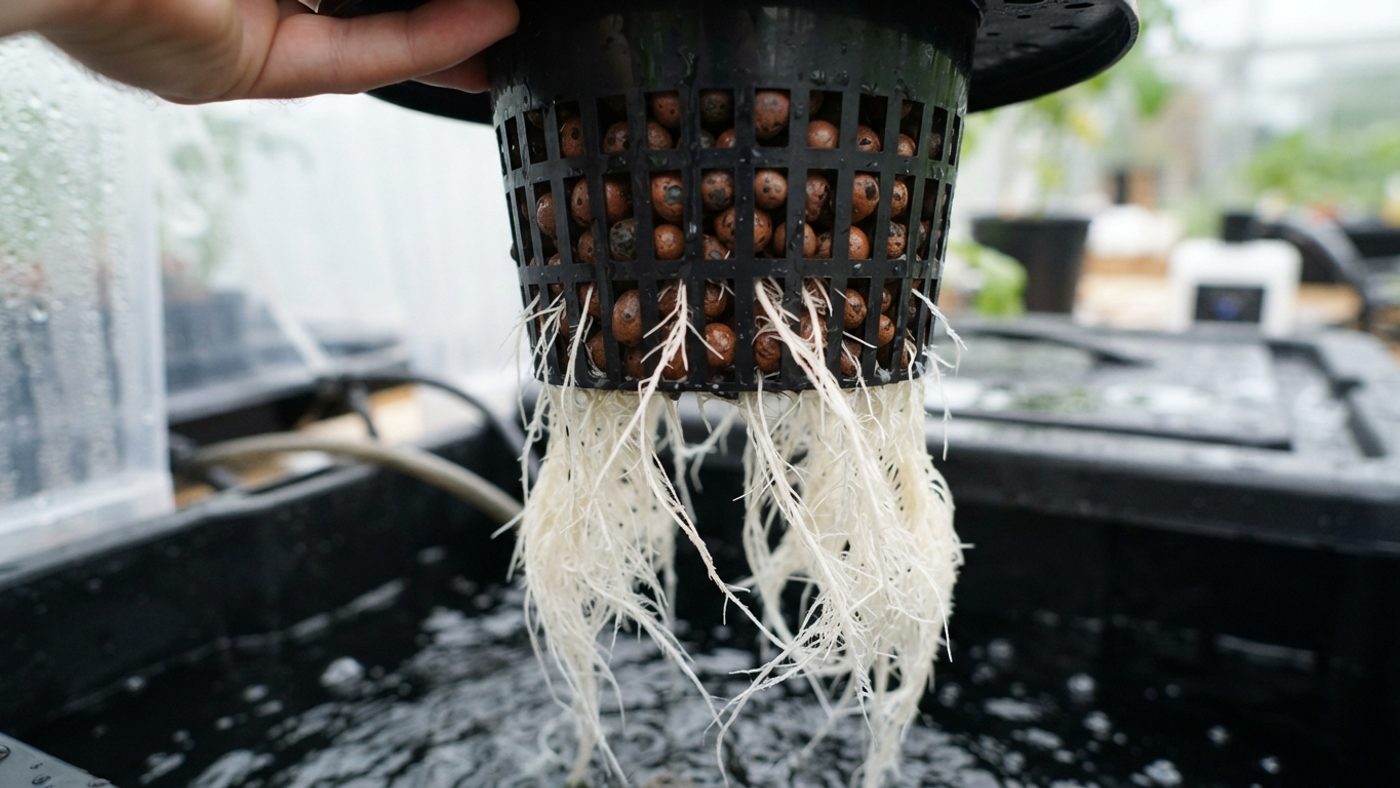
Rockwool (spun mineral fibre) and expanded clay pebbles are the two media most beginner kits ship with. Both are inert, they don't feed the plant themselves, they just hold the root ballThe mass of roots and the soil or compost clinging to them, as it comes out of a pot or out of the ground when a plant is lifted. Full definition → in place and retain some moisture and air. Rockwool holds more water and is common for starting seeds or cuttings; clay pebbles drain faster and are reusable if rinsed between crops, while rockwool generally isn't.
For anyone uneasy about rockwool's mineral-fibre, non-biodegradable nature, coir (coconut fibre) is a workable peat-freeCompost made without peat, which is harvested from a slow-forming, carbon-storing wetland habitat that peat extraction damages. Full definition → alternative already established in general growing media guidance, it behaves similarly to peat-based mixes but dries out faster because of its coarse texture, so it needs watering little and often rather than being left to sit.
Nutrient strength and pH: the part that actually needs daily attention
Rockwool and clay pebbles decide how the roots are held; the nutrient solution itself decides how the plant actually grows, and it needs more routine attention than either medium does. A liquid hydroponic feed (sold as a two-part or ready-mixed concentrate) is diluted to a specific strength, checked with an EC (electrical conductivity) meter, which measures how much dissolved nutrient is in the water, or, for a beginner, simply following the manufacturer's dilution ratio on the bottle rather than guessing. Too weak starves the plant, showing as pale, slow growth; too strong scorches roots and browns leaf edges, usually within a few days of feeding, which is the point to flush the system with plain water and re-mix at the correct strength rather than pushing on.
pH matters just as much: keeping hydroponic solution in a specific target range keeps nutrients available to the roots, checked with a cheap pH meter or test strips and corrected with a small amount of pH-up or pH-down solution as needed. Scottish tap water varies a lot by region, the west and Highlands tend to run soft, the east and central belt harder, which changes how much correction a solution needs from one household to the next, so check your own tap water's starting pH rather than assuming a fixed adjustment routine will work everywhere. A private water supply (a well, spring or burn, common in rural Scotland rather than mains) can vary far more than the regional mains split above, sometimes changing between seasons on the same property, so test it directly rather than assuming either regional figure applies.
Algae is the other routine nuisance, especially in DWC reservoirs: any light reaching the nutrient solution itself, not just the leaves, lets algae take hold, turning the reservoir green and competing with roots for oxygen. A light-proof reservoir and lid, most net-pot lids already block light if fitted snugly, prevents most of it; a reservoir that's already gone green needs draining, scrubbing, and refilling with fresh solution rather than topping up.
The other early warning sign worth knowing before it becomes a real problem is root rot: healthy hydroponic roots are white or pale cream, and a strong, sour smell or roots turning brown and slimy means oxygen has dropped too low or the reservoir has gone stagnant, usually from an air pump failure or a reservoir left too long between changes. Caught early, within a day or two of the smell appearing, trimming the affected roots and refreshing the solution usually saves the plant; left longer, the whole root system can collapse.
Buying a kit or building your own
A basic pre-made DWC kit (bucket, lid, net pot, air pump and stone included) costs roughly £15-£30 for a single-plant setup, and is the simpler starting point for a first attempt, no measuring or drilling required. Building the same thing from a food-safe bucket, a fish-tank air pump and a net pot bought separately comes in cheaper but takes an evening of assembly. Either way, a single air pump running continuously is quiet enough for a kitchen worktop or utility room, well below the noise of a fridge; a reservoir with a snug, light-proof lid also keeps smell to a minimum as long as the solution is changed on schedule rather than left to stagnate.
Wherever the setup ends up, porch, greenhouse, kitchen or utility room, an air pump, and any grow light or reservoir heater, is mains electrical equipment running continuously near standing water, so plug it into an RCD-protected socket or a plug-in RCD adaptor, the same basic precaution as any outdoor or damp-location electrics. A grow light and heater running in a cold, damp, poorly-ventilated porch or greenhouse also raises condensation on windows and surfaces nearby; a little airflow, a vent left open, or a small fan on low, keeps that in check alongside the algae and root-rot risks already covered.
The Scottish light problem
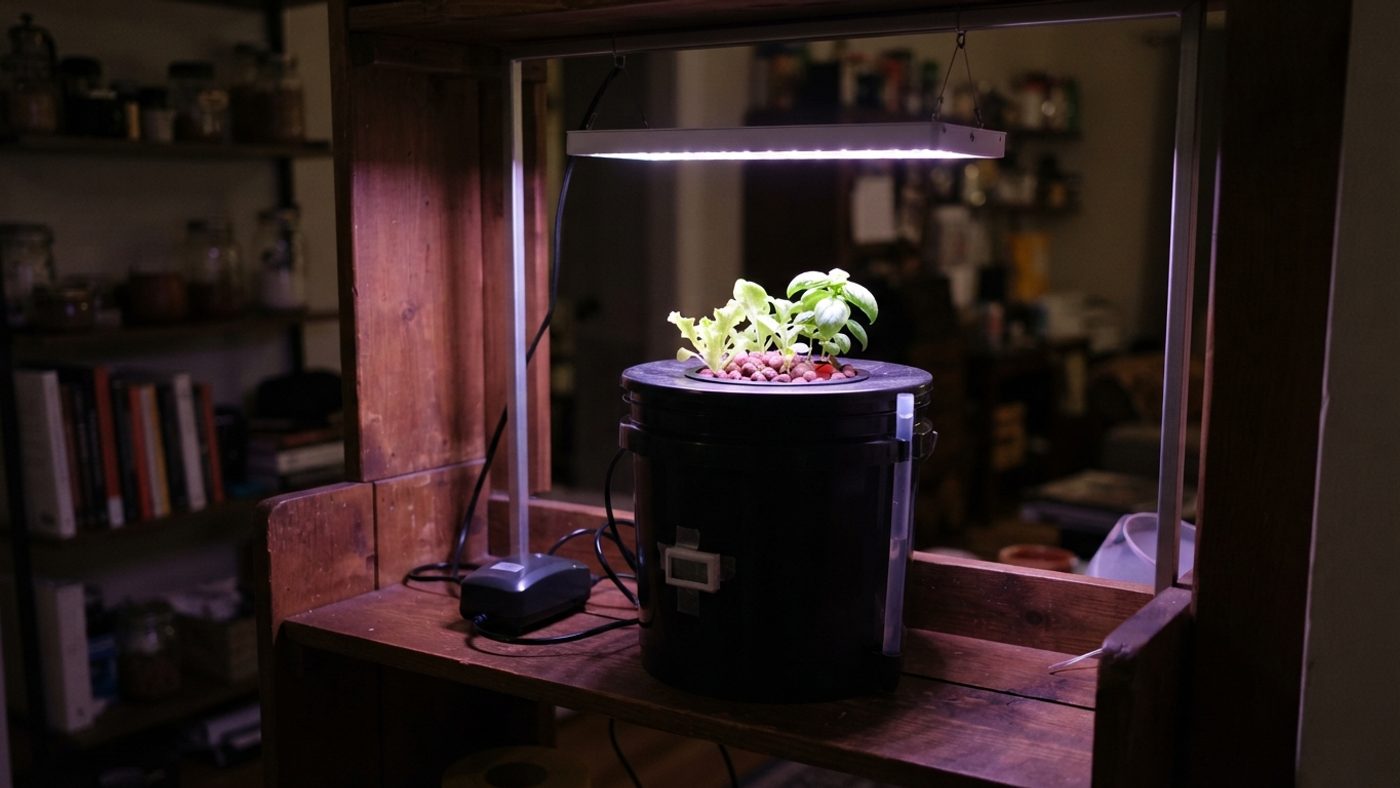
A windowsill or unheated porch works for a lot of beginner hydroponics advice written for further south, where winter light still gets a plant most of the way there. Scotland's winter light is genuinely thinner. Per Met Office 1991-2020 long-term averages (full monthly breakdown in the LED grow lights guide), Edinburgh gets roughly 7% less winter sunshine than Cornwall overall, with the gap widening to 10-11% in December and January specifically, in practical terms, a Scottish seedling or hydroponic plant is getting noticeably fewer hours of the bright, direct sunlight it actually uses each day through the darkest months, not just a slightly duller version of the same day. And Edinburgh is the milder end of the Scottish range, not the whole picture: the same Met Office data puts Lerwick, in Shetland, at roughly 38% less winter sunshine than Cornwall over the same window. The other side of that same latitude effect is a real gain in June, when Scotland's much longer summer daylight (17 hours or more in much of the country) outpaces the rest of the UK, so a system that struggles through December can genuinely thrive through the summer months with far less supplemental light than it needs in winter.
The practical consequence for hydroponics specifically: almost no beginner hydroponic system in Scotland works on ambient light alone between roughly October and March. You need supplemental grow lights running well beyond the light hours a windowsill gets naturally, which is a running cost, not just an equipment cost.
The electricity cost of running a system through winter
A hydroponic setup adds two possible electrical loads beyond a simple soil pot: the grow light, and, if you choose to run one, a small reservoir heater. Using Ofgem's current Direct Debit price cap rate of 26.11 pence per kWh:
| Load | Typical draw | Daily cost | Weekly cost |
|---|---|---|---|
| 150W LED panel, 14 hrs/day (typical for leafy greens/herbs) | 2.1 kWh/day | ~55p | ~£3.80 |
| 25W reservoir heater, run continuously to hold solution above ~15°C | 0.6 kWh/day | ~16p | ~£1.15 |
| Both together | 2.7 kWh/day | ~71p | ~£4.95 |
That's a genuine ongoing cost that soil growing in an unheated bed doesn't carry at all. It's not prohibitive for a single small DWC bucket, but it scales up fast with tray size, and it's worth totalling before committing to a bigger setup. For the full running-cost methodology and worked examples across different wattages, see the LED grow lights guide.
Will an unheated Scottish porch or greenhouse actually work?
An unheated greenhouse or porch tracks outdoor temperature closely once the sun goes down, and winter nights across most of Scotland regularly fall to or below freezing (see the frost dates page for how that varies by region). A hydroponic reservoir with nutrient solution sitting at or near 5°C stalls root uptake badly, and repeated freeze-thaw cycles risk splitting pipework, reservoirs, and pumps outright, a failure mode soil growing simply doesn't have, since a dormant soil bed doesn't need functioning electrical or plumbing components to survive winter. Commercial-scale vertical farming in Scotland, the James Hutton Institute's work with Dundee's vertical farm facility is one example, gets around this by fully engineering the growing environment: sealed buildings, controlled temperature, and dedicated lighting, none of which describes a garden porch. The closer a home system gets to controlling temperature and light rather than leaving them to the weather, the more of the year it stays workable.
From roughly April through September, an unheated greenhouse or a bright porch is a genuinely workable environment for a beginner system, daytime temperatures and light levels are close enough to what the plants need that a DWC bucket of lettuce or basil can do well with minimal extra input. The realistic verdict is seasonal, not absolute: treat an unheated space as a spring-to-autumn hydroponic setup, and either bring the system indoors under lights for winter or accept a dormant few months, rather than assuming a soil-free system automatically solves the season-length problem year-round.
Which crops are realistic first attempts
| Crop | Why it suits a beginner system | Verdict for a first Scottish attempt |
|---|---|---|
| Lettuce and salad leaves | Fast growing cycle, shallow fibrous roots suited to low-flow systems, harvested before problems compound | Realistic -- good first crop, especially in DWC |
| Herbs (basil, mint, coriander) | Short time to harvest, tolerant of minor nutrient fluctuations, high value for the space used | Realistic -- commonly the most successful beginner crop |
| Spinach and pak choi | Similar shallow-root, fast-cycle profile to lettuce | Realistic -- good second crop once the basics are working |
| Cherry tomatoes | Manageable size, but needs more light, a longer season, and hand-pollination indoors | Marginal -- workable with grow lights and patience, harder in an unheated space |
| Full-size tomatoes, peppers, cucumbers | Long season, high light demand, heavier feeding, larger root systems need bigger systems | Unrealistic as a first attempt, especially without a heated, lit growing area |
| Root vegetables (carrots, potatoes) | Need depth and bulk that most beginner systems (NFT, shallow DWC) can't provide | Not suited to the beginner system types covered here |
Leafy greens and herbs dominate every beginner recommendation for the same underlying reasons: a short time from seed to harvest limits the window in which anything can go wrong, shallow roots don't need a deep or complex system, and neither crop group needs pollinating indoors. Fruiting crops need more light, more time, and, in most home hydroponic setups, hand-pollination, which is why they're consistently flagged as a step up rather than a starting point.
Getting started: a realistic first project
Putting all of the above together, a sensible first Scottish hydroponics project looks like this: a single pre-made or DIY DWC bucket, growing lettuce, salad leaves or a herb, sited on a bright windowsill indoors or in a spring-to-autumn unheated greenhouse, with a snug light-proof lid to keep algae out and an EC/pH check built into a weekly routine rather than left to guesswork. Keep it to one bucket for the first attempt, it's cheap enough to write off if something goes wrong, and it tells you within a few weeks whether the routine (feeding, checking, topping up) is one you'll actually keep up with before spending more on a bigger rig.
Scale up, add a grow light for winter, or move to NFT/ebb-and-flow, only once that first bucket has run a full crop through without a disaster. Budget for a grow light from the start if winter growing matters to you, rather than discovering the gap in December.
One thing hydroponics doesn't remove: airborne and foliar pests. Aphids, whitefly and fungus gnats attack a hydroponic plant's leaves and stems exactly as readily as a soil-grown one, since none of them live in soil in the first place. Switching methods solves the soil-borne problems above; it isn't a general pest-free guarantee.
Common questions
Do I need a greenhouse to grow hydroponically in Scotland, or can I do it indoors?
Indoors is generally easier for a beginner in Scotland, because a heated room holds a stable temperature year-round without extra reservoir heating. A greenhouse or porch works well from spring to autumn but needs supplemental heat and light to stay viable through winter.
Which hydroponic system should a complete beginner start with?
Deep Water Culture (DWC) is the most commonly recommended starting system because it has only one moving part, an air pump, and no continuous flow to fail, unlike Nutrient Film Technique or ebb-and-flow systems.
Can I grow tomatoes hydroponically as my first project?
You can, but it's a harder first attempt than leafy greens or herbs: tomatoes need more light, a longer growing season, hand-pollination indoors, and a larger system than a small DWC bucket typically provides. Most beginner guidance treats fruiting crops as a second project, not a first.
Is rockwool the only growing medium option, and is it environmentally sound?
Rockwool and clay pebbles are the most common starter media, but rockwool is a manufactured mineral-fibre product that isn't biodegradable and generally isn't reused between crops. Coir (coconut fibre) is a peat-free alternative already used in general growing media, though it dries out faster and needs more frequent watering.
How much will running grow lights and a heater actually add to my electricity bill?
Using the current Ofgem Direct Debit rate of 26.11p/kWh, a 150W LED panel run 14 hours a day costs roughly 55p a day (about £3.80 a week) for lighting alone; adding a small reservoir heater to keep nutrient solution above about 15°C adds roughly another £1 a week. Costs scale up with tray size and panel wattage.
Weighing up other alternative growing systems for a Scottish garden? See square foot gardening: a Scottish verdict, hugelkultur: where it actually works and fails, hotbed gardening: free winter heat from manure, and chaos gardening: what it does to yield.
Sources
5 sources, recorded with what each was used for
- RHS: Hydroponics: Definition of hydroponics, system types (substrate vs aggregate-free, including NFT and aeroponics), growing media, oxygenation requirements, pH monitoring, and the note that winter production needs artificial lighting
- Met Office: Western Scotland Climate (regional sunshine-hour data, via the LED grow lights guide): Regional sunshine-hour comparisons (Edinburgh vs Cornwall vs Lerwick) underlying the winter-light discussion
- Ofgem: Changes to energy price cap between 1 July and 30 September 2026: Current Direct Debit electricity unit rate (26.11p/kWh) underlying the running-cost calculation
- James Hutton Institute: Vertical Farming: Description of controlled-environment vertical farming in Scotland (Dundee), the crops it targets, and a contrast point for full climate control versus an unheated home setup
- Garden Organic: Peat-free growing: Coir as a peat-free growing medium and its faster-drying, coarse-textured watering behaviour compared with peat-based media