
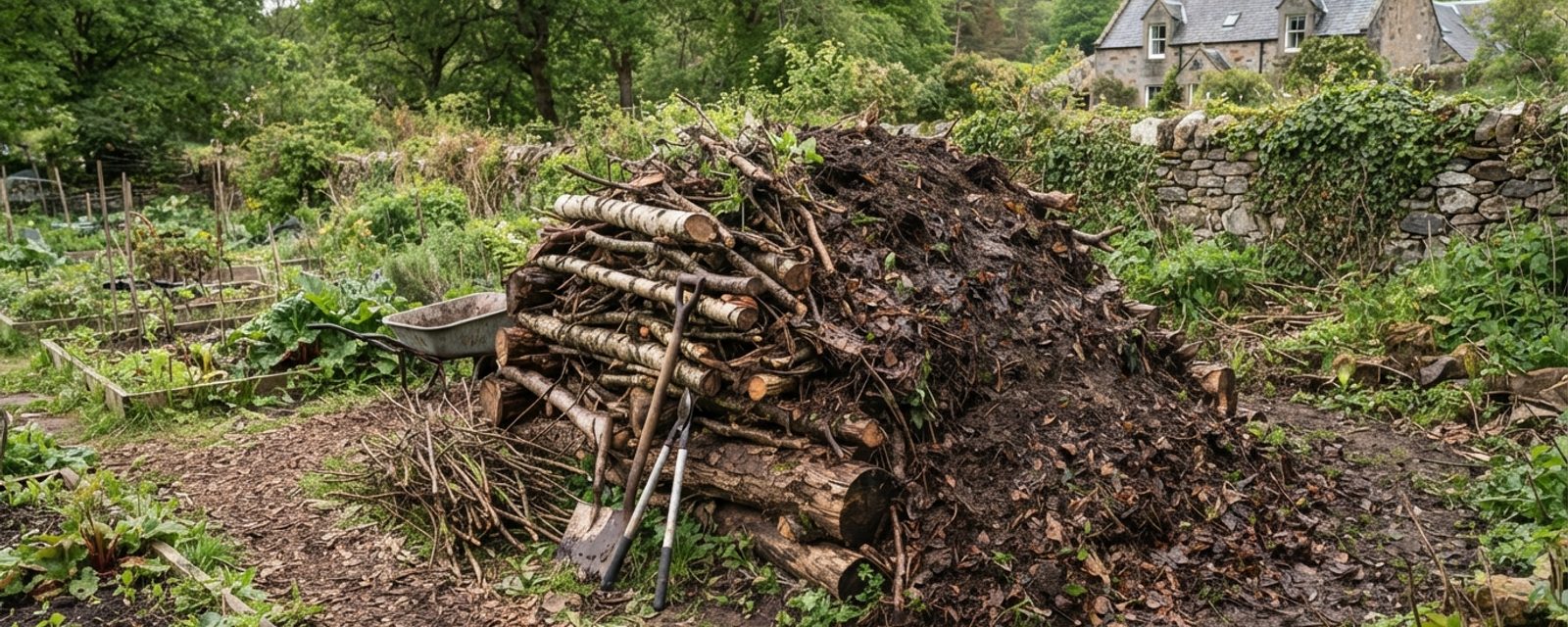
By late October, if you've spent a weekend hedge-laying or thinning out a shelterbelt, a line of trees planted to break the wind, common along field and garden boundaries, you're standing over a heap of birch, hazel and hawthorn branches with nowhere obvious to put them. Hedge-cutting and laying season runs October to February, precisely to avoid disturbing nesting birds and because the plants are dormant, so this pile appears right as the wettest stretch of the year across most of western Scotland is starting. Burning it is an option. Chipping it is another. Increasingly, gardeners are being pointed toward a third: bury it, mound soil over it, and grow on top. Hugelkultur promises that this pile of "waste" wood becomes a raised bed that holds its own moisture and feeds itself for years, with little or no watering and no added fertiliser required.
That promise was built somewhere else. Hugelkultur is a traditional Central and Eastern European technique, popularised more recently by the Austrian farmer Sepp Holzer's mountain smallholding, hardly a dry climate itself, but nothing like the range Scotland covers. Whether the moisture-retention pitch holds up on a Scottish allotment in a normal October is a genuinely open question, worth answering with real numbers before committing a weekend's worth of prunings to a hole in the ground.
What hugelkultur actually is
The technique digs a trench or clears a strip of ground, stacks logs and branches (ideally already partly rotted) into a mound, and layers smaller branches, twigs, leaves, grass clippings, compost and topsoil on top, finishing with a growing medium a few inches deep across the surface. Mounds are typically built waist-high or taller at first, because the pile settles significantly as the wood breaks down and the structure loses volume over the following seasons; a domestic version is usually a metre or so wide at the base, with length depending on how much wood there is to use.
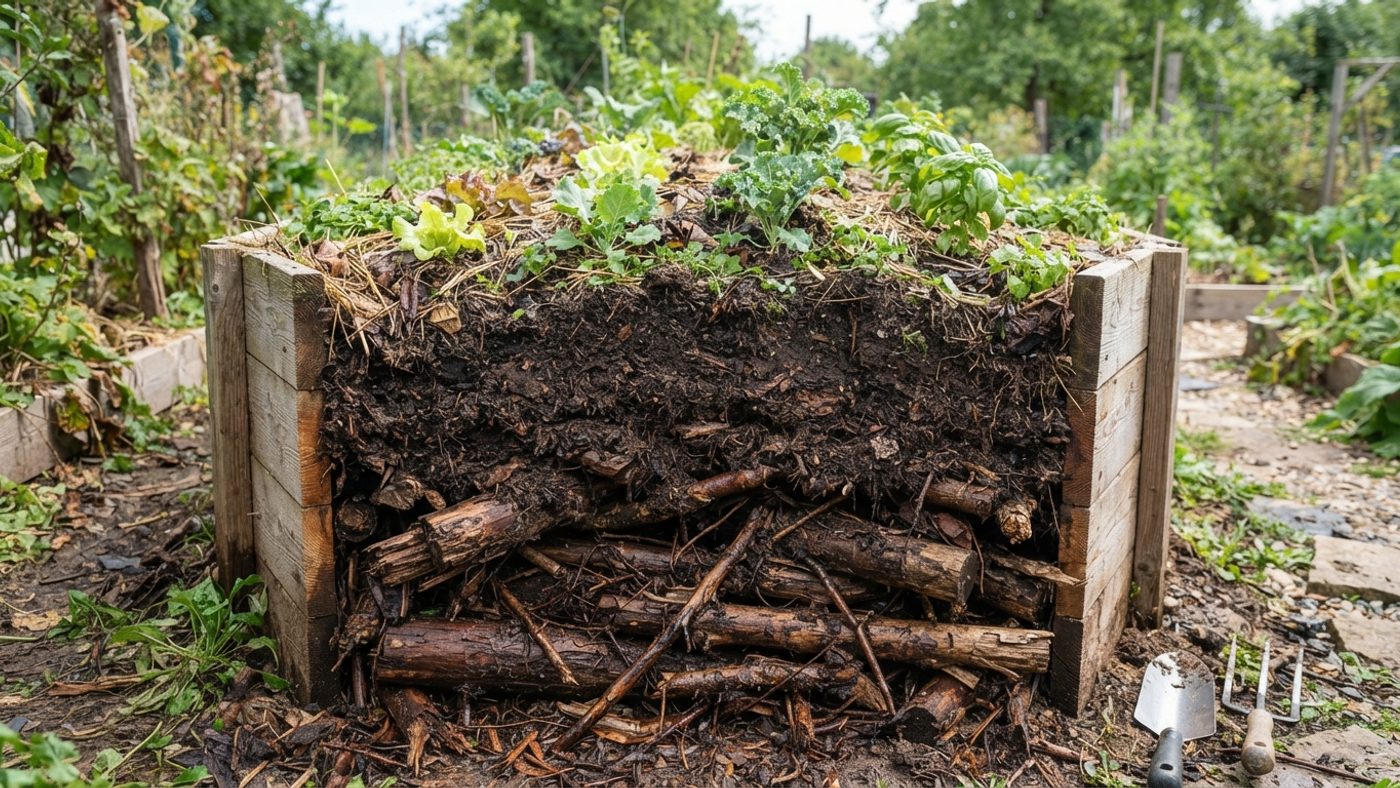
Buried wood decomposes slowly and acts as a long-lived store of organic matter, while as a surface mulchA layer of material spread over the soil around plants to suppress weeds, retain moisture, and improve soil structure as it breaks down. Full definition → it moderates soil conditions by absorbing moisture and slowly releasing it back. A hugelkultur mound is trying to put that mechanism to work below ground rather than on top of it.
The nitrogen catch, before the water catch
There's a cost the general permaculture write-ups tend to underplay: burying woody material causes real, if temporary, nitrogen drawdown. Digging woody material into soil, as opposed to using it as a surface mulch, causes nitrogen lock-up that can last up to two years, because the soil microbes breaking down the wood scavenge nitrogen from the surrounding soil to do it, competing directly with plant roots. A hugelkultur mound is, by design, wood dug into soil. In year one, nitrogen-hungry crops planted straight into a freshly built mound can underperform unless the top layers are nitrogen-rich enough to compensate, grass clippings, well-rotted manure, or compost worked through the finishing layers, not just topsoil laid over bare logs.
Freshly cut wood makes this worse on the exact timeline Scottish hedge-laying and shelterbelt work produces it. Fresh conifer and broadleaf mulches can be mildly phytotoxic, actively suppressing growth rather than just competing for nitrogen, until aged three to four months. Wood cut in October, at the start of the dormant-season cutting window, won't clear that phytotoxic period until midwinter or later. A mound built straight from a hedge-laying pile in autumn is combining both problems, nitrogen lock-up and phytotoxicity, at the point in the year the wood is freshest.
The Scotland problem: does the water even need holding?
Hugelkultur's central selling point is moisture retention, a bed that, according to its more uncritical advocates, may need little or no watering once established, because the buried wood acts as a sponge. That's a genuine advantage where summers are long, dry and irrigation is scarce. It's a much smaller advantage, and a plausible liability, on ground that's already wet most of the year, which describes a lot, but not all, of Scotland.
| Location/region | Annual rainfall | Note |
|---|---|---|
| Driest parts of eastern England | ~500mm | for comparison, the low end of the UK range |
| Upper Clyde valley, Ayrshire, Dumfries & Galloway coasts | under 1,000mm | Scotland's driest ground |
| Bishopton, near Glasgow (1991-2020 average) | ~1,370mm | autumn and winter alone outweigh spring and summer combined |
| Higher west Highlands | over 3,500mm | up to seven times the driest English figure |
Autumn and early winter, especially October to January, are the wettest months across western Scotland generally, the exact window in which a shelterbelt or hedge-laying mound is most likely to get built.
No institutional source states directly that a hugelkultur mound waterlogs in a wet climate, hugelkultur simply isn't a technique with peer-reviewed field trials behind it, anywhere; the reasoning below combines separately documented mechanisms rather than a single source's stated conclusion. The RHS's own guidance on waterlogging describes the mechanism plainly: water displaces air from the spaces between soil particles, and plant roots can literally drown in the resulting anaerobic conditions, starved of oxygen, with the risk highest in already wet, poorly draining ground. Garden Organic and the Soil Association both describe the same failure mode inside a compost heap: too much moisture and too little air turns decomposition anaerobic, and a heap that's too wet needs turning and drying out, not more water. A buried mound of logs is, functionally, a large, unturnable compost heap sitting in the ground. On the wetter half of Scotland's rainfall range, 1,300mm and up, weighted toward autumn and winter, a structure built to hold water can plausibly go past "moist and slow-release" into "saturated and airless" for long stretches, undermining the crop roots it's meant to support rather than feeding them. Teagasc's soil drainage guidance for Ireland, a genuinely comparable Atlantic maritime climate, makes the general point independently: on low-lying or flat ground, poor natural drainage is already the default problem, and management there is about lowering the water table to let roots go deeper, not building structures designed to hold more water in place.
A permanently damp buried log mass has a second, separate risk worth naming plainly: it's exactly the kind of decaying wood that favours honey fungus and other wood-rotting fungi establishing nearby, and it's cover that slugs, voles and other wood-dwelling pests use readily. Slug pressure rises with soil moisture generally, so a permanently damp mound is a more attractive slug habitat than the same mound on drier ground, worth weighing alongside the waterlogging risk itself, not a separate hazard from it.
One more thing worth checking before burying anything: don't bury wood showing signs of disease, ash with the wilting, blackened leaves or diamond-shaped bark lesions of ash dieback, for instance. Burying diseased material doesn't dispose of it the way burning does; treat it the same as any other diseased prunings and burn or bin it rather than build it into a growing bed.
None of this means hugelkultur is unworkable in Scotland. It means the mound's siting and drainage matter more here than the "never water again" pitch usually accounts for.
Where it plausibly still works
The rainfall table above cuts both ways. The Clyde valley, parts of Ayrshire, and stretches of the east coast sit under 1,000mm a year, closer to the climate hugelkultur assumes, and two further factors matter as much as the regional average: how well the specific site already drains, and whether it slopes. Flat, heavy clay holds water regardless of regional rainfall; a sloping or naturally free-drainingSoil that lets water pass through quickly rather than pooling, so roots aren't sitting in wet ground after rain. Full definition → site sheds water even in a wetter region. Independent of hugelkultur specifically, raising beds or planting on shallow mounds is a standard fix for ground that's naturally slow to drain, because it physically lifts the root zone above the standing water table. A hugelkultur mound is, in effect, a much taller version of that same raised-mound principle. That reframes what the technique is actually doing well in Scotland: less wood-as-sponge, more wood-as-bulk-filler for a very tall raised bed on a wet site, with the buried timber doing structural and slow-nutrient work rather than moisture-retention work.
The genuine Scottish upside: what to do with the wood
Where hugelkultur has a real, climate-independent case for Scotland is the byproduct problem, not the moisture claim. Hedge laying and shelterbelt maintenance produce exactly the kind of wood a mound needs, branch wood, not milled timber, and they produce it on the dormant-season schedule, October to February, that lines up with when a bed would need building anyway. Forestry and Land Scotland's own account of the forest cycle makes the point at commercial scale: every part of a felled tree, including branches and offcuts too small for construction timber, is routed to some further use rather than left to rot in place, mulch, boards, firewood, coppice wood. A garden-scale hugelkultur mound is the same logic applied to a domestic pile of prunings: material that would otherwise be burned, chipped, or hauled away gets used on-site instead. That's a legitimate, Scotland-relevant reason to build one, separate from and more defensible than the moisture-retention pitch.
Weighed against a simpler alternative, an imported-topsoil raised bed, or just composting the prunings and buying in soil improver, hugelkultur costs more labour up front, digging out and stacking a trench-load of logs is real work, for a payoff that arrives over years, not the first season, as the buried wood slowly breaks down. It's worth building for the wood-disposal problem it solves and the tall raised-bed structure it creates, not as a shortcut to a lower-effort garden.
Materials and mistakes worth getting right
Regardless of climate, some construction choices affect outcomes everywhere, and are worth doing properly.
Wood choice. Denser hardwoods, oak, hazel, birch, hawthorn, decompose slowly and hold structure and moisture-buffering capacity for longer, and they're exactly the species a hedge-laying or shelterbelt job actually produces. Soft, resinous conifer wood breaks down faster and can carry compounds that suppress growth if used fresh.
Avoid treated, painted or chemically-treated timber, the same rule that applies to any raised bed construction.
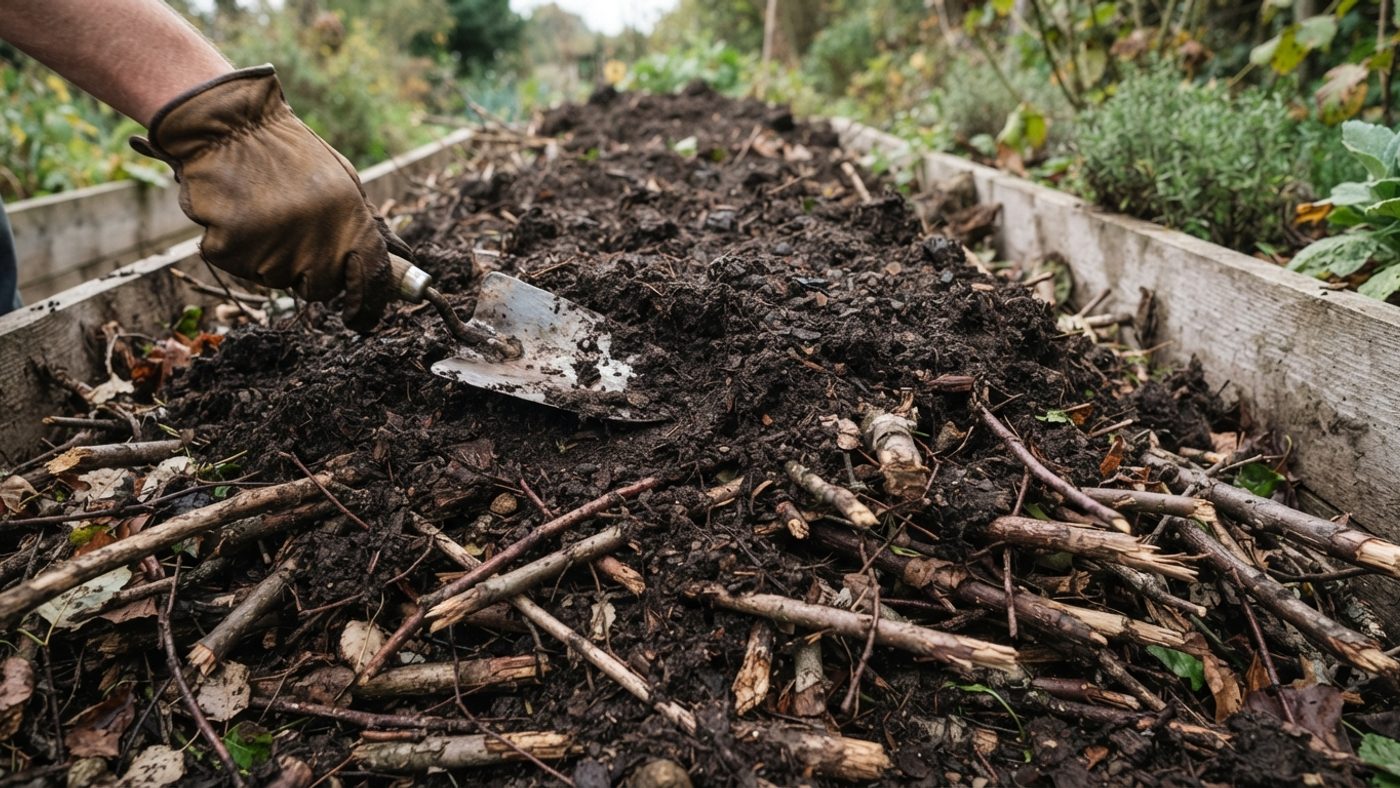
Build the nitrogen buffer in. Line the mound with a nitrogen-rich layer, grass clippings, manure, or finished compost, between the logs and the topsoil, rather than laying soil straight onto bare wood, to offset the lock-up period.
Expect significant settling. Mounds lose height as the wood breaks down and voids collapse; building tall initially and topping up soil in year two is normal, not a sign of failure.
Site for drainage first. On heavier or low-lying ground, this matters more in Scotland than in the technique's usual dry-climate context, a sloped or naturally free-draining site reduces the waterlogging risk above; a flat, heavy, low-lying site increases it.
Go easy in year one. Hungry, thirsty crops like squash and courgettes are commonly grown on new mounds because their sprawling roots can access whatever moisture and nutrients are already there, but nitrogen-sensitive crops, most brassicasThe cabbage family: cabbage, kale, broccoli, cauliflower, Brussels sprouts, kohlrabi, swede, turnip and more, sharing the same pests, diseases and rotation rules. Full definition → and leafy greens, are better held back until year two or later, once the nitrogen lock-up period has passed.
Mind the wind at height. A mound built waist-high or taller stands well above a conventional raised bed, and the same shelterbelts and hedges that break wind at ground level don't protect a structure that tall. Exposed, elevated soil dries and chills faster than ground-level beds, working against the moisture-retention case in an already marginal spot, so a mound sited in the lee of an existing windbreak, rather than out in the open, is worth favouring over one built purely for sun.
How long until it's genuinely low-input. The nitrogen lock-up above passes within one to two years, but the wood itself keeps decomposing and feeding the bed for several years beyond that; treat the first year or two as an investment period, not the point the "no fertiliser" promise is meant to kick in.
Common questions
Does hugelkultur cause nitrogen deficiency in the crops planted on top?
It can, in the first one to two years, because burying woody material into soil (rather than using it as surface mulch) causes microbes to draw nitrogen from the surrounding soil as they break the wood down. Adding nitrogen-rich material into the upper layers when building the mound, or planting nitrogen-hungry crops like squash rather than brassicas or leafy greens in year one, offsets this.
Can I use hedge-laying or shelterbelt prunings straight away, or do they need to season first?
Partly rotted wood is preferable to fresh-cut wood, since it's already lost some of the compounds that can suppress growth and starts the decomposition process closer to where it needs to be. If using freshly cut material, ageing it for a few months before burial, or at minimum building in a strong nitrogen-rich layer above it, reduces both the phytotoxicity and nitrogen-lock-up risk.
How do I tell if my own garden is a good site before building one?
Check drainage directly rather than going by regional rainfall alone: dig a hole roughly 30cm deep, fill it with water, and see how long it takes to drain away. Slow or standing water after several hours points to the kind of heavy, poorly-draining ground where a buried mound is more likely to waterlog; water that drains within an hour or two suggests a site closer to what hugelkultur assumes, regardless of which part of Scotland it's in.
Is diseased prunings wood safe to bury in a mound?
No. Treat diseased wood, ash dieback's wilting, blackened leaves or diamond-shaped bark lesions is the one to watch for, the same as anywhere else on the site and burn or bin it rather than bury it. Burying doesn't dispose of the disease the way burning does, and a growing bed is the wrong place to find that out.
What's a safer way to get some of the same benefit without the waterlogging risk?
Using the same wood as a shallower, surface-level woody mulch layer, rather than burying it in a tall mound, gets the same slow-release moisture buffering and long-term organic matter benefit without creating a large buried mass that can hold water anaerobically through a wet winter.
Weighing up other alternative growing systems for a Scottish garden? See square foot gardening: a Scottish verdict, hydroponics for beginners, hotbed gardening: free winter heat from manure, and chaos gardening: what it does to yield.
Sources
12 sources, recorded with what each was used for
- RHS: Woody Waste, Using as Mulch: Moisture retention as mulch, nitrogen lock-up when wood is dug into soil (up to 2 years), decomposition rate, phytotoxicity of fresh material
- RHS: Organic Matter, How to Use in the Garden: Nitrogen drawdown risk from high-carbon material, moisture retention role of organic matter, decomposition/nutrient-availability timescale
- RHS: Gardening on Wet Soils: Testing for poor drainage vs high water table, raised beds and mounds as a fix for wet ground
- RHS: Waterlogging and Flooding Solutions: Mechanism of waterlogging (oxygen displacement, root death), raised beds as a long-term solution
- RHS: How to Make a Raised Bed: Standard raised bed construction, depth, drainage, fill mixture
- Teagasc: Soil Drainage: Waterlogging risk on low-lying/flat ground in a maritime climate, drainage’s role in enabling deeper rooting
- Garden Organic: Composting: Green/brown balance, aeration requirements, effects of excess moisture on decomposition
- Soil Association: How to Make Your Own Compost: Green/brown ratio, woody material preparation, decomposition timescale, effects of excess moisture
- Woodland Trust: How to Plant and Maintain Hedges: Hedge cutting/laying season (October-February) and the reasons for dormant-season timing
- Forestry and Land Scotland: The Forest Cycle: End uses for all parts of a felled tree, including branch wood and offcuts not suited to construction timber
- Met Office: Western Scotland Climate: Regional annual rainfall range and seasonal distribution, autumn/early-winter peak
- Met Office: Glasgow, Bishopton long-term averages: 1991-2020 annual rainfall and seasonal breakdown for a west-central Scotland station