
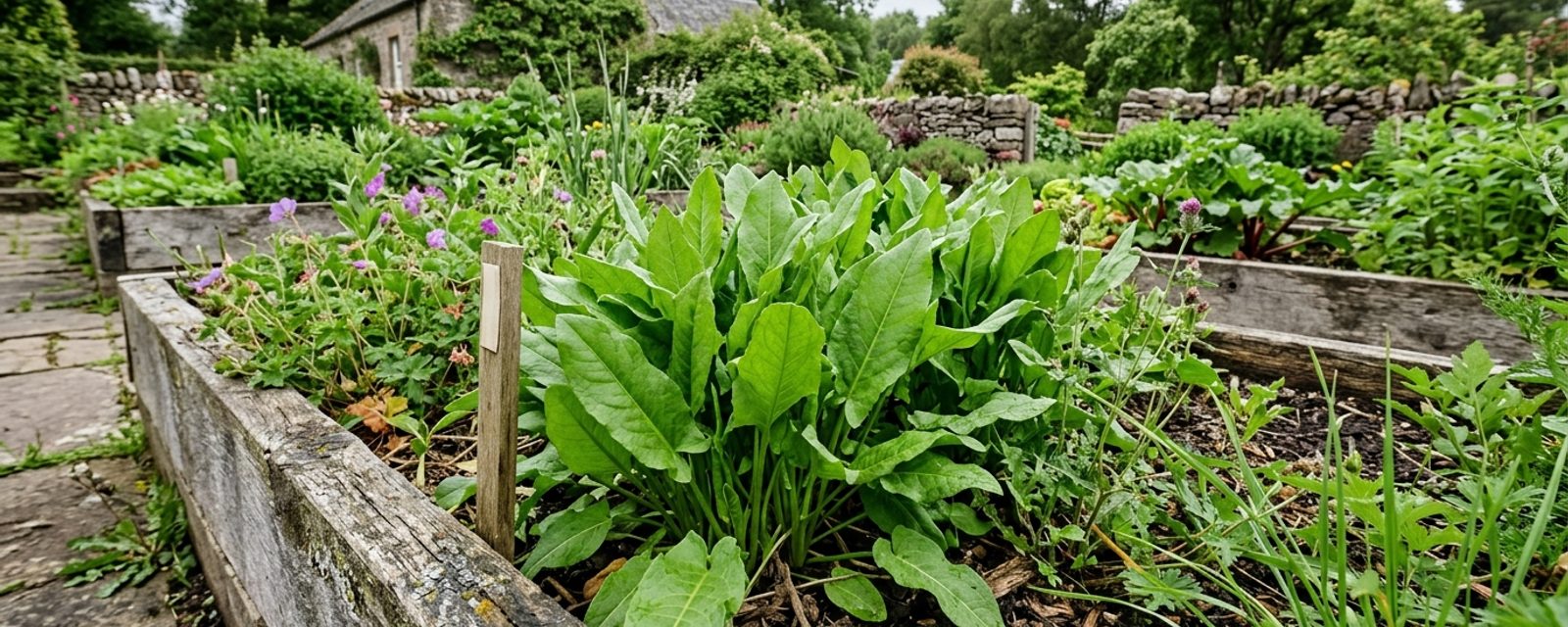
Sorrel's tang comes down to oxalic acid built up in the leaf tissue, and how much of it a plant carries, along with how cold-hardy that plant is, varies meaningfully across the four varieties sold as "sorrel" in the UK. Hardiness itself is a specific, testable rating: plants are banded from H1 (needs heat) to H7, and a rating of H7 means a plant shrugs off the severest continental winters, anything colder than -20°C, while H6The RHS's H1a–H7 scale for how much cold a plant can survive outdoors, H1a being tender indoor-only and H7 hardy anywhere in the UK. Full definition → still covers the whole of the UK but stops at -20 to -15°C. That one-band gap between H6 and H7 sounds academic until you're gardening on an exposed, upland, or otherwise unusually cold site rather than a sheltered lowland or coastal one, which is exactly why the variety choice for sorrel is less about flavour preference alone and more about matching a plant's tested cold tolerance, and its named traits, to where it's actually going in the ground.
Quick answer
For most Scottish gardeners wanting a reliable culinary herb, common sorrel is the best overall pick: it carries the toughest hardiness rating of the group (H7) and the sharpest, most classic sorrel flavour. Choose French sorrel instead if you find common sorrel's tang too sharp and want a milder leaf with a useful ground-cover habit; choose red-veined sorrel if you want a plant that earns its place visually as well as on the plate, especially in partial shade; and reach for Silver Shield only if you're building an ornamental potager and don't mind it being the hardest of the four to actually source.
None of the four RHS-recognised sorrel varieties, French, Silver Shield, common, or red-veined, carries an RHS Award of Garden Merit. That's unusual: on most crops, AGMThe RHS's Award of Garden Merit: a UK-wide trials award for reliable performance, not a Scotland-specific recommendation. Full definition → status is the anchor for a "best" recommendation, but sorrel sits outside that scheme entirely, so the real differences between the four come down to hardiness rating and named growth traits instead. All four also carry the same safety note: sorrel is harmful if eaten in large amounts, and gloves are recommended when handling it, whichever variety you grow, its oxalic acid is a flavouring note in small portions, not a leaf to eat in bulk the way you'd eat lettuce or spinach. For planting depth, spacing, sowing windows and winter care, the full growing guide covers that ground.
All four also share one genuine Scotland-relevant advantage over most herbs this site covers: their preference for fertile, moisture-retentive soil is the reverse of the free-drainingSoil that lets water pass through quickly rather than pooling, so roots aren't sitting in wet ground after rain. Full definition → ground that thyme, sage and rosemary demand, so Scotland's typically damper soil and summers are working with these plants rather than against them. That's a bigger practical difference than which of the four you choose.
The four varieties, compared
| Variety | Hardiness | Sun | Spread | Flavour | Best for |
|---|---|---|---|---|---|
| Common sorrel (Rumex acetosa) | H7 | Full sun or partial shade | 0.1-0.5m (species band); ~50cm per the growing guide | Sharp, classic sorrel tang | Exposed or upland sites; strongest culinary flavour |
| French sorrel (Rumex scutatus) | H6 | Full sun or partial shade | 1-1.5m (species band); ~1m per the growing guide | Milder than common | Bed edges, ground cover, cooks who find common sorrel too acidic |
| Red-veined sorrel (Rumex sanguineus) | H6 | Full sun (tolerated in part shade) | 0.1-0.5m (species band); 30cm per the growing guide | Mild, best harvested young | Ornamental value, partial shade, salad leaves picked small |
| Silver Shield (Rumex scutatus 'Silver Shield') | Not published | Not published | Not published | Milder, less acidic | Ornamental borders and potagers; hardest of the four to source |
Those hardiness bands are wide because they cover many different plants; when actually marking out spacing, use the tighter, sorrel-specific figures in the growing guide instead.
Common sorrel: the toughest and sharpest
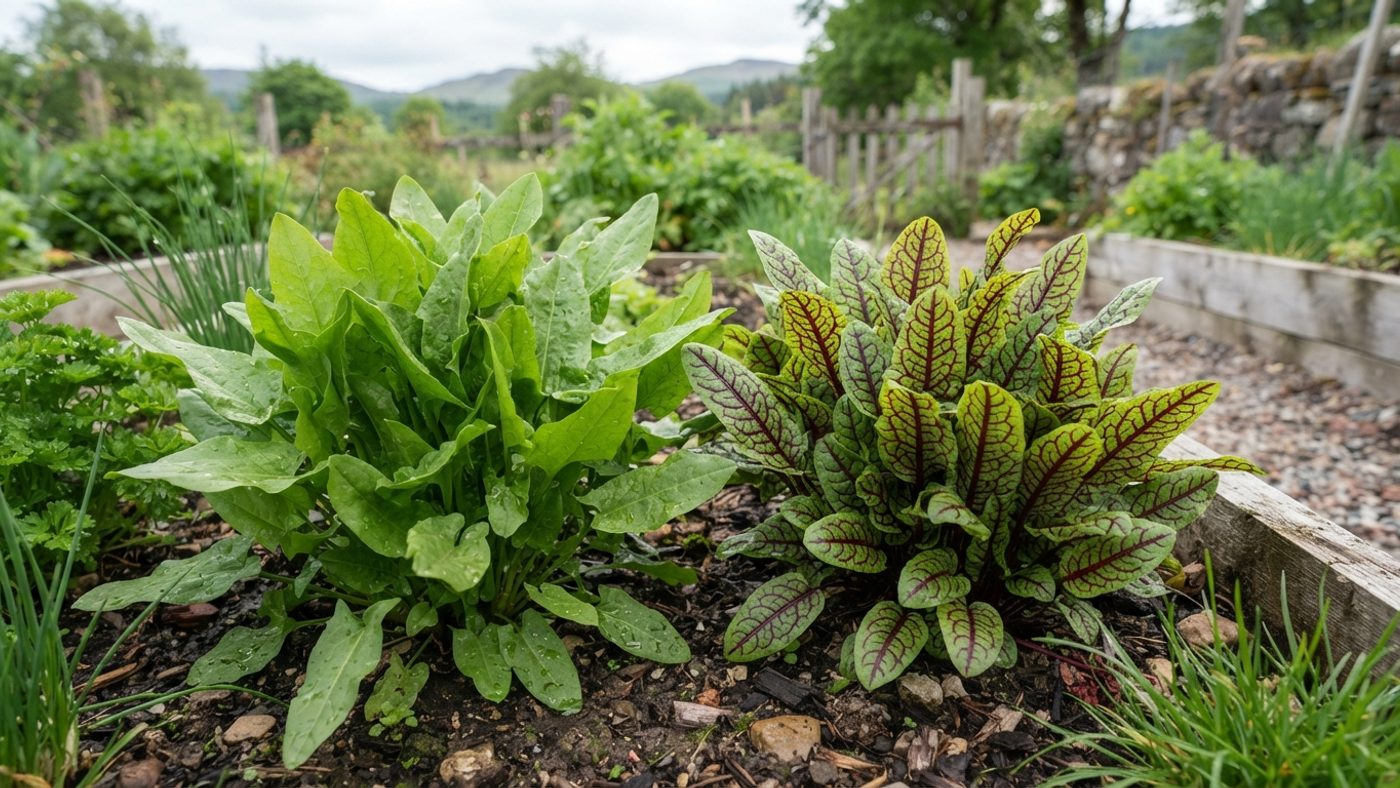
Common sorrel's H7 rating makes it the only one of the four tested down to below -20°C, and it's a UK native that also turns up growing wild, the same toughness that lets it self-seed in the wild is what makes it the safest bet for an exposed or upland Scottish garden without any special winter protection. It carries a data point worth knowing if you're choosing a bed for it specifically: it prefers acid or neutral soil, a pH preference that's published for common sorrel alone, the other three varieties don't have an equivalent figure on record, so don't assume it carries across. The trade-off for common sorrel's toughness is that it's the least ornamental of the four (plain green, upright habitA plant's characteristic shape and manner of growth, such as upright, spreading, creeping or bushy. Full definition →) and by far the most enthusiastic self-seeder, deadheadRemoving spent flowers before they set seed, which redirects a plant's energy into further flowering rather than seed production. Full definition → before seed-set if you don't want it colonising nearby beds. Slugs and snails will go for its young seedlings and new leaves same as any variety, so keep an eye out early in the season, and it grows equally well in the ground or a large container.
French sorrel: the milder ground-cover option
French sorrel sits one hardiness band below common sorrel at H6, which still comfortably covers every part of Scotland, this is a real but rarely decisive gap for most gardens. What actually distinguishes French sorrel is its habit and its flavour: grey-green, spear-shaped leaves on a low, creeping plant that spreads wide, making it a genuinely useful edging or ground-cover plant rather than an upright clump. The flavour is notably milder than common sorrel's sharp tang, which makes it the natural pick for a cook who wants sorrel's lemony note without the full acidity, French sorrel's mildness is exactly why it turns up in French cooking specifically, where its lemony bite is wanted without common sorrel's sharper edge. Its low, spreading habit also sits closer to the ground than an upright clump, useful on a windy west-coast or island plot, though salt tolerance isn't specifically confirmed for any of the four, so it's the habit rather than any confirmed salt resistance doing the work there. It also does well in a large pot if border space is tight.
Red-veined sorrel: grown as much for looks as for the plate
Red-veined sorrel, listed under the common name "wood dock", a reminder that it's as much a native ornamental as a culinary herb, carries the same H6 rating as French sorrel, and its defining trait is cosmetic: mid-to-dark green leaves marked with conspicuous dark red veins and stems. It's best harvested young, when the leaves are tender enough for raw salads; older leaves toughen. Full sun is its stated preference, though in practice a lot of gardeners use it precisely because it tolerates the partial shade that common and French sorrel would rather avoid. As with the others, watch young growth for slug damage, and if you're growing it in a container rather than open ground, waterlogging (not cold) is the real winter risk, root rot follows from poor drainage, not frost.
Silver Shield: the ornamental pick, with an honest caveat
Silver Shield is a cultivarA plant variety that arose or was bred under cultivation and is kept true by deliberate propagation, rather than a naturally occurring wild species. Full definition → of French sorrel bred for silvery-green foliage and a milder, less acidic flavour than the straight species, it's more often grown for how it looks in a border or potager than harvested in volume. Its own individual plant page doesn't publish a hardiness rating, sun or soil requirement, or a height and spread figure the way it does for the other three varieties. As a cultivar of French sorrel, it's reasonable to expect broadly similar H6 cold tolerance, but that's an inference from its parent species, not a confirmed rating for the cultivar itself, worth knowing before you commit a prominent, hard-to-replace spot in a border to it. It's also the hardest of the four to actually get hold of, RHS Plant Finder lists only two nursery suppliers for it, against wider availability for the other three. If you can find it and want the ornamental effect, it's a good choice; if sourcing trouble isn't worth it, red-veined sorrel gives a comparable visual lift with fuller data behind it.
Which variety for your situation
Common sorrel is still the right default for most Scottish gardens, see the quick answer above for the full reasoning. Beyond that headline pick, a few more specific situations are worth spelling out.
There's nothing stopping you growing more than one, a small clump of common sorrel for the kitchen and a Silver Shield or red-veined plant worked into a border for looks is a reasonable way to get both the toughest flavour and some ornamental value out of the same bed.
- No garden centre stock in front of you, or choosing from a seed catalogue instead? Common, French and red-veined sorrel are all reasonably widely available as seed or young plants from general garden centres and seed catalogues; Silver Shield's narrower supplier base means a specialist herb nursery or online search ahead of planting time is worth the extra step, rather than expecting to find it on a general garden centre shelf.
- Gardening on thin, poor, or recently-dug soil rather than an established bed? Common sorrel's acid-or-neutral pH preference is the only one of the four with a published figure, so it's worth a quick soil test if you're planting it somewhere new, the other three don't have a documented pH requirement to check against.
- Short on space, or growing in containers rather than open ground? All four cope in a large pot, and the choice between them doesn't change container size or spacing. The one risk that does change is winter waterlogging: Scotland's wetter winters make this the real threat to a potted plant, not cold, so move containers somewhere rain-sheltered rather than worrying about frost.
Common questions
Does sorrel bolt as easily in Scotland as it does further south?
Dry weather is the named trigger for sorrel running to seed, and Scotland's generally cooler, damper summers mean that specific trigger shows up less often than in a hotter, drier southern garden, though a warm dry spell can still cause it here, so keep any variety watered through one rather than relying on the climate alone.
What's the actual difference between French sorrel and common sorrel?
Mainly hardiness rating and flavour strength: common sorrel is rated H7 and has the sharper, more classic sorrel tang, while French sorrel is rated H6 (still fully hardy across the UK) and tastes notably milder, with a wider, creeping habit useful for ground cover.
Is red-veined sorrel edible, or just ornamental?
It's genuinely both, it's grown for its dark red leaf veining as much as for the plate, but the leaves are edible and best picked young for salads, when they're most tender.
Why is Silver Shield harder to find than the other sorrel varieties?
RHS Plant Finder lists only two nursery suppliers stocking it, against much wider availability for French, common and red-veined sorrel, so it's worth checking stock before planning a border around it.
Does soil pH matter when choosing a sorrel variety?
It's only documented for common sorrel, which prefers acid or neutral soil, that figure isn't published for French, red-veined or Silver Shield sorrel, so don't assume it applies to those three.
Sources
6 sources, recorded with what each was used for
- Sorrel: grow your own: Confirms the four named varieties (French, Silver Shield, common, red-veined) and that none carries an RHS Award of Garden Merit
- Rumex scutatus (French sorrel): French sorrel's H6 hardiness rating, height/spread, soil and sun preferences, and safety note
- Rumex scutatus 'Silver Shield': Silver Shield's safety note and supplier count (2 RHS-listed nurseries); also confirms no hardiness, soil or size data is published for this cultivar
- Rumex acetosa (common sorrel): Common sorrel's H7 hardiness rating, height/spread, acid-or-neutral soil pH preference, and self-seeding habit
- Rumex sanguineus (red-veined sorrel): Red-veined sorrel's H6 hardiness rating, height/spread, sun/soil preferences, and the "wood dock" common name
- How to grow sorrel: Silver Shield's ornamental/mild-flavour description and red-veined sorrel's best-harvested-young guidance