
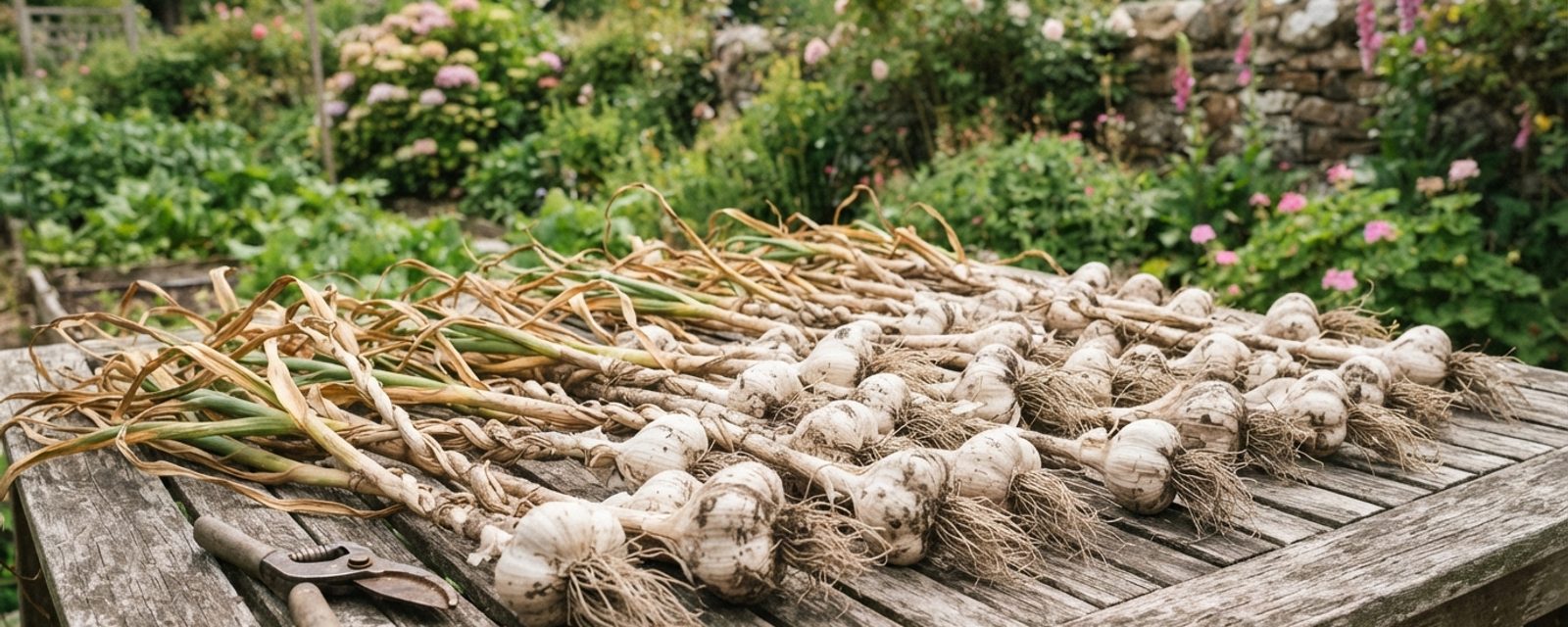
Garlic bulbs don't form on schedule, they form on cold. A clove tucked into the ground in autumn sits through weeks of low temperature before it does anything visible, and that exposure is what tells the plant to split into a multi-clove bulb rather than staying a single round. Most varieties need one to two months at 0–10°C for good bulb development, and a Scottish winter supplies that without effort. The real question for a Scottish grower isn't whether enough cold arrives, it's which type of garlic copes best above ground once that winter turns harsh.
Quick answer
For most Scottish gardens, Cristo is the best overall pick: it holds the RHS Award of Garden Merit (AGMThe RHS's Award of Garden Merit: a UK-wide trials award for reliable performance, not a Scotland-specific recommendation. Full definition →), is rated hardy down to -10°C, and stores for months. If long storage and a proven track record matter most, stay softneck with Cristo, Germidour or Solent Wight. If flavour and resilience through an exposed, harsh winter matter more than shelf life, a hardneck like Lautrec Wight is the better-suited plant, even though no hardneck variety currently carries the AGM badge. Plant cloves in October or November, before the ground freezes.
The vernalisation advantage, and where it stops applying
That cold-triggered bulb formation is a genuine Scottish advantage, and it applies to hardneck and softneck garlic more or less equally, both need the chill, and a Scottish winter delivers it reliably where a mild southern one sometimes doesn't. But vernalisation is not the same thing as winter hardiness. Vernalisation is about the cold that triggers the bulb to form underground; hardiness is about how well the growing plant, leaves and all, tolerates a harsh winter above ground. Those are two different questions, and conflating them is where a lot of "just plant garlic, it likes the cold" advice goes wrong for a Scottish garden specifically.
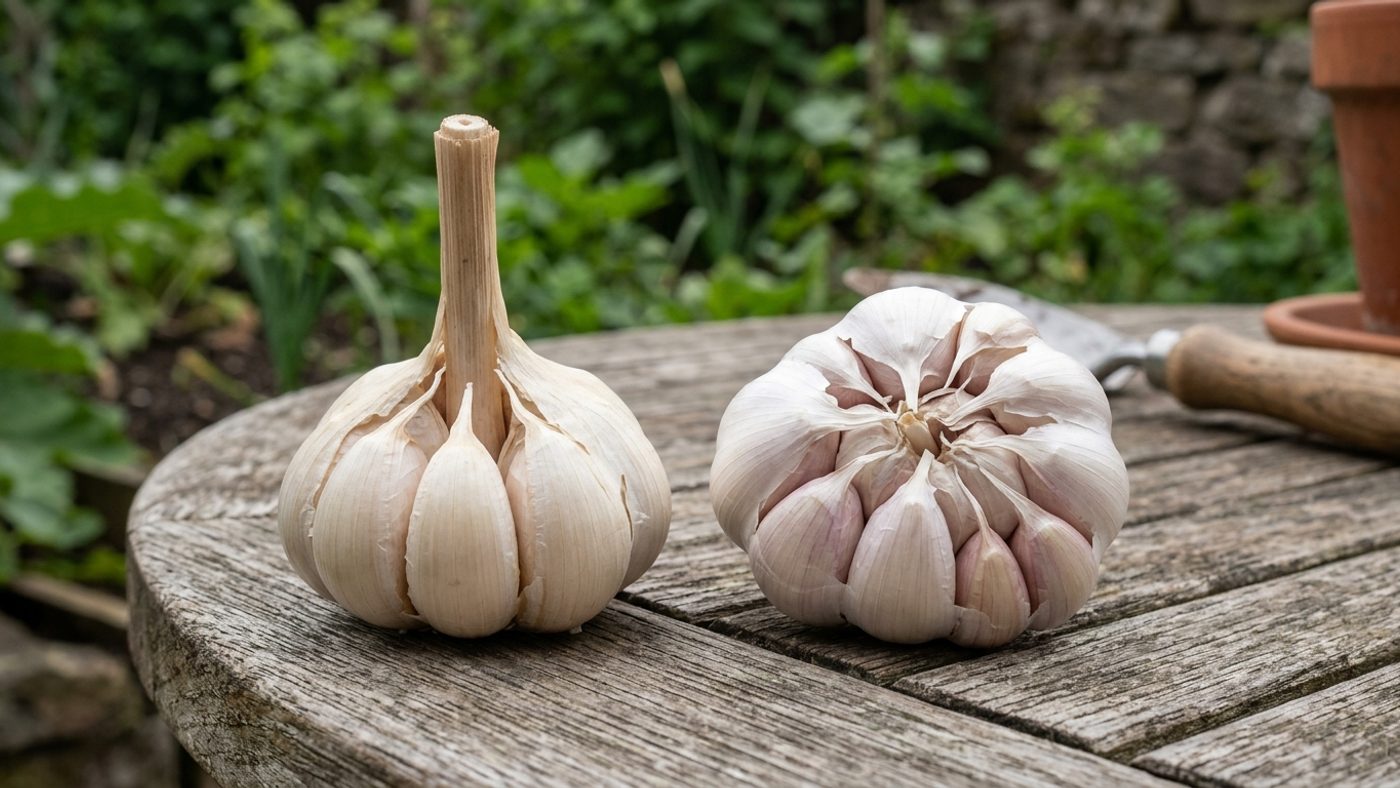
On that second question, Gardener's World is direct: hardneck garlic is "generally hardier" and "can be grown throughout the UK," while softneck is "less tolerant of prolonged cold temperatures" and "best suited to growing in milder southern counties in the UK, although it can be grown elsewhere with winter protection." That points toward hardneck for anyone gardening somewhere genuinely exposed, even though hardneck is also the type with no AGM winner behind it.
Where the RHS AGM does and doesn't help
The RHS Award of Garden Merit is a UK-wide horticultural award, not a Scotland-specific recommendation, and for garlic it currently sits entirely on one side of the hardneck/ softneck line. Cristo, Germidour and Solent Wight hold it; no hardneck variety does. The general grow-your-own page lists Arno as a fourth "recommended" variety without the AGM tag, and Lautrec Wight, the hardneck variety most often suggested as an AGM alternative, does not carry the badge on its own listing either.
Variety comparison
| Variety | Type | AGM | Hardiness | Flavour & storage |
|---|---|---|---|---|
| Cristo | Softneck | Yes | H4The RHS's H1a–H7 scale for how much cold a plant can survive outdoors, H1a being tender indoor-only and H7 hardy anywhere in the UK. Full definition → (-10 to -5°C) | Strongly flavoured, mild aroma, pure white skin with pinkish cloves |
| Germidour | Softneck | Yes | H4 (-10 to -5°C) | Large white bulbs, mild but rich flavour |
| Solent Wight | Softneck | Yes | H4 (-10 to -5°C) | Silverskin type from the Auvergne; ovoid bulbs, good all-round keeper |
| Lautrec Wight | Hardneck | No | H4 (-10 to -5°C) | Purple-tinged cloves, smooth garlic flavour; stores about four to six months |
| Arno | Softneck | No | H4 (-10 to -5°C) | Ivory-white skin over pinkish cloves; stores well |
All five sit in the same hardiness band (H4, -10 to -5°C) on paper, the practical difference described above is in how the plant copes with a prolonged harsh winter in practice, not in the published hardiness rating itself.
Elephant garlic isn't true garlic at all, it's more closely related to leeks, and it needs a long, warm growing season to bulk up. That's a harder ask in most of Scotland than in the milder trial conditions it's usually grown in, so treat it as a curiosity rather than a serious candidate.
Which one for your situation
Best overall: Cristo. It's the only variety here that combines AGM status, strong reported hardiness, reliable storage, and flexibility to go in either autumn or spring, the safest single pick if you only want to grow one thing and trust it to work.
Best for storage-focused growing: Germidour or Solent Wight. Both are AGM softnecks bred for reliability and keeping quality, and both keep well beyond what any hardneck here manages.
Best for an exposed, harsh site: Lautrec Wight. No AGM to lean on, but hardneck types are the ones singled out as more broadly cold-hardy and suited to being grown throughout the UK rather than just its milder counties. It trades storage life for that broader cold tolerance, plus scapes as a bonus harvest along the way.
Soil, planting and pests
Garlic dislikes acid soil below pH 6.5, common on Scottish ground, a cheap soil test before planting tells you whether you need to lime. Wet, heavy ground over winter is the other main risk: cloves rot rather than root, and on badly drained soil it's worth starting them in modulesA tray divided into small individual cells, each sown with its own seed or seedling, so each plant grows undisturbed roots until it's ready to plant out. Full definition → under cover instead, a method the growing guide walks through step by step. Buy from a garden centre or seed supplier rather than a supermarket bulb: supermarket garlic can be grown, but carries a risk of virus infection that named seed garlic is bred to avoid.
The main disease risk is onion white rot, which shows as yellowed, wilting foliage and decay at the roots and bulb. There's no chemical treatment: keeping garlic and its allium relatives off the same ground for four to five years is the only real defence, something worth tracking on a small plot with the crop rotationMoving each crop family to different ground each year, on a multi-year cycle, so pests and diseases that build up in soil don't get a repeat host. Full definition → planner. Onion downy mildew and leek rust are also worth watching for, both worse in humid, crowded conditions, along with allium leaf miner.
Common questions
Does garlic bolt in a Scottish cold snap, the way onions can?
No, garlic's relationship with cold runs the other way. It needs a sustained cold period to form a good bulb in the first place, so a cold snap isn't the risk. Hardneck varieties are more prone to boltingA plant switching early into flowering and seed production, usually triggered by stress, after which leaves, roots or bulbs turn bitter or unusable. Full page → generally, but as a response to their own growth habitA plant's characteristic shape and manner of growth, such as upright, spreading, creeping or bushy. Full definition →, not to sudden cold.
Is the RHS AGM the only thing I should check before choosing a variety?
No. It's a reliable signal of UK-wide garden merit, but it currently only covers softneck garlic for this crop, so relying on it alone means never considering a hardneck variety.
Can I grow hardneck garlic in Scotland even without an AGM-holding option?
Yes. Hardneck is described elsewhere as generally hardier and grown throughout the UK, so the absence of an AGM badge reflects what's been trialled and awarded, not a known weakness for cold gardens.
Should I plant in autumn or spring?
Most of the varieties above can go in either, though late autumn or early winter planting is what several of their own listings specifically recommend, since it exposes the cloves to enough cold before the ground freezes.
Is elephant garlic worth trying in Scotland?
It's not true garlic, and it needs a long warm season most Scottish gardens won't reliably deliver, so it's a riskier choice than any variety in the table above.
Sources
7 sources, recorded with what each was used for
- Garlic: grow your own: Hardneck/softneck general traits, vernalisation quote, AGM tagging (Cristo, Germidour, Solent Wight), Arno's non-AGM "recommended" status, elephant garlic notes, harvest timing, white rot symptoms, autumn planting window
- Cristo plant page: Hardiness rating, AGM status, flavour/skin description, planting flexibility
- Germidour plant page: Hardiness rating, flavour description, planting timing
- Solent Wight plant page: Hardiness rating, bulb description, AGM status, planting/harvest window
- Lautrec Wight plant page: Hardneck classification, hardiness rating, flavour description, confirmation of no AGM badge
- Arno plant page: Hardiness rating, bulb description, confirmation of no AGM badge
- Best garlic varieties: Hardneck vs softneck general hardiness comparison, cold-tolerance and regional suitability statements, advice against planting supermarket bulbs (virus risk)