
Leek Rust is a common disease that affects leeks, garlic and onions in Scotland. Here is what it looks like, the conditions it needs, and the controls that actually work.
What does it look like?
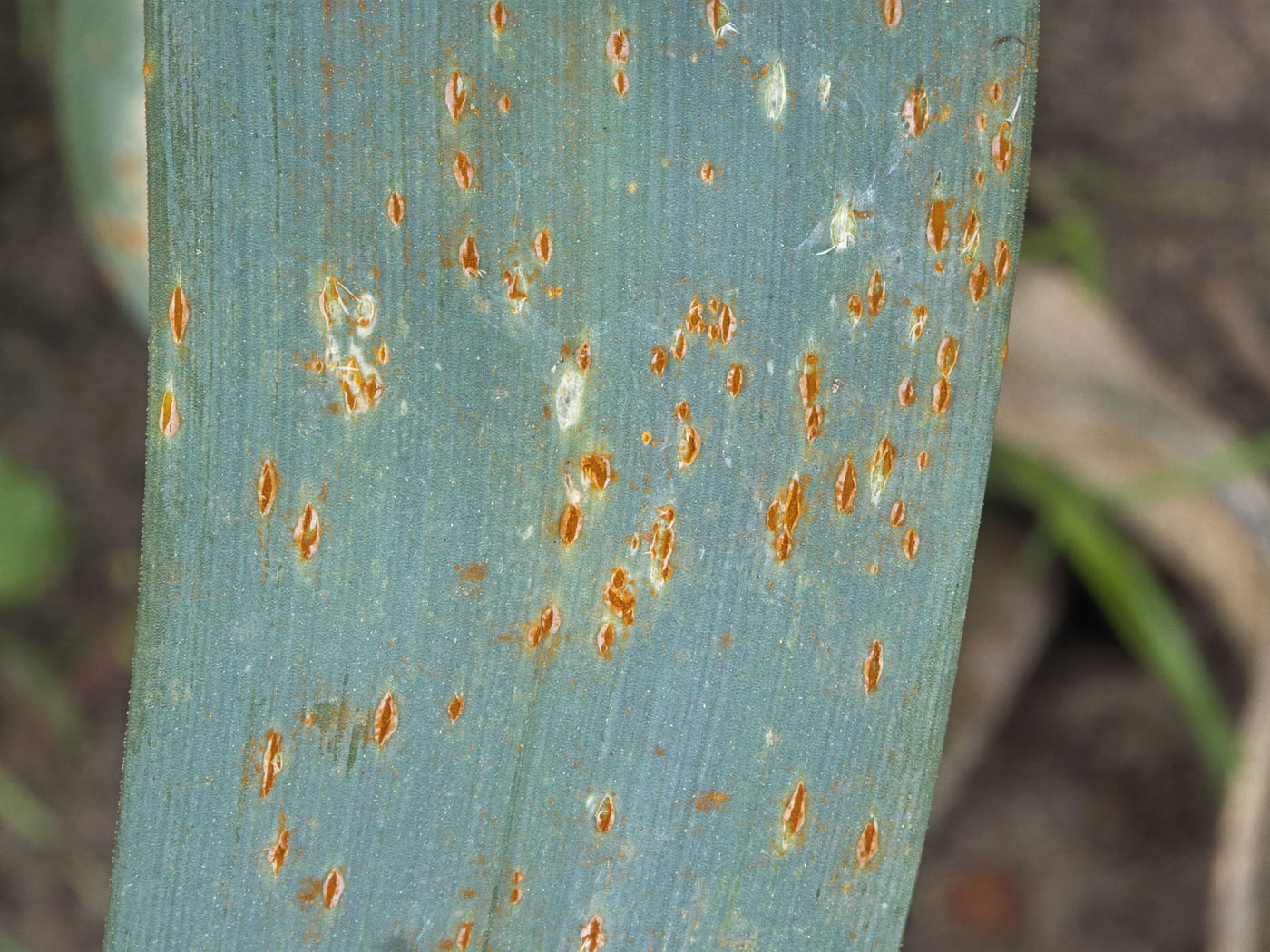
Pustules are found most commonly on the lower leaf surface, and can be orange, yellow, brown, black or white. Severely affected leaves often turn yellow and fall prematurely.
The lower-leaf-surface detail is the useful diagnostic — it is where to look first.
This pest follows moisture conditions rather than a calendar.
Symptoms
Heavy attacks cause leaves to shrivel and die prematurely, and depress vigour.
Life cycle
The leek rust pathogen completes its entire life cycle on leeks, without needing an alternate host.
There is no third plant to remove to break the cycle — management is about conditions and rotationMoving each crop family to different ground each year, on a multi-year cycle, so pests and diseases that build up in soil don't get a repeat host. Full definition →, not about clearing a host elsewhere.
Why this matters in Scotland
This disease and Scotland's climate line up almost perfectly, and RHS's own explanation of why makes the connection directly.
Rusts in general are, in RHS's own words, 'usually diseases of wet summers', because infection needs prolonged leaf wetness to take hold. Scotland's defining climate feature is rainfall. Leeks are also a mainstay Scottish crop, easy and dependable, standing through winter when little else crops. So the disease that most threatens one of Scotland's best crops is one our climate actively encourages, which is exactly why spacing for airflow and avoiding overhead watering are worth taking seriously here rather than treating as optional extras.
Controls: what actually works
All the methods below are backed by real evidence, not just repeated folklore.
Chemical control
There are no fungicides approved for use by amateur gardeners to control leek rust.
What actually works: With no fungicide option, this one comes down to cultivation: space plants for airflow, check current catalogues for a variety claiming some rust tolerance, and remove affected foliage rather than reach for a spray that does not exist.
Cultural practices: avoid nitrogen-heavy feeding, space plants to keep humidity down, and clear all plant debris at the end of cropping
Infection is worse on nitrogen-rich soil that's low in potassium, so it's worth taking care with feeding rather than assuming more fertiliser helps. Crowded plants raise humidity right where the fungus needs it, so spacing for airflow matters as much here as it does for most other rust and mildew diseases. Clearing all plant debris at the end of cropping removes the material the fungus would otherwise use to carry over.
Frequently asked questions
What should I do first if I find leek rust in my garden?
Start with cultural practices.
Is there a spray that works?
No. There are no amateur chemical treatments available for leek rust. The controls that work are cultural: the measures listed above.
How much of this advice is actually proven?
Every control listed above is evidence-based, not just repeated folklore. None of it is a guess.
Sources
2 sources, recorded with what each was used for
- RHS1: Puccinia porri (syn. P. allii), affected alliums, pustule appearance and lower-leaf-surface location, premature yellowing and leaf fall, complete life cycle on leeks with no alternate host, prolonged leaf wetness / wet summers, no amateur fungicides, cultural and resistant-variety approach
- RHS1: general rust behaviour: heavy attacks shrivel leaves and depress vigour