
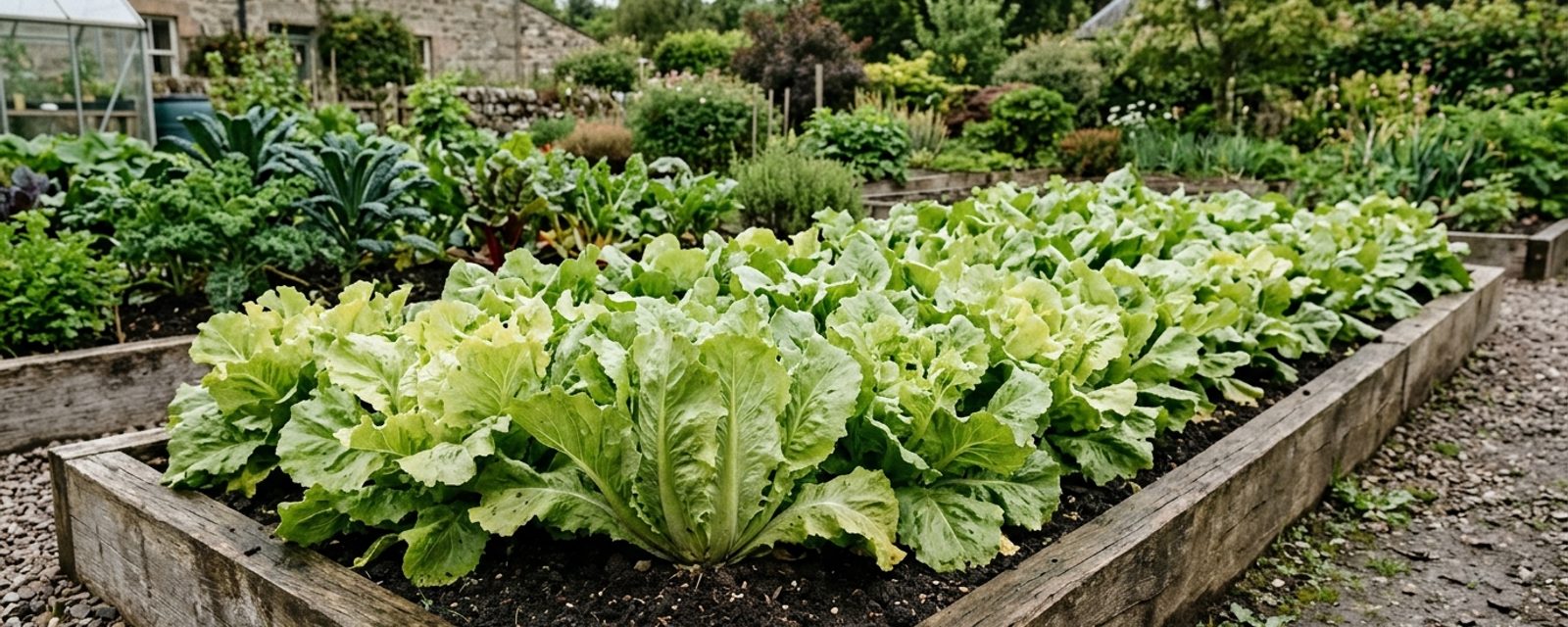
Endive is a chicory, Cichorium endivia, and like the rest of that family it is genuinely, naturally bitter. That bitterness isn't a growing fault to be fixed with better soil or more water; it's built into the plant. The traditional fix is blanchingExcluding light from part of a growing plant, usually by earthing up, wrapping or covering, so it grows pale, tender and less bitter. Full definition →: excluding light from the mature head for a period before harvest, which softens the leaves and mellows the bitterness, particularly in the pale, tender centre, typically done by covering the plant with an upturned bucket or pot for about two weeks once the head has formed.
Quick answer
Pancalieri for a summer salad crop. Natacha for a hardier crop that stands into winter. Most gardens do best growing both, staggered across the year, rather than picking one.
That single mechanism, light exclusion softening a genuinely bitter leaf, is the real starting point for choosing a variety, because the two types of endive sold in the UK carry that bitterness differently and respond to blanching on different timescales. Picking "a good endive variety" isn't really the first decision. Picking the right type for the job you want it to do is.
The first decision: frisée or Batavian
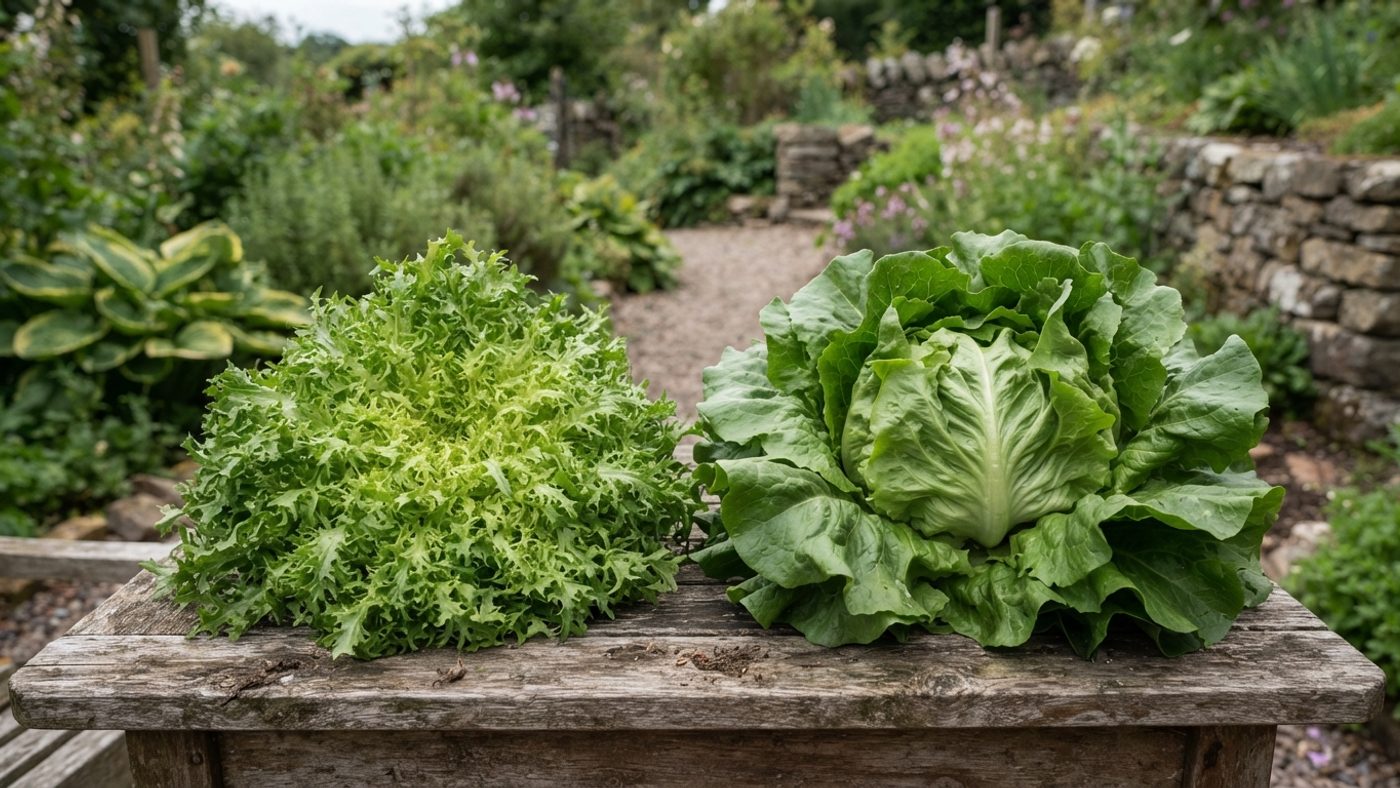
Endive splits into two distinct types, and this split matters more than any individual variety name:
- Frisée (curly endive) forms a loose rosette of thin, finely serrated, frilly leaves. It's the lighter, more delicate type, better suited to summer cropping and more tolerant of hot weather.
- Batavian (escarole) has broad, flat, robust leaves and is the hardier type, better suited to winter harvesting. "Escarole" is just another name for Batavian, not a third type; seed packets and shops use the two names interchangeably.
Endive generally is described as a hardy substitute for lettuce that tolerates high temperatures well, which supports the idea that this is a genuinely heat-tolerant, cool-climate-friendly crop rather than one that needs babying through a Scottish summer. The type split doesn't remove the need to blanch, but it does change how the timing and reliability of that step work out in practice.
Named varieties: what's actually available with an AGM
Two endive varieties carry the RHS Award of Garden Merit (AGMThe RHS's Award of Garden Merit: a UK-wide trials award for reliable performance, not a Scotland-specific recommendation. Full definition →), the badge given to plants judged to perform reliably in UK garden conditions.
| Variety | Type | Stated strength | Best-suited season |
|---|---|---|---|
| Natacha AGM | Batavian / escarole | Hardy, bolt-resistantA plant switching early into flowering and seed production, usually triggered by stress, after which leaves, roots or bulbs turn bitter or unusable. Full page →; the more robust type for winter harvesting | Winter crop (sow mid-to-late August) |
| Pancalieri AGM | Frisée | Classic finely serrated leaves with a light-coloured centre; the summer-cropping pick | Summer crop |
Natacha and Pancalieri together form the natural summer/winter pairing most growers need: a frisée crop through summer, followed by the hardier Batavian type carrying you into autumn and winter.
Why Natacha's bolt resistance matters most at one particular sowing window
Bolting (premature flowering, which ruins the crop for eating) is triggered by cold exposure while plants are young, and separately by hot, dry conditions. Endive "can bolt if conditions are very hot", and waterlogged or dry soil both cause stress that pushes bolting, worth knowing on a heavier, slower-draining plot after a wet spell (see the Scotland climate guide for how rainfall and soil vary by region), since it means bolting risk isn't purely a dry-summer problem here.
Natacha's bolt resistance is most valuable on the earliest sowings of the year, an indoor February sowing kept under cover, which is exposed to exactly the cold-while-young risk described above, rather than on a normal late-May-onward outdoor sowing where that particular trigger doesn't apply. If you're starting endive early under cover, a bolt-resistant variety is doing real work; if you're sowing outdoors from late May onward into settled soil temperatures, the cold-exposure risk is largely already avoided by timing.
That cold-exposure trigger is also the more Scotland-relevant of the two named bolting causes for anyone starting early: springs here typically stay cold for longer than further south (see the frost dates page for regional timing), so outdoor soil is slower to reach the 15°C minimum (ideally 20-22°C) endive needs to germinateA seed sprouting: breaking dormancy and putting out its first root and shoot, given the right warmth and moisture. Full definition →. An indoor February start under cover is a more common route to an early crop here than in a milder region simply because the outdoor window opens later, and that's exactly the route where a bolt-resistant variety like Natacha earns its keep.
Where Scotland's climate actually helps, and where it doesn't
See the Scotland climate guide for the regional detail behind the general pattern below: cooler, less consistently hot summers, and typically damper autumns than further south.
| Risk | What triggers it | Scotland's effect | What to do |
|---|---|---|---|
| Bolting | Hot, dry weather | Advantage: sustained heat like this is rare in a Scottish summer | Normal watering is usually enough; no special action needed |
| Bolting | Cold exposure while young | Neutral to risk: mainly hits early indoor sowings | Choose a bolt-resistant variety (Natacha) for February sowings |
| Slow blanching | Cool autumn weather | Disadvantage: budget more than the usual 2 weeks | Check covered Batavian heads regularly rather than to a fixed date |
| Blanched-head rot | Warm or wet weather | Disadvantage: a damp Scottish autumn is exactly this condition | Blanch a few plants at a time, not the whole row at once |
| Winter survival | Frost | Disadvantage: Batavian needs protection to stand into winter | Cover with clochesA small, portable clear cover placed over an individual plant or short row to trap warmth and keep off wind, rain and pests. Full definition → or fleeceA lightweight, breathable fabric laid or draped over plants to trap a little warmth and keep off frost, wind and some flying pests. Full definition → from October onwards |
The heat-bolting row is the one genuine advantage, cancelling out one of the two named bolting triggers directly. The bottom three rows all land on the same Batavian winter crop, and none of them are reasons to skip growing it for winter; they're reasons to budget more time for blanching, check covered heads regularly rather than to a fixed date, blanch a few plants at a time rather than the whole row, and have cloches or fleece ready from October.
Slugs, blanching covers, and the variety choice
Slugs deserve a specific note tied to blanching technique. A blanching cover, a bucket, pot, or board placed over the head to exclude light, creates exactly the dark, damp, sheltered space slugs favour, right against the leaves you're trying to protect. That risk applies regardless of variety or type; it's a consequence of the blanching method itself, not something Pancalieri or Natacha individually avoids. Check under blanching covers regularly, especially once a cover is in place removing the light and airflow that would otherwise make the area less appealing to slugs.
Aphids are a secondary but real risk across both types, reducing vigour and causing leaf distortion; watch for them particularly on the exposed frisée rosette, where there's more leaf surface for them to colonise.
A practical succession note
Because frisée and Batavian are sown at different points in the calendar for different jobs, frisée sown outdoors from late May through August for a summer crop, Batavian specifically sown mid-to-late August for a winter crop, the two types aren't really competing choices. Growing both gives a frisée crop through summer, followed by Batavian taking over as the hardier type carries you into autumn and winter, with its longer, more variable blanching window budgeted for as the days shorten, a natural consequence of the two types' own sowing windows lining up back to back. A cold frame or polytunnel extends the Batavian blanching window further into winter than an open bed manages alone, worth considering if a hard frost keeps arriving before a covered head is ready.
Within the frisée sowing window itself, sowing "little and often" through to the end of August rather than one large batch gives a continuous supply rather than a single glut, worth doing whether you're growing frisée alone or alongside a later Batavian sowing. Frisée's own clock is short enough that season length rarely limits it here: cut-and-come- again leaves are ready in about a month, and a whole head in around three, so a late-May start still leaves plenty of a Scottish summer to work with. If you need help working out exact succession timing for your part of Scotland, the Planting Calendar tool covers it. The endive growing guide covers sowing, spacing, and day-to-day care in full.
Soil pH
There's no UK-published pH figure for endive. Other sources give a genuinely wide tolerance, pH 5.5 to 8.3, spanning from moderately acid through to alkaline, wide enough that most garden soil should sit comfortably within it without needing correction.
Common questions
Can I grow endive successfully in a Scottish garden, or does it need a warmer climate?
Yes, endive is well suited to a Scottish garden. Its main climate risk, bolting from hot, dry weather, is one Scotland's cooler, less consistently hot summers actually help avoid. The trade-off is that blanching runs slower here in cool autumn conditions, particularly for a Batavian crop taken into winter, so allow more time than the standard two-week guide.
What's the difference between frisée and escarole, and does it matter which I grow?
Frisée and escarole (Batavian) are the two types endive is sold as, and it genuinely matters which you buy. If you want a single summer salad crop, look for a frisée like Pancalieri; if you want a crop that stands into winter, look for a Batavian like Natacha. Growing one of each, sown at their own separate times, covers both jobs.
Do I need to blanch endive, or can I eat it straight from the garden?
You can eat unblanched endive, but it will taste noticeably more bitter, since bitterness is a natural trait of the plant rather than a growing fault. Blanching, excluding light from the mature head for roughly two weeks, softens that bitterness, especially in the pale centre leaves.
Is Natacha or Pancalieri the better variety to grow?
They're not really competing for the same job, so most gardens do best growing both rather than picking one over the other.
What soil pH does endive need?
No UK figure is published, but a genuinely wide tolerance, pH 5.5-8.3, is reported elsewhere, wide enough to cover most garden soil without needing correction.
Sources
3 sources, recorded with what each was used for
- RHS: How to grow endive: The frisée/Batavian type split, the two named AGM varieties (Natacha, Pancalieri) and their stated traits, germination temperature, blanching duration, October cloche/fleece protection, bolting causes, and slugs/snails/aphids as named pests
- Garden Organic: How to grow endive: Corroborates the two-week blanching duration and confirms three-month whole-head harvest timing, the Latin name and family, slugs and snails as a named pest, and the high-temperature tolerance framing
- NC State Extension Gardener Plant Toolbox: The soil pH range (5.5-8.3), not Scotland-specific and not affiliated with RHS