
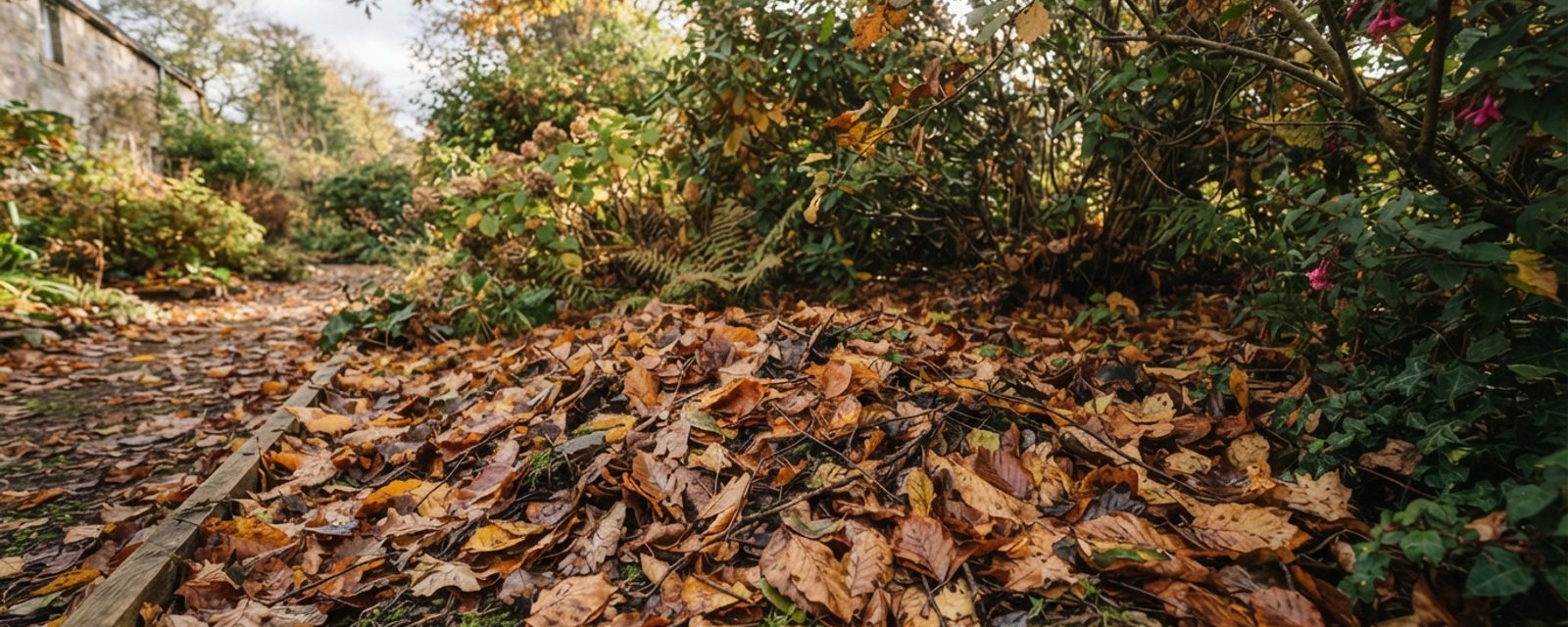
If you're standing over a lawn or a border scattered with fallen leaves right now, wondering whether the rake needs to come out at all, the honest answer is: it depends on where they've landed and how deep they are. Leave the wrong patch alone and you can end up with bare, diseased grass by spring. Clear the wrong patch and you've just evicted a hedgehog's winter bed, or the resting stage of a moth that was relying on that exact leaf layer to survive the cold.
Quick answer
Leave a thin scatter of leaves on the lawn where you can still see grass through it, it breaks down and feeds the soil. Rake up a thick, mat-like layer, because that smothers the grass, and clear leaves off paths where they get slippery. Everywhere else, under hedges, in borders, in quiet corners, leave the leaves alone; that's the exact layer hedgehogs, ground beetles and overwinteringKeeping a plant alive and intact through the cold months, whether left outdoors, moved under cover, or stored dormant. Full definition → butterflies use as winter shelter. If you do need to clear leaves, pile them in a corner rather than bagging them, and always check a settled pile for a sleeping hedgehog before disturbing or burning it.
What's living in a leaf layer over winter
Fallen leaves aren't inert once they hit the ground. A layer of leaf litter, or a loosely piled heap of raked leaves, functions as genuine winter housing for several groups of garden animals.
Hedgehogs build their hibernation nests largely out of leaves, gathering them and layeringPropagating a new plant by pinning a low, flexible stem into the soil while still attached to the parent, so it roots before being cut free. Full definition → them up to make a weatherproof shelter. A messy leaf pile that looks like nothing to a gardener reads as a ready-made nest site to a hedgehog. Hibernation typically runs from October or November through to March or April, though mild spells can keep individual hedgehogs active well into December. They aren't fixed in one nest for the whole winter either, most hedgehogs move nest site at least once during hibernation, and can go on to use nests other hedgehogs have already built.
Lacewings, useful predators of aphids during the growing season, hibernate through winter in crevices, leaf litter and evergreen shrubs.
Ground beetles, including species such as the violet ground beetle, shelter through the colder months in leaf litter, log piles and compost heaps, alongside rove beetles like the devil's coach horse, which is commonly found under logs or pots. Both groups are predatory: they feed on slugs, leatherjackets, cutworms and caterpillars, so a garden that keeps them fed and housed over winter has active pest control on hand come spring. That predator-prey relationship cuts both ways, worth being honest about: the same damp leaf litter that shelters ground beetles also gives slugs somewhere to sit out the cold, which is exactly why keeping the beetles around matters.
Butterflies and caterpillars also rely on undisturbed shelter to get through winter, whether that's thick ivy growth, leaf litter, or other cover left standing rather than cleared away. Tidying every leaf out from under a hedge or in a border removes exactly the kind of ground cover this depends on.
None of this requires a formal habitat structure. A pile in a corner, or leaves simply left where they fall under a hedge or in a border, does the job.
Do you actually need to rake?
Not always, and not everywhere.
A thin scatter of leaves on a lawn, the kind you can still see grass blades through, can be left where it is. It breaks down, feeds the soil, and does no harm to the turf underneath.
A thick layer is a different matter. Left in place, it blocks light and moisture from reaching the grass, which weakens and can kill it off, leaving bare or diseased patches by spring. On lawns, a proper covering of fallen leaves genuinely needs raking or blowing off.
Elsewhere in the garden, the calculation flips. Under hedges, in borders, and around shrubs, leaf litter is worth leaving deliberately rather than tidying away, it's exactly the layer that hedgehogs, ground beetles and lacewings use. The main exceptions are paths, where a wet layer of leaves gets slippery underfoot, and beds of small or newly planted plants, where a heavy leaf covering can smother them the same way it smothers grass.
Away from the lawn and paths, leaving the leaves is the better choice for wildlife, not just the lower-effort one.
Where cleared leaves should go
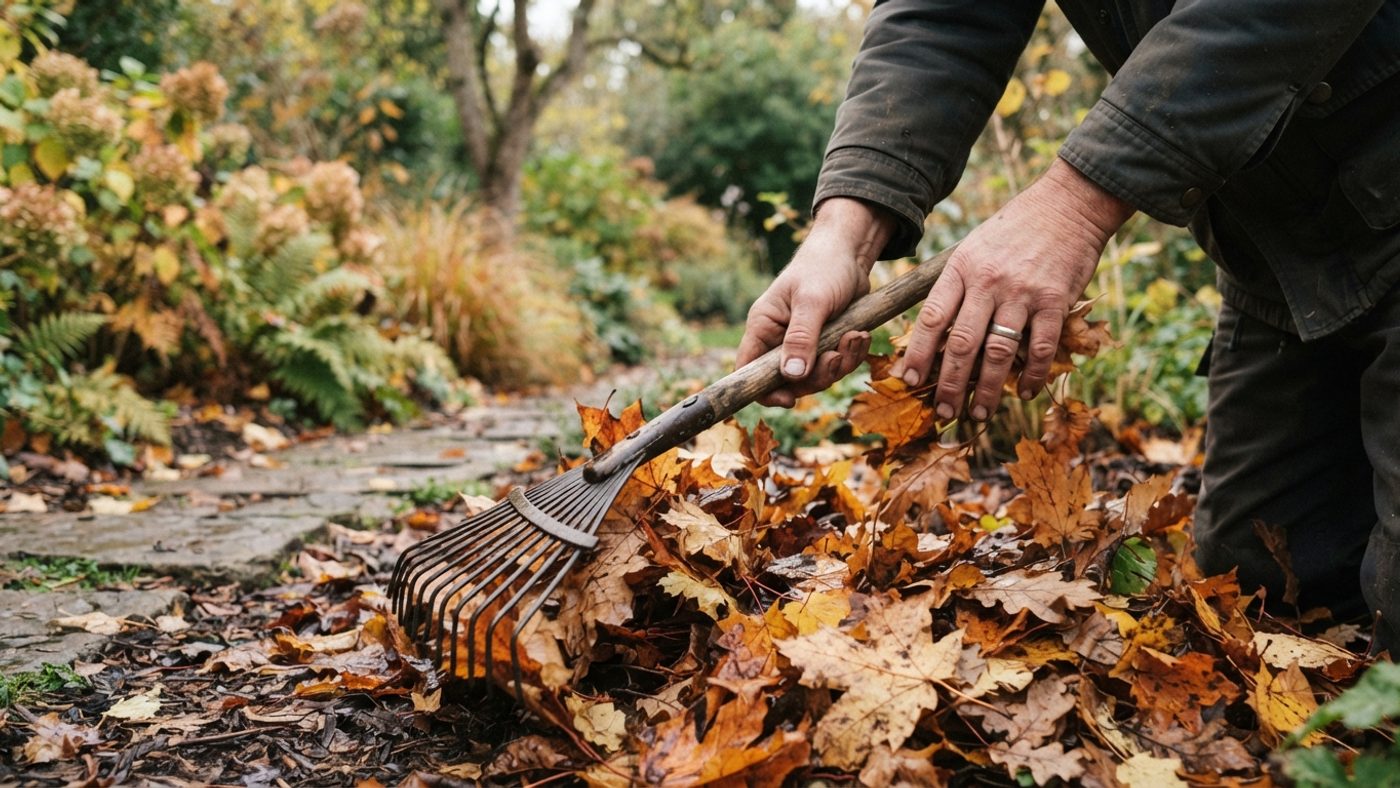
If you do need to rake, because the lawn's disappearing under a mat of leaves, or a path's turned slippery, don't bag them for council collection. Push them to the back of a bed or border where they'll rot down and enrich the soil while still providing habitat, or gather them into a loose pile in a quiet corner of the garden. Either way, you're keeping the same shelter value the leaves had on the lawn, just moved somewhere it isn't a problem.
On an allotment or vegetable bed, the same thin/thick rule applies as on a lawn, a light scatter of leaves between rows can be left to break down, but a thick layer over young brassicasThe cabbage family: cabbage, kale, broccoli, cauliflower, Brussels sprouts, kohlrabi, swede, turnip and more, sharing the same pests, diseases and rotation rules. Full definition → or overwintering crops wants clearing the same way it would off grass.
Don't just fork cleared leaves into the ordinary compost heap, either. Leaves rot by a slower, fungal process rather than the bacterial one that drives a compost heap, so mixing them in dilutes and slows the whole heap down rather than adding useful bulk to it. If you'd rather turn a full autumn's worth of leaves into a soil conditioner instead of leaving them as a habitat pile, the guide to making leaf mould covers how to compost them down in their own space, separately, over the following year. A quiet corner pile and a leaf mould cage aren't mutually exclusive, plenty of gardens run both, with a wildlife pile left undisturbed and a separate cage for leaves being processed into compost.
A simple leaf pile isn't the only option either. The guide to building a hibernaculum covers a more structured shelter aimed at frogs, toads and other cold-blooded visitors as well as hedgehogs, for anyone with the time and materials for a bigger project; a loose leaf pile in a corner is the low-effort version, and it still works.
Check before you disturb a pile
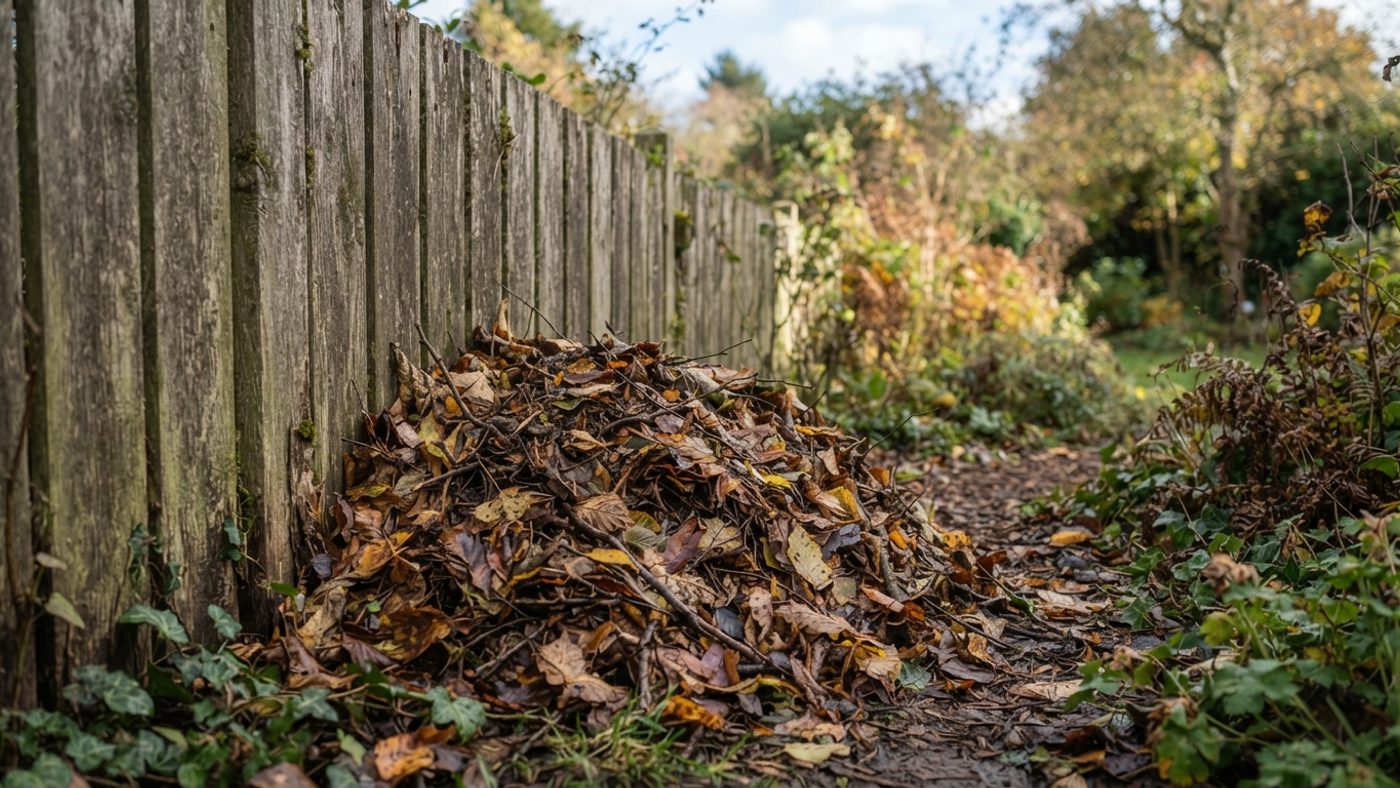
Leaf and log piles are prime nesting spots for hedgehogs, and because hedgehogs move nests during winter and can occupy piles other hedgehogs built, a pile that looked empty in October may not be empty in January. Before forking over a compost heap, moving a leaf pile, or lighting a bonfire built from garden debris, check it thoroughly for a sleeping hedgehog, ideally by checking on the day itself rather than assuming an earlier look-over still holds, and by moving material gently by hand rather than with a fork. A hedgehog disturbed out of deep winter torpor in cold weather can struggle to recover, so this isn't a minor courtesy, it's the difference between a pile doing its job as shelter and it becoming a hazard.
If burning garden waste is part of your autumn plans, the same check applies to any leaf or wood pile destined for a bonfire, the guide to bonfires and allotment rules covers this in more detail for anyone burning leaves or prunings.
Common questions
Do I need to rake every leaf off my lawn?
No. A thin scattering that still lets grass show through can be left to break down naturally. It's a thick, mat-like layer that needs clearing, because that blocks light and moisture and can leave bare or diseased patches.
Is it true hedgehogs hibernate in leaf piles?
Yes. Hedgehogs gather leaves to build their winter hibernation nests, and a leaf pile in a quiet corner is genuinely attractive habitat to them, not just a byproduct of not tidying up.
When do hedgehogs hibernate in the UK?
Typically from October or November through to March or April, though mild weather can keep individual hedgehogs active later into the year, and warm spells during winter can wake them briefly.
How do I check a leaf pile for a hedgehog safely?
Move material gently by hand rather than with a fork or spade, and check on the day you plan to disturb the pile rather than relying on an earlier check. If you find a hedgehog, leave it undisturbed where possible rather than moving it.
What should I do with leaves I do need to rake up?
Move them to a border or a quiet corner of the garden rather than bagging them for collection, they'll keep sheltering the same insects and animals there. Alternatively, use them to make leaf mould over the following year.
Are leaves under hedges and shrubs worth leaving alone?
Yes. That's exactly the leaf litter that shelters ground beetles, lacewings and hedgehogs foraging for worms and beetles, so it's worth leaving deliberately rather than tidying it away with the rest of the garden.
Sources
9 sources, recorded with what each was used for
- Scottish Wildlife Trust: Hibernating Hedgehogs: Hibernation timing (Oct/Nov–March/April), hedgehogs moving nest sites during winter, and checking compost heaps/bonfires before disturbing them
- RHS: Hedgehog-friendly gardening tips: Leaf/log piles as hedgehog habitat and food source, and advice against burning garden debris that may shelter hedgehogs
- RHS: Beneficial insects and bugs: Lacewings hibernating in leaf litter, and ground beetles sheltering in leaf litter/log piles/compost
- RHS: Ground beetles and rove beetles — garden allies: Ground/rove beetle diet, predatory role, and leaf litter/log pile shelter
- Wildlife Trusts: How to attract butterflies to your garden: Butterflies and caterpillars overwintering and needing undisturbed shelter such as ivy growth over winter
- RHS: October lawn care advice: The claim that thick leaves smother grass, blocking light and moisture
- Hedgehog Street: Hedgehog hibernation — all the facts: Hedgehog nest sites (leaf/log piles, compost, sheds), hedgehogs moving between nests, and never disturbing a nesting hedgehog
- Hedgehog Street: Hedgehogs After Dark — Nesting and gathering leaves: How hedgehogs gather and use leaves to build nests, and leaf piles as attractive habitat
- Hedgehog Street: Bonfire Night hedgehog safety: Checking piles thoroughly, or moving them on the day, before burning